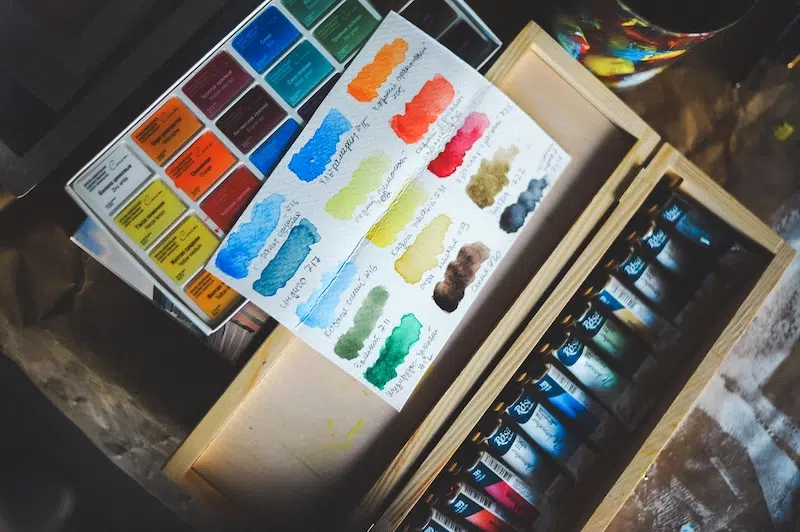
Water-based media are a great gateway to painting. Getting started, after all, is as easy as just adding water. But within the realm of water-soluble media, there are choices to make. We often think of watercolor paint, but it’s not all you have to choose from. Colored inks are similar to watercolor, and many artists—particularly illustrators—prefer to use them in their work. But how do they compare to watercolor paint?
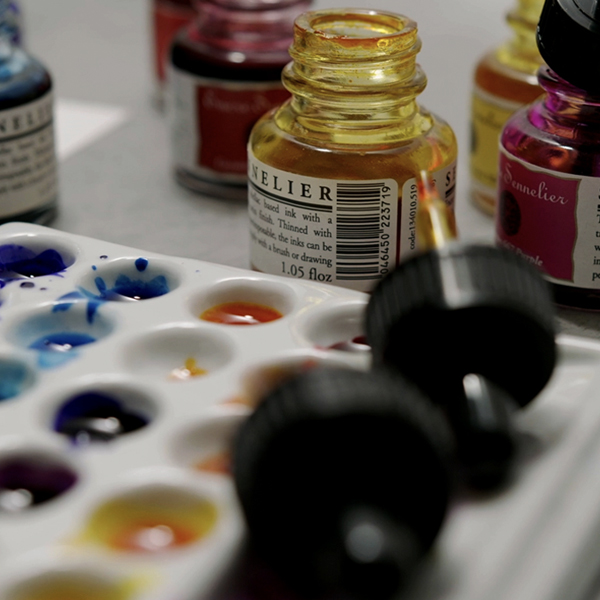
There are some key differences between watercolor paint and colored inks. First, let’s talk composition. Watercolor is made using a finely ground pigment and a binder, often gum arabic. Colored inks, by contrast, can vary in composition, depending on the type and manufacturer. Dr. Ph Martin’s, a beloved brand, sells inks that use dye dissolved in liquid—in this case, water. Acrylic inks are another option and are composed similarly to acrylic paint; the ink contains pigment with a polymer binder.
Knowing the composition of these materials helps to explain how they react on paper. Inks will generally be more pigmented. Because they are also used in writing and in line drawing, the formula must retain its vibrancy and saturation. Consistent coverage is important as a pen moves across a page. So if you like to create brightly colored compositions, ink will make it easier to achieve. It takes more effort, however, to create lighter hues because more dilution has to happen.
Watercolor paint prizes subtlety. You’ll likely draw out a wider range of hues as you glaze and use essential watercolor techniques. And a big advantage that watercolor has over ink is that it can reactivate with water. To reanimate the paint, dip your brush in water and rub it over the area you want to work on. You can blend to soften or add more pigment using the wet-on-wet approach. Once ink dries, that’s it.
Learn more about watercolor and acrylic inks when you visit My Modern Met Academy, our e-learning platform. There, you can take Introduction to Watercolor Painting and Animal Portraits in Colored Inks: Tell a Visual Story That Conveys Emotion. Each will go over supplies and teach you the skills you need to wield these two water-based media.
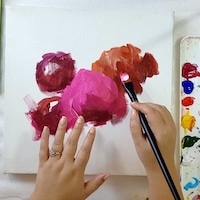
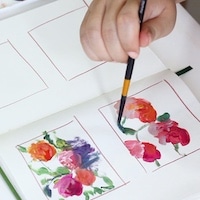
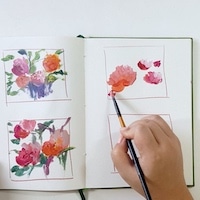
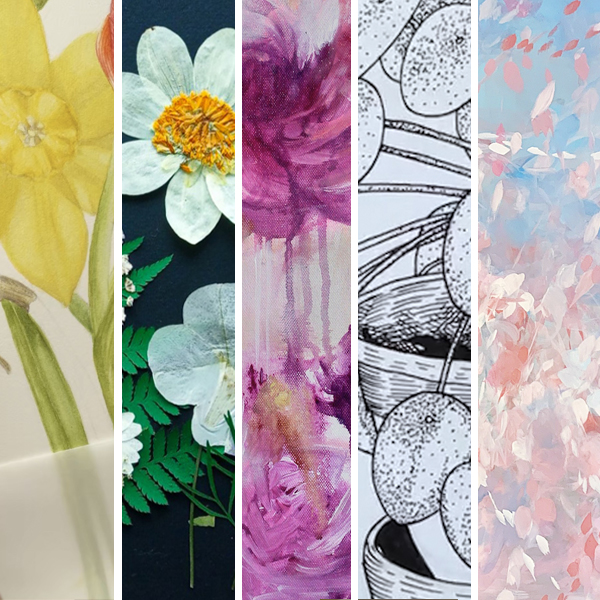
Colored inks and watercolor paint have some similarities, but some key differences.
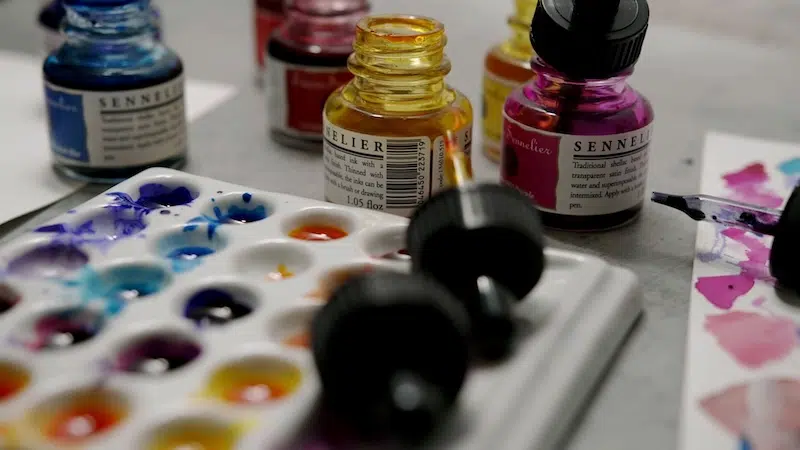
Ink is generally more pigmented and will retain its saturation. Once it dries, you can’t reactivate it like you can watercolor paint.
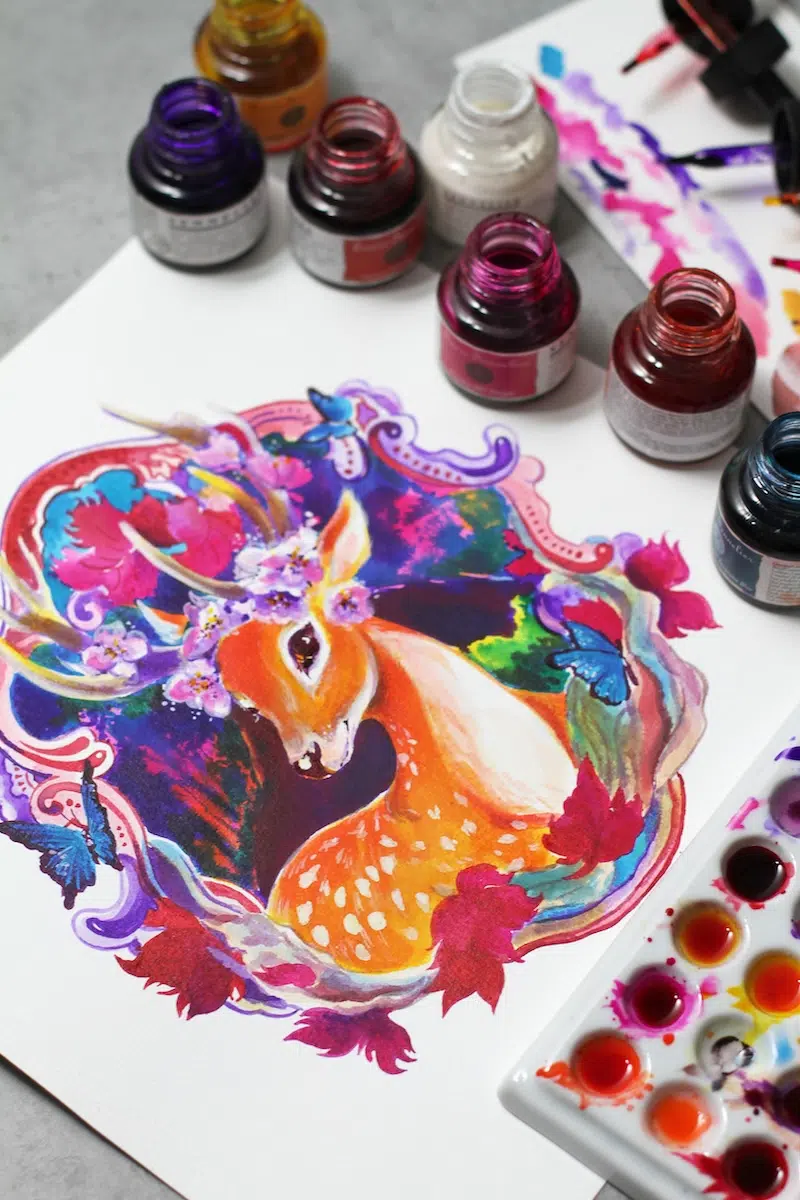
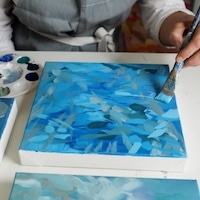
Learn how to paint with colored inks in the online class Animal Portraits in Colored Inks: Tell a Visual Story That Conveys Emotion.
Watercolor paint prizes subtlety. You’ll likely draw out a wider range of hues as you glaze and use essential watercolor techniques.
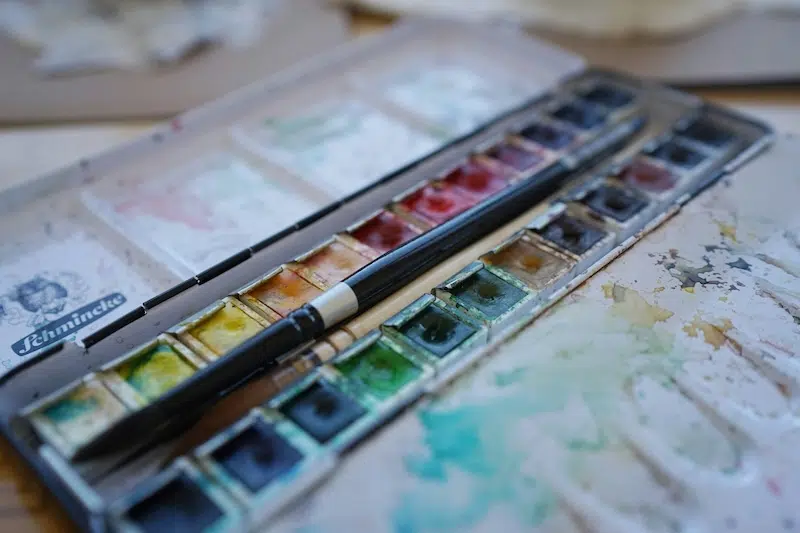
To reanimate watercolor paint, dip your brush in water and rub it over the area you want to work on. You can blend to soften or add more pigment using the wet-on-wet approach.

Learn all about using the medium in the comprehensive class Introduction to Watercolor Painting.
My Modern Met Academy: Website | Facebook | Instagram | Pinterest | TikTok
Related Articles:
These Supplies Will Help You Ace Our Acrylic Painting Masterclass
Mutable Skies and Colorful Landscapes Come To Life in Bold Acrylic Paintings
Learn 3 Unique Ways To Create Your Own Abstract Acrylic Paintings