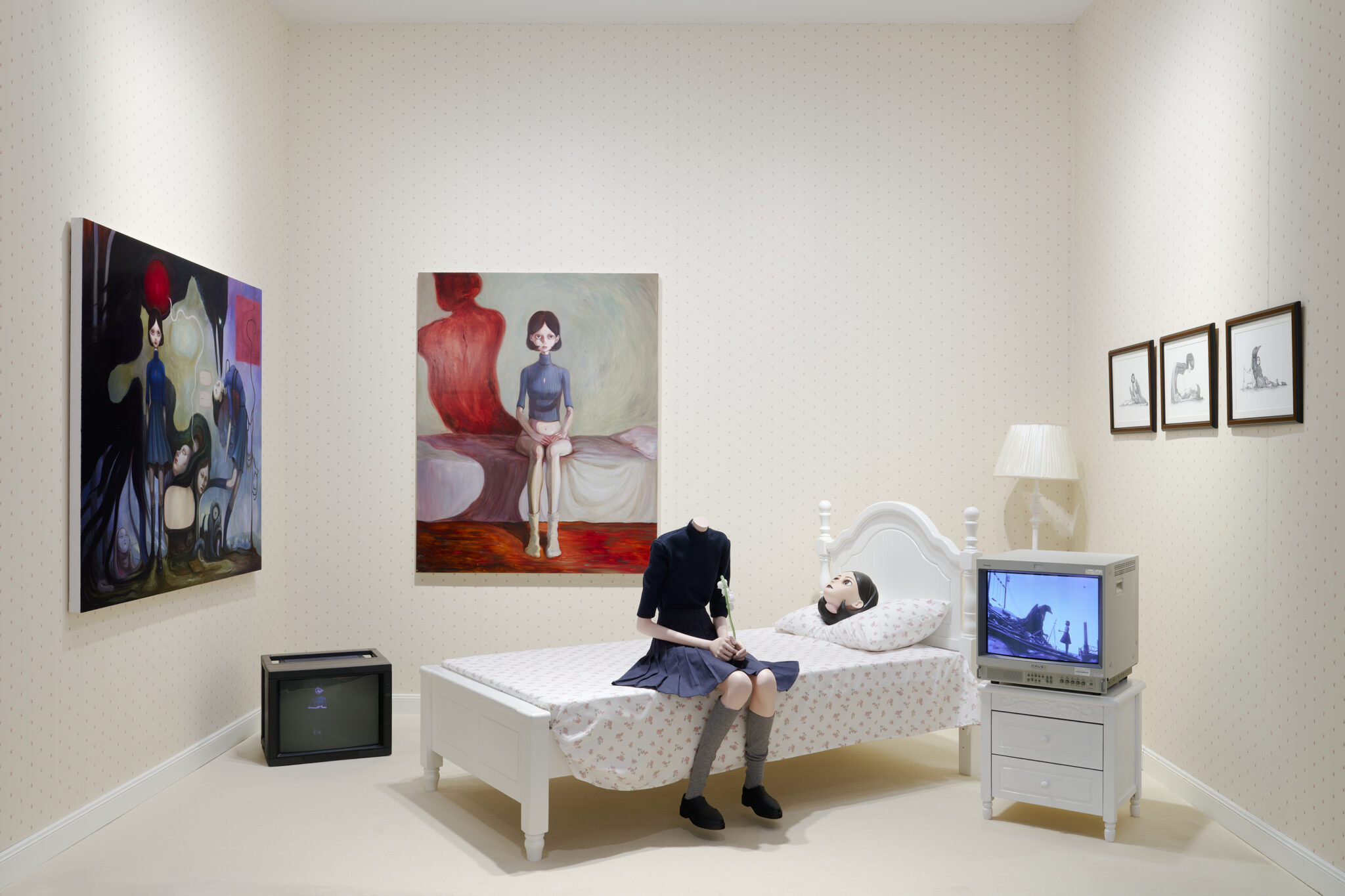
Installation view of Perrotin’s booth at Art Basel Hong Kong 2026, featuring Lauren Tsai’s work. (Photo: Mengqi Bao)
Late last month, nearly 92,000 visitors descended upon Hong Kong to attend Art Basel’s latest art fair. As always, the organization’s Hong Kong edition gathered some of the most illustrious artists and galleries from Asia and beyond, celebrating the region’s contemporary art scene in all its diversity. But amid the fair’s more than 170 presentations, one booth stood out above the rest: Perrotin.
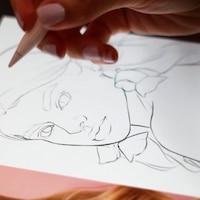
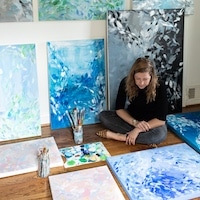
This year, the international gallery showcased works by Mehdi Ghadyanloo, Steph Huang, and, perhaps most notably, Lauren Tsai. “This is my first time collaborating with Perrotin and showing at an art fair,” the multidisciplinary artist remarked in a recent Instagram post. If there was any anxiety about her art fair debut, though, Tsai’s installation didn’t betray it. The immersive showcase demonstrated the sheer breadth of her practice, spanning drawings, monumental paintings, stop-motion animations displayed on retro TVs, and a rendition of her installation Poison Little Girl.
Originally created in 2025, Poison Little Girl was undoubtedly at the heart of Tsai’s exhibition in Hong Kong. The sculpture depicts one of Tsai’s recurring characters, Astrid, perched on the edge of a plain bed, her gray skirt fanned out around her. Even at first glance, it’s clear that something is wrong: the girl’s neck stops abruptly, completely decapitated. Her head is only a short distance away from her body, resting on a pillow with exhausted, sunken eyes. The unsettling scene is completed by an illuminated lily-of-the-valley flower, whose stem Astrid gently cups with both of her hands.
Like much of Tsai’s work, Poison Little Girl explores psychological and liminal terrains. The installation is part of a larger project titled The Dying World, in which Astrid must grapple with themes of memory, ephemerality, transcendence, loss, and death, all of which have grounded Tsai’s practice for years.
“Astrid herself can contend with the issues I have around my identity and my body,” Tsai admitted in a 2025 interview with IndieWire. “The feeling of being a mask and the feeling of being a puppet.”
That’s precisely why Astrid remains vacant, a character that isn’t embodied so much as projected upon. Instead of simply being a human, then, this girl is a vessel through which emotions can be visualized or understood, existing in what Perrotin calls an “environment shaped by psychological rather than narrative logic.” That sentiment underscored Tsai’s entire presentation, prompting visitors to coax out their own interpretations based on the suite of linked works.
“I was interested in someone who might have slipped into being forgotten themselves while they were still alive,” Tsai added, “so that’s Astrid. And Astrid is able to go between these two realms, although in my mind the Dying World and the real world are all one place.”
Aside from this, the Perrotin presentation also experimented with scale. The Dying World encapsulates several media, each of which assume varying dimensions—a fact Tsai hoped to highlight during Art Basel. “I knew I wanted to do something that played with scale,” the artist told Vogue Hong Kong in a video interview, “because the project is based in stop-motion, which is puppet animation. I wanted to create some version of [Astrid’s] bedroom on a real scale, while also presenting things on a miniature scale.”
In addition to Tsai, Perrotin also showcased artwork by Takashi Murakami, Mr., Emi Kuraya, Emily Mae Smith, Danielle Orchard, Lee Bae, and Makiko Kudo, among others. To learn more about Perrotin’s booth and the 2026 art fair in Hong Kong, visit the Art Basel website.
At the 2026 edition of Art Basel Hong Kong, artist Lauren Tsai showcased a suite of multimedia works exploring liminality, psychology, ephemerality, and loss.
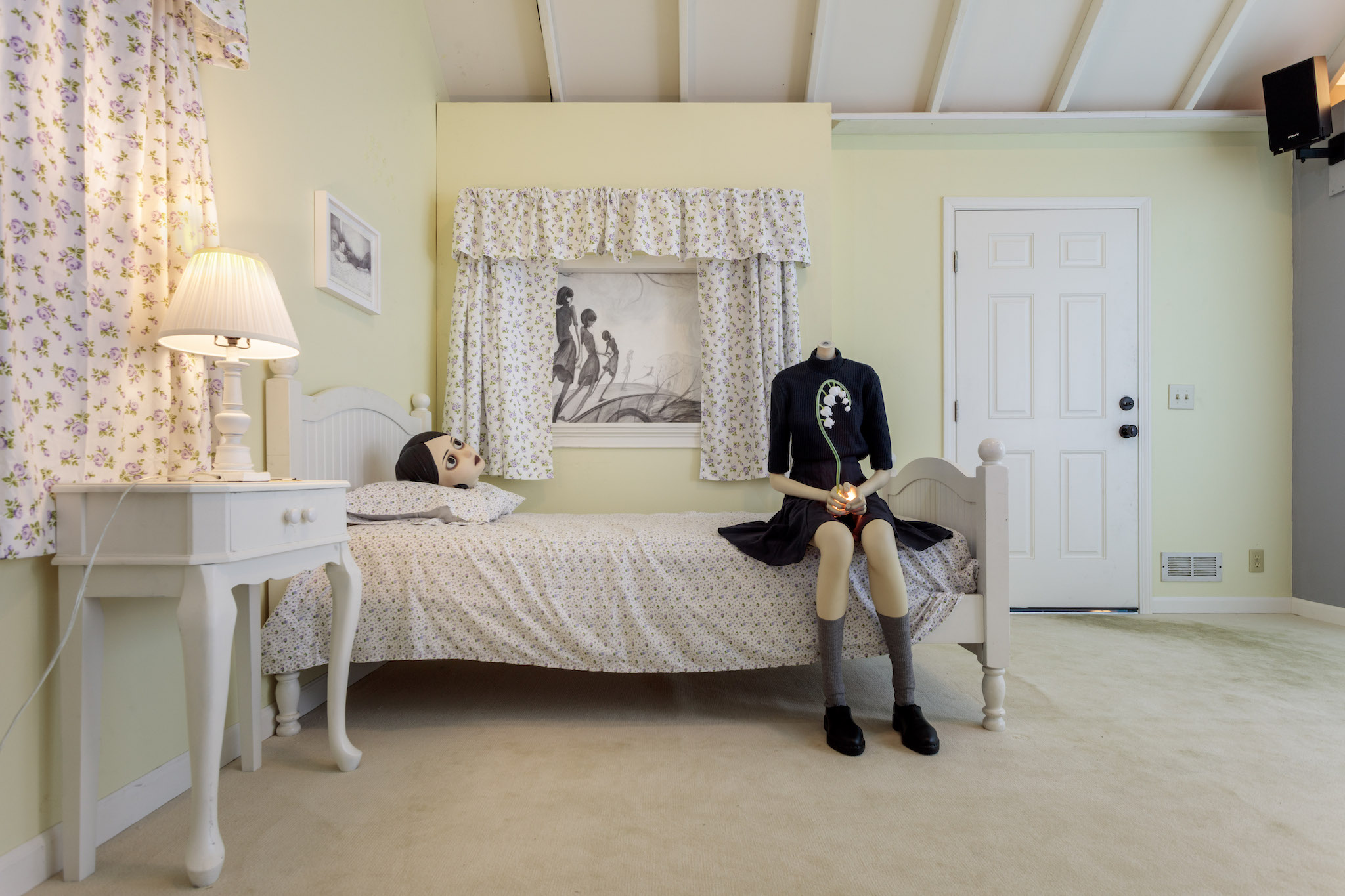
Installation view of “The Dying World” at Hollywood Forever Cemetery, Los Angeles, 2025. (Photo: Joshua White)
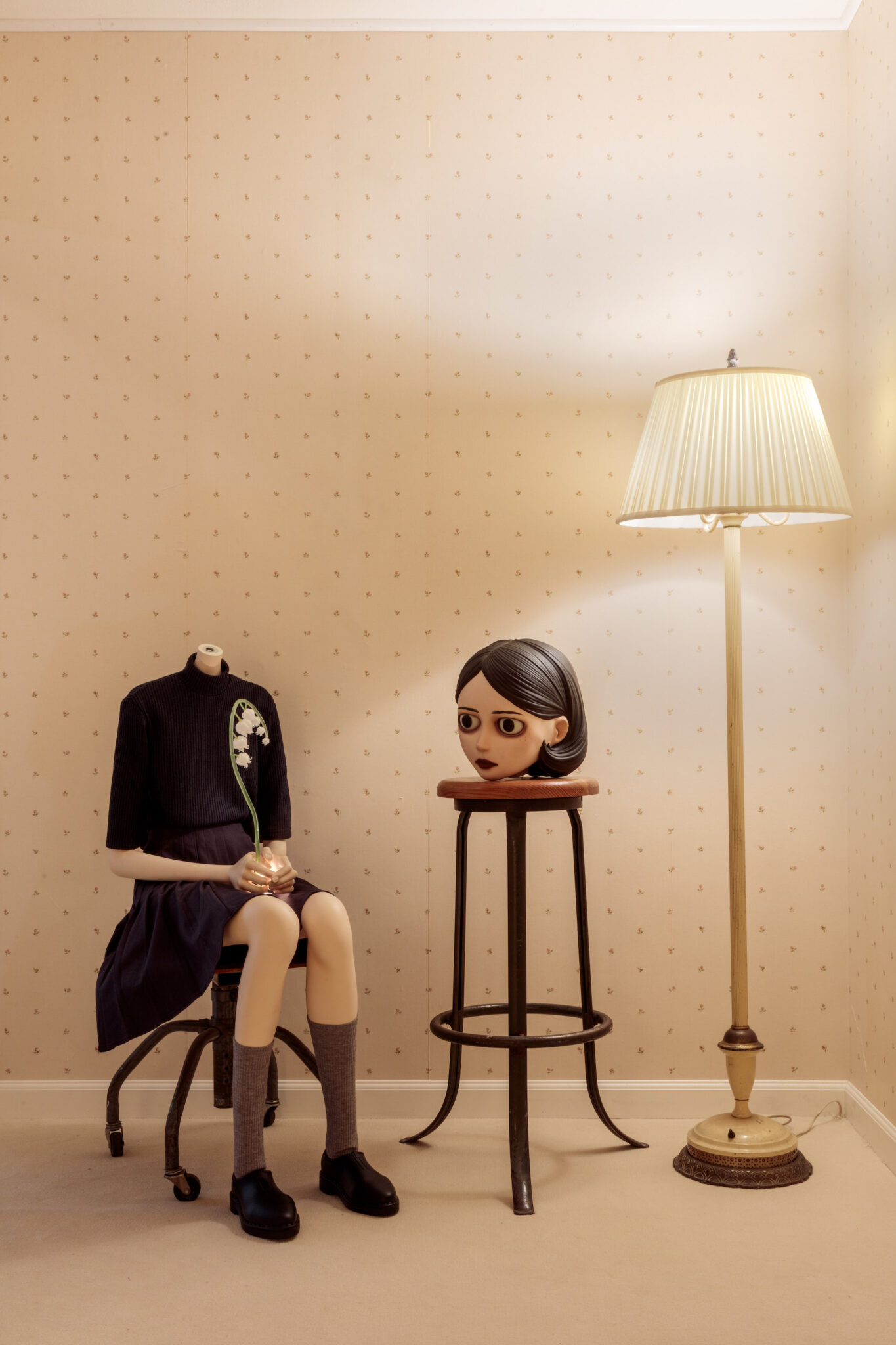
“Poison Little Girl,” 2025. Aluminum, hand-blown glass, custom garments, and automotive paint. (Photo: Joshua White)
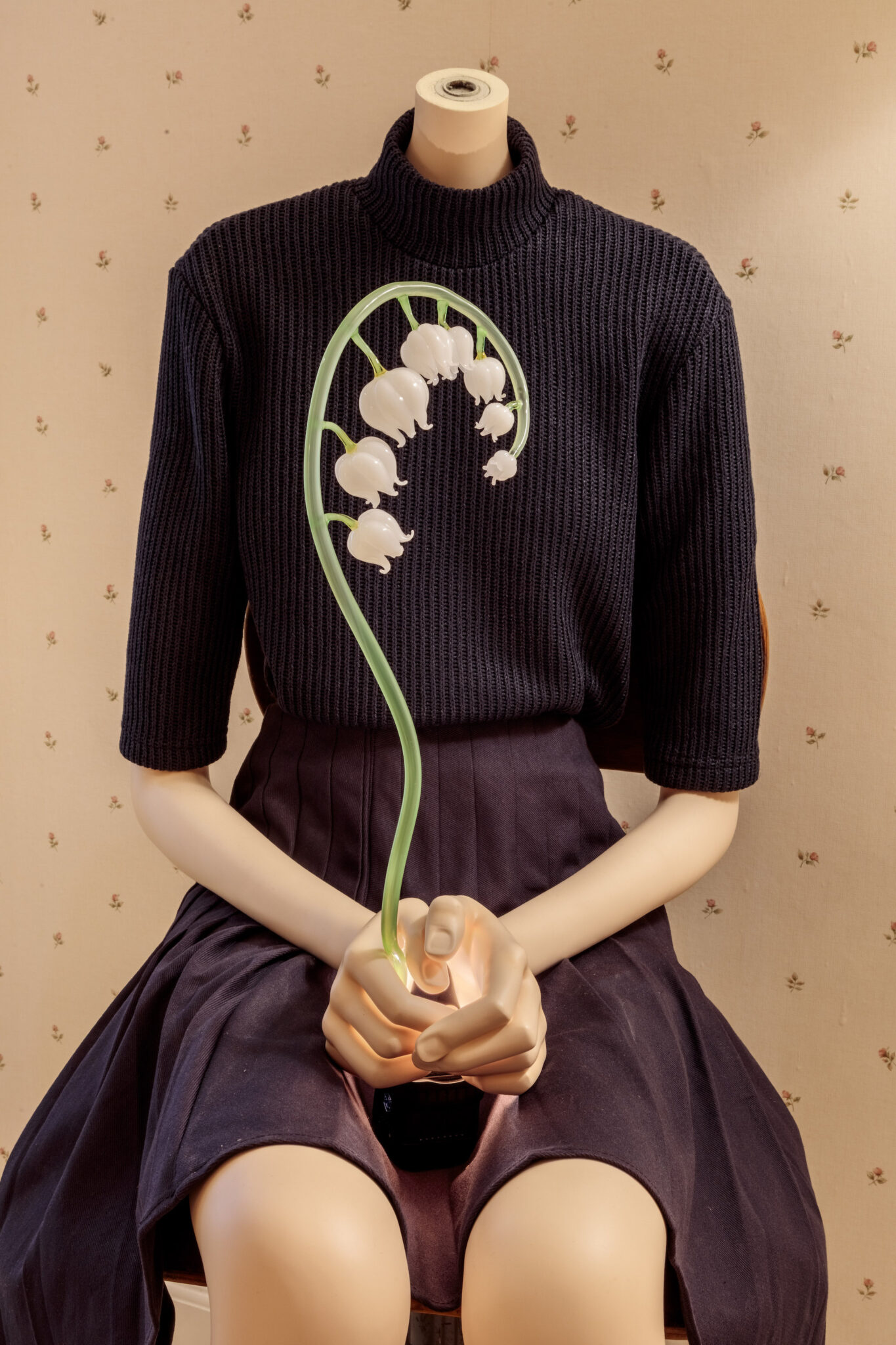
Detail of “Poison Little Girl,” 2025. (Photo: Joshua White)
Hosted by Perrotin, Tsai’s presentation encompassed an immersive installation, monumental paintings, stop-motion animations, and drawings.
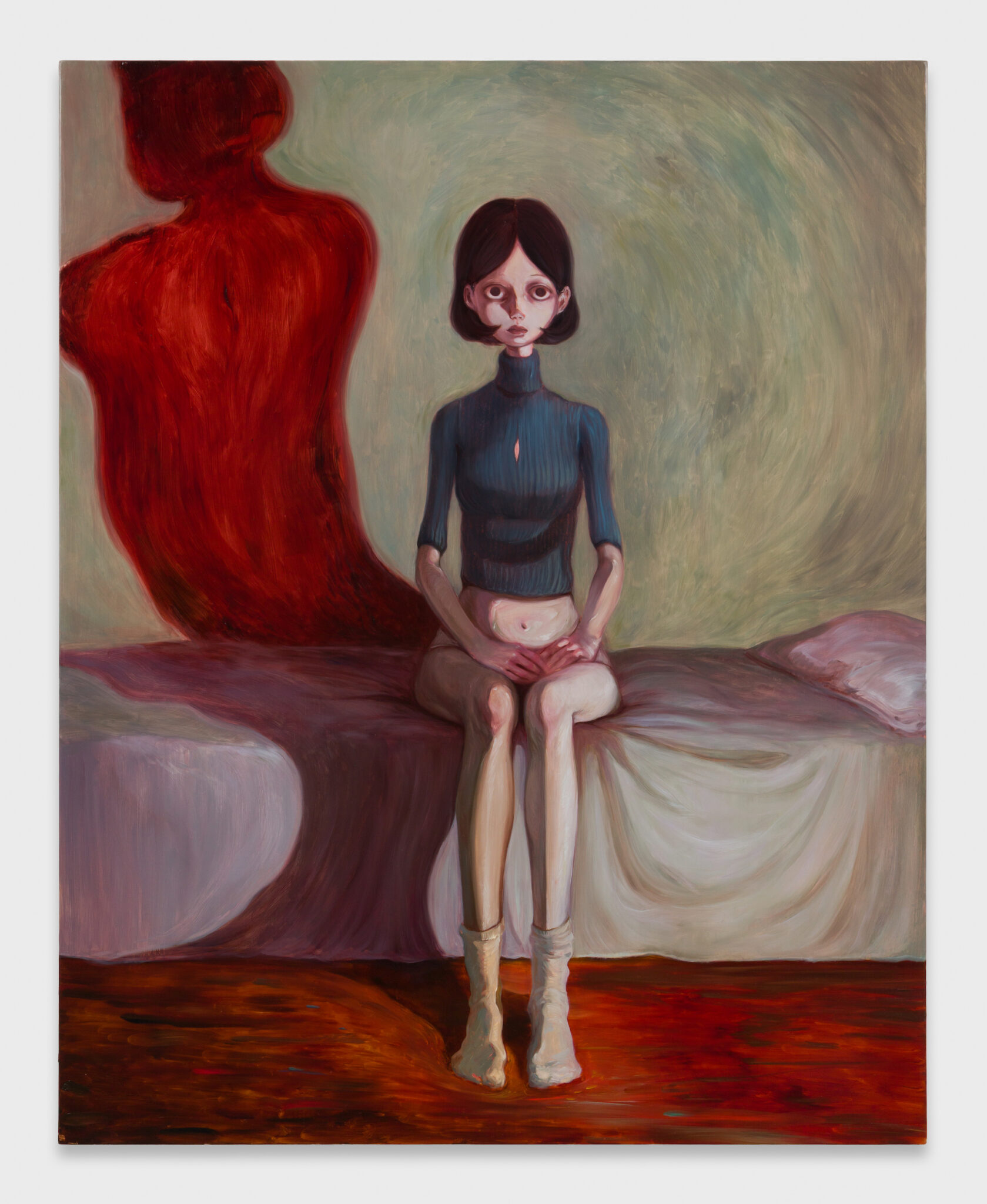
“Last Youth,” 2026. Oil on canvas. (Photo: Deen Babakhyi)
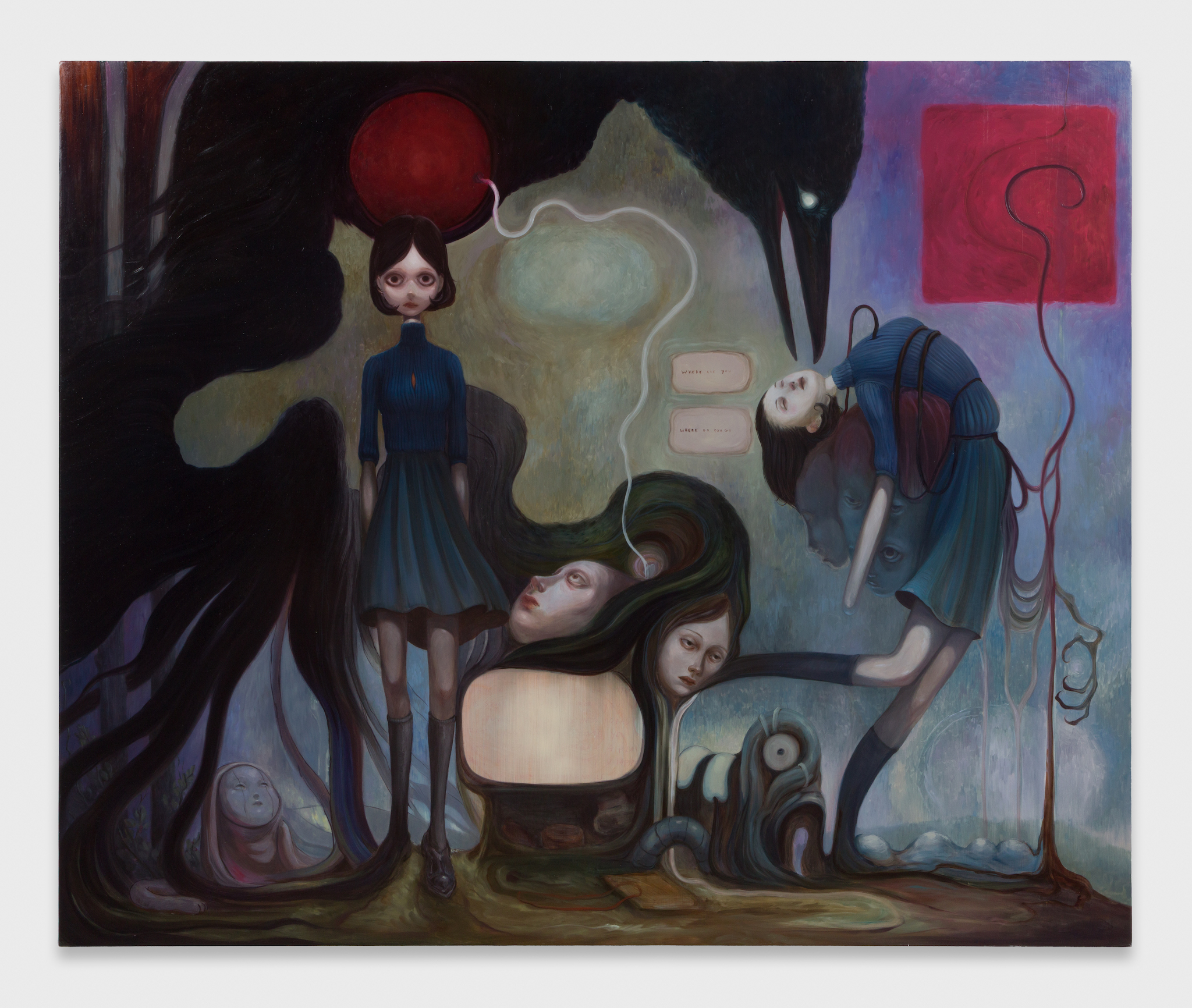
“Neither home, nor far from it,” 2026. Oil on canvas. (Photo: Deen Babakhyi)