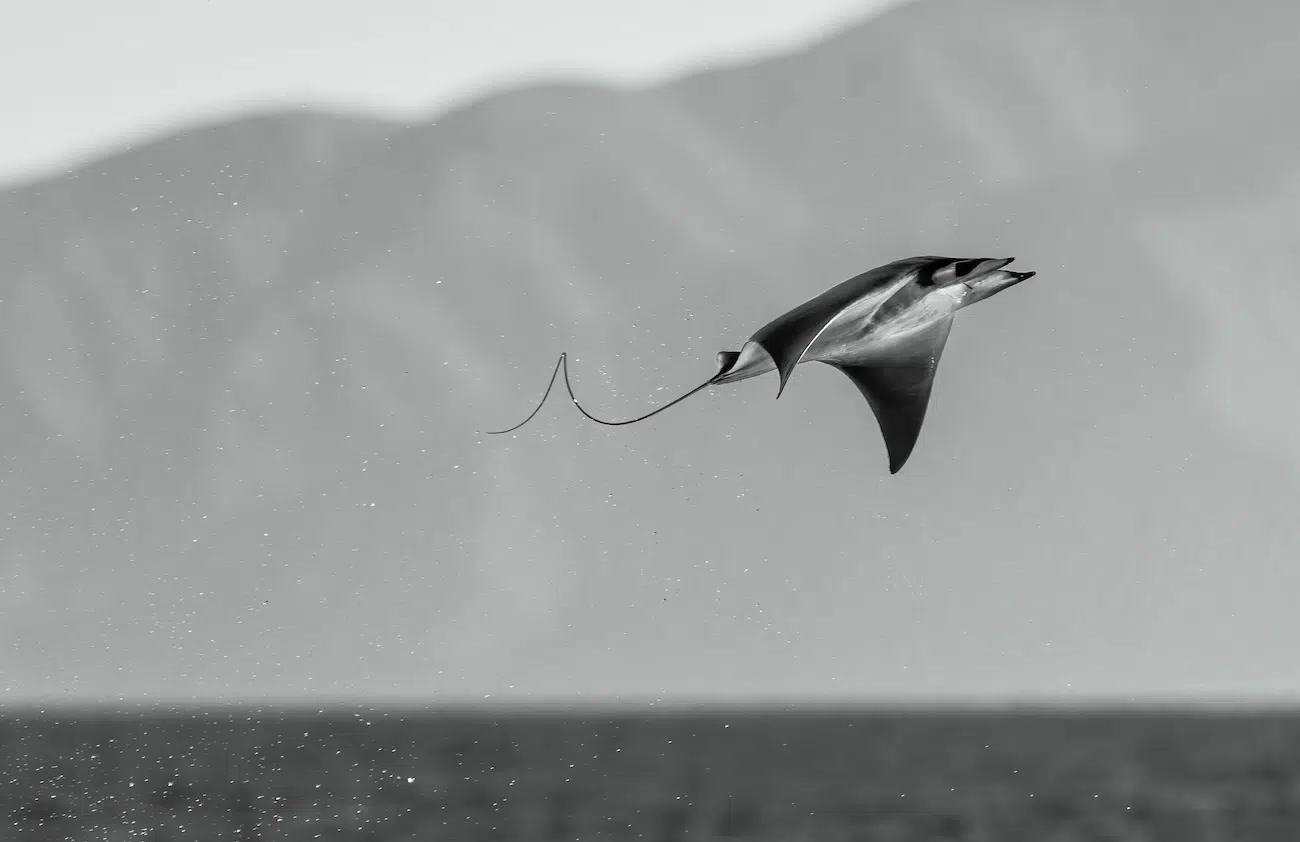
“Mobula Rocket” by Angela J Sanchez. Photographer of the Year 2025.
It’s impossible to see all of the beauty the natural world has to offer. But thanks to the work of photographers, Earth seems a little smaller—and more knowable—with every click of their camera shutters. The Nature Photography Contest is one way we can marvel at the world and celebrate the creatives who make these images possible. The competition has just announced the winning photographs of its 2025 edition, taking us across ecosystems and offering a glimpse into the lives of various species.
Beyond the aesthetic quality of the winning images is the urgency inherent in the selection of photos. Nearly 500 photographers participated in the 2025 edition, and environmental awareness is at the heart of each composition. They are beautiful, yes, but also a stark reminder of what we have to lose if we don’t act to save the planet.
The Nature Photography Contest awards the prestigious Photography of the Year to one compelling image. For the 2025 edition, Thomas Vijayan from Oakville, Canada, won for his photograph titled Please Spare Our Home. It epitomizes exactly what the contest aims to achieve: stunning imagery with a call to action. In the photograph, an orangutan sits among the remains of its devastated habitat. It grabs on broken trunks and uprooted vegetation. Shot from a low angle, the creature seems larger than life, confronting the viewer with a plea to do something before it’s too late.
In addition to the Photography of the Year title is the Photographer of the Year, which is awarded to the person for their overall body of work. Angela J Sanchez from the United States won the honor, and her representative image features the striking sight of a mobula shooting out of the water. Judges picked her for the top title because of elements in the image, visible across her portfolio: a “deep connection with her subjects, combining technical skill with a strong sense of timing and composition.”
As part of the Photographer of the Year 2025 prize, Sanchez has the honor of selecting the place where nearly 500 trees will be planted, in collaboration with the non-profit organization One Tree Planted.
Scroll down to view the winning category images, and be sure to check out the gallery of The Nature Photography Contest 2025 winners and finalists.
Check out the incredible winners of The Nature Photography Contest 2025.
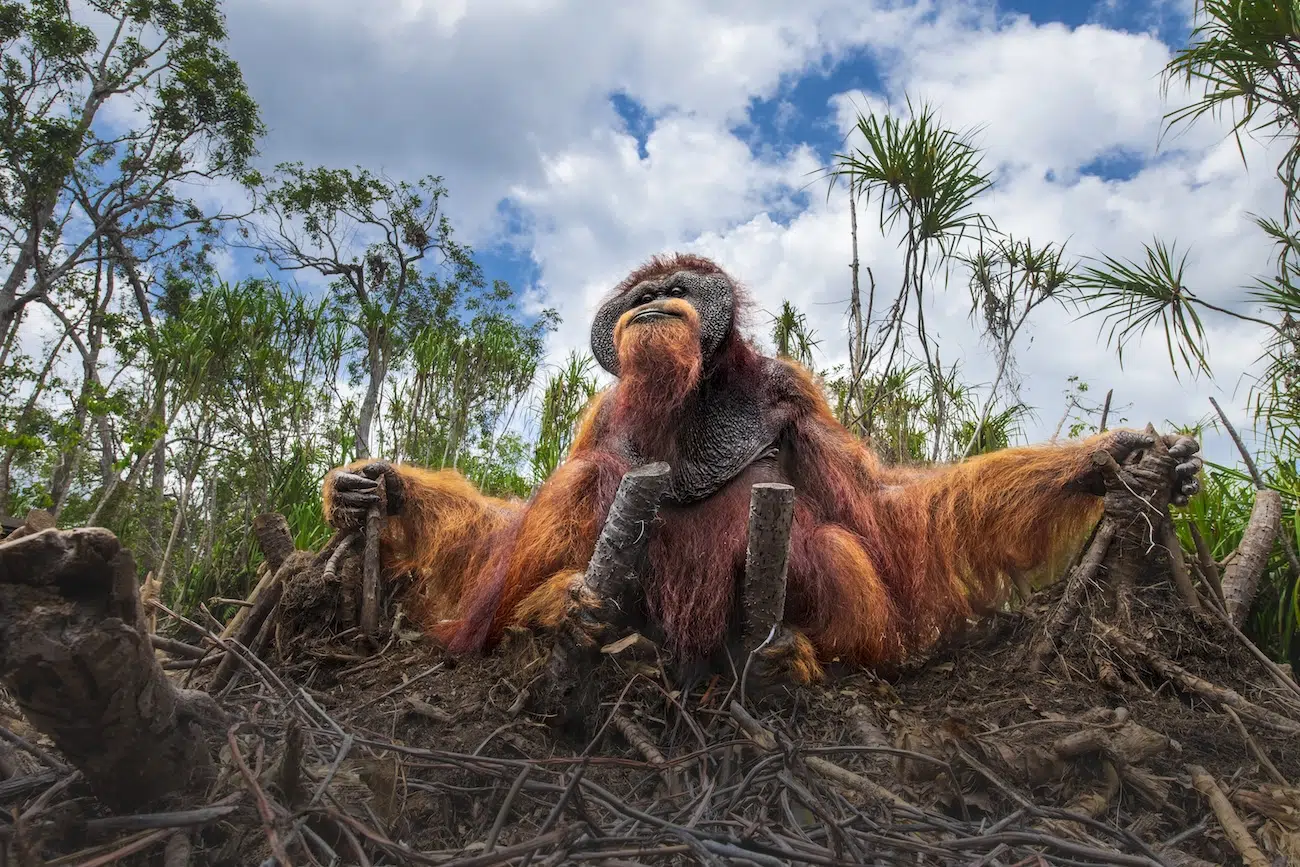
“Please spare our home,” by Thomas Vijayan. Photography of the Year 2025.
“Our changing world is a major threat to many living beings around us one among them is this greatest living ape on Earth, The Orangutans. Humans are on a run to satisfy their immediate requirements and are forgetting the impact of it on the coming future. Orangutans are closest to humans. If deforestation continues then the coming generation may miss seeing this majestic creation of God. These helpless creatures are now dependent on feeding stations for food as most of the vegetation or rather 1000+ year old trees which in itself is a major asset to our planet have been cut down for palm oil plantation following a rise in global demand for palm oil by the oil and fats industry which in turn very harmful for the human body.”
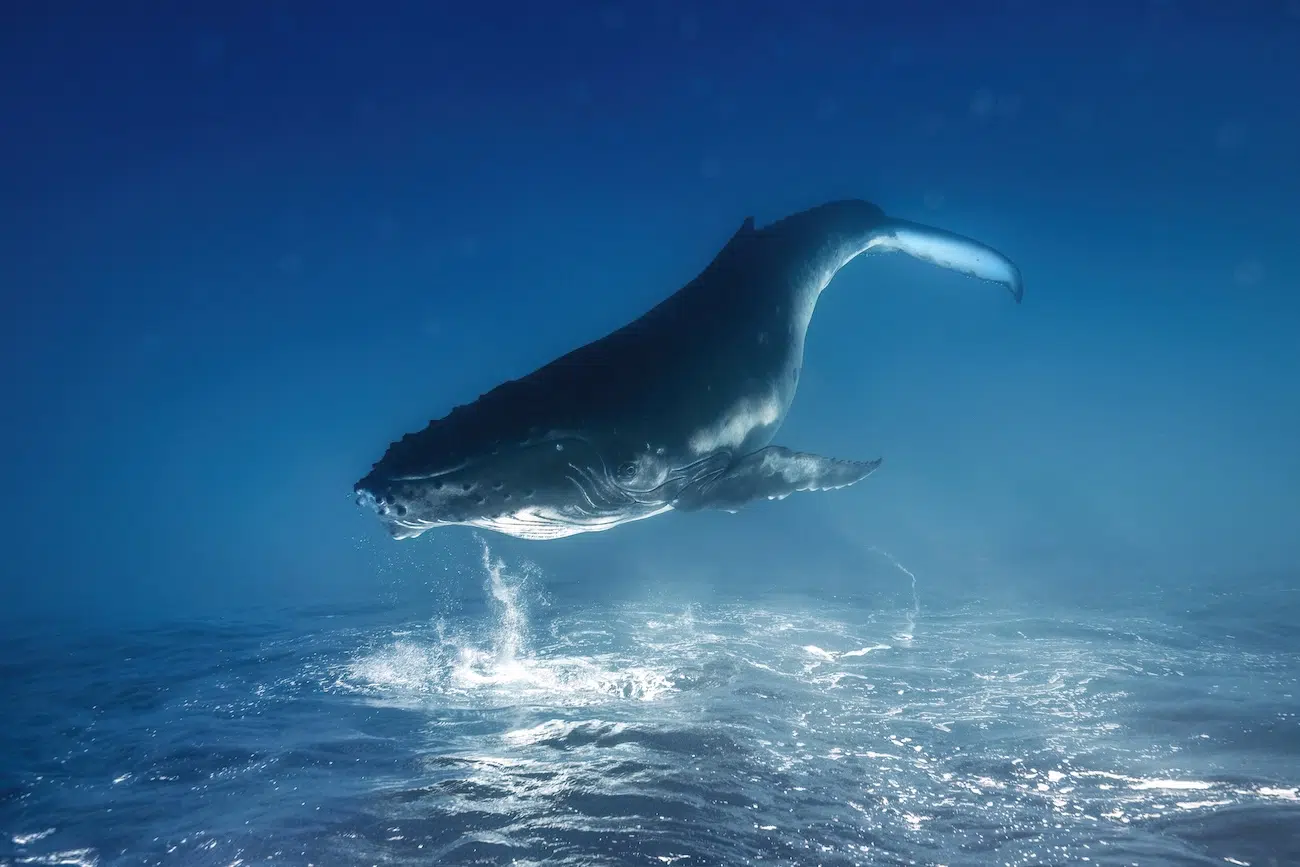
“Whale Dreams,” by Remuna Beca. Winner, Underwater.
“A playful Humpback Whale calf pauses gracefully at the surface in the deep blue of the South Pacific Ocean. A dreamlike scene, which I hope inspires a greater fascination for the wonders of our incredible ocean and the dream to experience and protect it.”
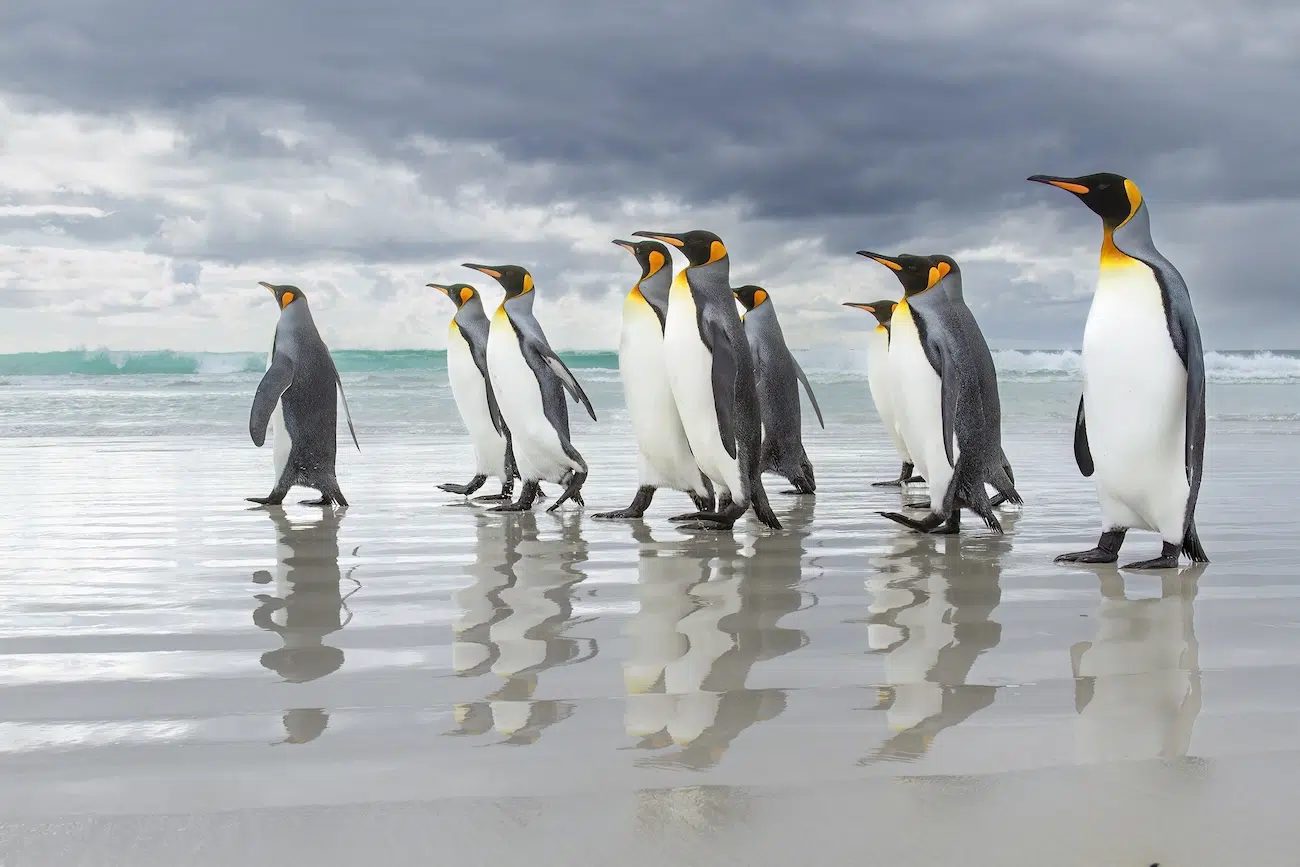
“Before the Storm,” by James Welch. Winner, Birds.
“A group of king penguins look out to sea as a grey sky indicates an incoming storm.”
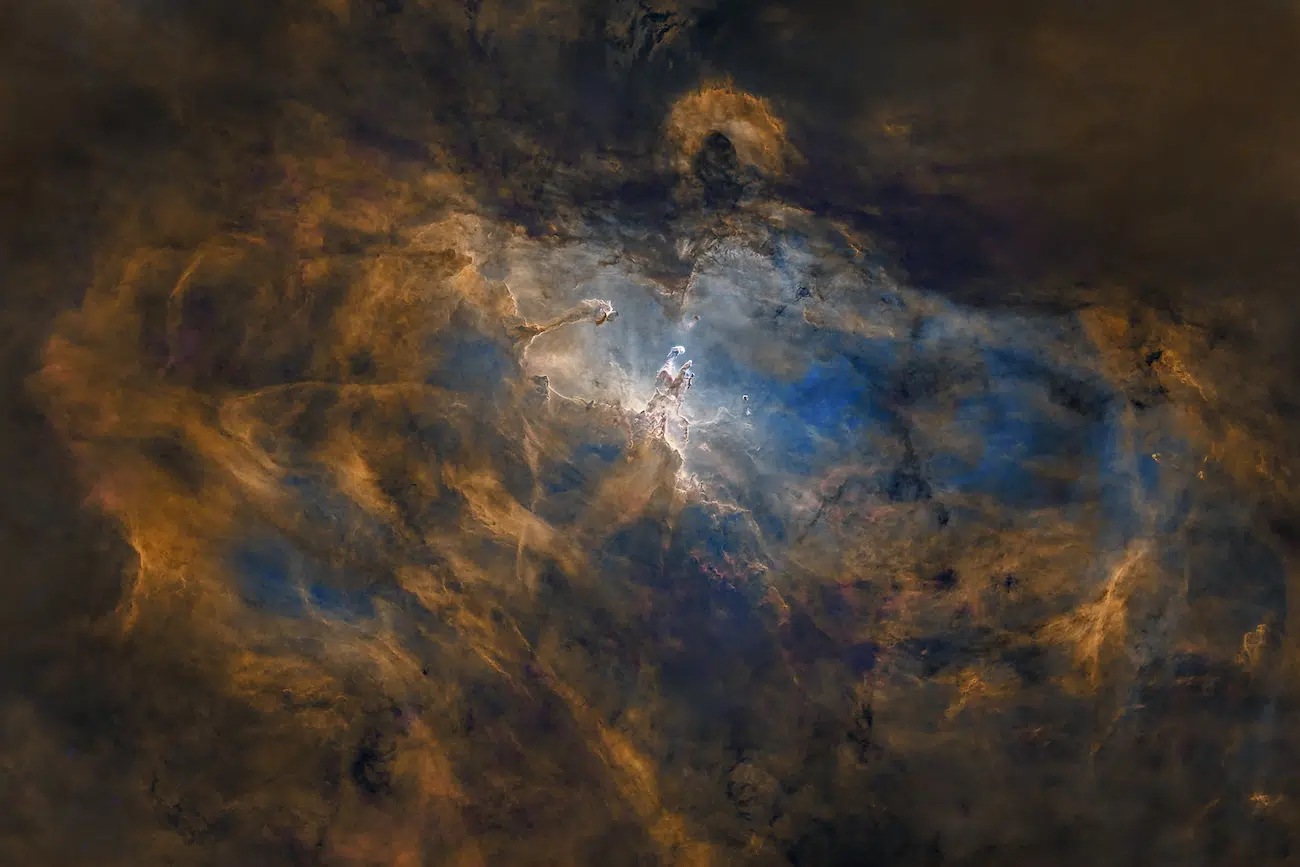
“Creation,” by Peter Hergesheimer. Winner, Night World.
“The Eagle nebula with the iconic Pillars of Creation is captured in this starless narrowband image. Filter used in narrowband astrophotography allow the camera to capture only specific frequencies of light emitted by ionized gases, in this case Hydrogen, Sulphur and Oxygen. The stars were intentionally removed during processing.”
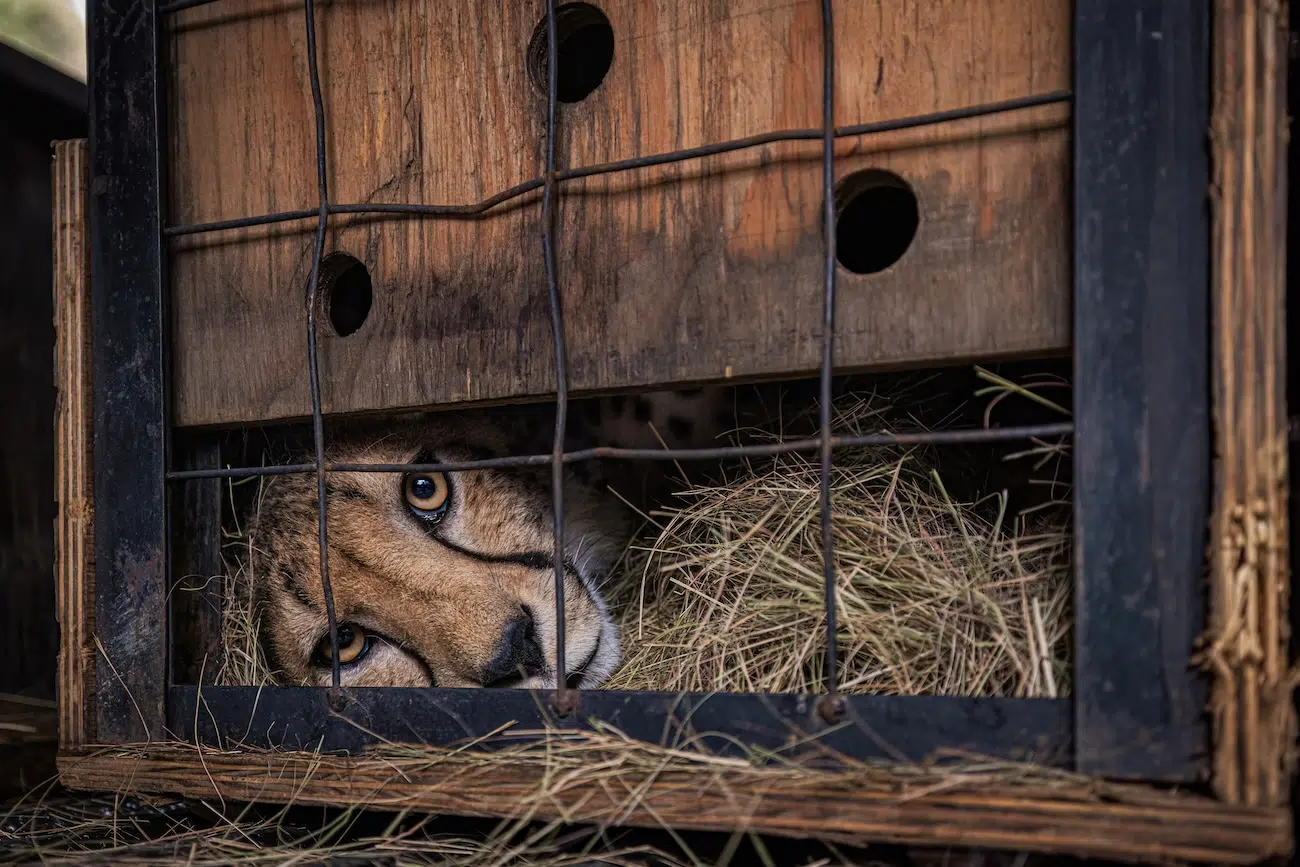
“First Gaze,” by Wiktoria West. Winner, Environmental Impact.
“A cheetah opens its eyes for the first time after sedation, during which it underwent X-rays, laser treatments, and various other veterinary procedures. This cheetah was a victim of snaring. Snares, often set by impoverished communities to catch small game for food, are indiscriminate and can trap any animal. Fortunately, thanks to the NGO’s daily monitoring team, we were able to intervene quickly and bring her in for treatment to repair torn ligaments. In this image, she is preparing to be transported back into the wild after several weeks in rehabilitation. I have been fortunate to photograph cheetahs across Southern Africa for several years, observing their vulnerabilities, conflicts, challenges, and the promising solutions. A particular challenge was capturing the cheetah’s expression, the very first moment she opened her eyes. This required me to squat beside the vehicle for an extended period (thankfully, I exercise regularly), keeping my gaze fixed on her closed eyes. I needed to ensure that the focus was on her eyes and not on the bars in front of her.”
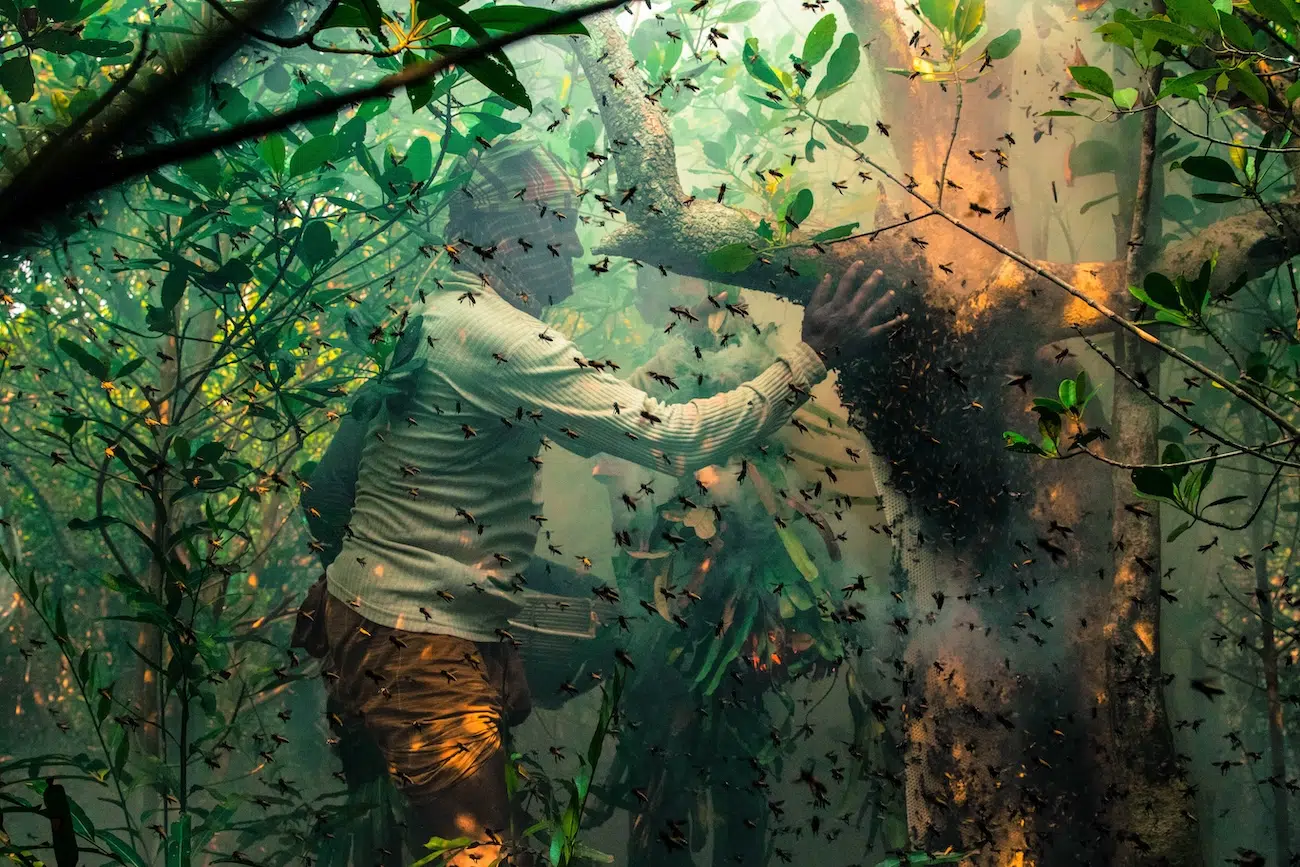
“The Honey Keepers of Sundarbans,” by Muhammad Mostafigur Rahman. Winner, Sharing the Planet.
“In the Sundarbans, the world’s largest mangrove forest and a UNESCO World Heritage Site, a honey collectors gather wild honey using traditional methods that have been practiced for generations. This careful and respectful approach reflects a longstanding relationship between local communities and the forest, where people depend on its resources while recognizing the presence and power of wildlife such as the Royal Bengal Tiger. Rising water levels and increasing salinity now threaten both the mangroves and this cultural heritage, reminding us how deeply our well-being is connected to the health of our shared environment. Sathkhira, Bangladesh.”
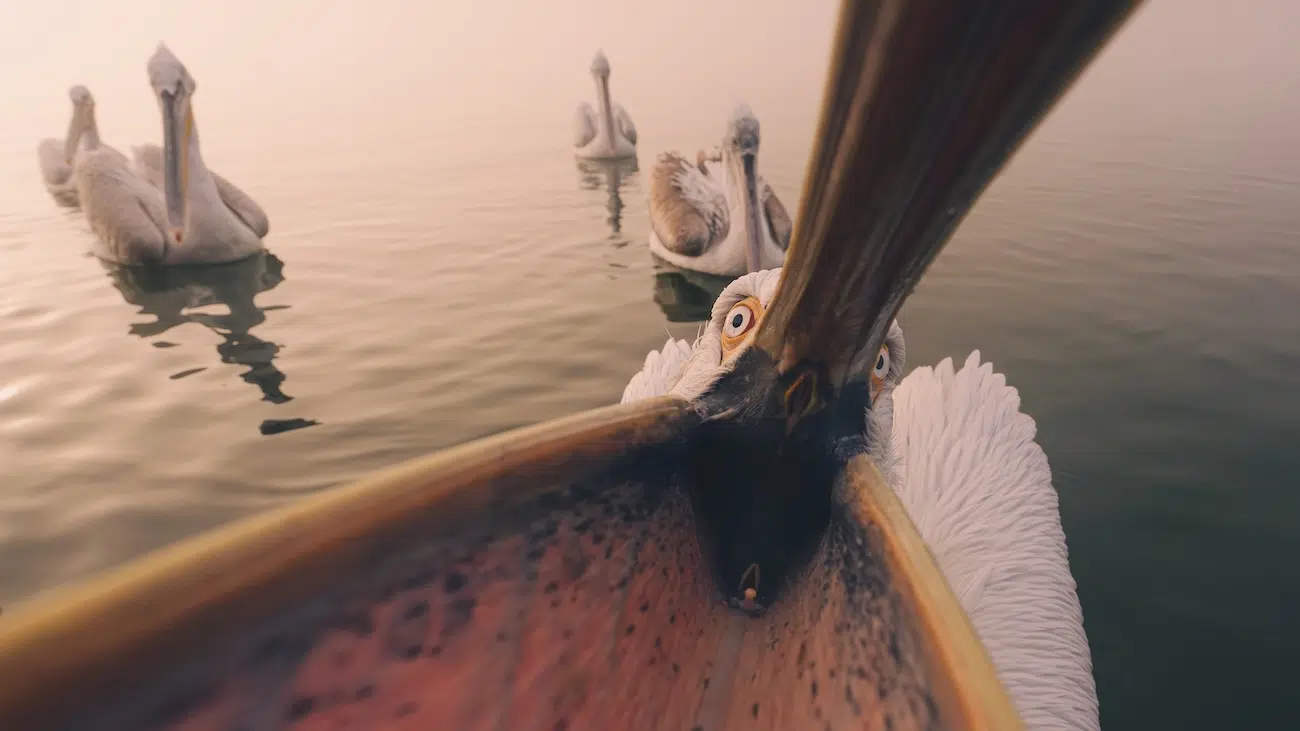
“Into the Gape: Dalmatian Pelican at Dawn,” by Panagiotis Xaxiris. Winner, Funny Nature.
“Eye-level, natural light ,lake Kerkini. A Dalmatian Pelican opens its bill wide right in front of the camera as a group emerges through the soft morning mist-a close ,intimate moment showing the character and presence of this iconic species.”
The winning images are beautiful, but there is an urgency inherent in the selection of photos.
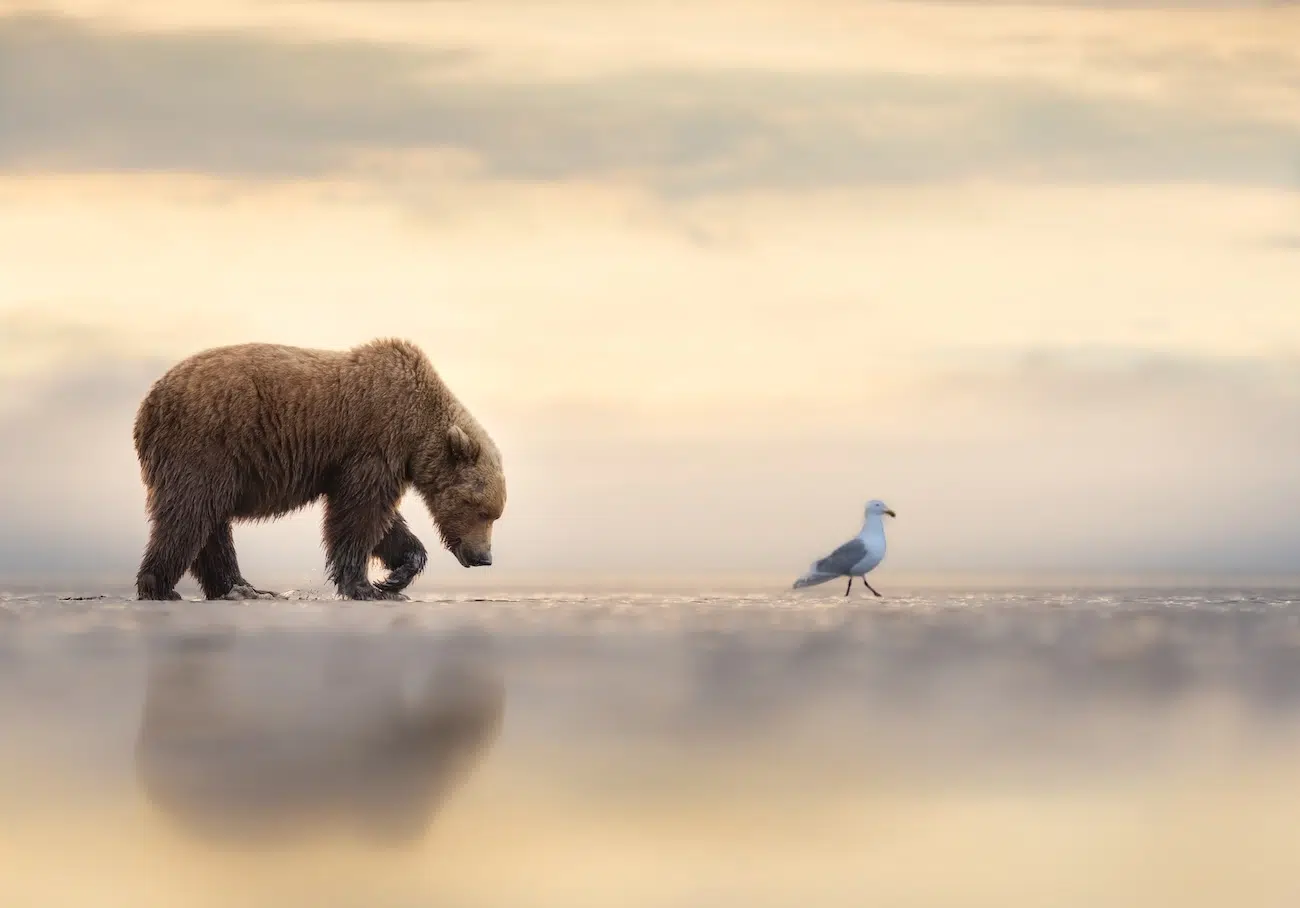
“Following,” by Janet Gustin. Winner, Wildlife.
“A young brown bear follows the confident lead of a small seagull across the tidal flats as nature painted the world in golden pastels. The bear’s gentle, humble posture as it trusts this tiny guide speaks to a deeper truth – sometimes the greatest strength is found in quiet surrender to gentle guidance. In this extraordinary moment, we’re reminded that wisdom often comes in the smallest whispers, and true courage lies in following where we’re led with childlike trust.”
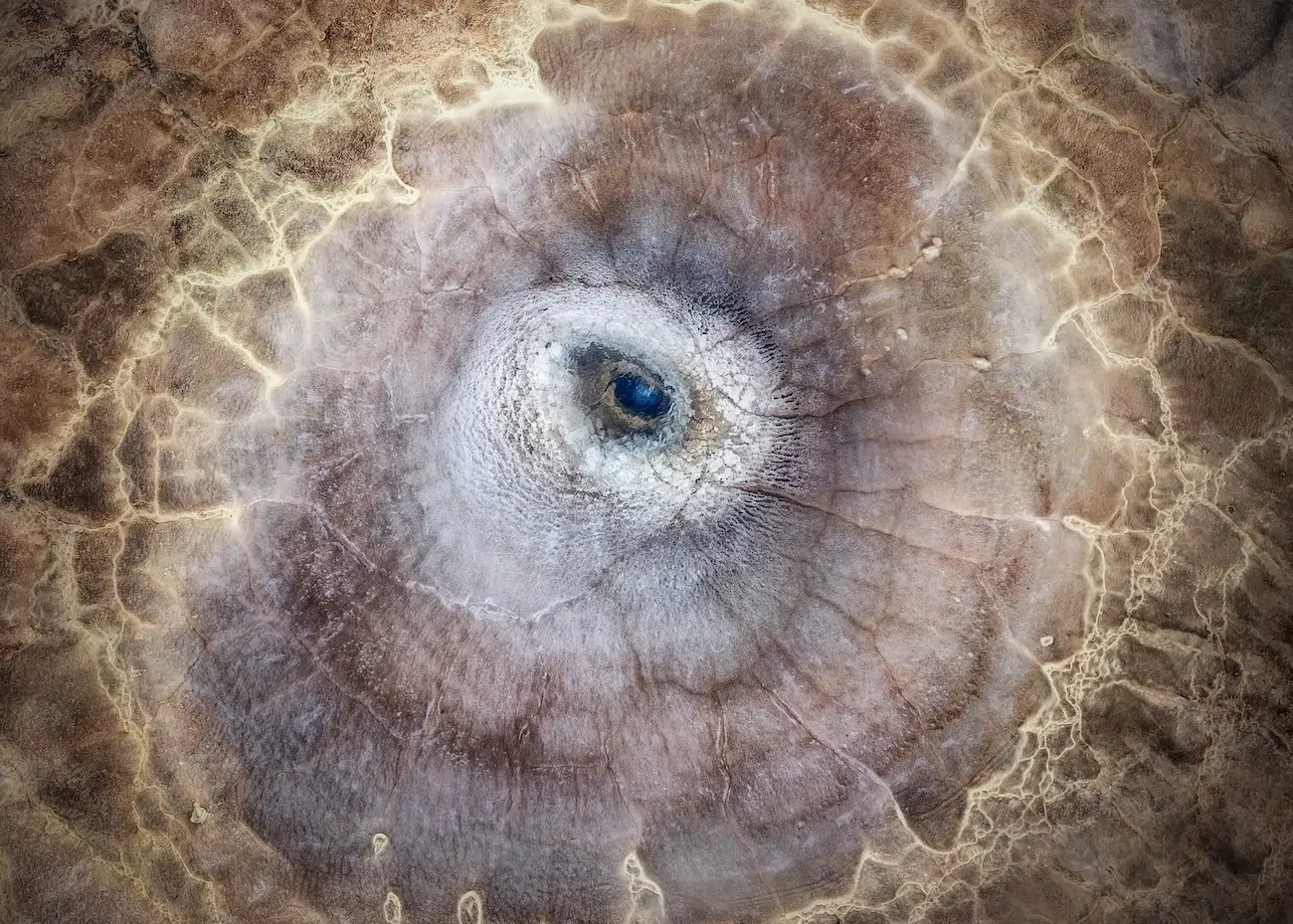
“The Earth’s eye,” by Pawel Zygmunt. Winner, Natural Landscape.
“An aerial view of the Hveravellir geothermal area in Iceland shows a natural formation that looks like an animal’s eye. A dark, deep-blue pool sits at the center, surrounded by rough, textured ground in rich brown shades. The mineral deposits create a layered effect, adding to the eye-like appearance. The surrounding rocky landscape is barren, making the formation stand out even more. The whole scene has a raw, natural beauty that feels almost alive.”
The photos are a stark reminder of what we have to lose if we don’t act to save the planet, which is at the heart of the competition.
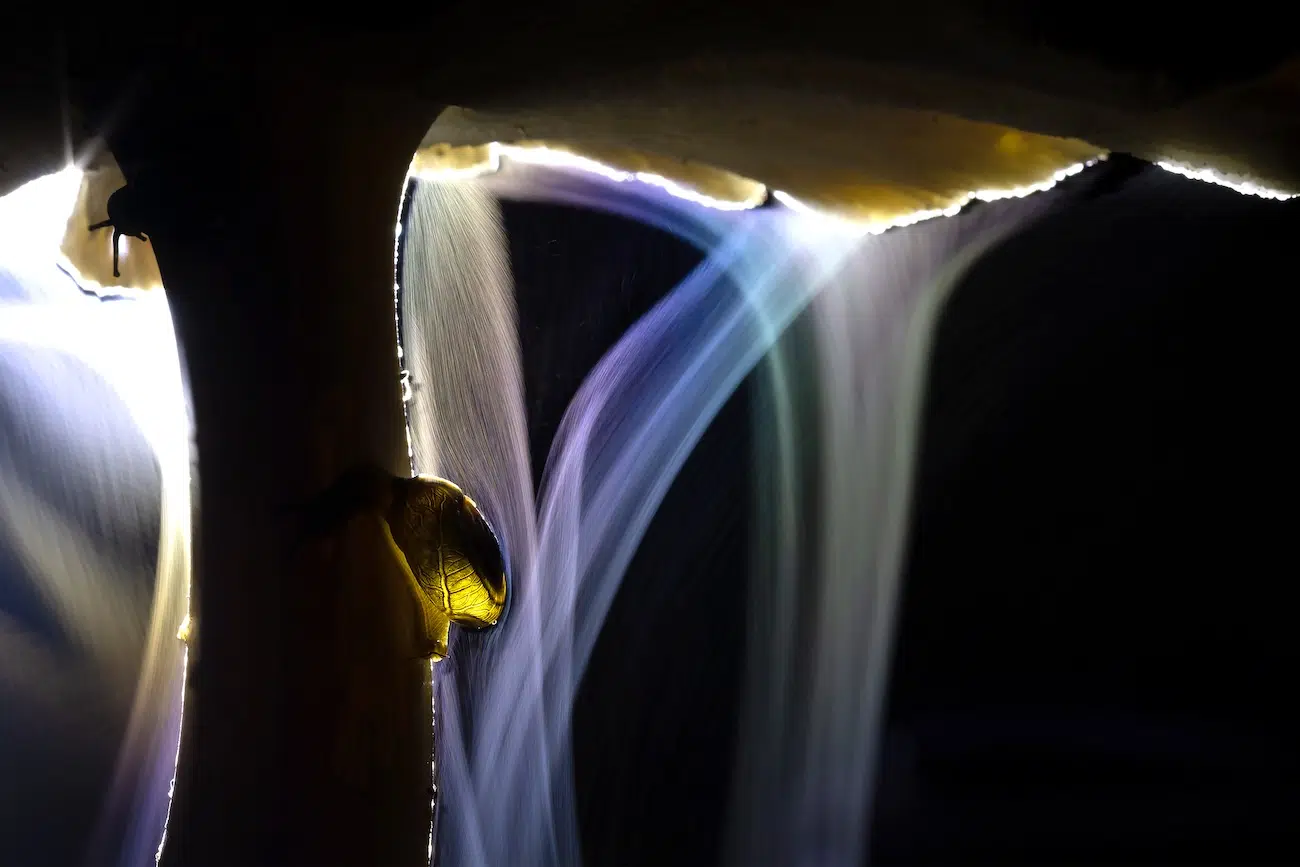
“Sporing Party,” by Indranil Basu Mallick. Winner, Macrophotography.
“A captivating macro scene captured under the cover of night. Two glass snails are diligently feeding on the decaying cap of a Termitomyces fungi. The drama is amplified by backlighting with an LED, which brilliantly illuminates the fine details and creates a dramatic silhouette. A long exposure was essential here, enabling the creation of an amazing pattern of discharged spores scattering in the air, adding a surreal, ethereal quality to this natural decay cycle. The diffraction of light through the spores truly transforms the scene.”
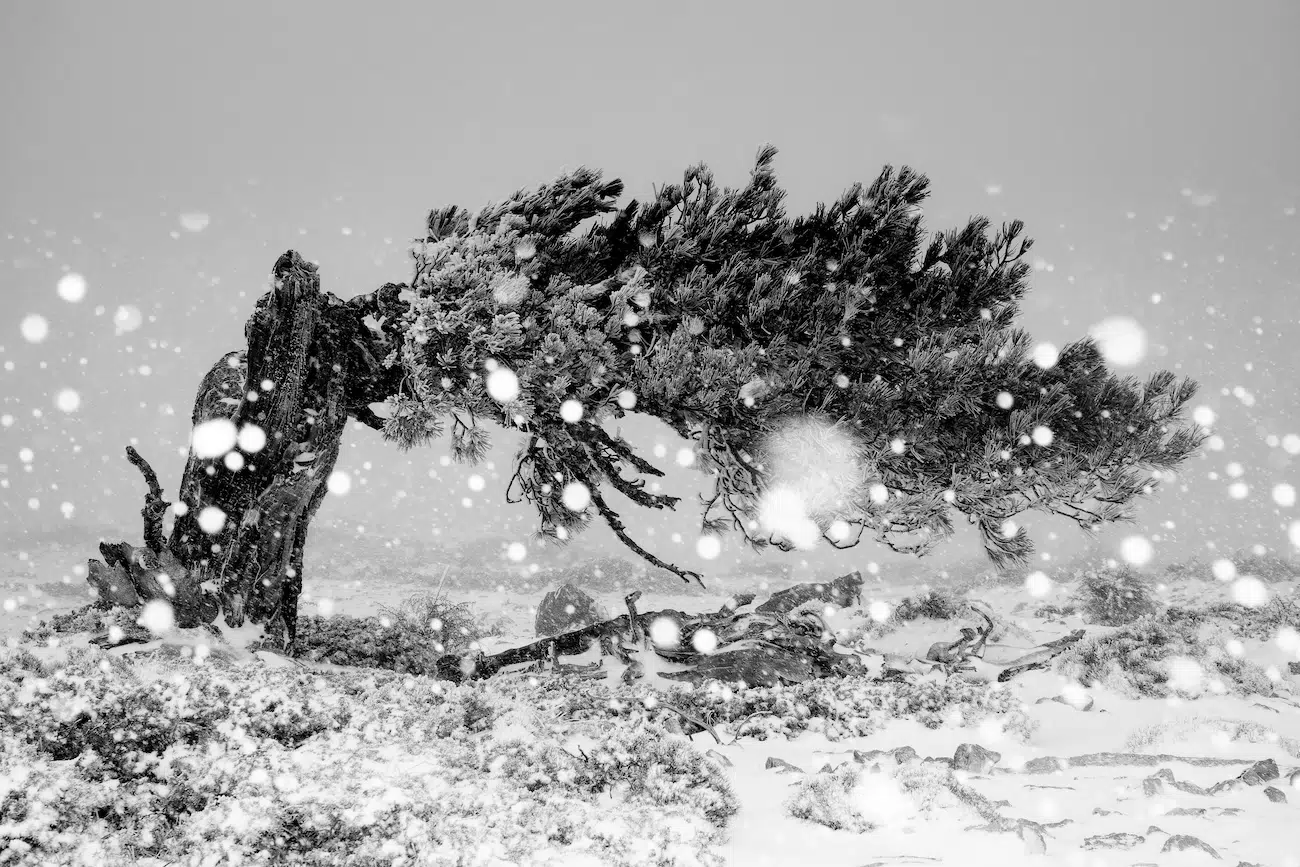
“My Jeffrey Pine, Sierra de Baza,” by Miguel José Ávalos González. Winner, Plant Life.
“Every year I climb into the extreme winter of my nearby mountain. There, far from my comfort zone and immersed in biting cold, right at the upper edge of the treeline, I find myself alone among ancient conifers, battered by the wind. Their ability to adapt to any weather condition is astonishing.”