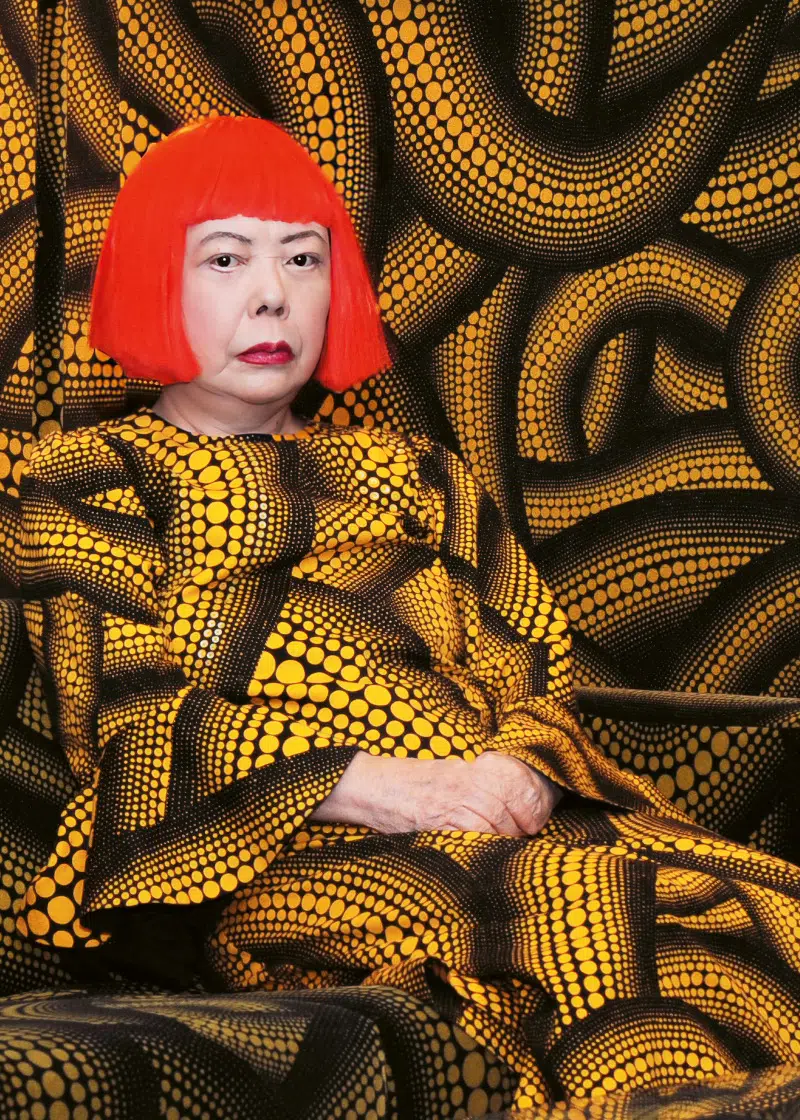
KUSAMA with YELLOW TREE / Living Room at the Aichi Triennale, 2010. © YAYOI KUSAMA, Courtesy of Ota Fine Arts, Victoria Miro, David Zwirner
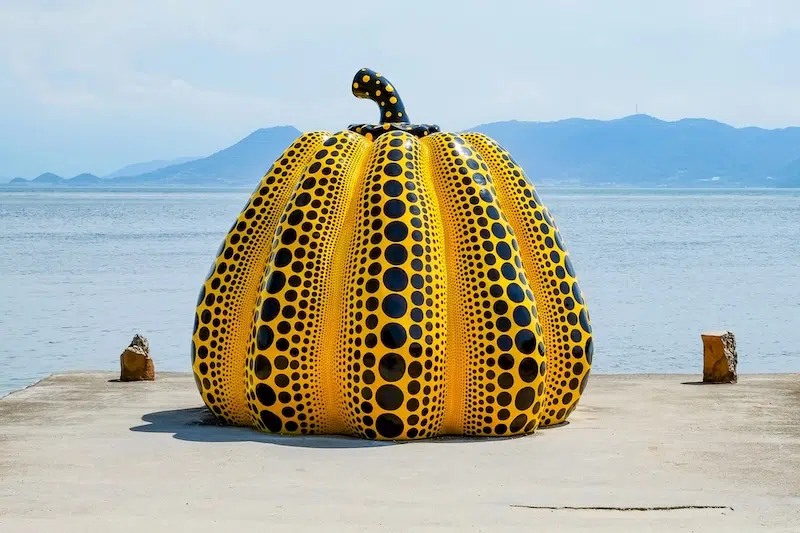
A gourd covered in dots of varying sizes. Mirrored rooms, littered with lights, that seem to go on forever. Monumental flowers with rainbow-colored circles across their blooms and stems. This is the oeuvre of art icon Yayoi Kusama, who sadly died on August 14, 2026, at 97 years old. Her death is a deep loss for the art world.
Art icon Yayoi Kusama died on August 14, 2026, at 97 years old. Her death is a deep loss for the art world.
Kusama was born in 1929 in Matsumoto, Japan, northwest of Tokyo. Her parents helped run the family’s wholesale seed business, but Kusama had other plans. In 1948, against her parents’ wishes, she enrolled in art school in Kyoto. There, she studied Nihonga painting, which bridged Japanese and Western traditions. But that restrictive style didn’t work for her, and she soon began following Surrealist-inspired art at home and abroad. This led her to create her own semi-abstract paintings and eventually to a move to the U.S.
In 1957, she arrived in Seattle, living there for about six months before settling in New York City. Her New York years were spent alongside hippie culture, and public performance was a large component of her work. She entered the male-dominated avant-garde scene alongside the likes of Andy Warhol and Claes Oldenburg and was aware that her existence as an Asian woman projected “exotic outdoor presence,” which she used to her advantage. Her radical performance pieces, which she called Body Festivals and Anatomic Explosions, involved male and female volunteers who would strip nude and pose as she painted their skin with dots. “With those polka dots the people will self-obliterate and return to the nature of the universe,” she said.
A prolific creator until the end of her life, Kusama was known for gourds covered in polka dots of varying sizes. Similar dots covered entire rooms.
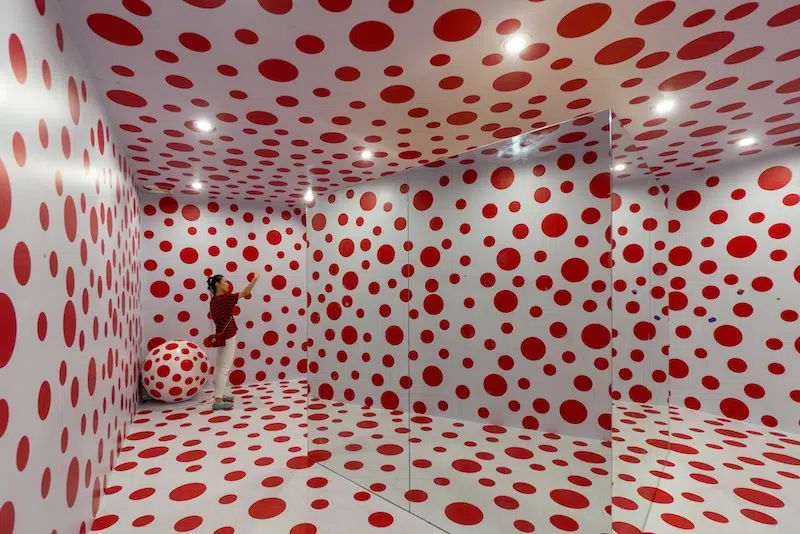
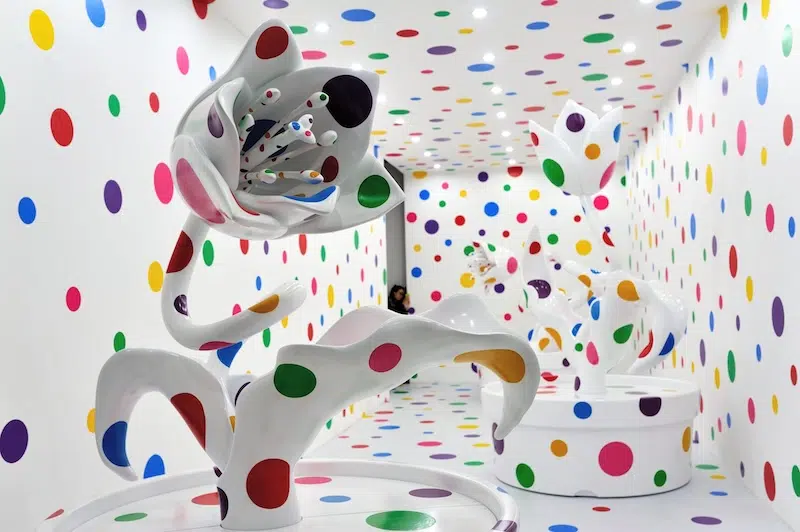
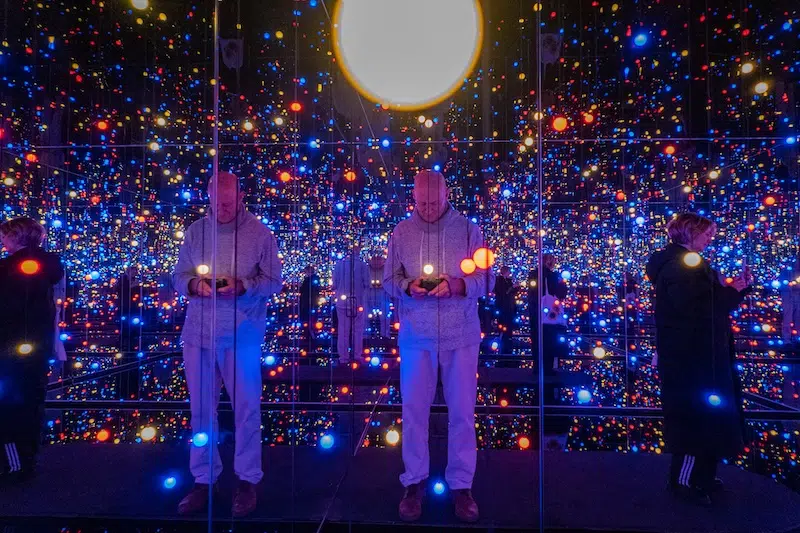
Self-obliteration was a thread that tied her work together throughout decades and movements. It’s the idea of dissolving the self into pattern and infinity, something that viewers experienced firsthand when visiting her Infinity Mirror Rooms.
Kusama returned to Japan in 1973, settling in Tokyo and making ends meet by selling modern and contemporary Western art, creating collages inspired by the American artist Joseph Cornell (whom she knew), and writing a lot of fiction. Throughout it all, she was enduring panic attacks and hallucinations that had plagued her since childhood. In 1977, she voluntarily checked herself into the Seiwa mental hospital in Tokyo, which she would make her permanent home and build a studio nearby.
The support of the hospital environment allowed Kusama to continue making artwork. By the late 1990s and early 2000s, she was again creating immersive installations that we know and love today: polka-dot covered rooms and Infinity Mirror experiences.
Her Infinity Mirror Rooms offer a never-ending sense of wonder and highlight self-obliteration, a theme found throughout her work. It’s the idea of dissolving the self into pattern and infinity.
As her work gained international popularity, she participated in esteemed museum shows, with many still happening—including a 70-year retrospective that is currently on view throughout Europe in 2026. Kusama also collaborated with brands, such as a line of polka-dot bags with Louis Vuitton. She saw record-breaking auction prices for her work and was the top-selling contemporary artist of 2023.
Her immersive art has also influenced museums. The large-scale installations are immensely popular, with people waiting in line just for a chance to be in an Infinity Room for a literal minute—just long enough to take a selfie. It has encouraged institutions to consider incorporating more photography-friendly installations tailored for our social media age.
Kusama’s prolific output shows how art can be therapeutic and a means of survival. “She continued to paint until her final days, never setting aside her brush, and continued exploration of forever love and eternal soul,” the Yayoi Kusama Studio said in a statement on her death. “We will carry forward Kusama’s wishes and, through art, continue to bring hope and strength for the future to people around the world.”
“She continued to paint until her final days, never setting aside her brush, and continued exploration of forever love and eternal soul,” the Yayoi Kusama Studio said in a statement on her death.
“We will carry forward Kusama’s wishes and, through art, continue to bring hope and strength for the future to people around the world.”
Sources: Yayoi Kusama, Pop Artist Who Expanded and Endured, Dies at 97; Yayoi Kusama, who splashed polka dots across the art world, dies at 97 in Tokyo
Related Articles:
15 Gifts for Yayoi Kusama Fans That They’ll Go Totally Dotty For
Yayoi Kusama’s Latest Installation “Obliterates” an Entire Apartment in Red Flowers
Yayoi Kusama Announces She’s Opening Her Own Museum in Tokyo
7 Most Spectacular ‘Mirror Room’ Installations by Yayoi Kusama