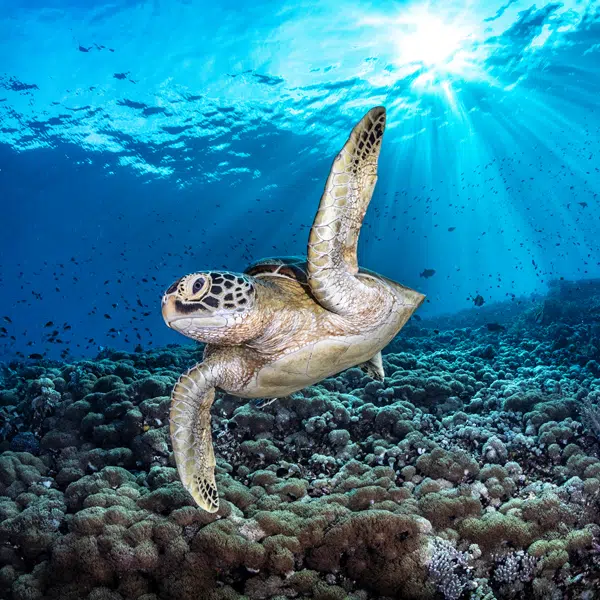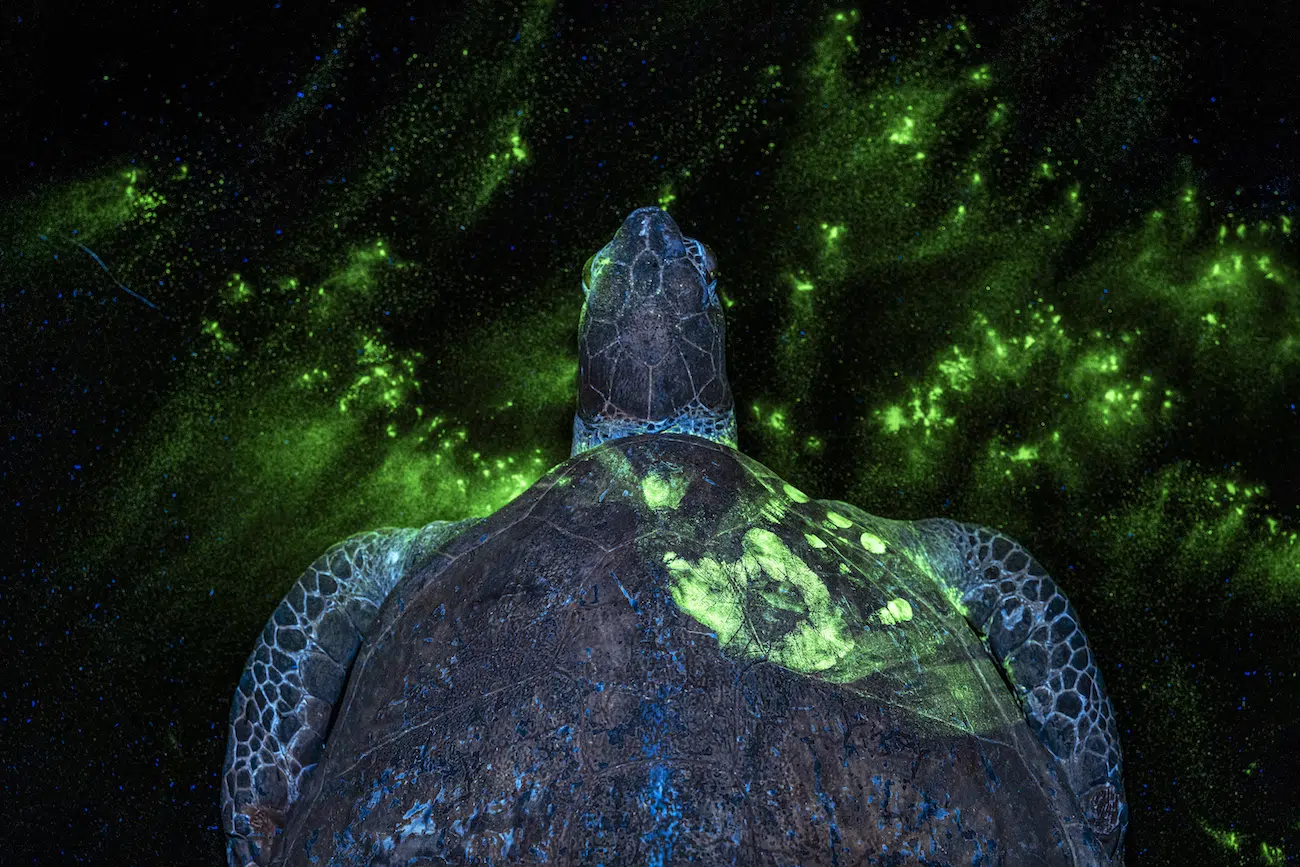
“Handprint on Sea Turtle” by Britta Jaschinski. Category Winner, Changemakers, 2026 Environmental Photography Award.
Combating illegal wildlife trade with forensic science, United Kingdom, 2025. Every crime leaves a trace. On the hunt for smugglers with wildlife forensics: the work that aims to disrupt or even dismantle illegally run wildlife trade chains. At first glance this may appear to be an underwater photograph of a green sea turtle (Chelonia mydas), but can you spot the human handprint? This scene demonstrates a method for securing forensic evidence that can help to catch poachers and animal traffickers. Special fluorescent powder dyes, photographed under ultraviolet light, reveal traces of hand and fingerprints, blood and other bodily fluids, and gunpowder residues, among others. Wildlife forensic experts Dr. Alexandra Thomas and Dr. Louise Gibson from the ZSL Wildlife Forensic Lab, London, are developing such methods to assist law enforcement. Six of the world’s seven sea turtle species are classified as threatened, endangered, or critically endangered due to human persecution, habitat destruction, or marine pollution.
The winners of the 2026 Environmental Photography Award reveal a planet caught between fragility and resilience. Organized annually by the Prince Albert II of Monaco Foundation, the competition celebrates photographers using their cameras to spotlight the urgent environmental issues shaping the world today.
Selected from roughly 10,000 submissions, this year’s winning images span five categories—Changemakers, Forests, Humanity vs Nature, Ocean, and Polar Regions. Together, they document everything from wildlife trafficking and climate disasters to moments of breathtaking beauty in the natural world.
Taking the competition’s top honor is wildlife photojournalist Britta Jaschinski for Handprint on Sea Turtle, which also won the Changemakers category. At first glance, the image feels almost peaceful. A green sea turtle glides through dark water illuminated by an eerie neon glow. But under ultraviolet light, a faint human handprint becomes visible across the turtle’s shell.
The photograph was created using forensic techniques developed to help combat wildlife trafficking, transforming scientific evidence into something hauntingly poetic. Rather than showing direct violence, Jaschinski’s image quietly reveals the traces humans leave behind on vulnerable species.
The Forests category winner, Spirits of the Falls by Arnaud Farré, offers a very different mood. Wrapped in mist and cascading water, the rainforest scene feels almost mythical. Dense greenery disappears into soft fog while waterfalls cut through the landscape, emphasizing both the beauty and vulnerability of forest ecosystems threatened by climate change and deforestation.
One of the competition’s most emotional images won the Public Award. Koalas are Dying for You to Slow Down by Doug Gimesy shows a fallen koala stranded on a road after a tragic hit and run situation. This heartbreaking image is a haunting reminder of human impact in natural environments. Speeding and reckless driving are huge threats to the iconic Australian marsupials.
Fernando Faciole’s Born for the Ocean, Fated to the Flames won the Humanity vs Nature category with its eye-opening image of shark fins being scorched. The hunting and trading of shark fins is both illegal and devastating to the balance of the ocean ecosystem. As one of the main threats to marine biodiversity, shark fins are confiscated by authorities. In this image, they were taken in Brazil and since they are biological materials, they have to be burned.
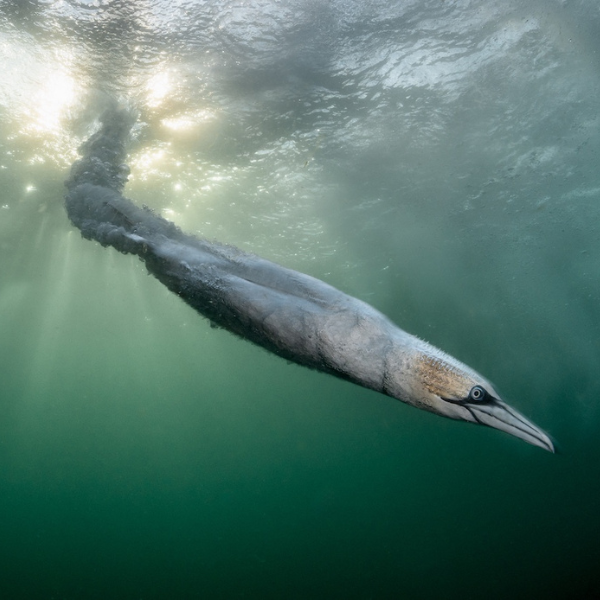
Henley Spiers earned the Ocean category prize for Shearwater’s Dilemma, an image bursting with movement beneath the surface of the Eastern Pacific Ocean. At the center of a swirling school of lanternfish, a wedge-tailed shearwater appears nearly swallowed by the chaos of the feeding event unfolding around it. Silver fish ripple through the water in dense formations while predators circle from every direction, creating a scene that feels both frantic and strangely elegant.
Meanwhile, Vadim Makhorov’s The Gathering, winner of the Polar Regions category, captures wildlife surviving in one of Earth’s harshest environments. Animals cluster together across a vast snow-covered landscape that stretches endlessly into the distance. The immense scale of the frozen terrain emphasizes both the isolation of polar ecosystems and their growing vulnerability as global temperatures continue to rise.
In Up is Down, which received both an Ocean category runner-up distinction and the Student’s Choice Award, Arnaud Farré photographs a humpback whale and calf from above as they dive beneath the ocean surface. Only their tails remain visible inside a circular ripple known as a “fluke print,” creating an image that feels almost abstract.
Another standout photograph, Shane Gross’ Better than Gold, transforms a dense underwater feeding event into something painterly. Thousands of fish shimmer beneath the surface, blurring the line between documentary photography and abstraction.
Now in its sixth year, the Environmental Photography Award continues to demonstrate how photography can turn environmental crises into deeply human stories. Rather than relying solely on spectacle, many of this year’s winning images draw power from quieter moments—small gestures, fleeting encounters, and subtle traces of humanity’s impact on the natural world.
The shortlisted works will be exhibited in Monaco before traveling internationally as part of the award’s touring exhibition. A companion book featuring all selected photographs will also be published later this year.
Scroll down to view the complete set of winning images and some worthy runners up from the 2026 Environmental Photography Award.
This year’s Environmental Photography Award is organized into five categories: Changemakers, Forests, Humanity vs Nature, Ocean, and Polar Regions.
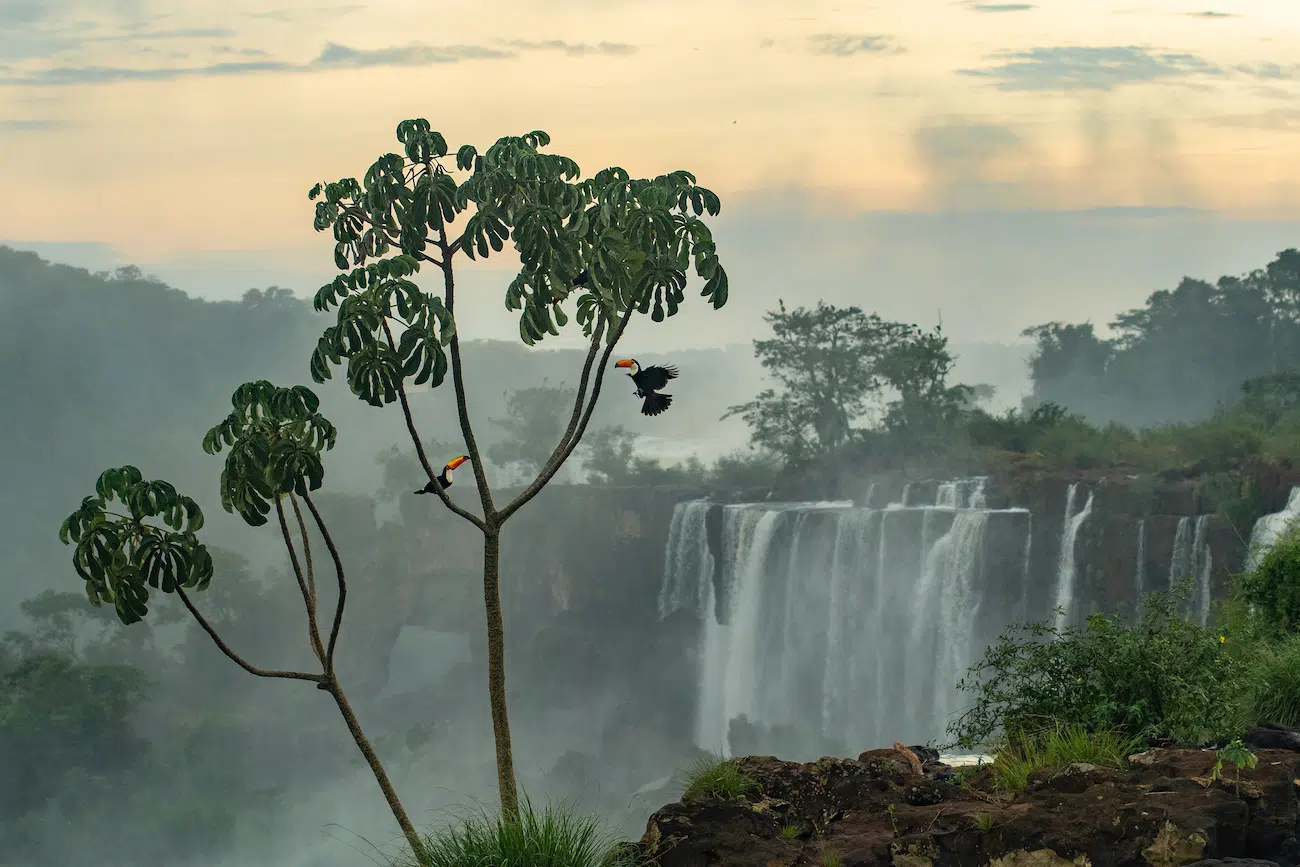
“Spirits of the Falls” by Arnaud Farré. Category Winner, Forests, 2026 Environmental Photography Award.
Iguazu Falls, Argentina and Brazil, 2024. The Iguazú Falls (“great water” in the indigenous language) have the distinction of being split between two countries, Argentina and Brazil. They consist of a system of 275 waterfalls spanning nearly three kilometres and are protected by a national park in both countries. On the Argentine side, Iguazú National Park covers 67,000 hectares. It was created in 1934 to protect one of the country’s most beautiful and most visited natural sites, and was declared a UNESCO World Heritage Site in 1984. The park is home to more than 450 bird species, including the toco toucan (Ramphastos toco), an iconic bird native to the subtropical forest. It is the largest species in the toucan family and can be identified byits long bright orange bill. These birds feed on fruit and inhabit the upper canopy.
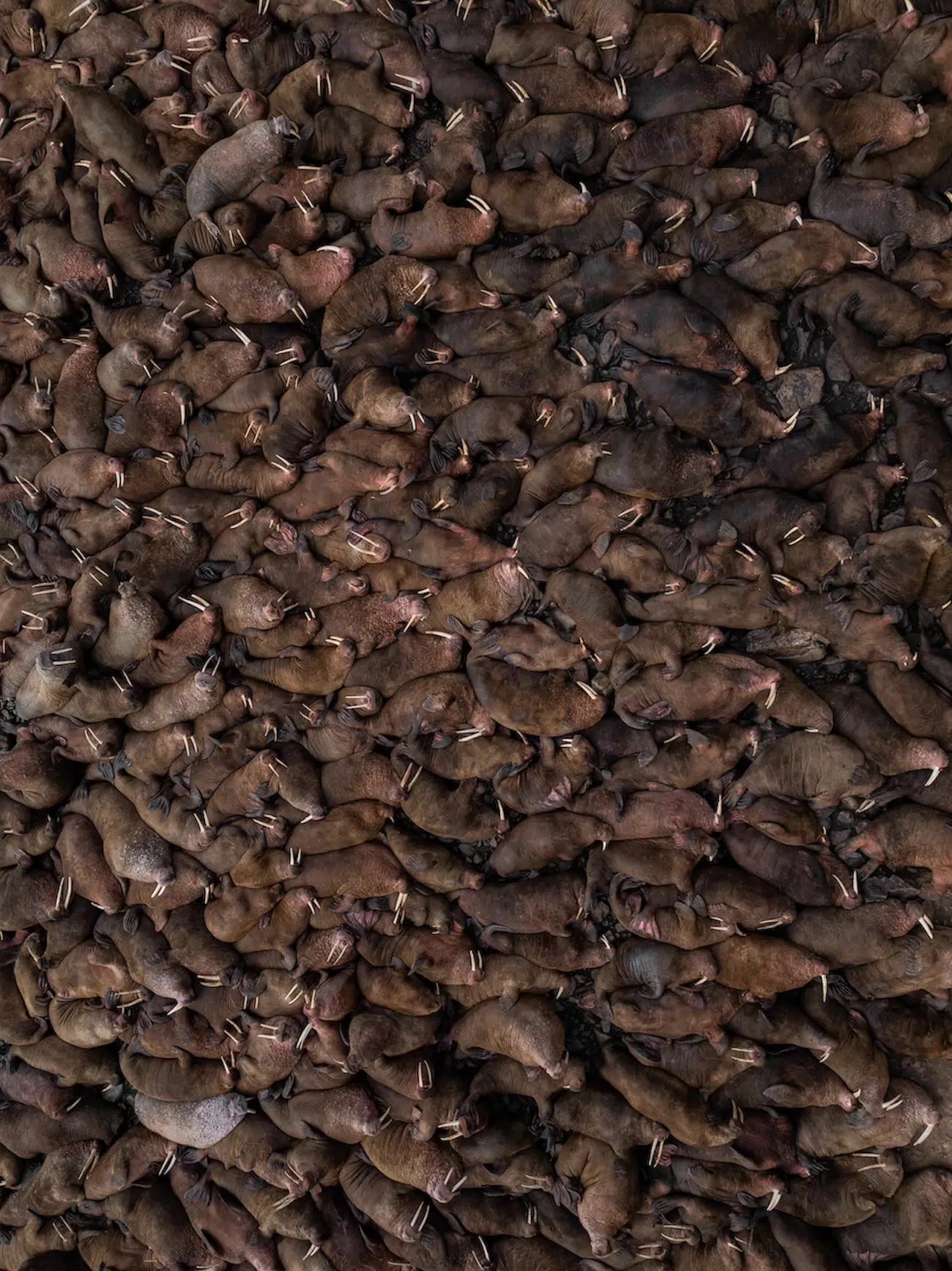
“The Gathering” by Vadim Makhorov. Category Winner, Polar Regions, 2026 Environmental Photography Award.
Pacific walruses, Russia, 2025. The Pacific walrus (Odobenus rosmarus divergens) is the largest species of walrus – males can reach up to four metres in length and weigh as much as 1.5 tons. This photograph shows a walrus haulout on Ratmanov Island, on the maritime border between Russia and the United States. The entire southern coastline of the island is occupied by walruses, most of them males. Females only come ashore during the breeding season. They may appear immobile on land, but are fast and agile in the water. Understanding how they use the coastline helps keep encounters safe for both wildlife and people.
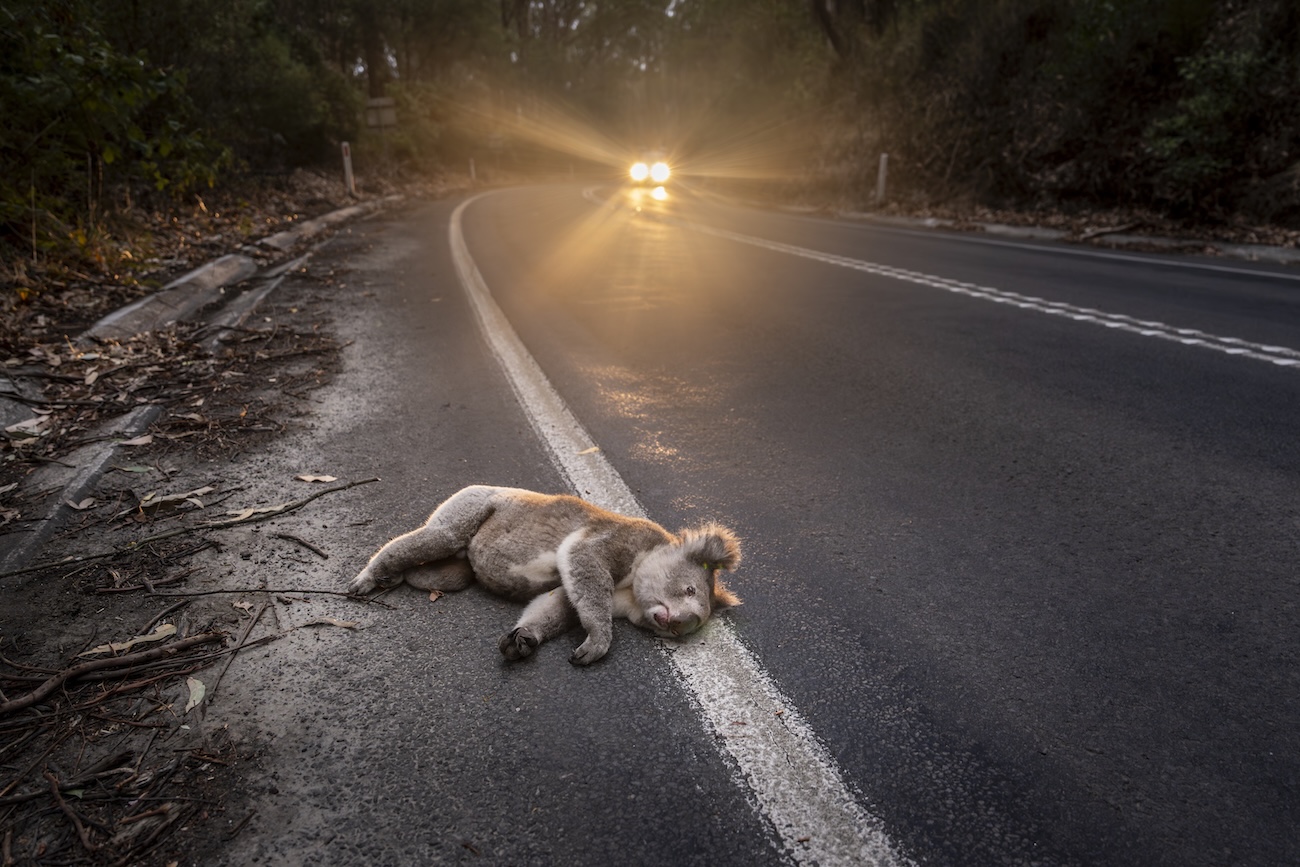
“Koalas are Dying for You to Slow Down” by Doug Gimesy. Public Award Winner, 2026 Environmental Photography Award.
Koala hit by a car, Australia, 2025. With koalas (Phascolarctos cinereus) often crossing roads to access food, mates, or shelter, road trauma is sadly a major threat to this iconic Australian species, with high traffic volumes, inappropriate high speed limits—especially between dusk and dawn—and inconsiderate driving all playing a part. But vehicle strikes are not just a conservation issue, they are a huge wildlife welfare issue, resulting in crippling injuries such as fractured jaws, broken limbs, or spinal damage. Whilst a few may be found, rescued and treated, many crawl off into the bush to die slow horrible deaths, or live crippled and in pain. Drivers slowing down could help prevent so much death, pain and suffering.
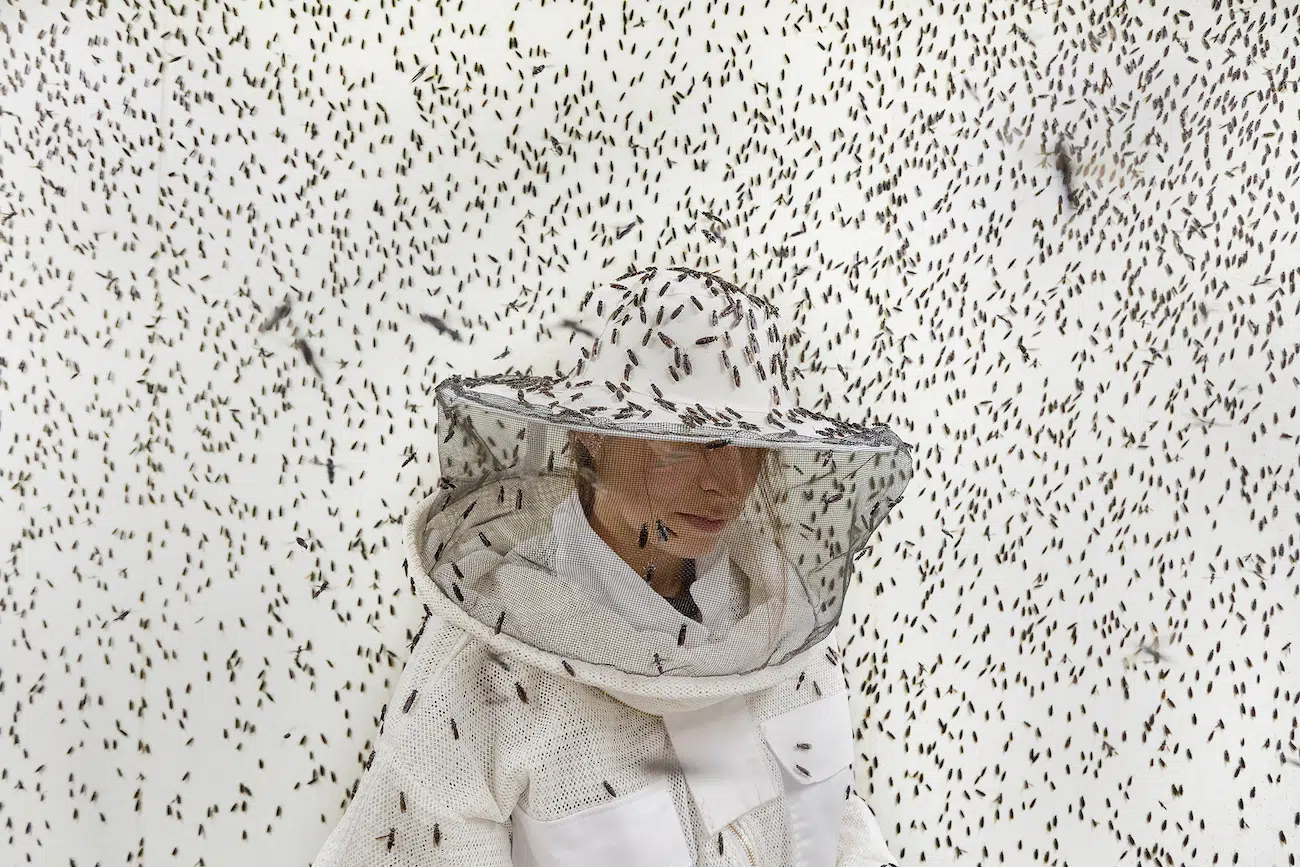
“Insects, Architects of a Sustainable Future” by Maud Delaflotte. Runner-Up, Changemakers, 2026 Environmental Photography Award.
Collection of black soldier fly eggs inside an aviary, France, 2024.
Winning photographs document everything from mist-covered rainforests to fragile marine ecosystems and human impact on nature.
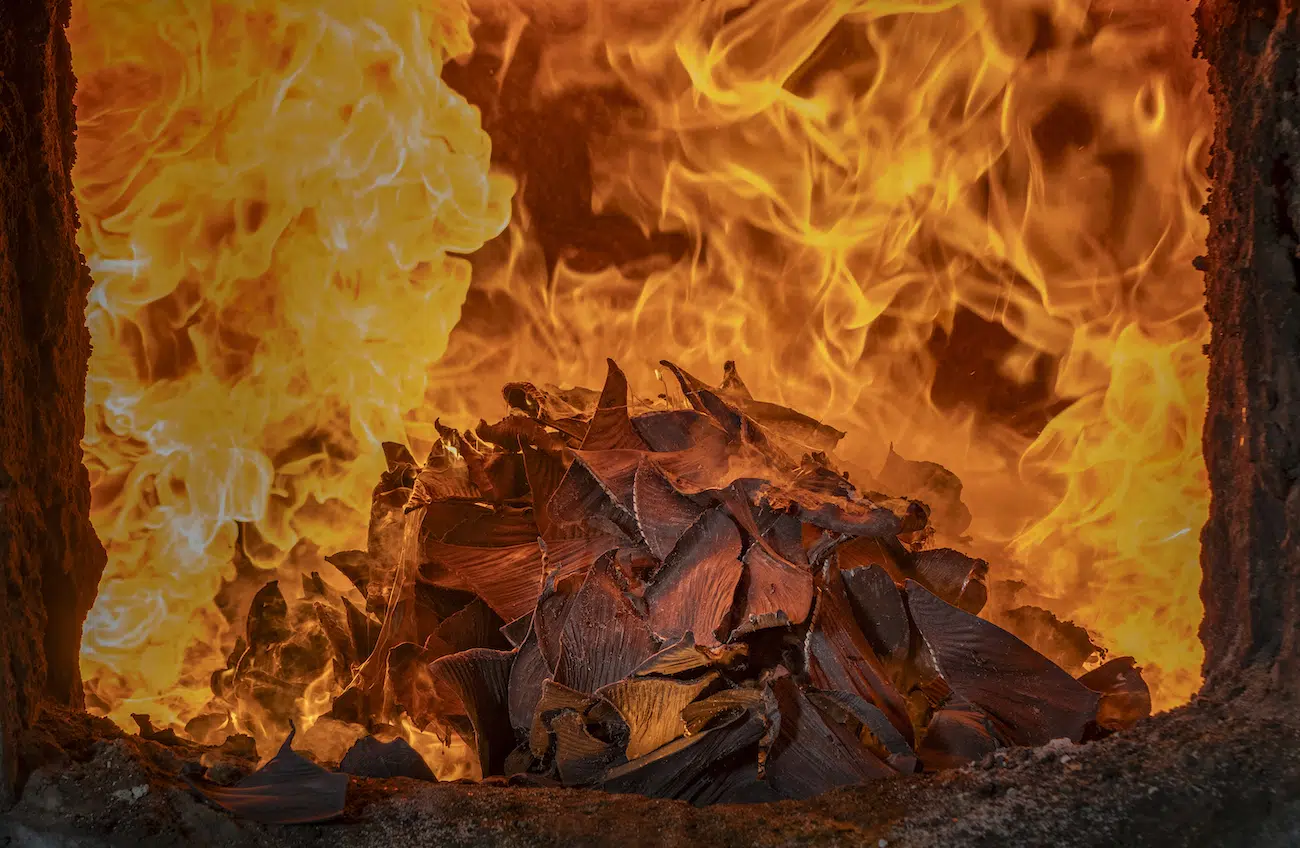
“Born for the Ocean, Fated to the Flames” by Fernando Faciole. Category Winner, Humanity vs Nature, 2026 Environmental Photography Award.
Incineration of shark fins after seizure, Brazil, 2025. The hunting and trade of shark fins are among the main threats to marine biodiversity and the balance of ocean ecosystems. In Brazil, enforcement authorities have revealed a recurring pattern of fraud, with shipments repeatedly containing protected and critically endangered species. In 2023, the Brazilian Institute of Environment and Renewable Natural Resources (IBAMA) carried out the largest shark-fin seizure ever recorded in the country, 28.7 tonnes, corresponding to the death of at least ten thousand sharks, including threatened species. As biological materials, these fins are required to be incinerated after official processing. This photograph records the incineration carried out in São Paulo in 2025, under IBAMA supervision. The act symbolises both the enforcement of environmental law and the urgent need for public policies capable of ending a trade that turns apex predators, essential to the health of the oceans, into waste consigned to flames. In a historic milestone, IBAMA announced a nationwide ban on the export of shark fins on Thursday, 26 March 2026. Brazil also banned the import of any shark classified as a threatened species on its official list.
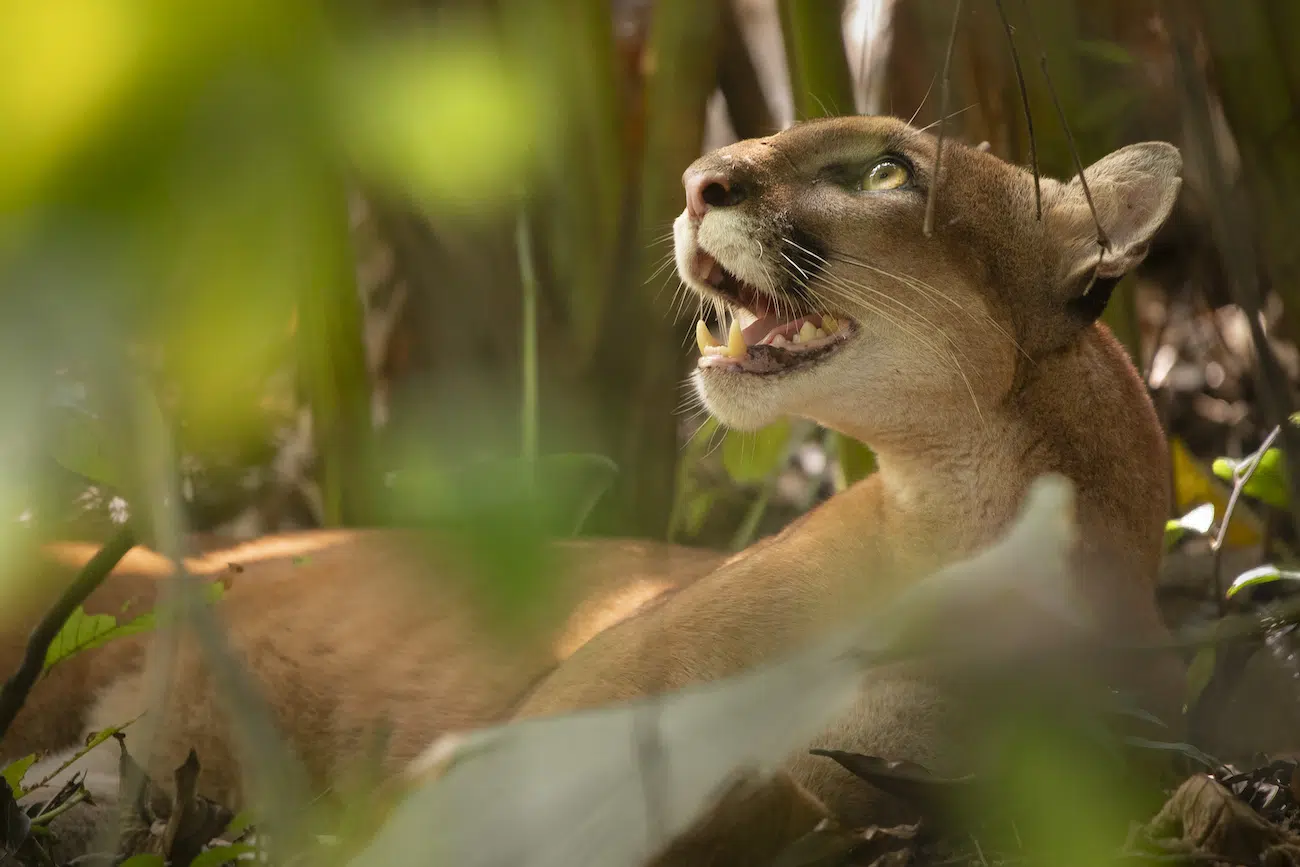
“Predator’s Gaze” by Luca Eberle. Runner-Up, Forests, 2026 Environmental Photography Award.
Female puma peers through the forest canopy, Costa Rica, 2023.
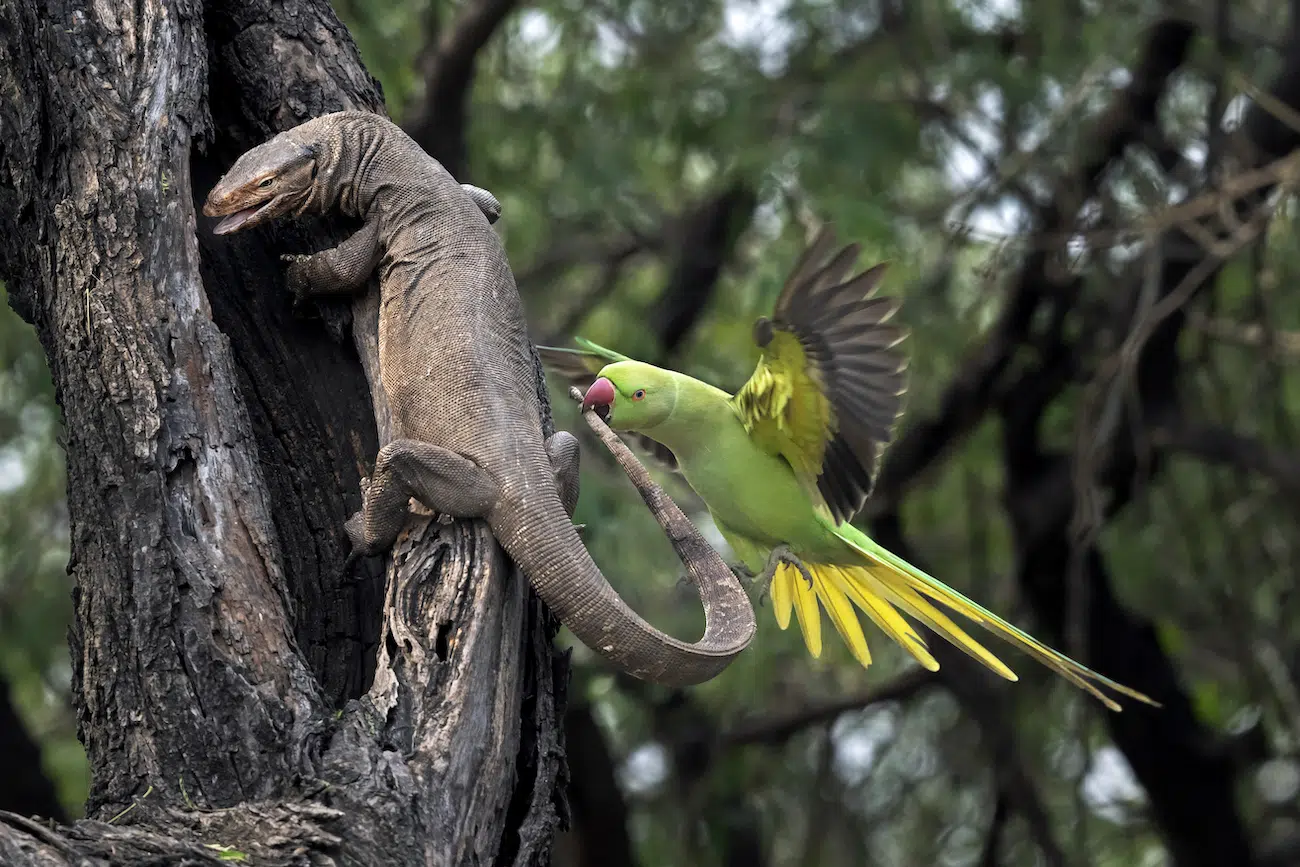
“Parakeet Bitting Monitor Lizard” by Hira Punjabi. Runner-Up, Forests, 2026 Environmental Photography Award.
Parakeet versus monitor lizard, India, 2024.
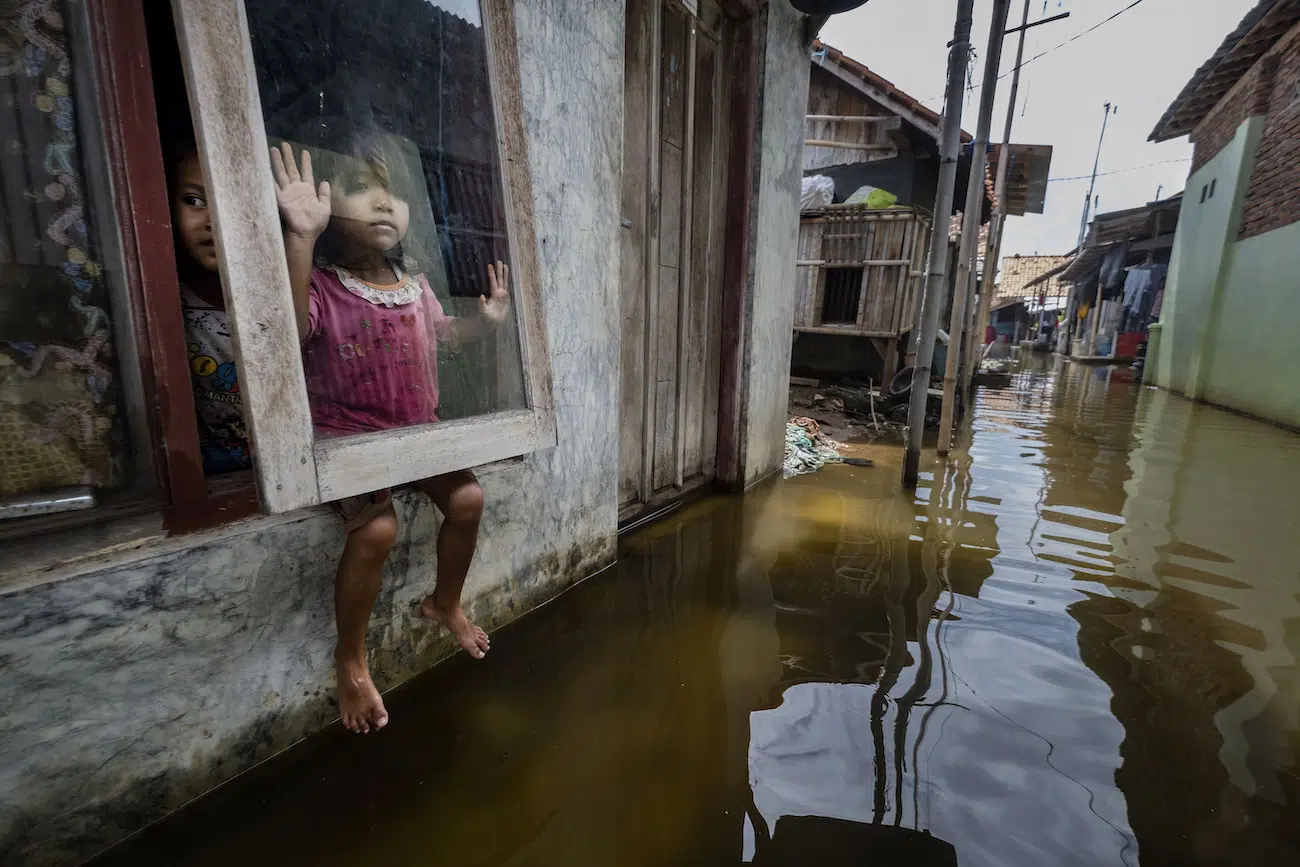
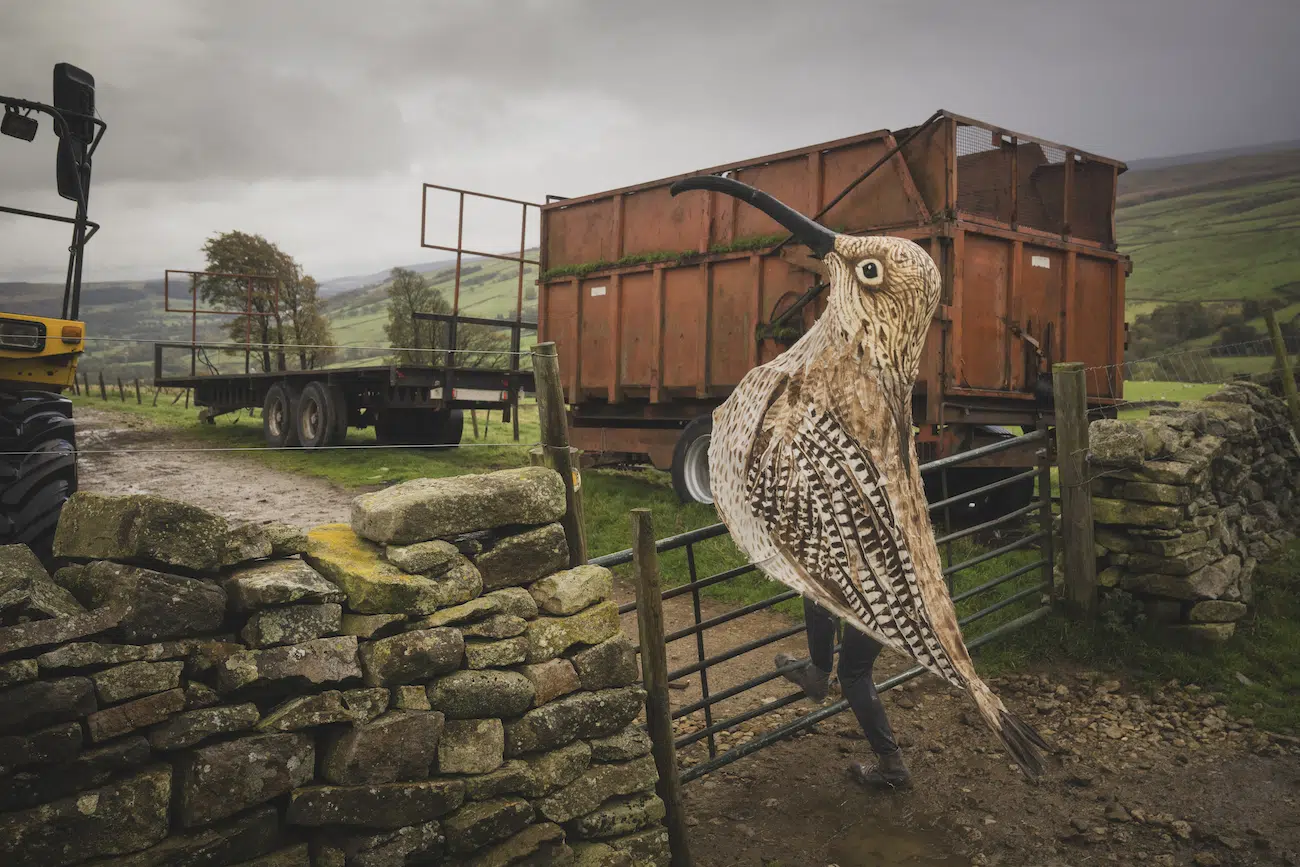
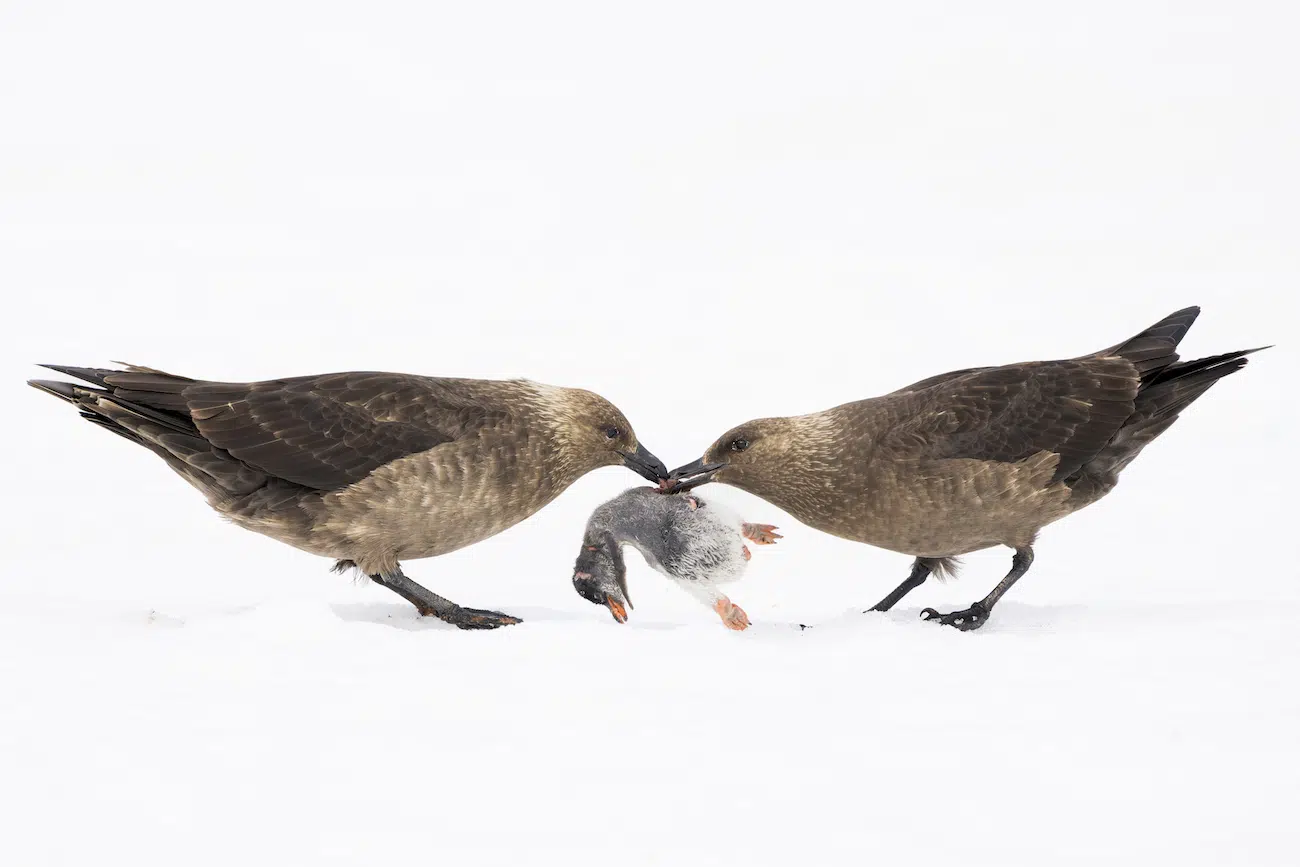
“Penguin Feast” by Lucas Bustamante. Runner-Up, Polar Regions, 2026 Environmental Photography Award.
Brown skuas, Antarctica, 2023.
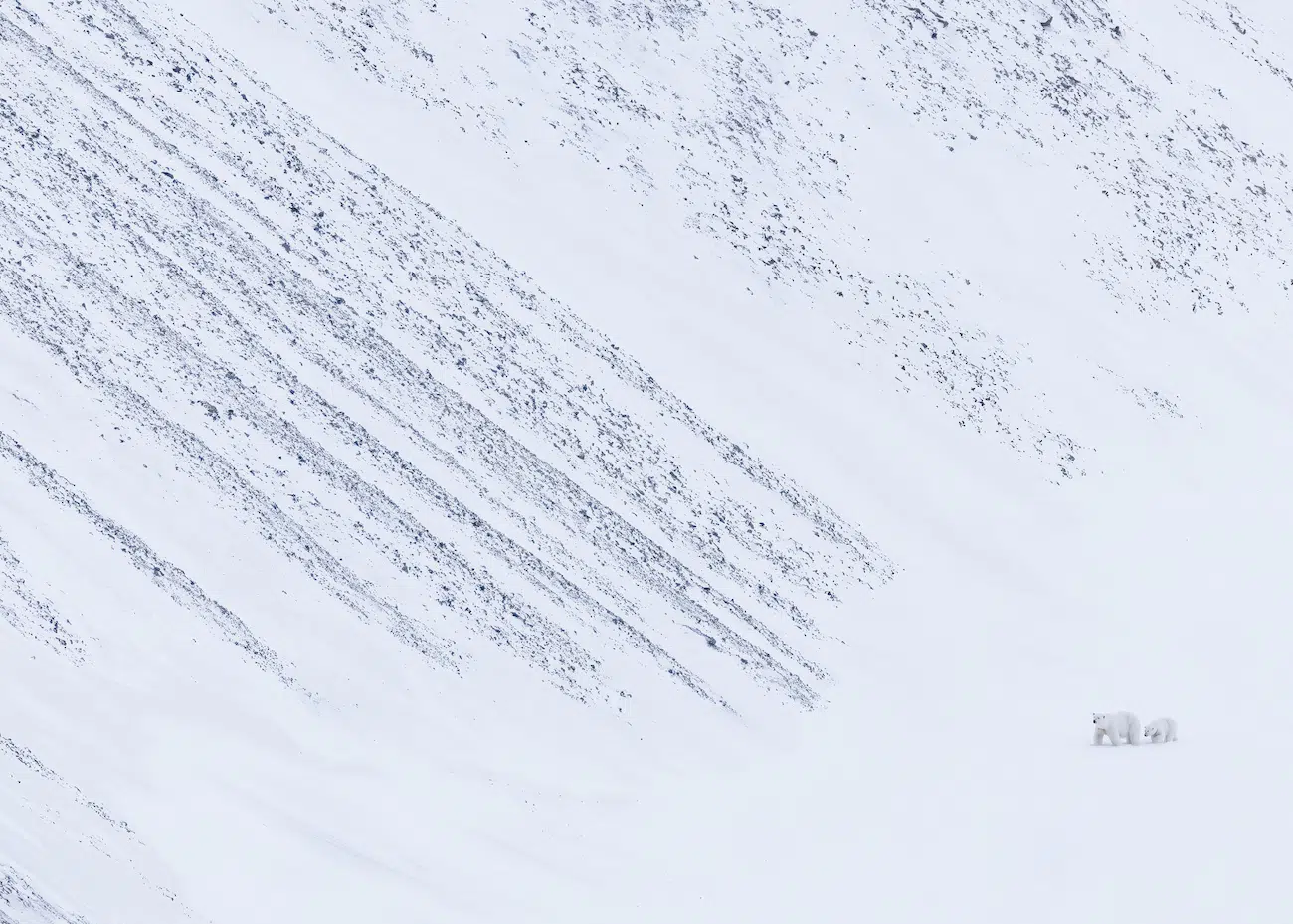
“The Explorers” by Panos Laskarakis. Runner-Up, Polar Regions, 2026 Environmental Photography Award.
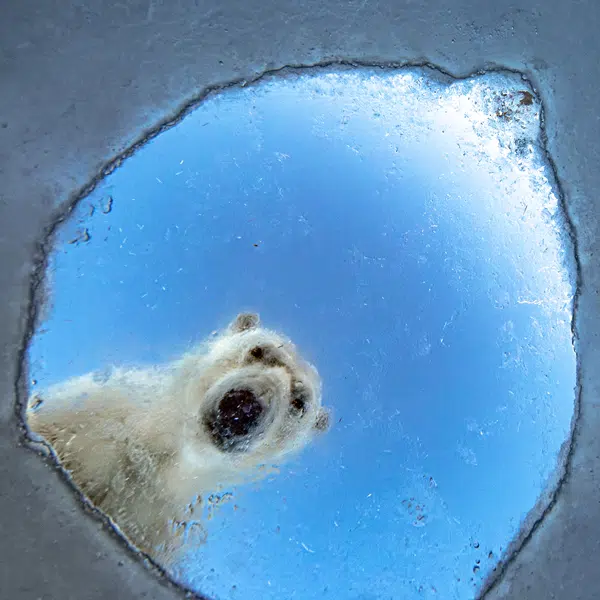
Polar bear mother and cub, Norway, 2025.
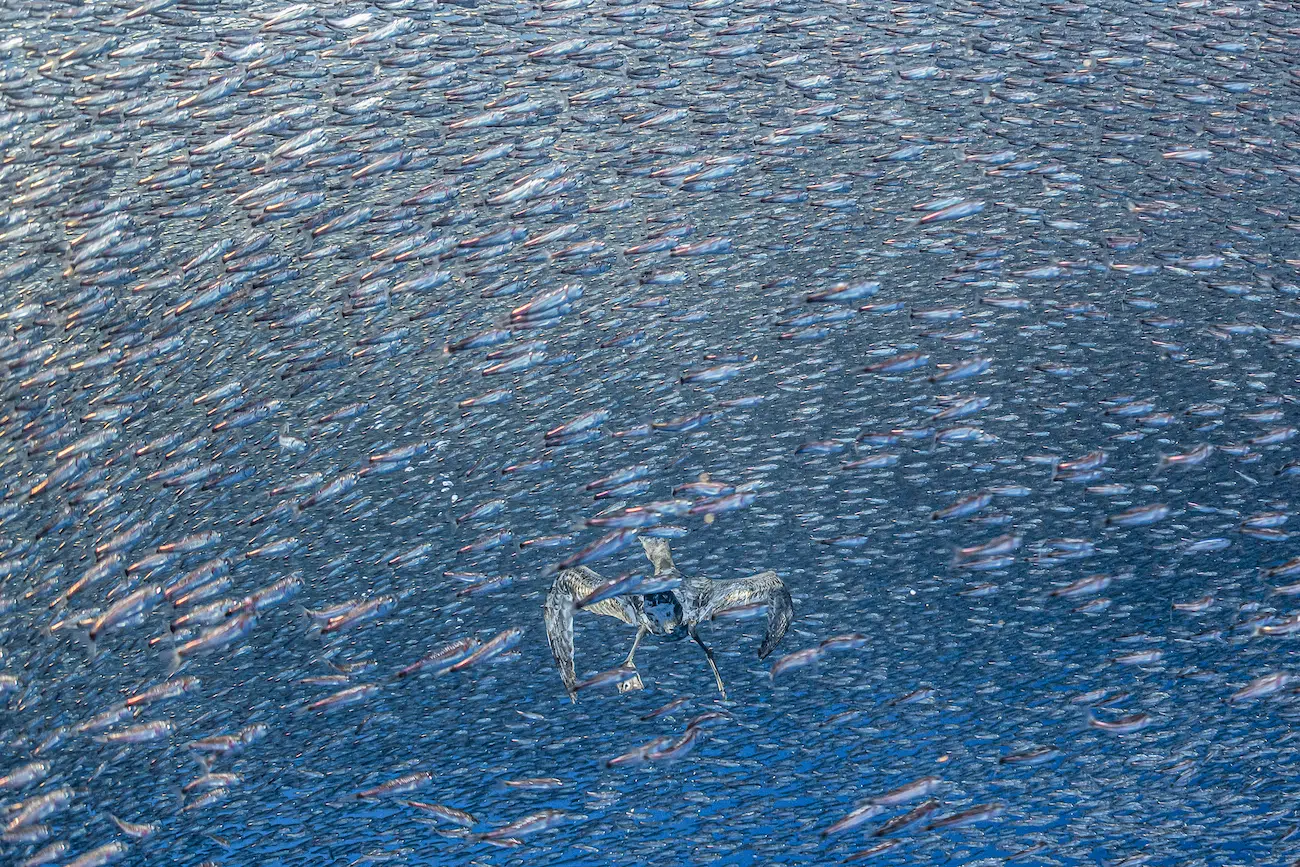
“Shearwater’s Dilemma” by Henley Spiers. Category Winner, Ocean, 2026 Environmental Photography Award.
Wedge-tailed shearwater in a school of lanternfish, Costa Rica, 2023. Off the Eastern Pacific coast, a wedge-tailed shearwater (Ardenna pacifica) plunges into a football-pitch-sized school of lanternfish, struggling to single out a target. The fish move as one, their schooling defence working perfectly. The bird surfaced without catching anything and circled back for another dive. Shearwaters are exquisitely adapted for life at sea and depend on healthy fish stocks. This encounter captures a rarely witnessed moment of open-ocean abundance, and one of the most extraordinary days of my career as an underwater photographer. Lanternfish are thought to be the most numerous vertebrates on Earth, accounting for up to 65% of deep-sea fish biomass. They form a critical link in the ocean food web, sustaining predators from seabirds and dolphins to tuna and devil rays. The Biodiversity Beyond National Jurisdiction Agreement (BBNJ), which came into force at the beginning of 2026, is the first international legal framework to protect scenes like this across the roughly half of our planet that lies beyond national waters.
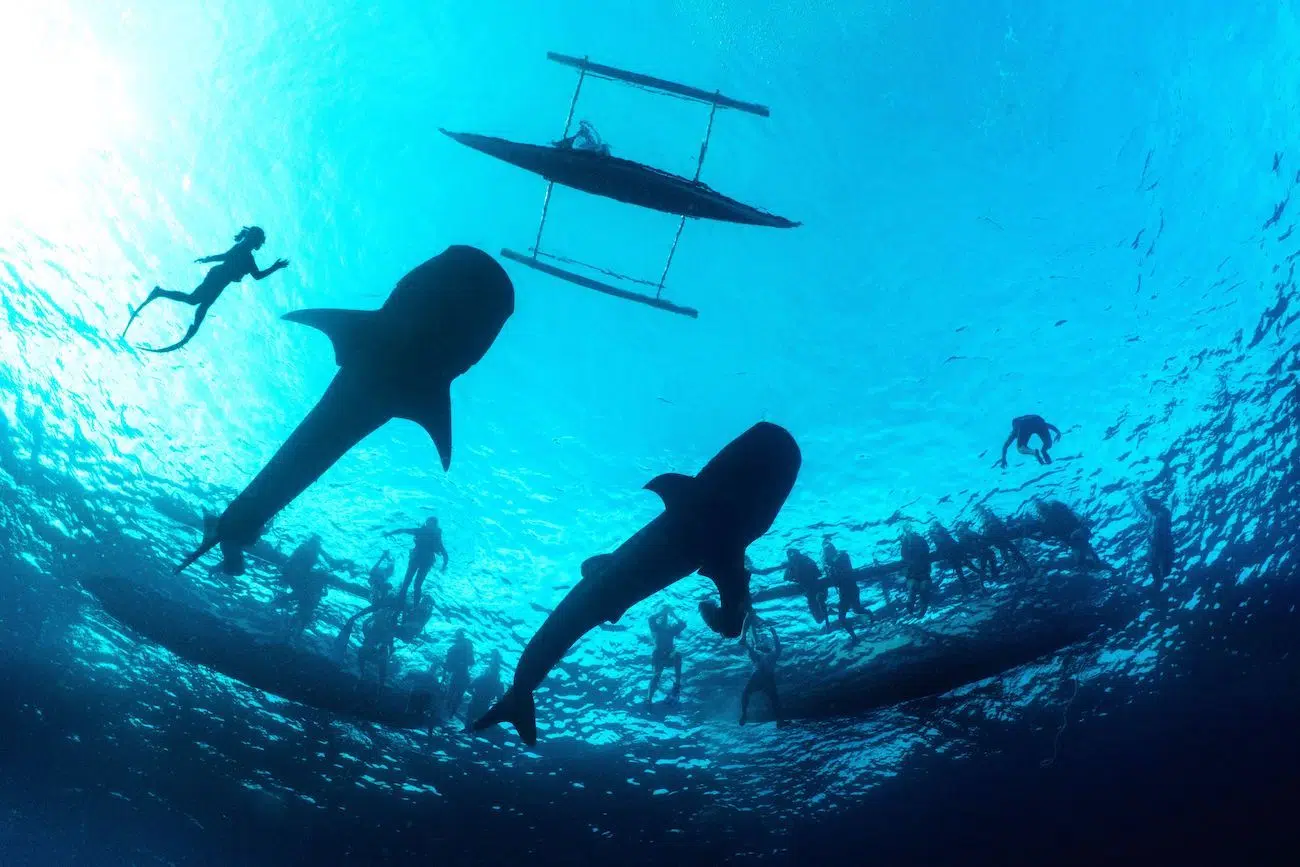
“Conservation vs Tourism” by Peter McGee. Runner-Up, Humanity vs Nature, 2026 Environmental Photography Award.
Whale shark tourist site, Philippines, 2025.
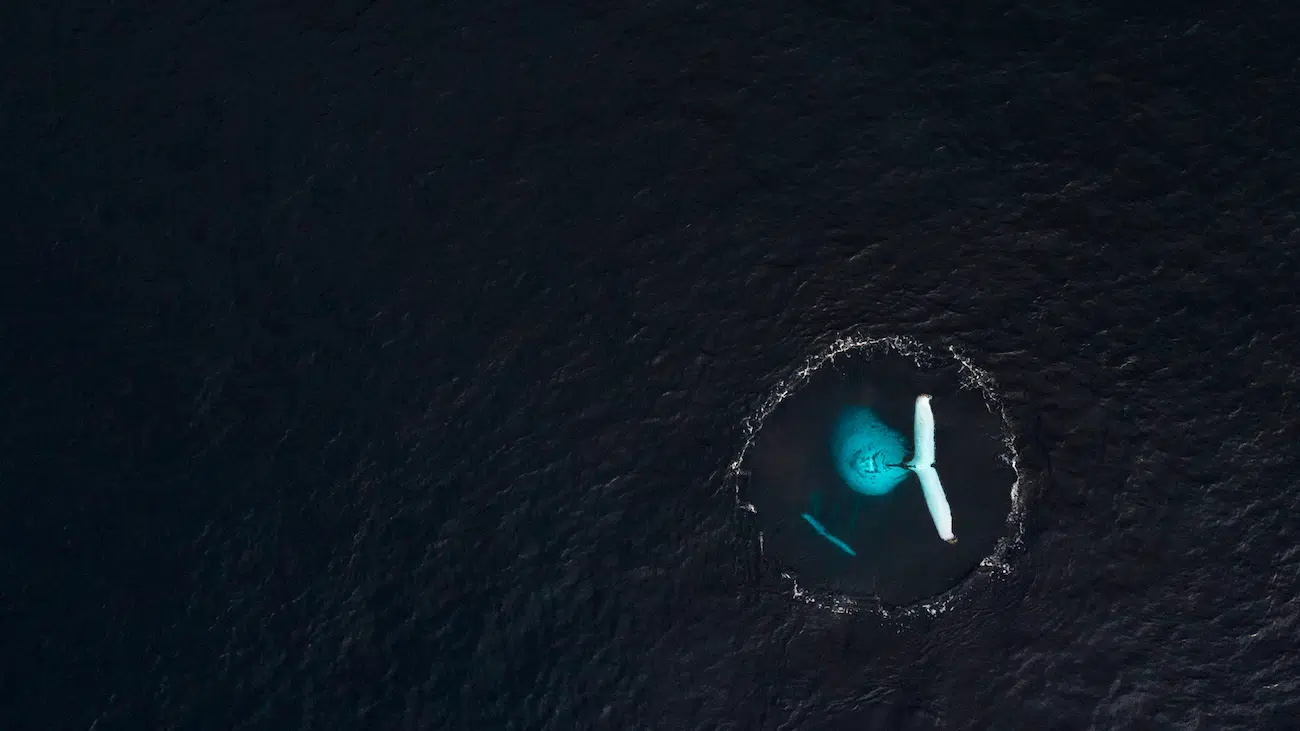
“Up is Down” by Arnaud Farré. Winner, Student’s Choice & Runner-Up, Ocean, 2026 Environmental Photography Award.
Humpback whale and her calf, Réunion Island, 2023. From June to October, large numbers of humpback whales (Megaptera novaeangliae) gather along the west coast of Réunion Island, especially in the Bay of Saint-Paul, to breed and give birth. Cap La Houssaye marks the southern limit of the bay and the starting point of the Marine Nature Reserve, consisting of 35 square kilometres of protected reefs. It is an ideal location for whale watching. Drone flights are prohibited inside the marine reserve without prior permission, but this mother and her calf were spotted just 200 meters from the beach, outside the boundary of the reserve. The mother is diving, followed by her calf, just before sunset. Only their flukes (tails) are visible as the pair begins their plunge to the depths, leaving behind a circular ring called a “fluke print.” This striking, rare scene illustrates the harmonythat exists between these marine mammals and the ocean.
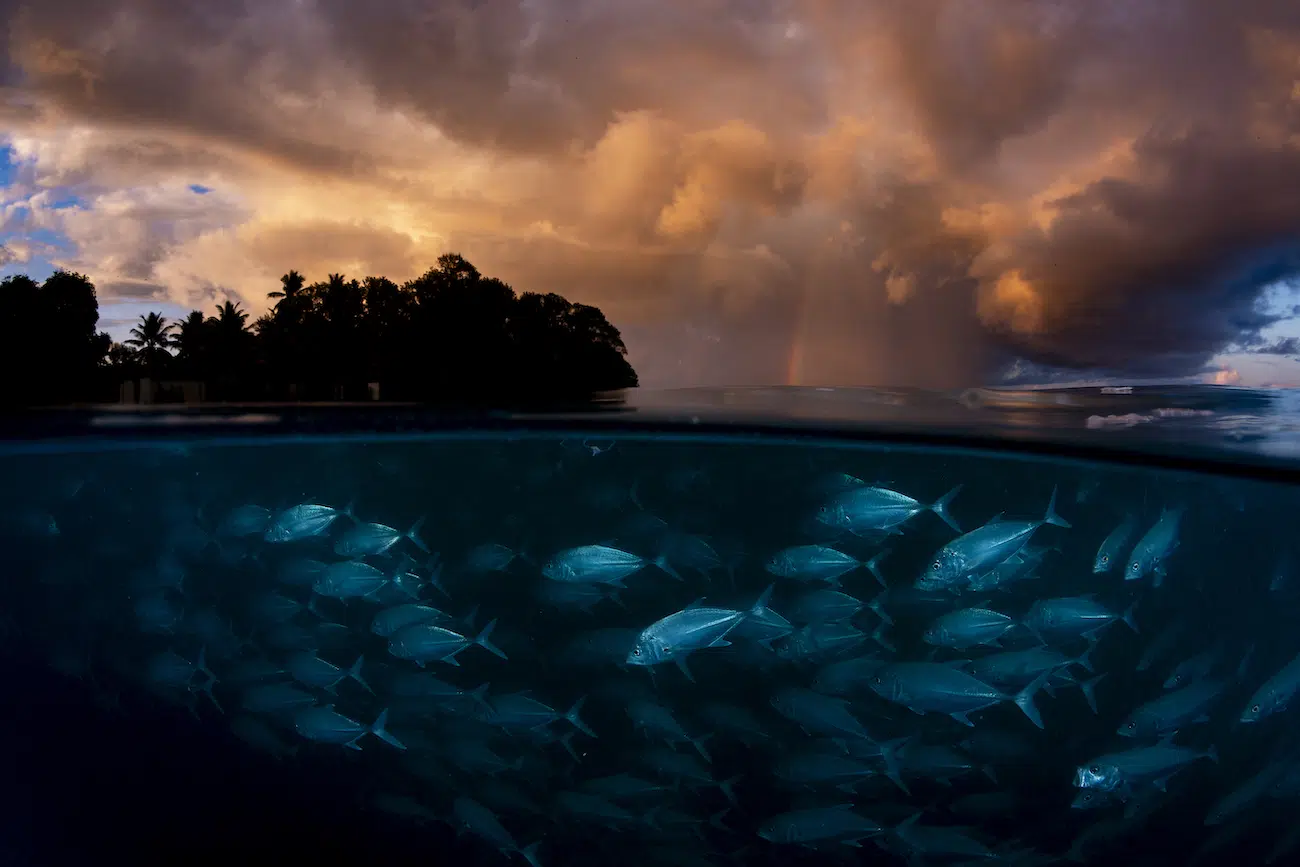
“Better than Gold” by Shane Gross. Runner-Up, Ocean, 2026 Environmental Photography Award.
A school of bigeye trevally, Seychelles, 2022.