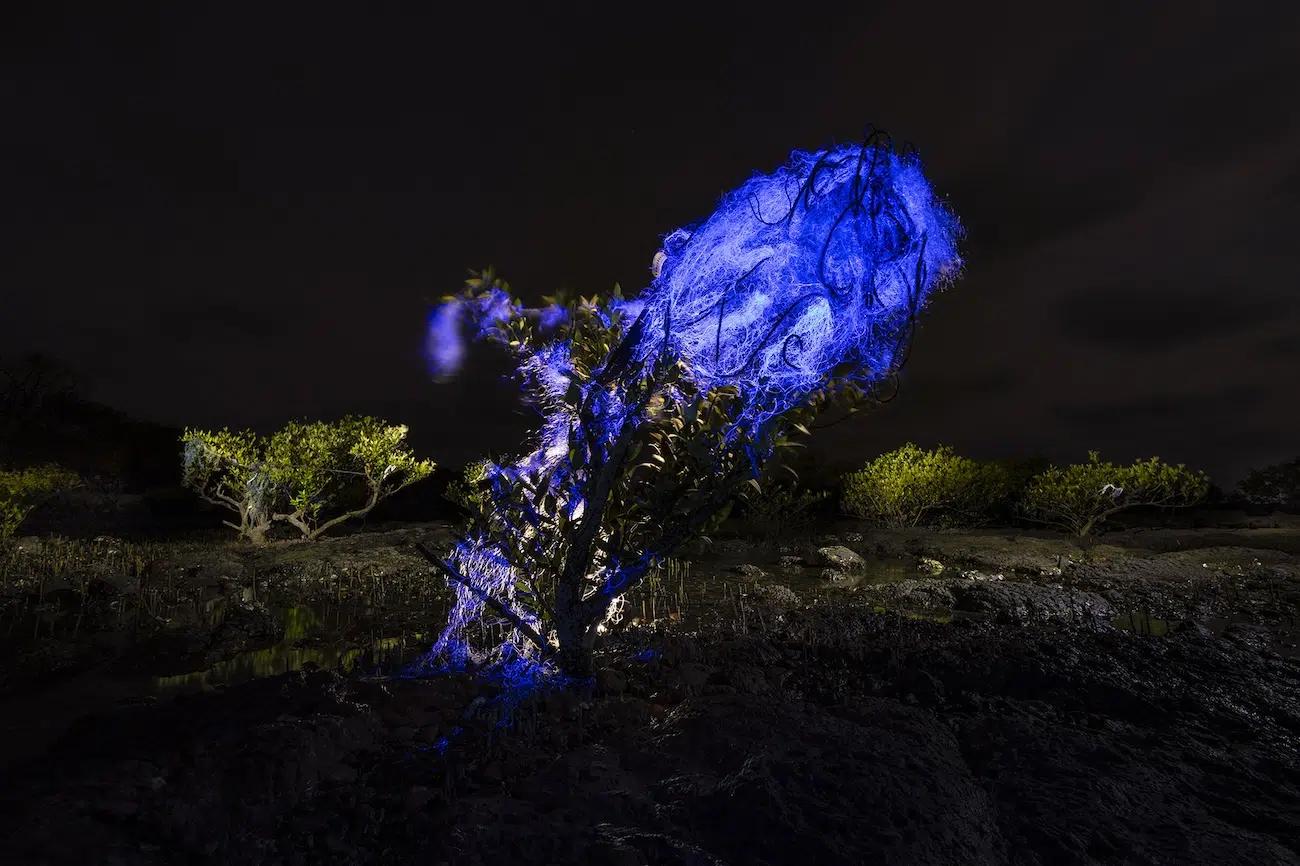
“Tangled glow: When life meets the ruins,” Gaurav Patil, Overall Winner, Mangrove Photographer of the Year 2026. India. “I came across this particular mangrove patch where discarded fishing nets were getting trapped during high tide. These nets, after getting discarded or lost from the fishing vessels, meet the oceanic currents which bring them to the coast. I have been watching ghost nets getting trapped in mangroves for the last several years, and I wanted to document it in an artistic manner to grab the attention of the viewers.”
A glowing net, seemingly erupting from the branches of a mangrove, has an otherworldly feel. It’s as if the mesh is some alien being, intent on ensnaring the tree before moving to its next victim. The net, of course, is not some extraterrestrial, but its eerie presence is the result of human action. Photographer Gaurav Patil captured the nighttime scene, and his ability to craft a narrative earned him the title of Overall Winner of the 2026 Mangrove Photography Awards.
Now in its 12th year, the Mangrove Photography Awards is a unique photo contest hosted by the Mangrove Action Project (MAP) centered on the conservation of the mangrove ecosystem. The lauded images use storytelling to celebrate the beauty, diversity, and, ultimately, fragility of global mangrove forests. A mangrove is a shrub or tree that grows along coastlines and tidal rivers. The species is resilient, having evolved to live in salty, oxygen-poor soil. Mangroves are also ecological powerhouses and excel at absorbing and storing carbon from the atmosphere—up to five times more than a forest found on land.
Mangroves are vital to the health of our planet and face many threats. In Patil’s winning image, he uses UV lighting to illuminate a recognized hazard to the health of the mangrove—but one that doesn’t get enough attention. Known as ghost nets, discarded fishing nets are carried into the ecosystem and become trapped, creating a “hidden garbage hotspot” that can entangle marine life and choke the trees.
“I came across this particular mangrove patch where discarded fishing nets were getting trapped during high tide,” Patil describes. “These nets, after getting discarded or lost from the fishing vessels, meet the oceanic currents which bring them to the coast. I have been watching ghost nets getting trapped in mangroves for the last several years, and I wanted to document it in an artistic manner to grab the attention of the viewers.”
While Patil took home the top prize, winners were also announced for Wildlife, Landscape, Underwater, Threats, People and Conservation Stories, along with the Young Mangrove Photographer of the Year. They were selected among 5,258 entries from 87 countries.
Scroll down to see the category winners from the 2026 Mangrove Photography Awards.
The 2026 Mangrove Photography Awards recently announced its overall and category winners.
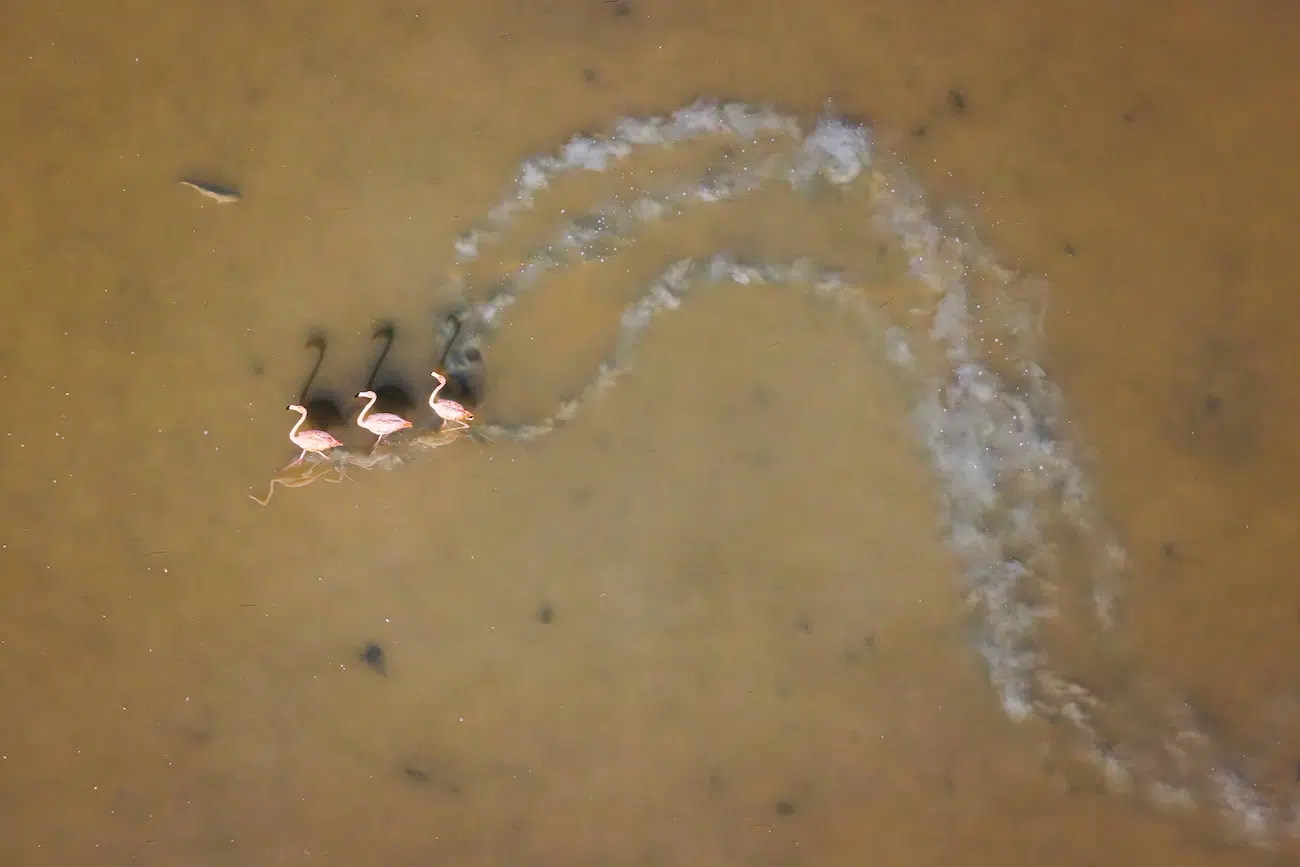
“March of the Flamingos,” Mark Ian Cook, Winner, Wildlife, Birds. United States. “A small group of American Flamingos peer at a juvenile Lemon Shark while searching for suitable foraging habitat in the mangrove-lined shallow backwaters of Florida Bay, Florida.”
The lauded images use storytelling to celebrate the beauty, diversity, and fragility of global mangrove forests.
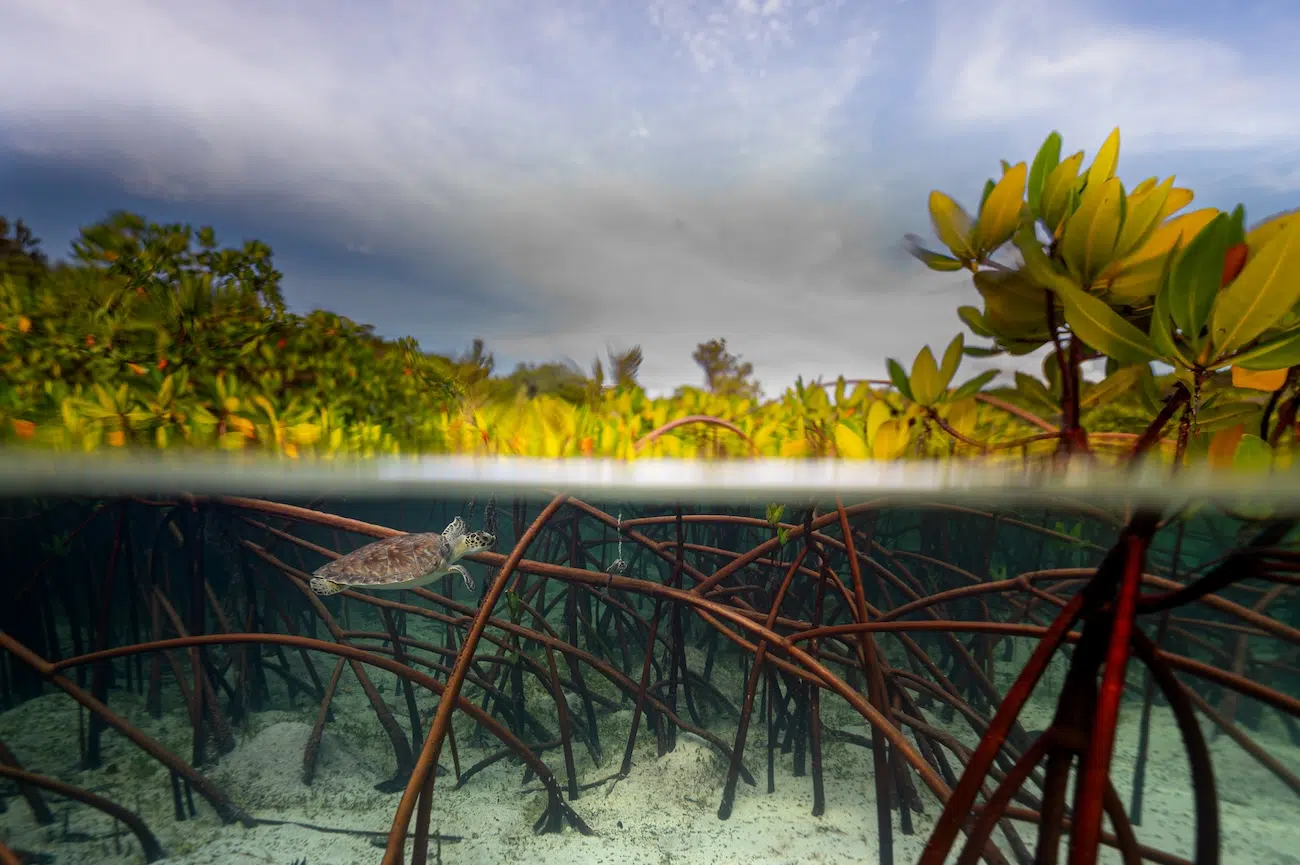
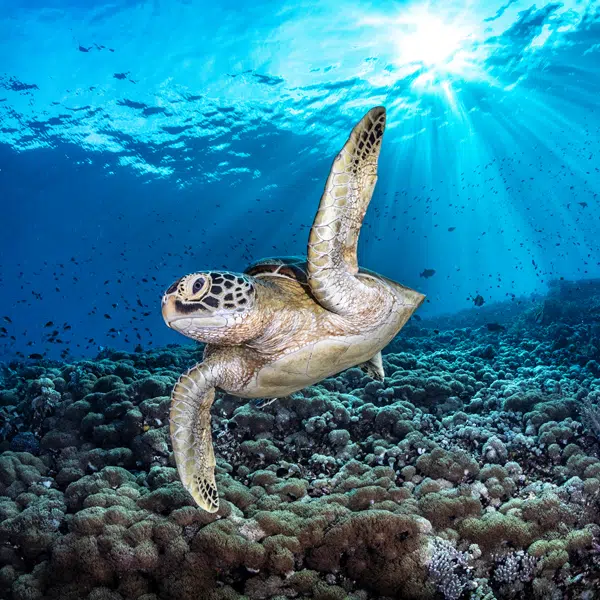
“Seeking Refuge in the Mangroves,” Evan Cooper, Winner, Wildlife – Other Species. Bahamas. “A juvenile green turtle in a shallow Bahamian mangrove forest near sunset during high tide. As the water levels rise and the tide comes in, the mangroves' roots transform from a barren buffer to a flourishing ecosystem home to sea turtles, crustaceans, fish, and much more. This turtle likely just recruited here from the sargassum sea, based on its size. The mangrove forest provides shelter for little green turtles like this one from tiger sharks and other predators.”
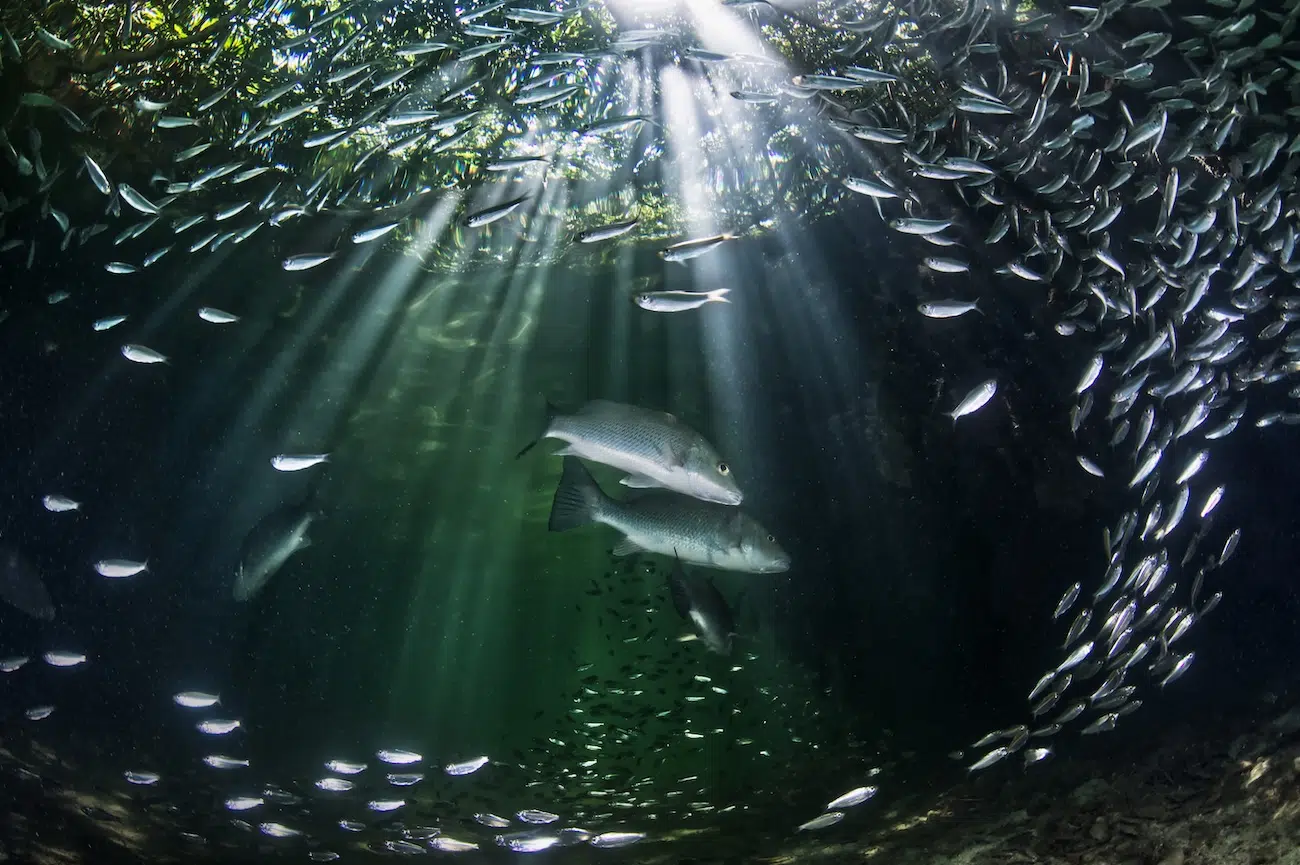
“Feeding grounds under the canopy,” Ewan Tregarot, Winner, Underwater. Netherlands Antilles. “Grey snappers hunt through a school of baitfish beneath the mangrove canopy of Lac Bay, Bonaire—captured during a fish monitoring survey, as shafts of midday light revealed predator-prey interactions usually hidden in these submerged forests. A reminder that Bonaire's celebrated reefs depend on the mangroves that shelter and feed them.”
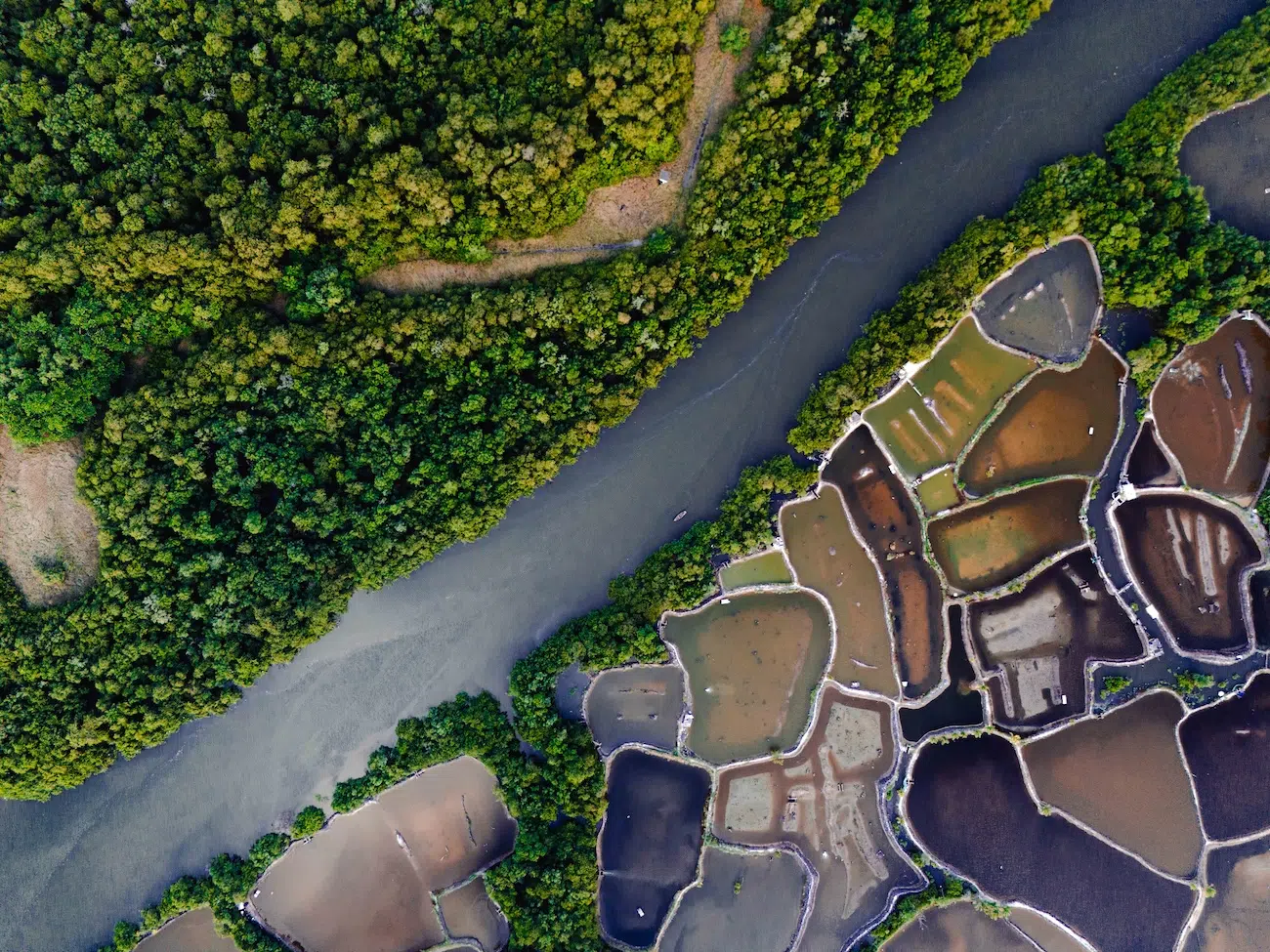
“MangueBeat,” Lucas Gonçalves Garcias, Winner, Landscape, From the Air. Brazil. “Aerial view of the Tejipió River in Recife, dividing shrimp ponds maintained by residents of Ilha de Deus—many of whom depend on the ecosystem's health for their livelihood—from a stretch of mangrove forest partly filled in for a Navy zone. The varied colours of the ponds trace different stages and depths of shrimp farming.”
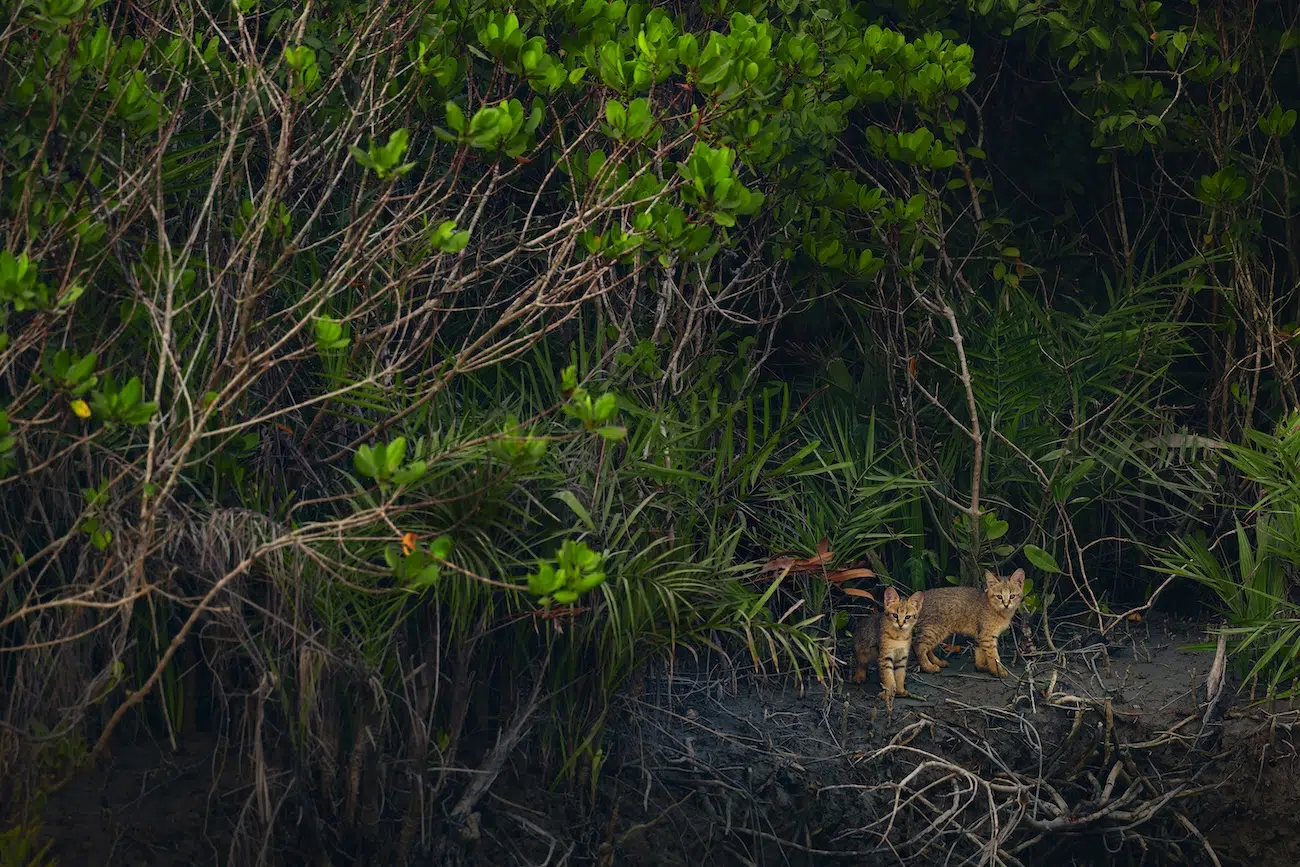
“Where the Mangroves Begin,” Kallol Mukherjee, Winner, Wildlife, Mammals. India. “Two jungle cat kittens emerge from the dense mangrove forest in the Sundarban Tiger Reserve. A rare glimpse of the smaller, lesser-known wildlife that shares this tidal landscape with the reserve's tigers, and survives its shifting mud, saline water, and daily tidal flooding.”
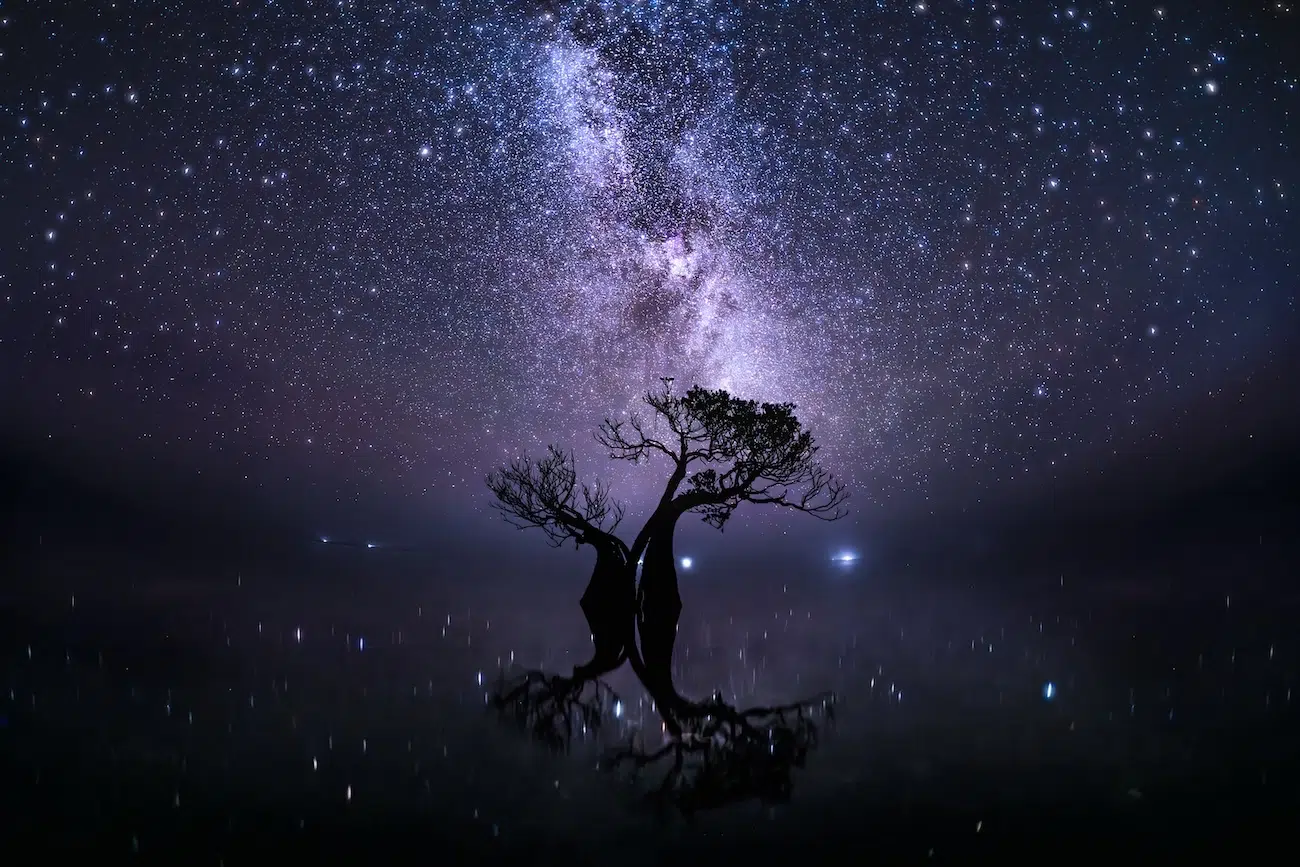
“Beneath Ancient Light,” Ryuhei Suguri, Winner, Landscape, On the Ground. Indonesia. “Under the Milky Way, a solitary mangrove stands in shallow tidal water, its reflection still in the low tide—a quiet pairing of ancient starlight with one of Earth's most vital coastal ecosystems.”
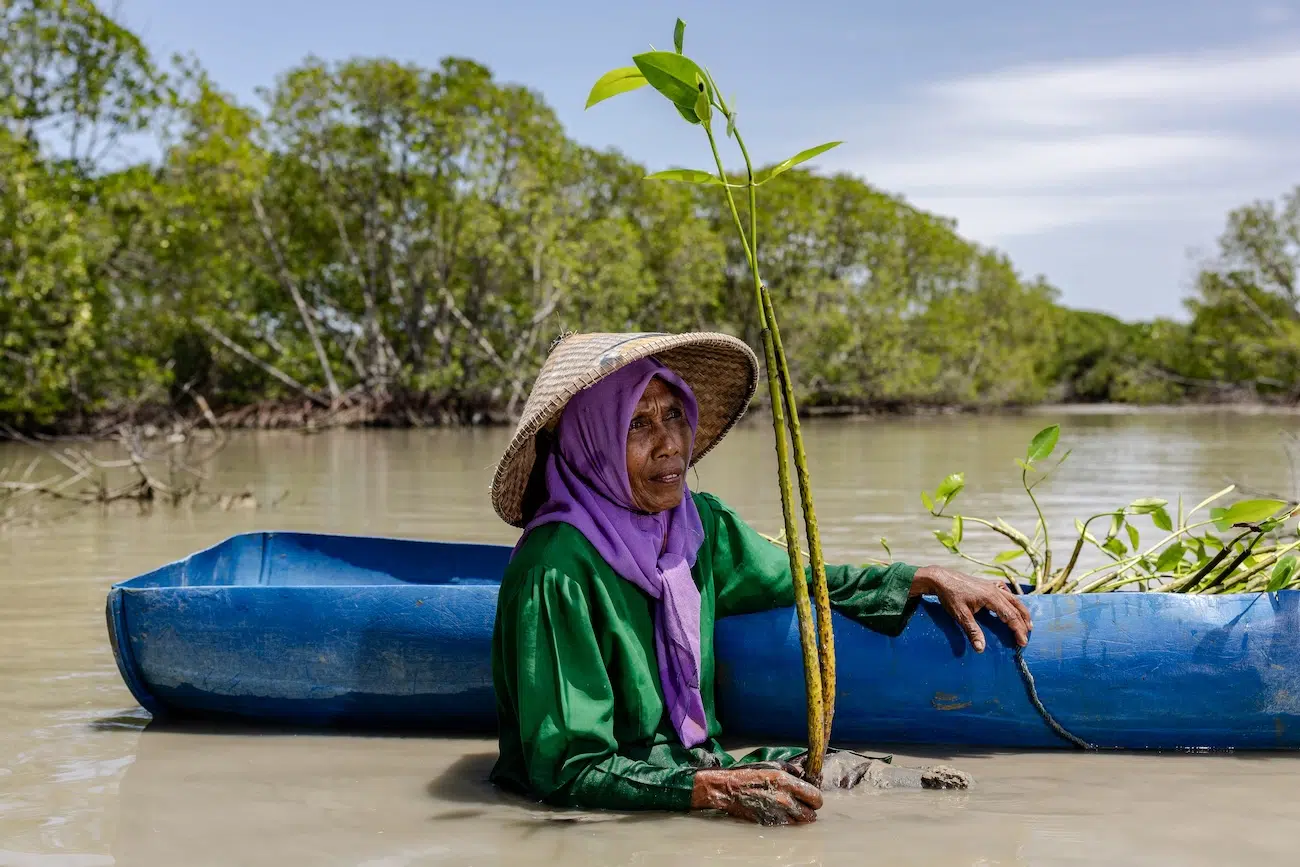
“Seeds of hope from a coastal village,” Garry Lotulung, Winner, People, Conservation and Restoration. Indonesia. “Pasijah, 56, plants mangrove seedlings beside her flooded home in Bedono, Demak, Central Java—one of the last residents remaining after more than 200 families left as rising seas and land subsidence submerged the village. She's planted mangroves since 2000, watching her family's rice fields turn to ponds and then disappear. In 2021, she and her son planted 15,000 seedlings in a single day; by morning, the waves had washed them all away.”
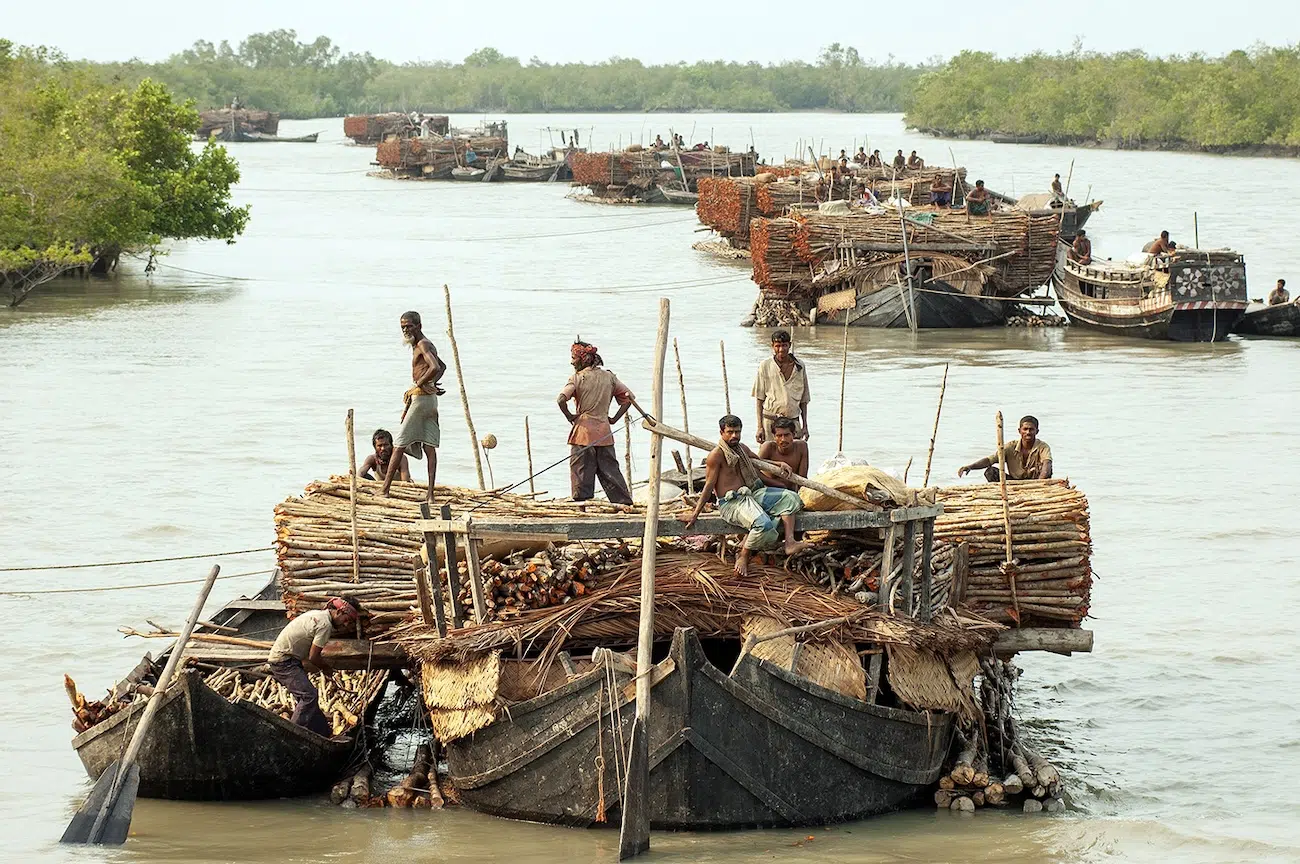
“Red mangrove harvest,” Zafer Kizilkaya, Winner, Threats. Bangladesh. “Illegal red mangrove harvesting in the Sundarbans, Bangladesh—a UNESCO World Heritage Site and home to around 125 Bengal tigers. Weak enforcement lets the trade continue, feeding a local charcoal industry, driving deforestation, and fueling the region's high rate of human-tiger conflict among wood collectors.”
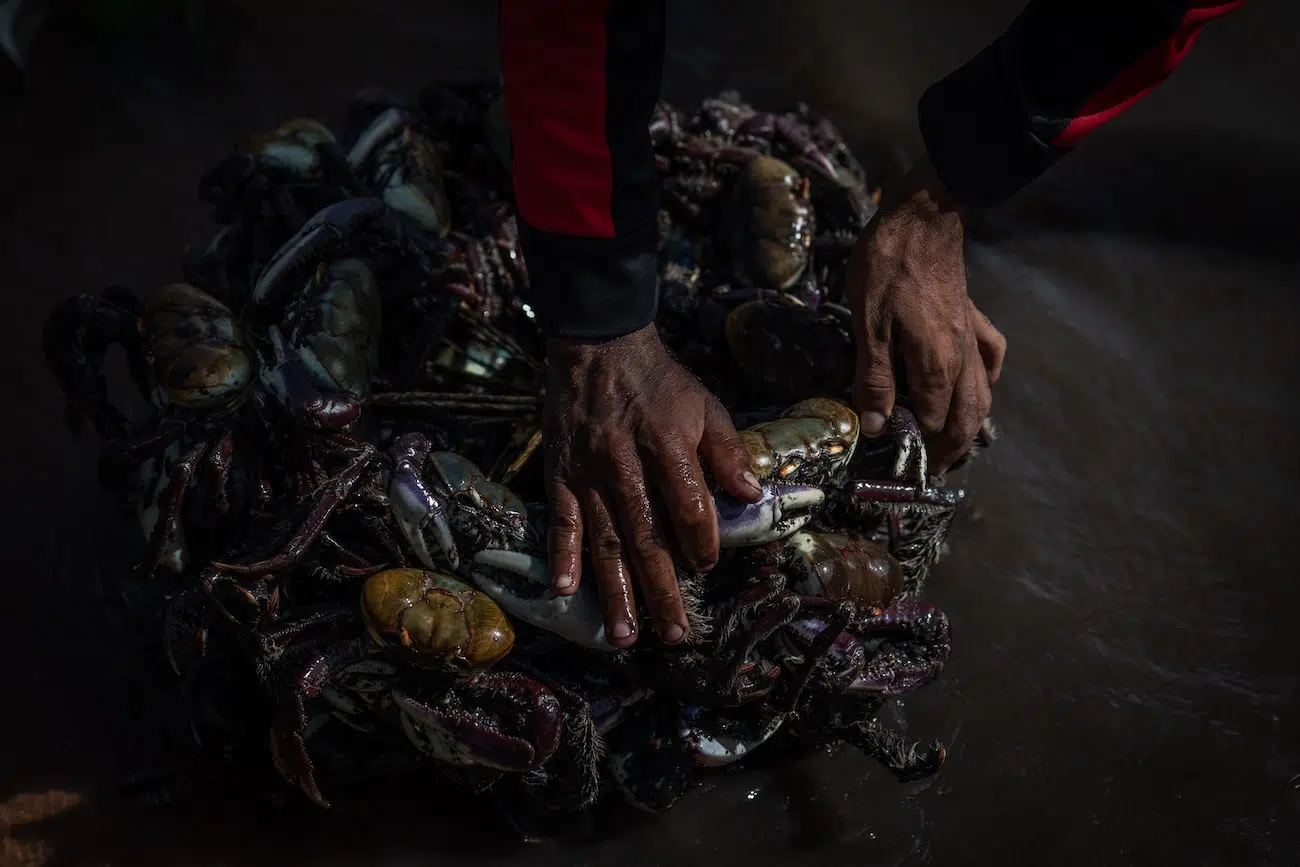
“String of Crabs,” Roosevelt Cassio, Winner, People, Livelihoods. Brazil. “A fisherman shows off the day's catch—a batch of crabs known locally as a ‘corda,’ sold for around R$20 in Brazil.”
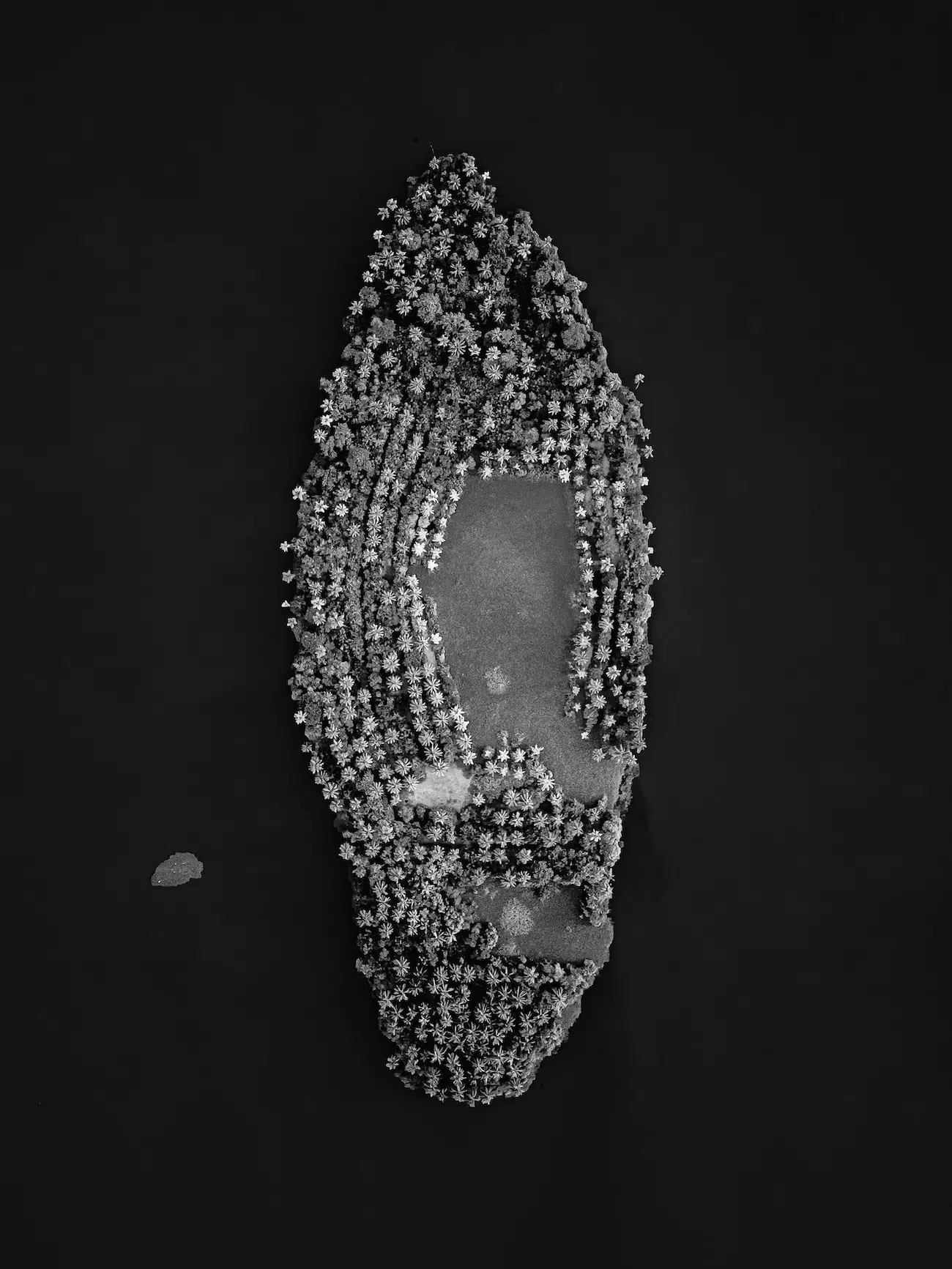
“Footprint of the Earth,” Abijith Soman, Winner, Landscape, Black and White. India. “An island shaped like a footprint emerges from Kerala's backwaters, its mangroves tracing the toes and sole of the print. Many of these islands were once mangrove forest before being cleared for coconut plantations—on some, the mangroves are now reclaiming that ground. A quiet mark of where nature stepped away, and where it's stepping back in.”
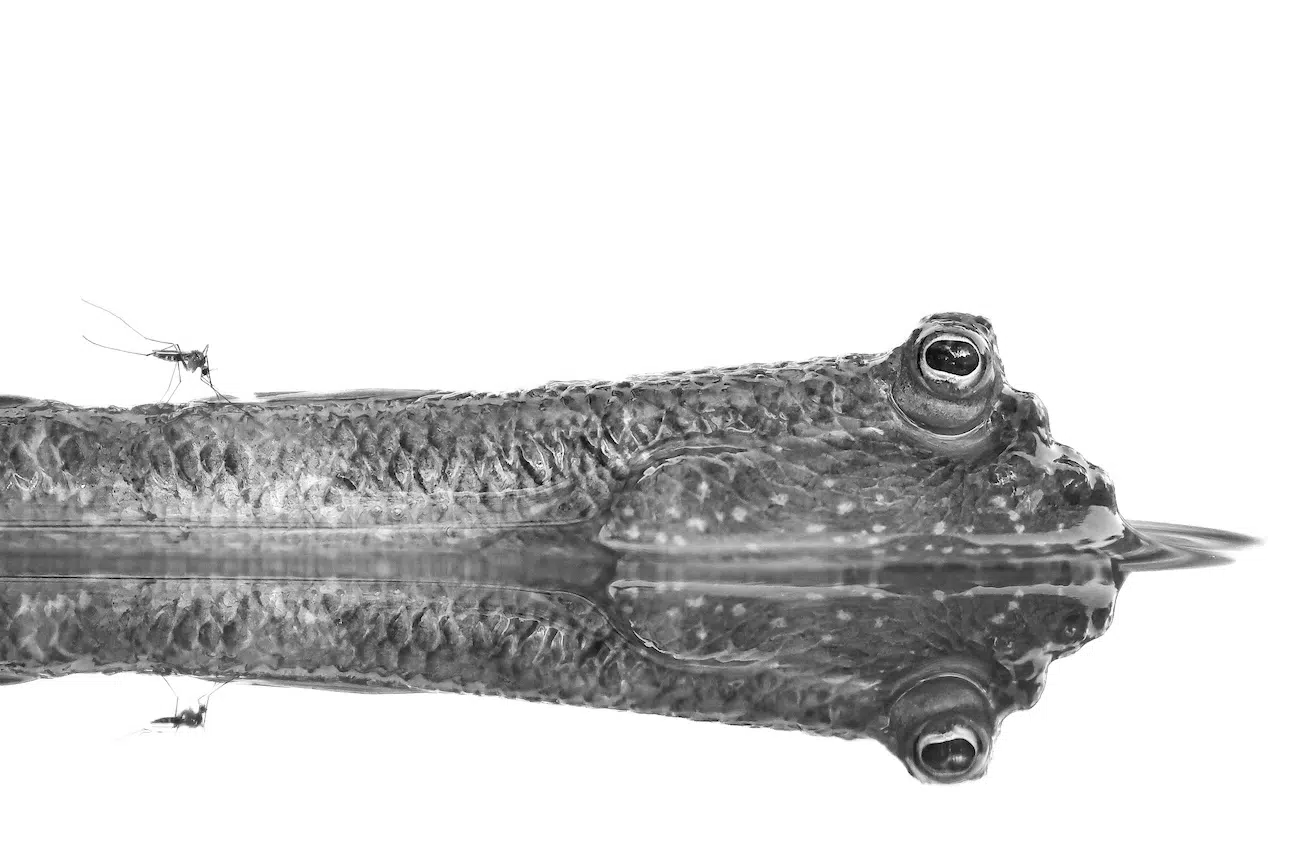
“Adaptation,” Katanyou Wuttichaitanakorn, Winner, Young Mangrove Photographer of the Year. “In mangrove forests where warm-blooded prey is scarce, some mosquitoes have adapted to feed on cold-blooded mudskippers instead—captured here after the photographer set out to discover what was sustaining the forest's large mosquito population.”