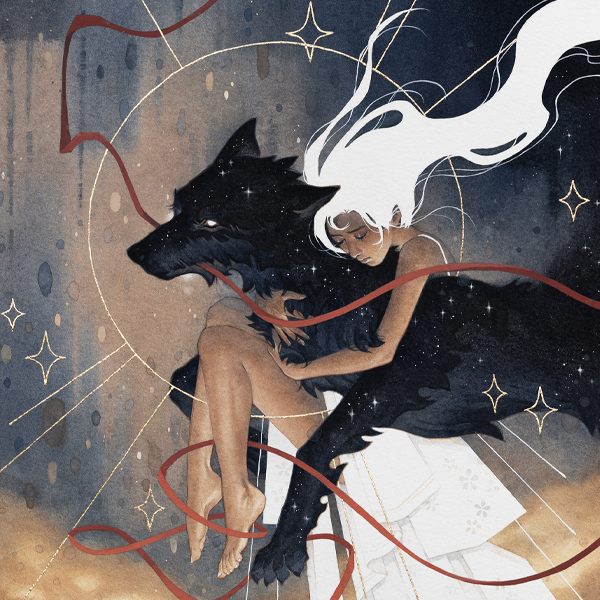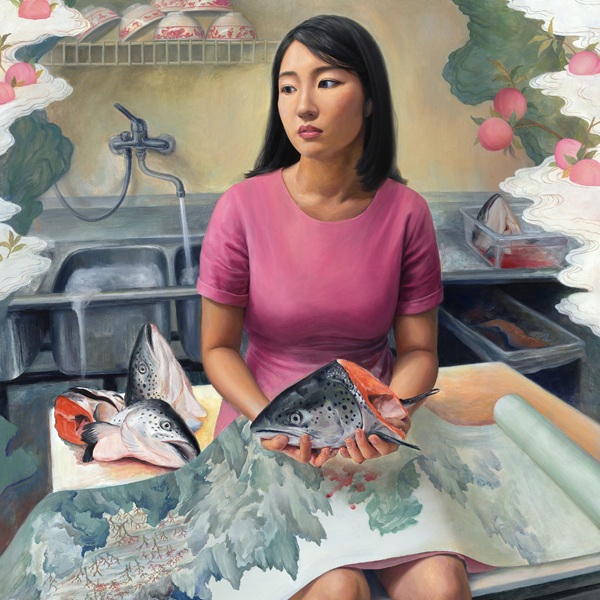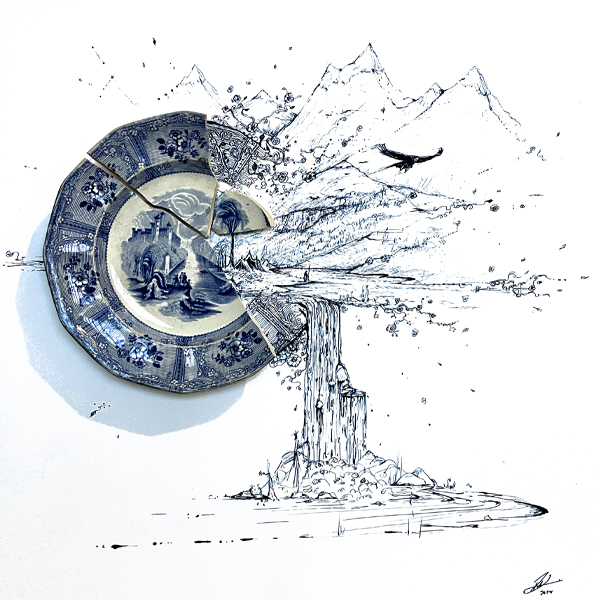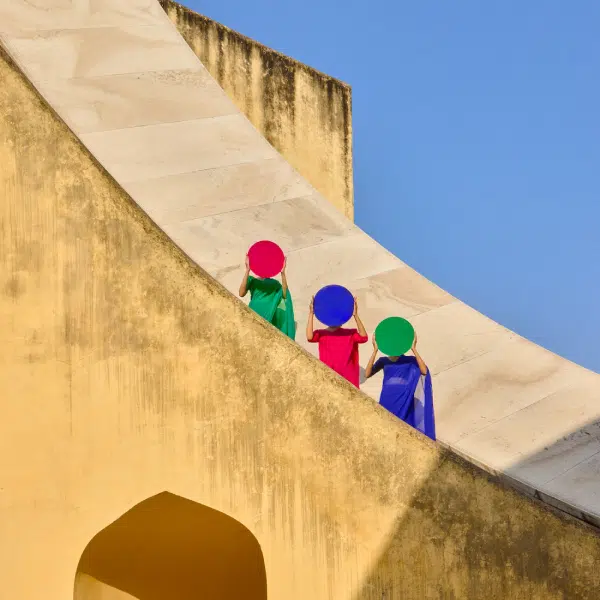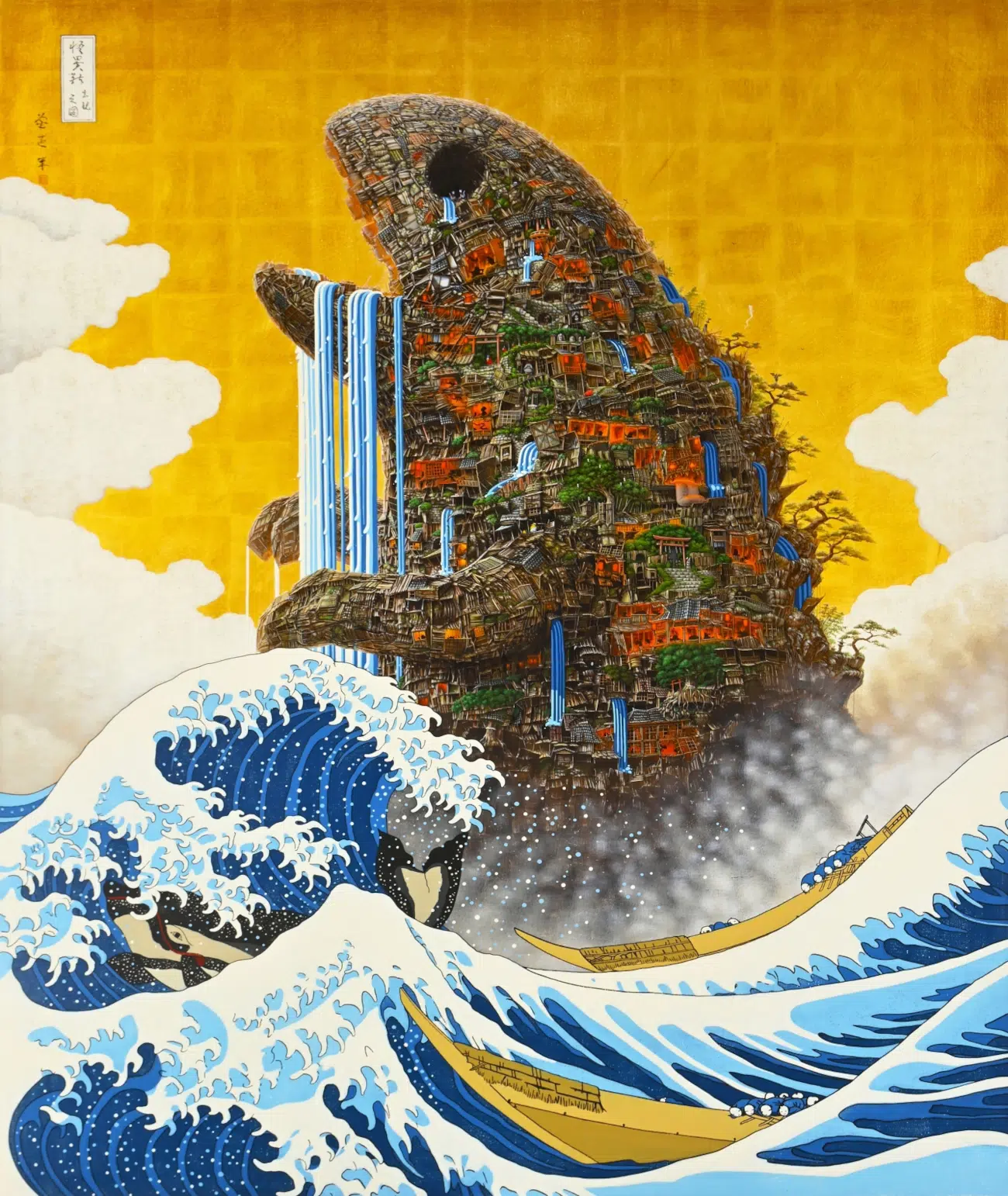
Takumi Kama, “The First Appearance KAIJU,” 2026, Japan. Acrylic color. Cotton on wood panel. L162×W130.3×H3.5cm(F100)
In Japanese pop culture, a kaiju is a mythical monster of great proportions. They have long been symbols of chaos and destruction, serving society as cathartic vehicles to dealing with difficult times and challenging situations. In media, they could symbolically manifest as World War II and the atomic bombings of Hiroshima and Nagasaki, or natural disasters that make humankind feel powerless in the face of nature. More than anything, though, kaiju represent the consequences of human actions—or inactions.
These fantastical creatures inspired Japanese artist Takumi Kama to tackle a more recent and universal topic. In his aptly titled KAIJU series, these towering beasts aren’t made of flesh and blood. Instead, their bodies are an accumulation of the things we consume and quickly discard, whether physical or digital. “In other words,” the artist says, “it exists like a mirror reflecting us—the very people who are looking at this work—and perhaps it could even be described as a self-portrait of us as human beings.”
These kaiju loom in dark alleys and the morning fog, for which they can be accidentally run into. Some feature imagery from the Edo period, as the artist wonders how these creatures would have looked in that time, while others are more contemporary, made up of pixels or pop culture, junk food, and plastic trinkets.
Kama recently presented his work at Art Taipei, where he was one of the most talked about creatives for his unique approach to modern culture and our increasingly digitalized lives. As such, COMBINE/BAMI Gallery, which represents the artist, will offer plenty of chances to check out the artist’s work from up close. From late December 2026 through early January 2027, the gallery will present many of Kama’s works in an annual exhibition centered on the theme of the Chinese zodiac, spotlighting the artist’s charming and playful style.
Next year, COMBINE/BAMI Gallery will open a dual exhibition featuring Kama and fellow Japanese painter Hisashi Matsumoto in March. Before that, his work will be exhibited at Osaka International Art 2027, taking place January 29-31, 2027 (VIP Preview on January 28, 2027).
We had the opportunity to talk to Kama about the story behind the kaiju motif, his creative process, and what he hopes people will take away from his work. Read on for My Modern Met’s exclusive interview with Takumi Kama.
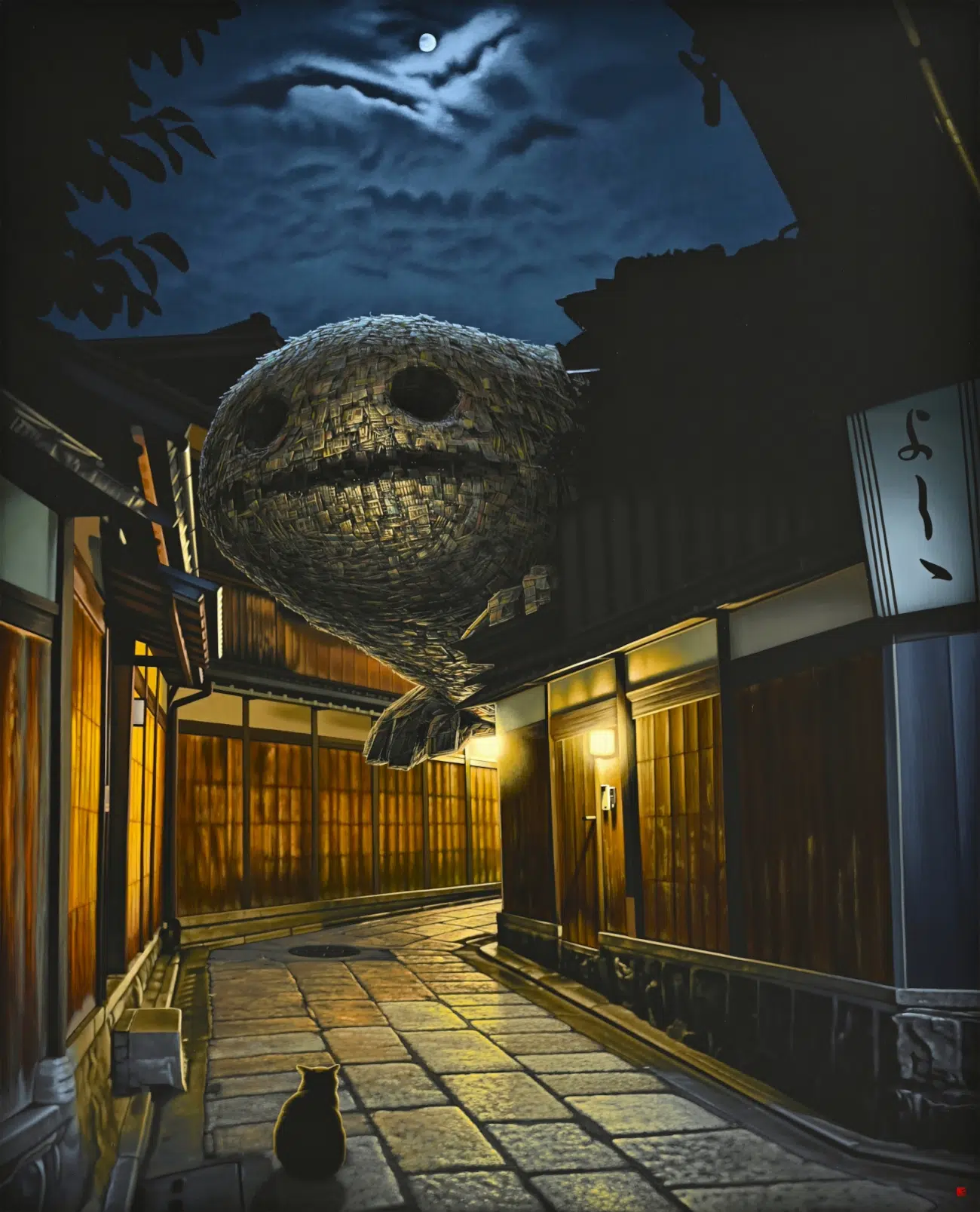
Takumi Kama, “Ishibe-Koji KAIJU,” 2026, Japan. Acrylic color. Cotton on wood panel. L116.7×W91×H3.2cm(F50)
How did your art journey begin?
My journey into art began with my childhood environment. I grew up in a single-parent household and spent much of my time at my grandparents’ home. Drawing became a way for me to escape feelings of loneliness and boredom.
When my grandparents saw my drawings, they were genuinely impressed. Their reactions made me incredibly happy, encouraging me to draw even more enthusiastically. This was my earliest formative experience with art.
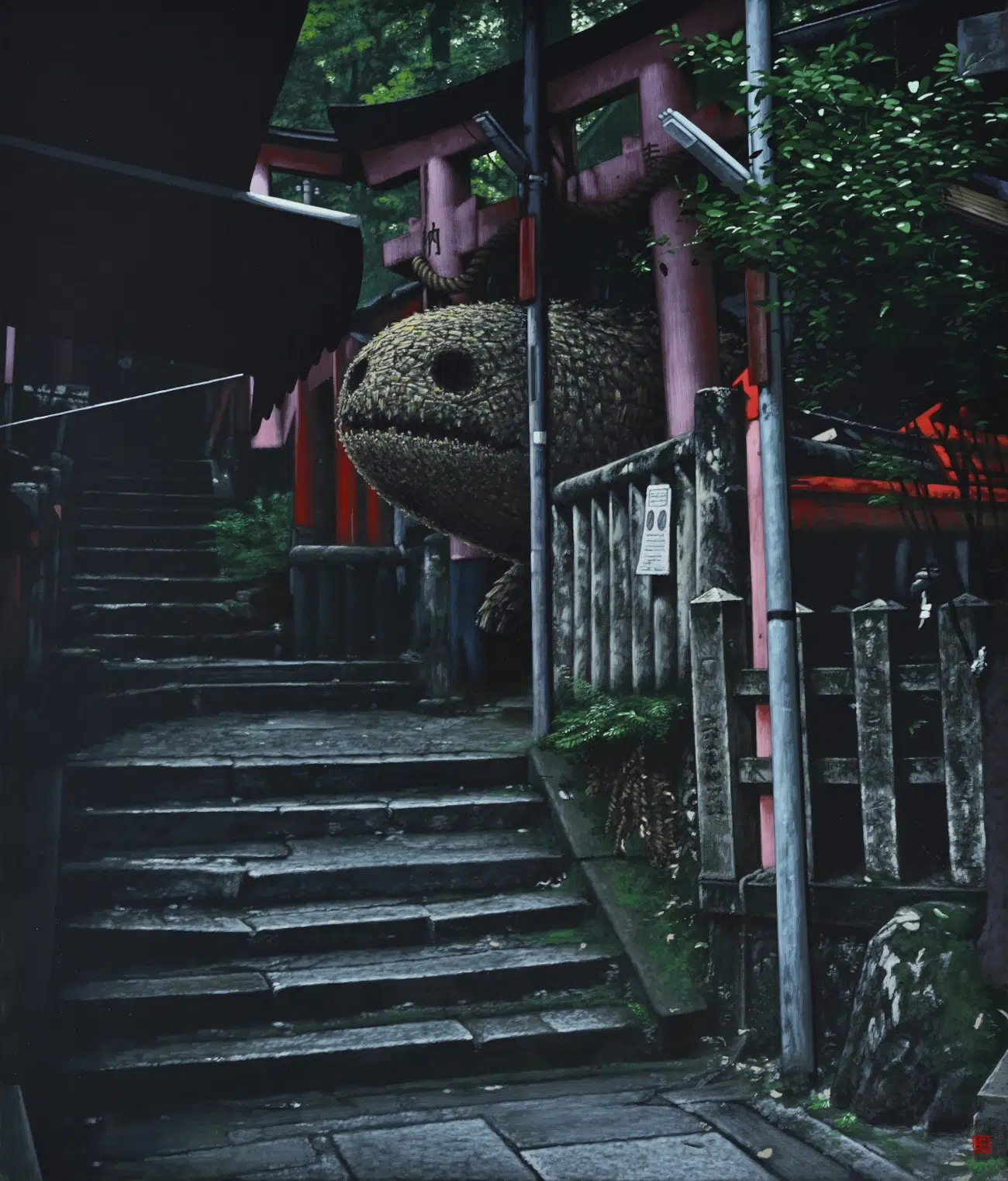
Takumi Kama, “Shrine and KAIJU,” 2026, Japan. Acrylic on cotton mounted on wood panel. 53 × 45.5 cm (F10)
What’s your creative process like?
I don’t usually sit down with the intention of deliberately coming up with an idea for an artwork. Instead, as I go about my daily life with my family, I take note of things that feel unusual or strike me as interesting. I repeatedly reflect on why these particular things have affected me, and as they gradually become connected to concrete imagery in my mind, they eventually develop into artworks. As a result, I have no shortage of ideas. However, only a relatively small number of them ultimately develop into finished works.
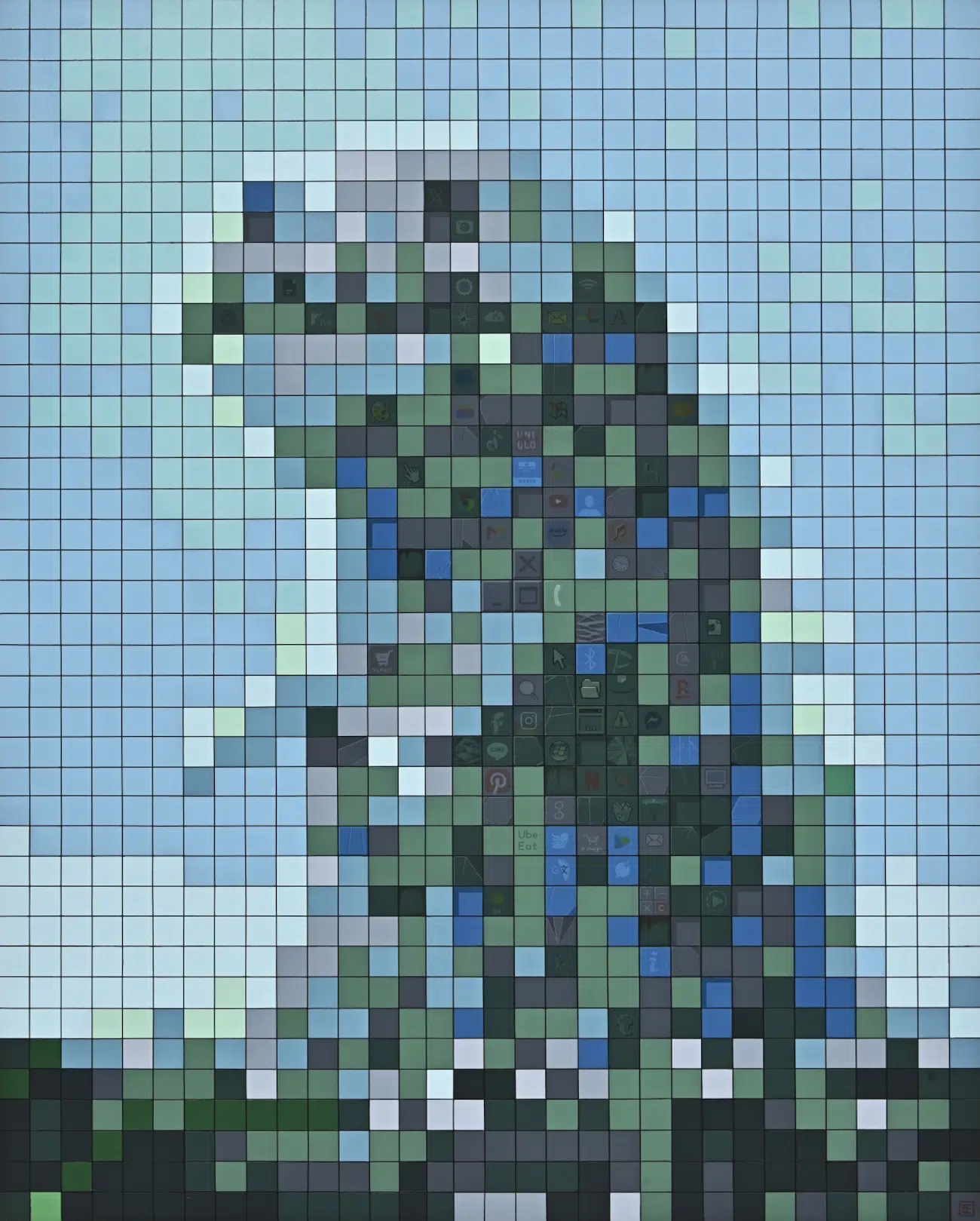
Takumi Kama, “Digital KAIJU,” 2026, Japan. Acrylic color. Cotton on wood panel. L91×W72.7×H3.2cm(F30)
What inspires your compositions?
My approach to composition and the arrangement of elements within an image varies from one artwork or series to another. This is because each work has its own focal points and themes, and the composition needs to communicate them as effectively as possible.
To achieve this, I don’t limit myself to the conventional principles of pictorial composition. I also draw inspiration from a wide range of visual expressions, including cinema, video games, and manga.
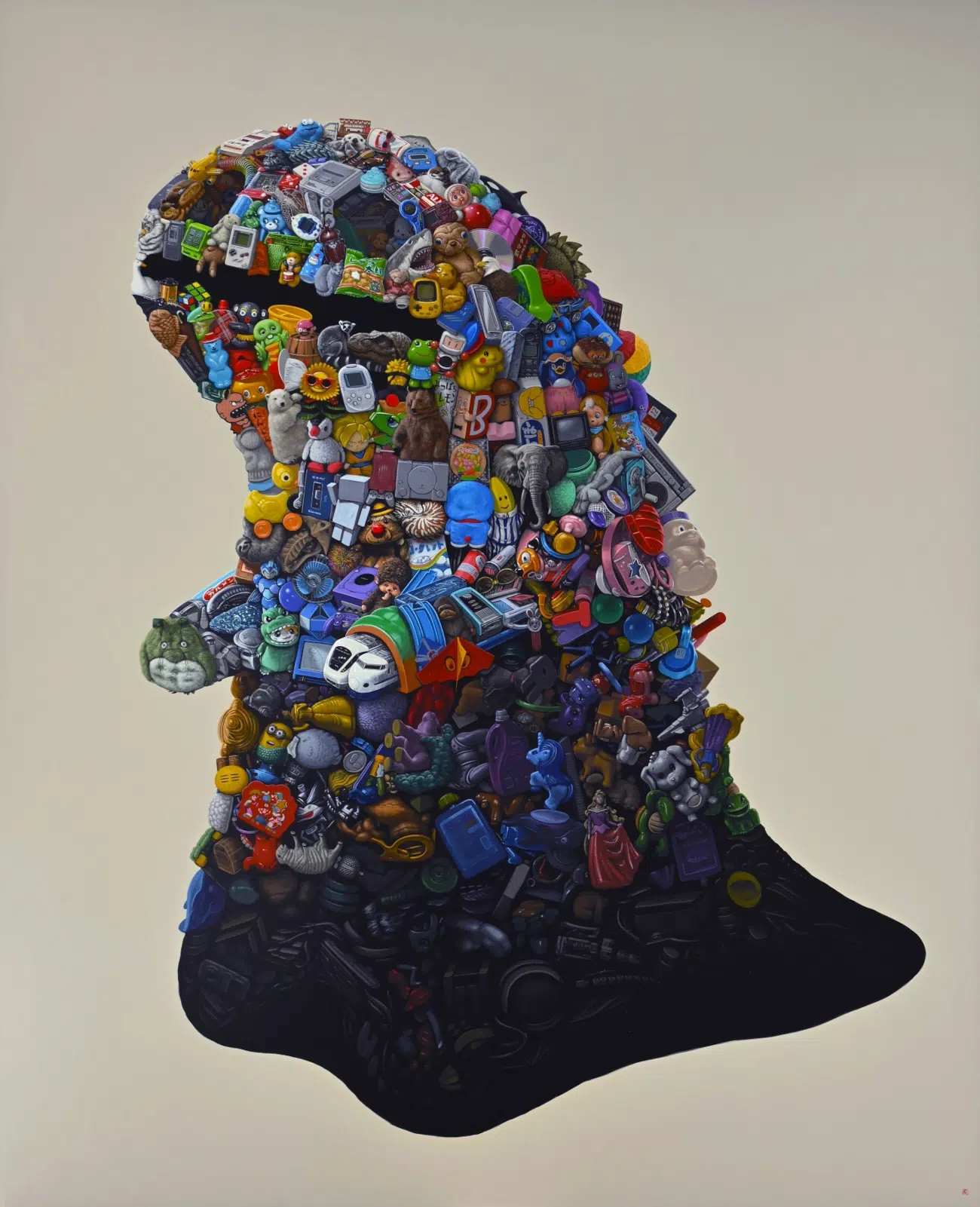
Takumi Kama, “THE Anatomy of KAIJU,” 2026, Japan. Acrylic color. Cotton on wood panel. L162×W130.3×H3.5cm(F100)
What is the inspiration behind the KAIJU series?
It began one morning when I was taking out the rubbish. As I stood before a large pile of discarded waste, I suddenly sensed something in it. Looking around the neighborhood, I noticed that rubbish was scattered everywhere. The sheer quantity of it suddenly sent a chill down my spine.
I began imagining all these discarded objects piling up higher and higher, eventually merging into something enormous that was slowly stirring and moving. That real-life experience became the initial concept for the KAIJU series.
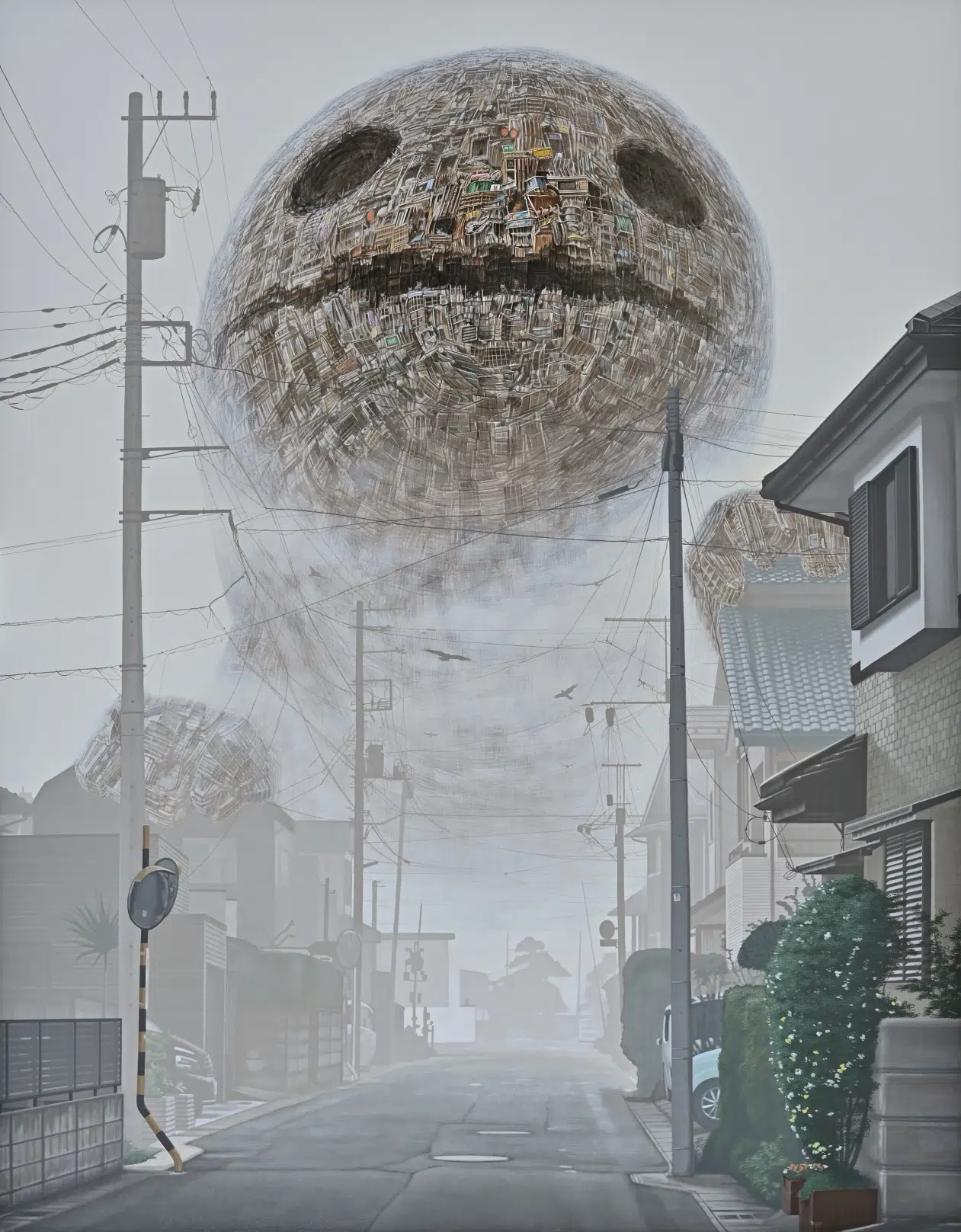
Takumi Kama, “Morning Mist KAIJU,” 2026, Japan. Acrylic color. Cotton on wood panel. L116.7×W91×H3.2cm(F50)
Can you explain more about the decision to depict kaiju made of many things?
The kaiju are formed from vast quantities of discarded objects. These are things that were once needed by someone, but eventually became unwanted and were thrown away. Today, however, waste is no longer limited to physical objects. We also constantly generate and discard enormous amounts of digital information, images, and data. Even when these things are no longer visible or actively used, they leave behind a kind of virtual residue. I am interested in how this less tangible form of accumulation might also be understood as a contemporary form of waste, and how kaiju could embody the things we produce, consume, and eventually forget in our increasingly digital lives.
In Japan, there has long been a belief that spirits or deities reside in all things in the natural world. There are also traditional stories about tsukumogami (付喪神), in which spirits or divine beings inhabit not only natural elements such as mountains, rivers, and stones, but also objects made by human hands. Perhaps each of the countless discarded objects that make up the kaiju’s body also contains its own spirit or deity.
I sometimes wonder whether the kaiju has appeared in order to communicate something to us, as we continue to pursue a mass-consumption society while forgetting these traditional beliefs.
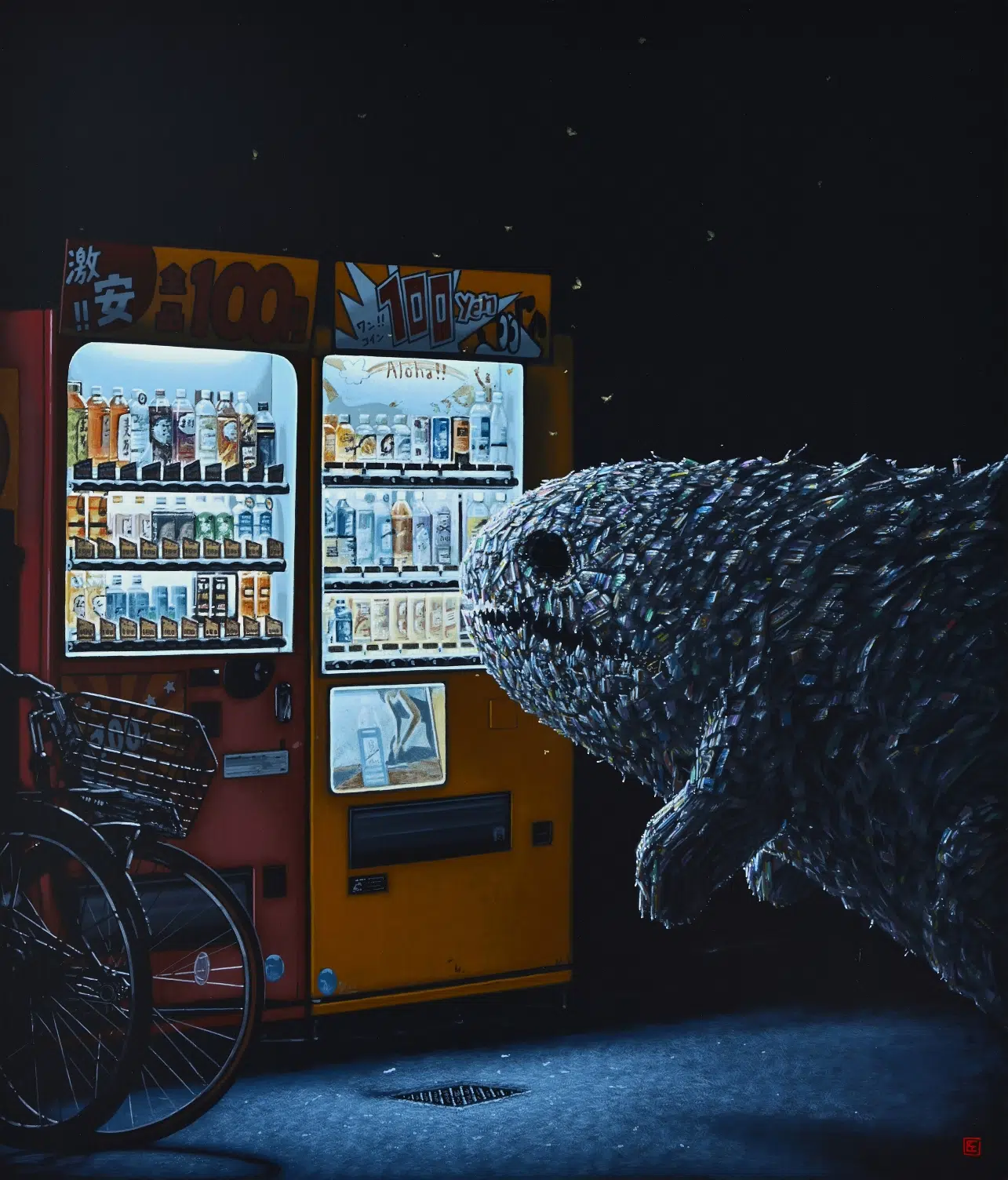
Takumi Kama, “Vending Machine and KAIJU,” 2026, Japan. Acrylic on cotton mounted on wood panel. 53 × 45.5 cm (F10)
Do you remember your earliest encounter with kaiju imagery? How has your perception of it evolved?
For me, the existence of kaiju is closely connected to the act of drawing itself. As I mentioned in my first answer, the very subjects I was passionately drawing as a child were monsters. To keep me entertained, my grandparents repeatedly showed me television programs featuring Godzilla, Gamera, and Ultraman. I was fascinated by these enormous monsters and became absorbed in drawing them. I believe it was my encounter with these monsters that first made me so passionate about drawing. As a child, I admired monsters almost as heroic figures. However, as I grew older, my perception of them gradually changed.
I became increasingly interested in questions such as why Japan, a relatively small island nation, has repeatedly produced such enormous threats in its cultural imagination. Attack on Titan, for example, is another work that touches on this fascination. Today, I am drawn not only to the monsters themselves, but also to the human imagination that has given rise to them.
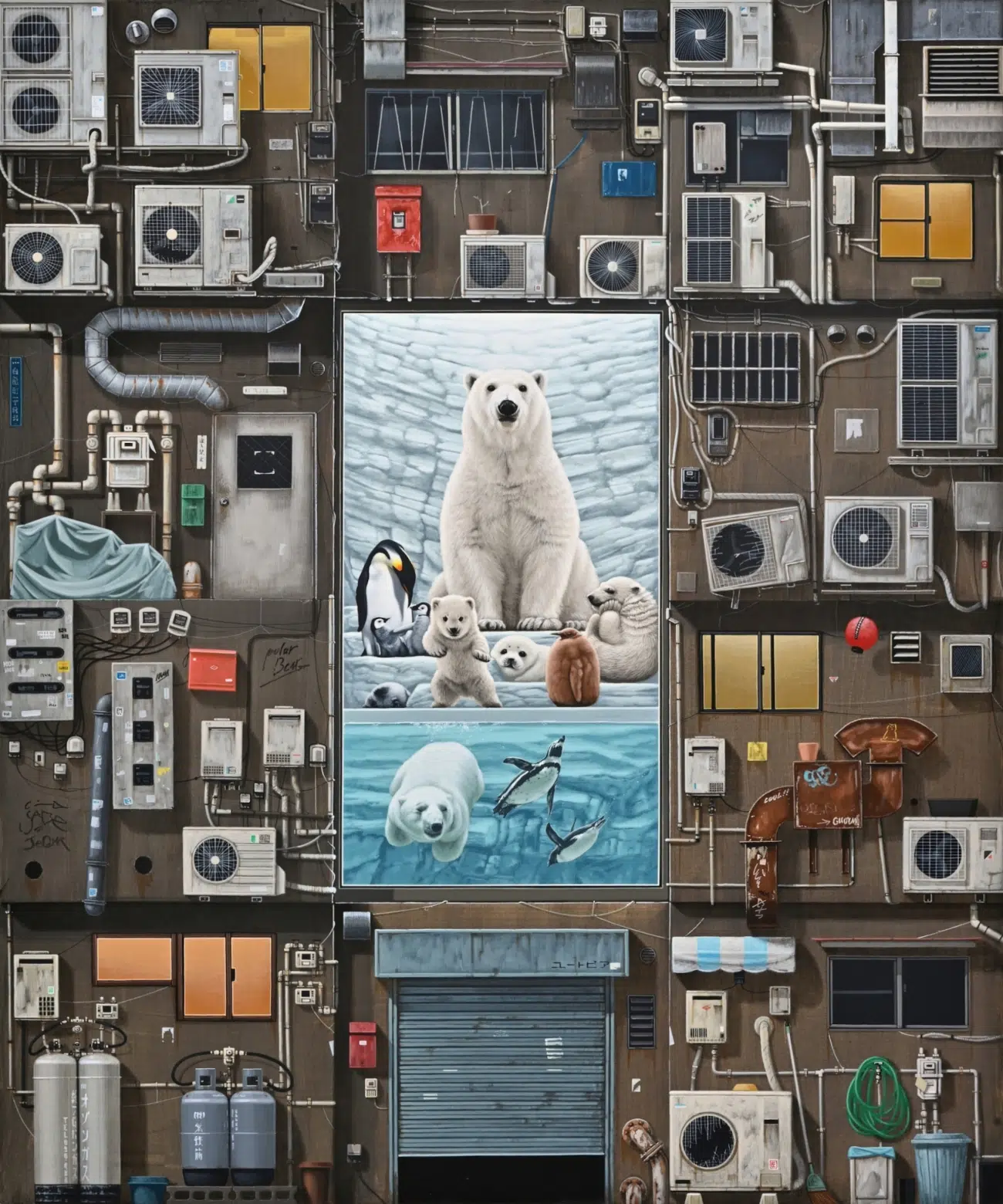
Takumi Kama, “Utopia,” 2026, Japan. Acrylic color. Cotton on wood panel. L72.7×W60.6×H2.4cm(F20)
From your perspective, how does it connect to your larger body of work?
Until now, I have created works that reconsider human activity through the relationship between people and animals. I primarily chose animals as my subjects, depicting them in ways that brought them closer to human activities. Through this approach, I sought to reveal the true nature of human beings as animals belonging to the primate family.
However, as I continued working, the scale of the issues and the sense of urgency I felt around mass production, mass consumption, and environmental problems grew increasingly significant. I gradually realized that depicting the relationship between humans and animals alone was no longer sufficient to express these concerns. It was in this context that I encountered the idea of kaiju.
Kaiju are not animals. Unlike my earlier works, they do not depict lions, elephants, or polar bears. Yet, to me, these kaiju are beings that encompass even those wild animals. I see them as something resembling the Earth itself, possessing both a physical form and a will of their own.
My longstanding interest in the human being as an animal remains at the heart of my work. However, through my encounter with kaiju, I feel that my focus has expanded to another level: from examining human beings as animals to contemplating the very existence of humanity itself.
In some of my more recent works, I have introduced settings inspired by the Edo period. By placing kaiju within a historical landscape, I wanted to explore the relationship between humans, nature, and the environment from a different perspective. Looking back at a time when people’s lives were more closely connected to the natural world also offers a way to reflect on how our relationship with nature has changed through modernization, mass production, and consumption. Although the works are set in a historical context, the questions they raise are very much about the present.
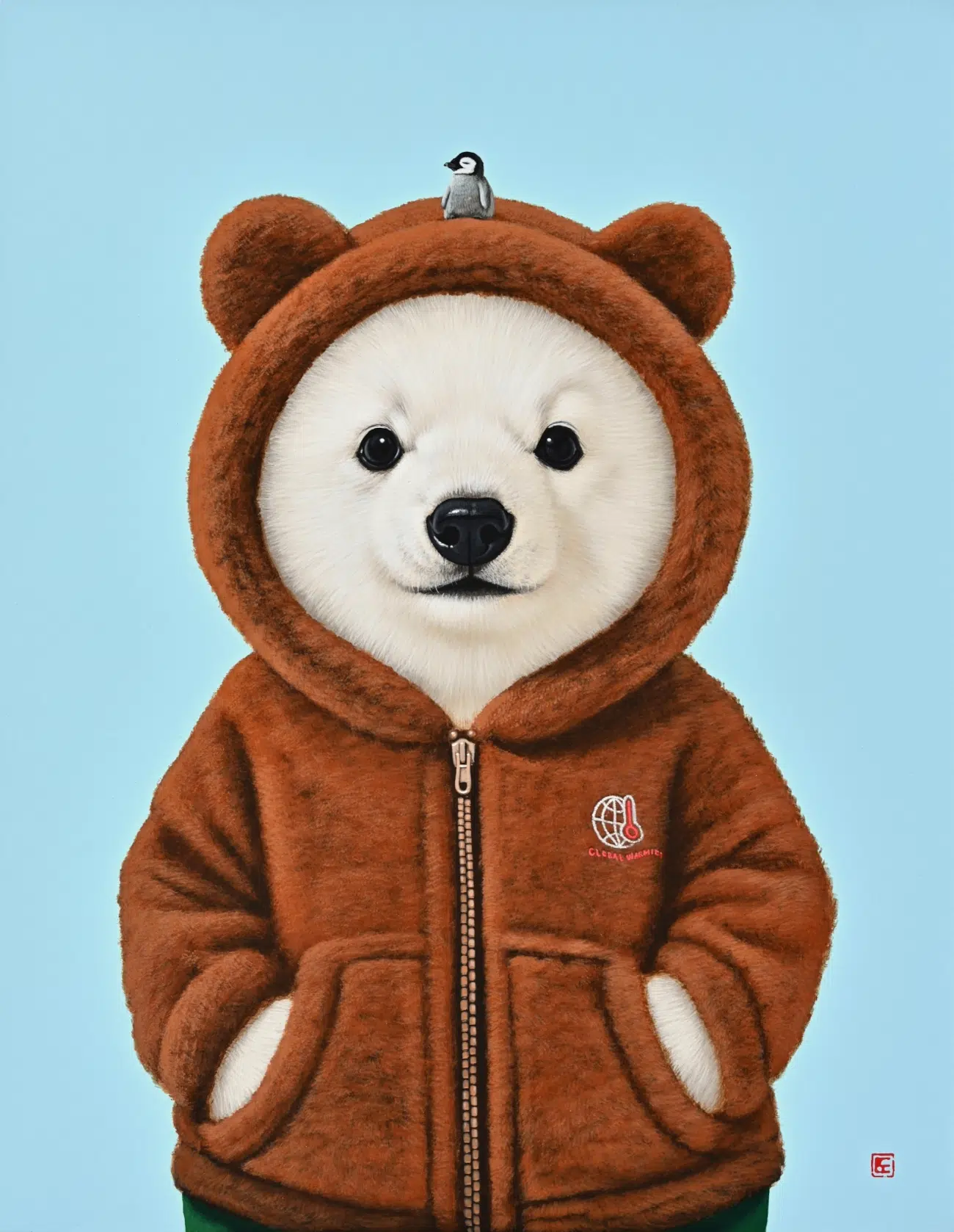
Takumi Kama, “Polar Bear in a Bear hoodie,” 2026, Japan. Acrylic color. Cotton on wood panel. L41×W31.8×H2.1cm(F6)
What materials and media do you work with, and what do you like about each of them?
My materials are quite traditional: I paint on wooden panels covered with cotton canvas, using acrylic paint. The technique itself is relatively simple.
At university, I studied the fundamentals of oil painting, tracing its techniques back to classical methods. I initially worked with oil paint, but gradually became interested in issues associated with its aging over time, such as yellowing and cracking. This led me to explore acrylic paint, a relatively modern medium. Although acrylic painting has a shorter history and its techniques are not as fully established as those of oil painting, I find the process of exploring and developing its possibilities appealing. I am also attracted to its potential for long-term durability.
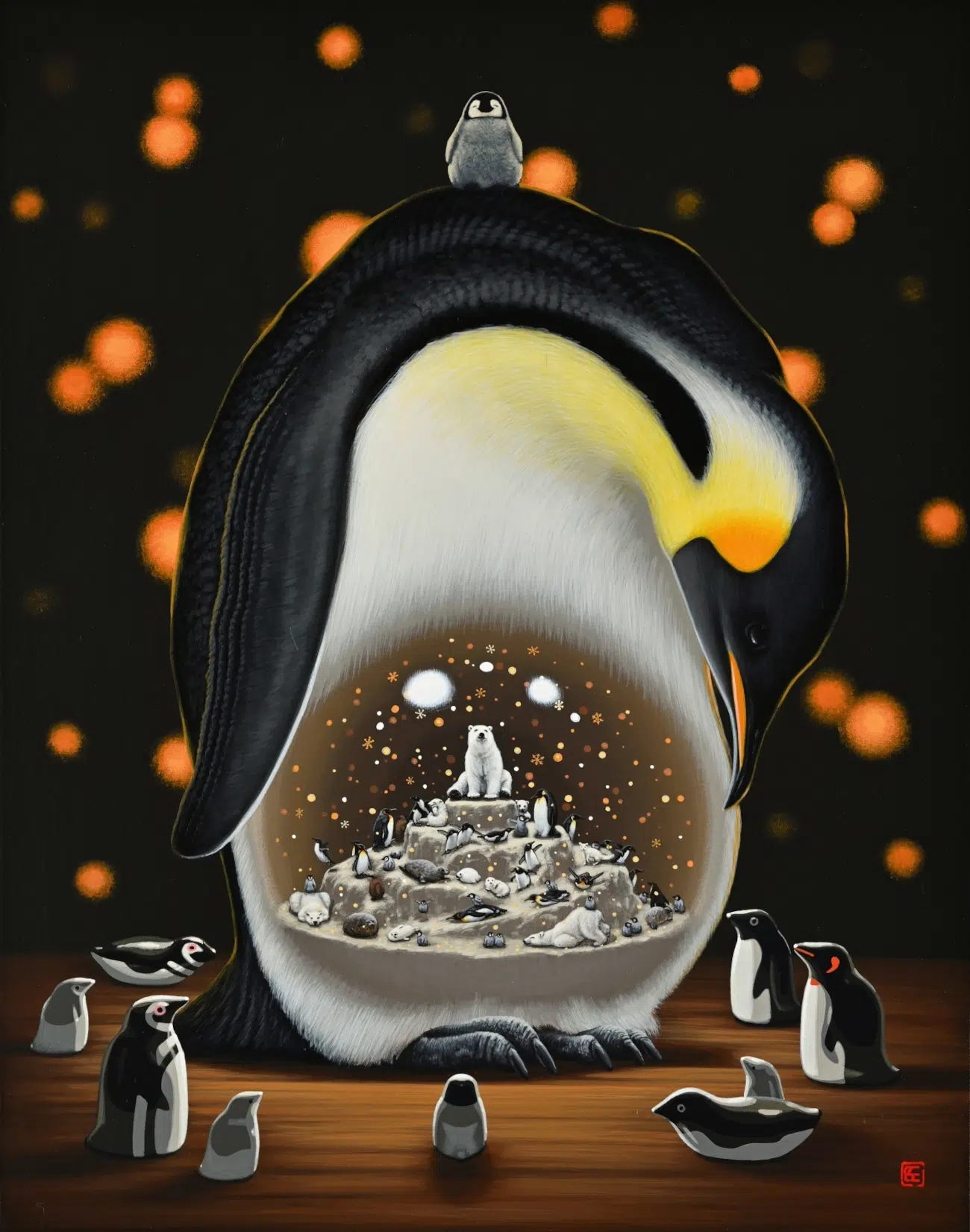
Takumi Kama, “Penguin Snow Globe,” 2026, Japan. Acrylic color. Cotton on wood panel. L41×W31.8×H2.1cm(F6)
What do you hope people will take away from your work?
I don’t intend to present viewers with a single definitive answer through my work. I want to avoid simply imposing my own concerns on viewers from the position of an artist. Instead, I would rather stand alongside them and invite them to consider these questions together, as if saying, “Shall we talk about this?”
To me, an artwork is like a table around which we sit together to have that conversation. Even as we enjoy convenient and comfortable lives, there are moments when we experience a sense of unease about something. Normally, it is easy to turn away from these feelings and forget about them. But I believe art can give us an opportunity to pause and reconsider the things that might otherwise go unnoticed. If someone who encounters my work happens to experience a similar sense of unease at some point in their future, and my work comes back to mind, perhaps prompting them to think differently or imagine an alternative future, I could not be happier.
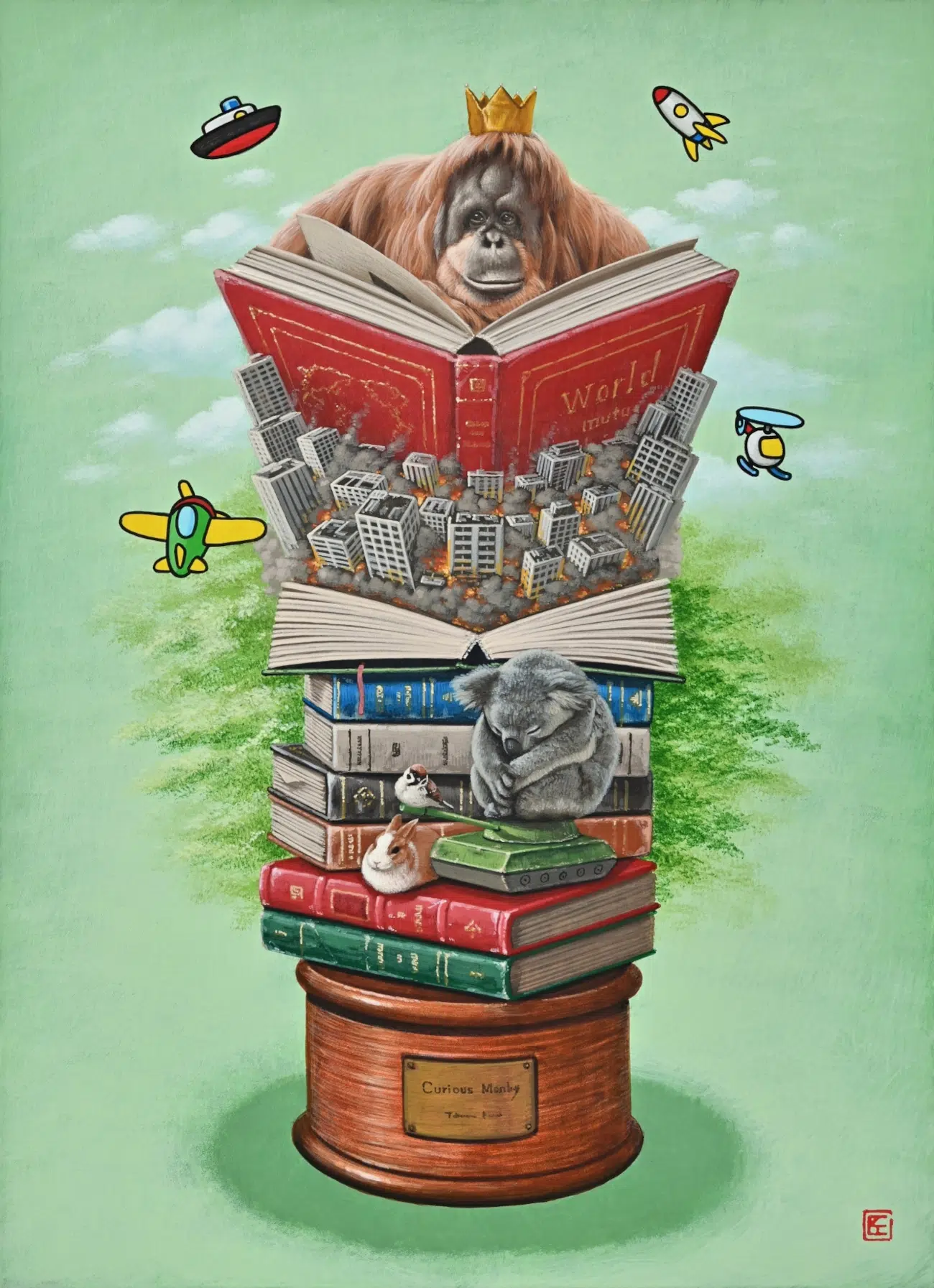
Takumi Kama, “The Monkey King,” 2026, Japan. Acrylic color. Cotton on wood panel. L33.3×W24.2×H2.1cm(F4)