Evolution is typically thought of as a slow, gradual process, with species adapting over generations in response to environmental changes. But when environments change suddenly and dramatically, evolution can happen much faster than scientists once thought.
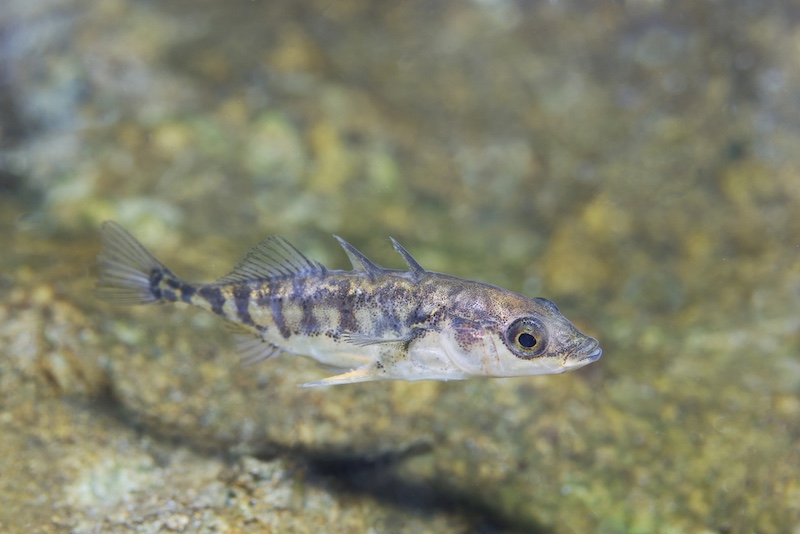
On March 27, 1964, a powerful earthquake struck southern Alaska, lifting parts of the coastline and creating new freshwater ponds from what had once been marine habitat. Several threespine stickleback fish became trapped in these ponds across at least three islands in Prince William Sound and the Gulf of Alaska, forcing them to quickly adapt to their new and very different environments. Isolated from other stickleback populations still in the ocean, the freshwater sticklebacks developed dramatically in less than 50 years.
Scientists from the University of Alaska Fairbanks, University of Alaska Anchorage, University of Oregon, and University of Illinois compared the newly adapted stickleback with older freshwater populations and found that, despite being less than 50 years old, they had evolved many of the same genetic and physical characteristics, including differences in their eyes, body shape, color, bone size, and body armor.
“We find that the freshwater populations, despite population genetic analyses clearly supporting their young age, have diverged phenotypically from oceanic ancestors to nearly the same extent as populations that were likely founded thousands of years ago,” reported the scientists in 2010. “Our results support the intriguing hypothesis that most stickleback evolution in fresh water occurs within the first few decades after invasion of a novel environment.”
This incredible discovery suggests that rapid evolution could be possible in other species, too. “This research perhaps opens a window on how climate change could affect all kinds of species,” said Susan L. Bassham, a Cresko lab senior research associate who co-authored the paper. “What we’ve shown here is that organisms—even vertebrates, with long generation times—can respond very fast to environmental change.”
Read the full study on the National Library of Medicine site and find out more in the video below.
A 1964 Alaskan earthquake revealed just how quickly stickleback fish can evolve. They dramatically adapted to freshwater in less than 50 years.
Source: Evolution of stickleback in 50 years on earthquake-uplifted islands; Small fish species evolved rapidly following 1964 Alaska earthquake
Related Articles:
Meet the “Red Handfish,” a Fascinating Fish That Walks With Hand-Like Fins Across the Sea Floor
Tiny Fish the Size of a Fingernail Can Produce Noises as Loud as an Elephant
Unlikely Friendship Between a Minnesota Woman and a Sunfish Enters Its Ninth Year
Watch First-Ever Footage Captured of the Ground Shifting During a Powerful Earthquake