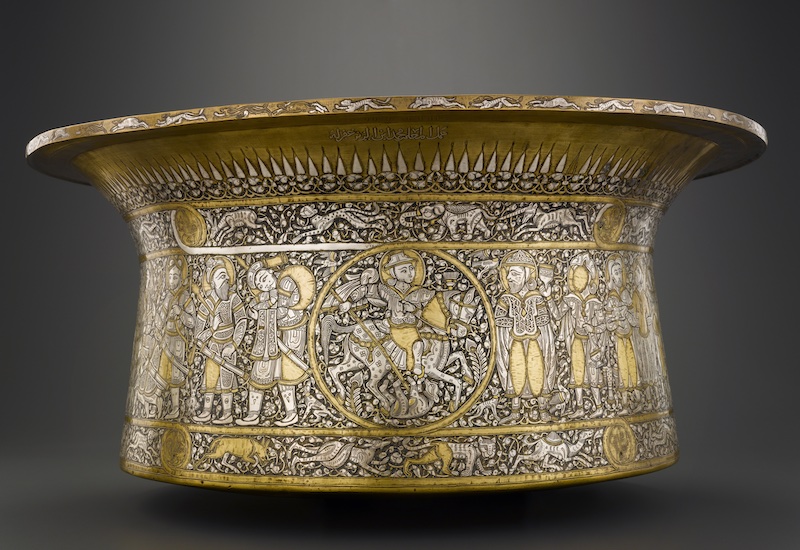
Basin known as the Baptistery of Saint Louis. Mamluk period, ca. 1325-40. Egypt or Syria. Copper alloy with engraving and inlay of silver, gold, and black paste. Credit: © Musée du Louvre, Dist. GrandPalaisRmn / Hughes Dubois
For the first time, 26 masterpieces from the Louvre’s renowned collection of Islamic art will travel to the United States. From the Louvre: Masterpieces of Islamic Art opens September 26, 2026, at the Smithsonian's National Museum of Asian Art in Washington, D.C. The exhibition brings together works created between the seventh and nineteenth centuries. They span a vast geographic area, from Spain to India.
The exhibition offers a rare look at the breadth of the Louvre’s Islamic art holdings. The selection ranges from intricate metalwork to monumental courtly imagery. Among the highlights is the Baptistery of Saint Louis, a lavish copper-alloy basin created in Syria or Egypt around 1330–1340 during the Mamluk dynasty. Its surface combines gold and silver inlays with finely engraved figures of humans and animals. Winding vegetal motifs fill the spaces between them.
Visitors will also encounter an enigmatic Andalusian bronze lion and a monumental portrait of a Persian king adorned with jewels. Together, these works reveal the technical sophistication and visual diversity of Islamic art across centuries and regions.
The exhibition also traces the works’ journeys from their places of origin to the Louvre. Some passed through royal courts and private collections, while others served as diplomatic gifts. Their meanings evolved as they moved between cultures and contexts. This history of movement provides a central thread throughout the exhibition. Rather than treating the works as static masterpieces, From the Louvre considers how objects accumulate meaning through their owners, journeys, and changing contexts. It also places the Louvre’s collection in dialogue with the Smithsonian’s own holdings in Islamic art.
Dr. Souraya Noujaim, director of the Islamic Art Department at the Musée du Louvre, and Dr. Simon Rettig, associate curator for the Arts of the Islamic World at the National Museum of Asian Art, co-curated the exhibition. Their collaboration brings together the expertise of both institutions.
From the Louvre: Masterpieces of Islamic Art opens on September 26, 2026, and is on view through January 18, 2027. Look for it in Galleries 23 and 24 of the National Museum of Asian Art’s East Building.
The Smithsonian’s National Museum of Asian Art will bring 26 masterpieces from the Louvre’s Islamic art collection to Washington, D.C.
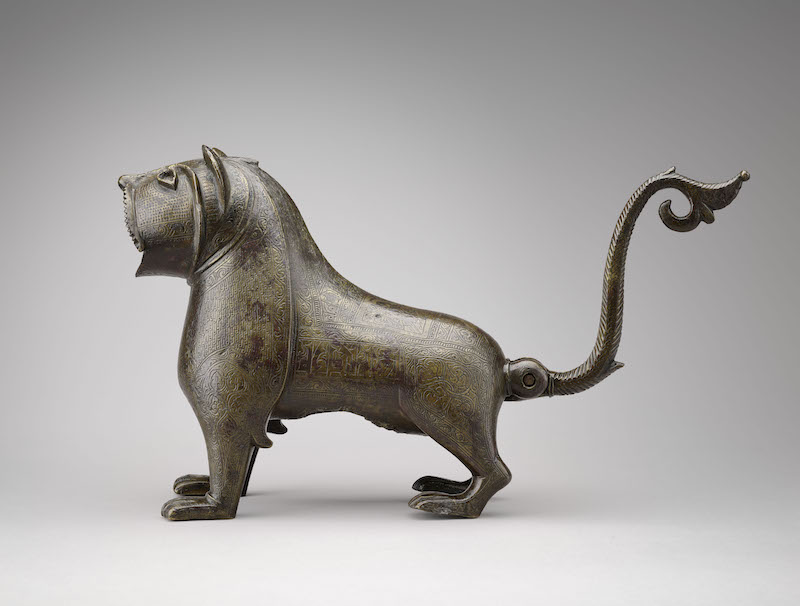
Lion of Monzòn. 12–13th century. Spain, Nasrid. Bronze. Credit: © GrandPalaisRmn (musée du Louvre) / Mathieu Rabeau
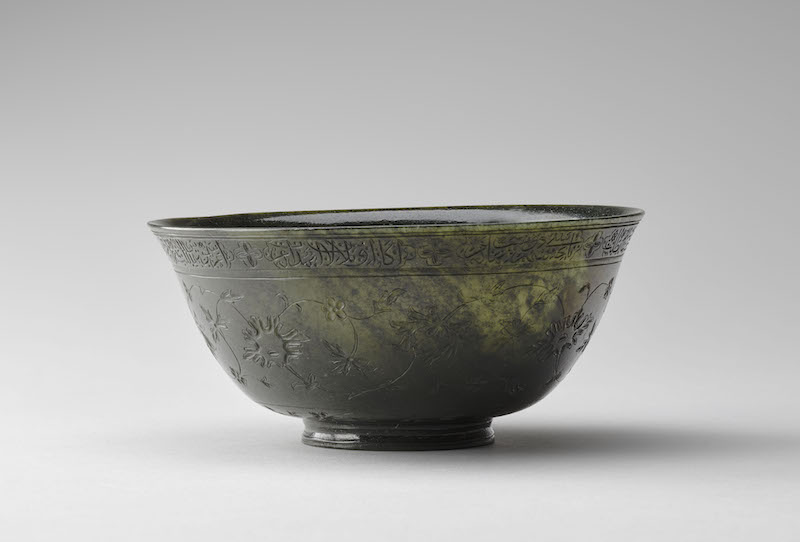
Jade cup with poetic inscription in Persian. Timurid period, ca. 1450–1500. Eastern Iran or Afghanistan Jade. Credit: © GrandPalaisRmn (musée du Louvre) / Mathieu Rabeau
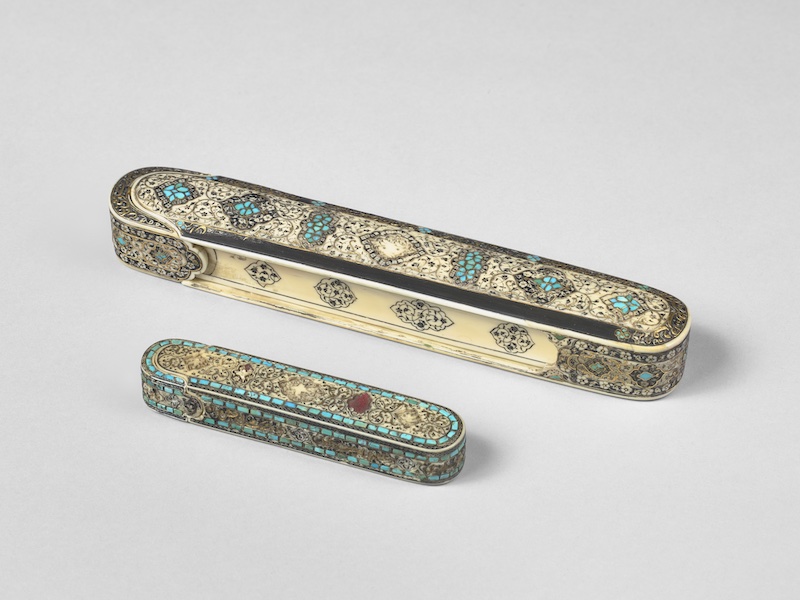
Pencases with the name of Shah Abbas I (r. 1587-1629) and of Grand Vizier Mirza Muhammad Munshi, ca. 1575–1625. Credit: © Musée du Louvre, Dist. GrandPalaisRmn / Hervé Lewandowski
The exhibition explores nearly 1,200 years of artistic production through works that reveal the range of materials, techniques, and traditions across the Islamic world.
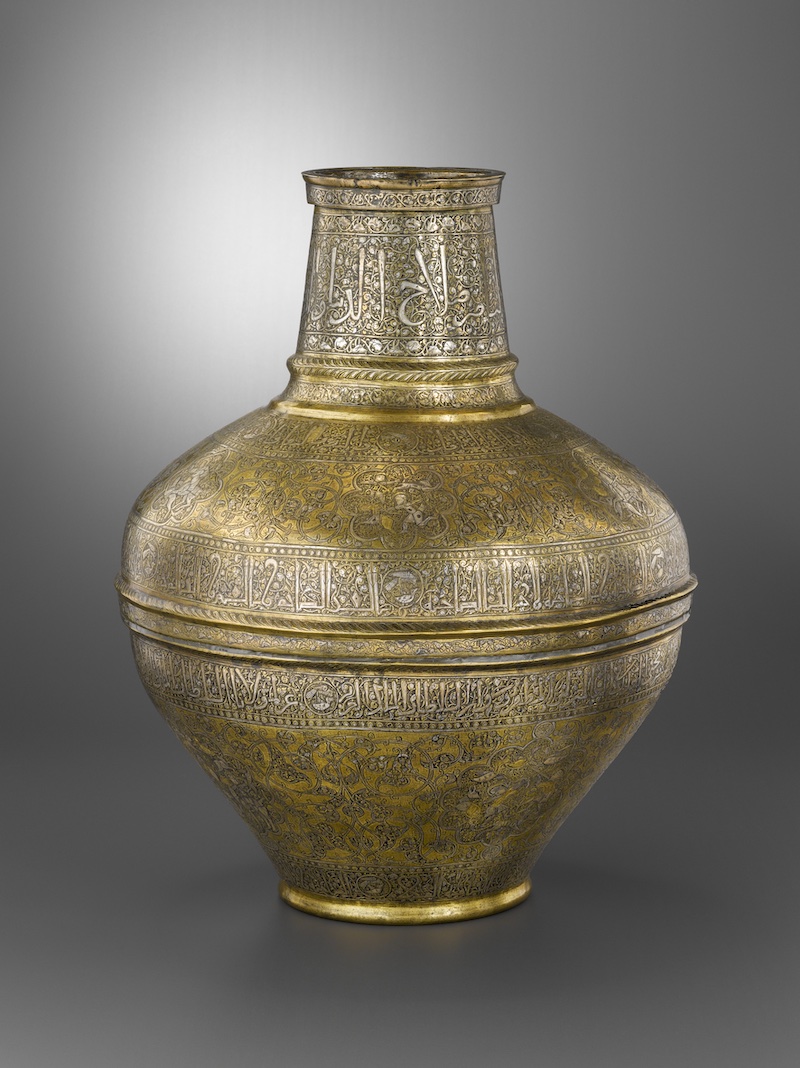
Vase inscribed with the name of Sultan Salah al-Din Yusuf. Made by Dawud son of Salama al-Mawsili. Ayyubid period, between 1237 and 1260. Metal. Credit: © Musée du Louvre, Dist. GrandPalaisRmn / Hughes Dubois
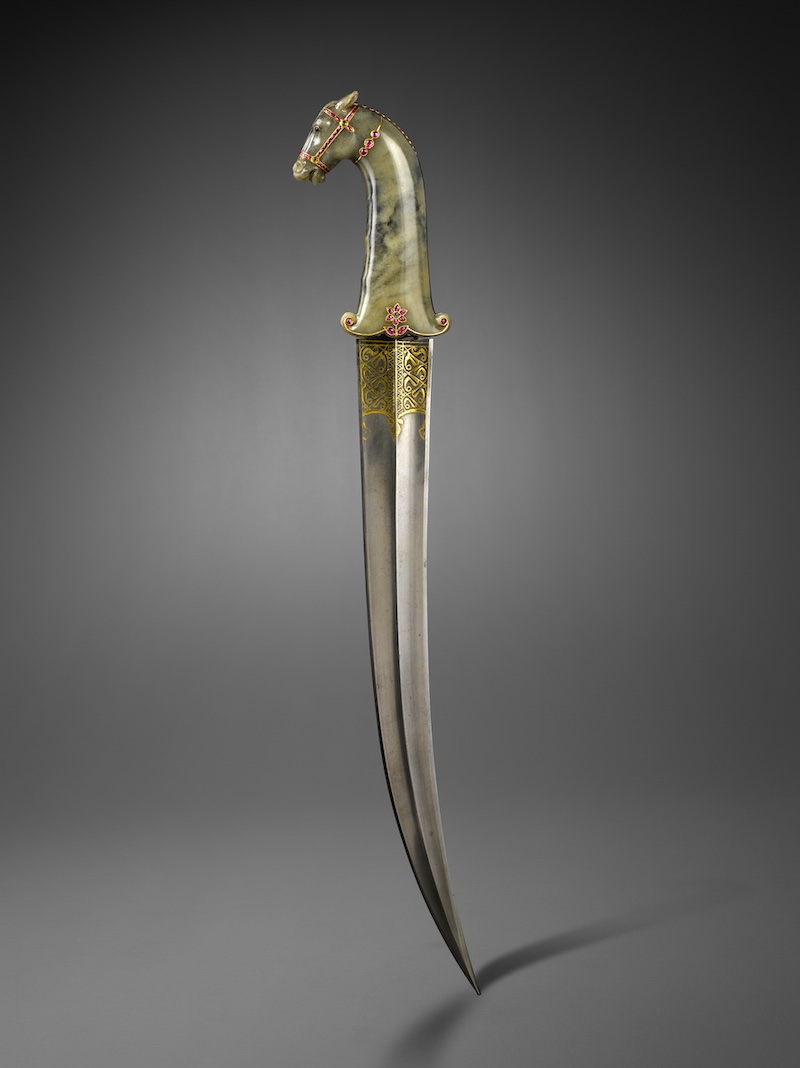
Dagger with horse head, ca. 1700. Mughal India. Jade, rubies, emeralds, and kundan gold; damascus steel inlayed with gold. Credit: © Musée du Louvre, Dist. GrandPalaisRmn / Hughes Dubois
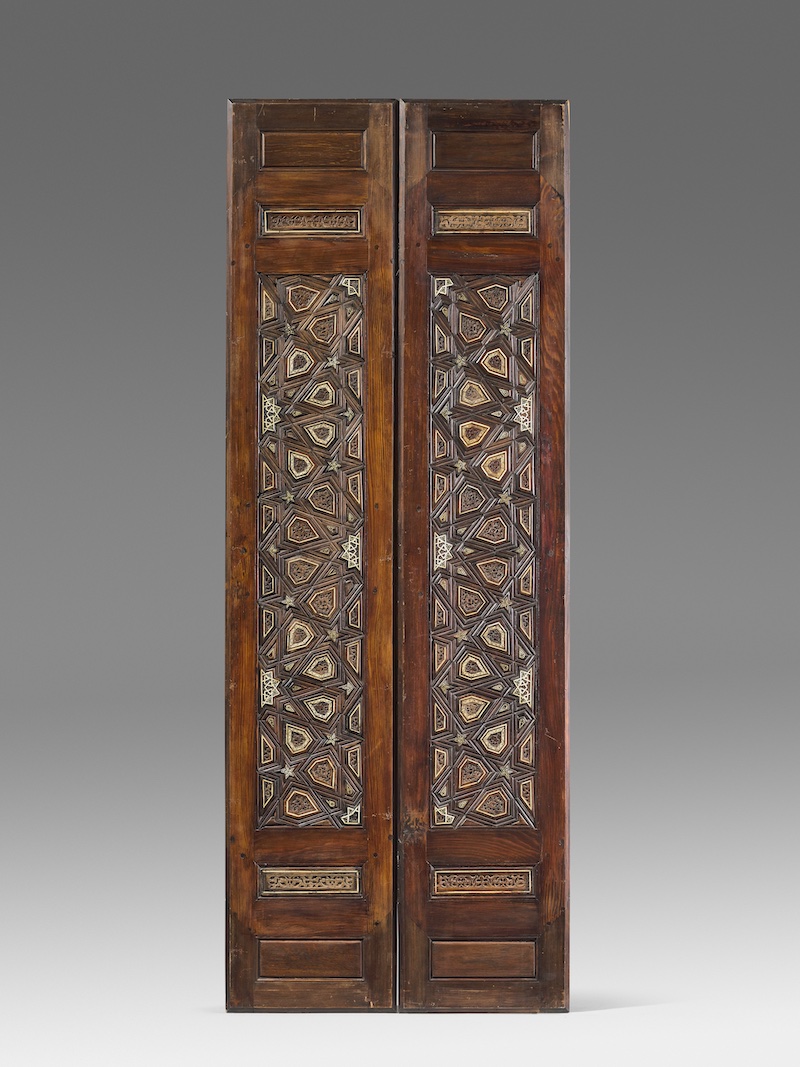
Doors. Mamluk period, ca. 1300 and 19th century. Egypt or Near East. Wood (rosewood), wood assembly decoration (jujube, ebony) inlaid with ivory. Reverse: wood, carved decoration and inlaid with ivory; frame: wood (pitch pine). Credit: © Musée du Louvre, Dist. GrandPalaisRmn / Hervé Lewandowski
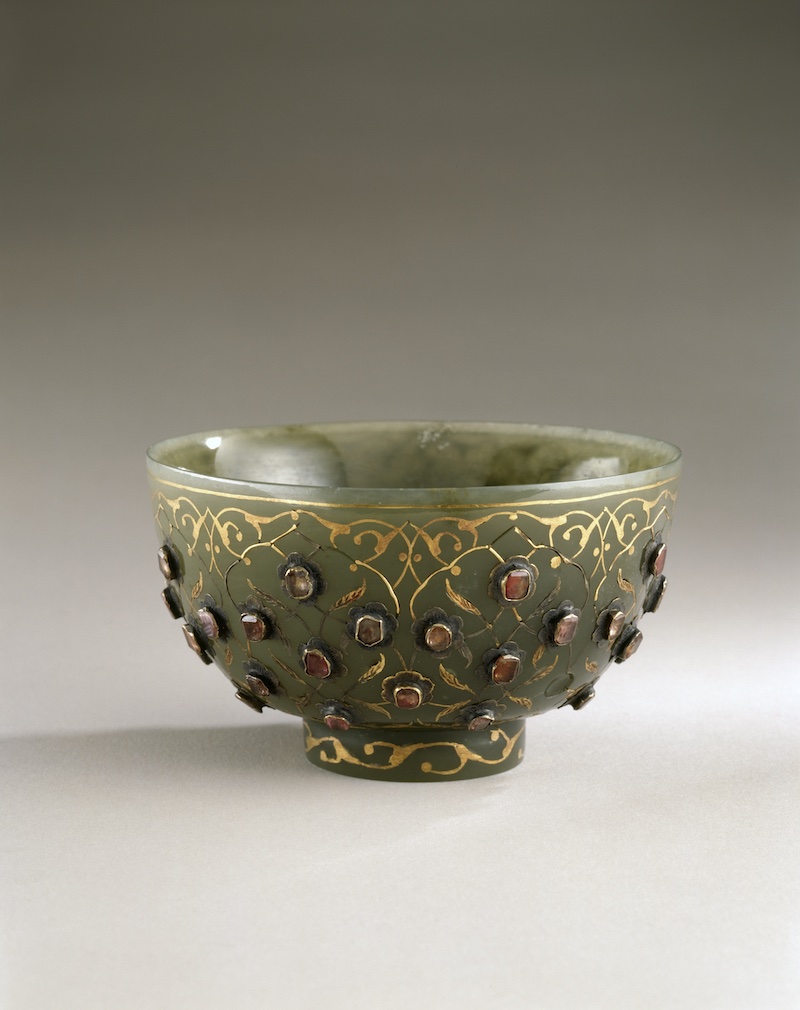
Jade cup with rubies and gold. Ottoman period, ca. 1550–1600. Turkey. Composite, Jade (gemstones), ruby (precious stones), gold (metal). Credit: © Musée du Louvre, Dist. GrandPalaisRmn / Raphaël Chipault
From the Louvre: Masterpieces of Islamic Art opens September 26, 2026, and remains on view through January 18, 2027.
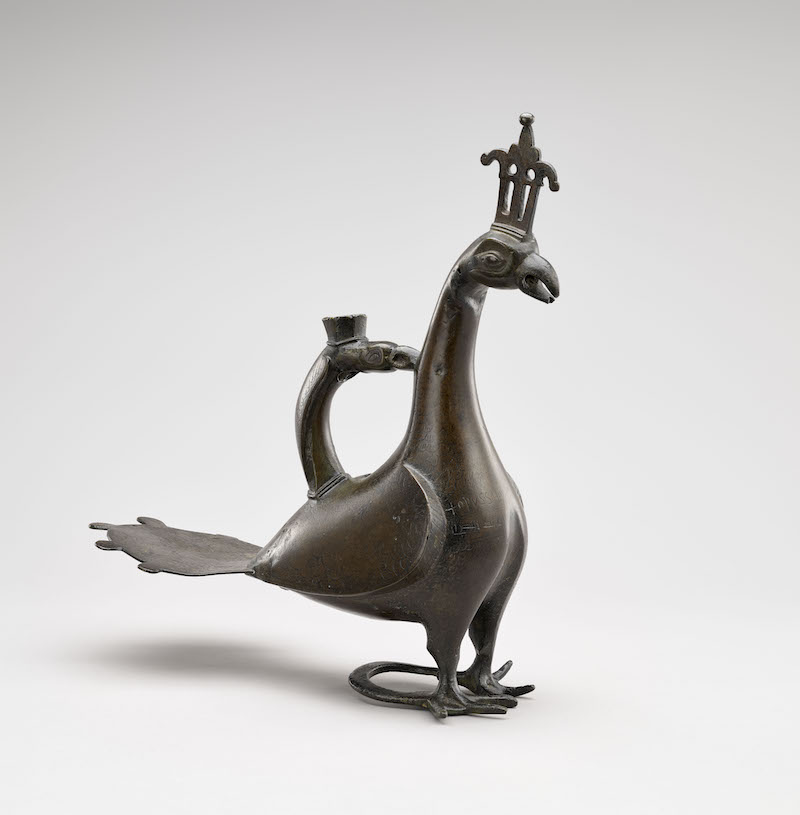
Aquamanile Peacock. Umayyad period, 972. Spain/al-Andalus, probably Cordoba. Bronze cast and chiseled. Credit: © GrandPalaisRmn (musée du Louvre) / Mathieu Rabeau
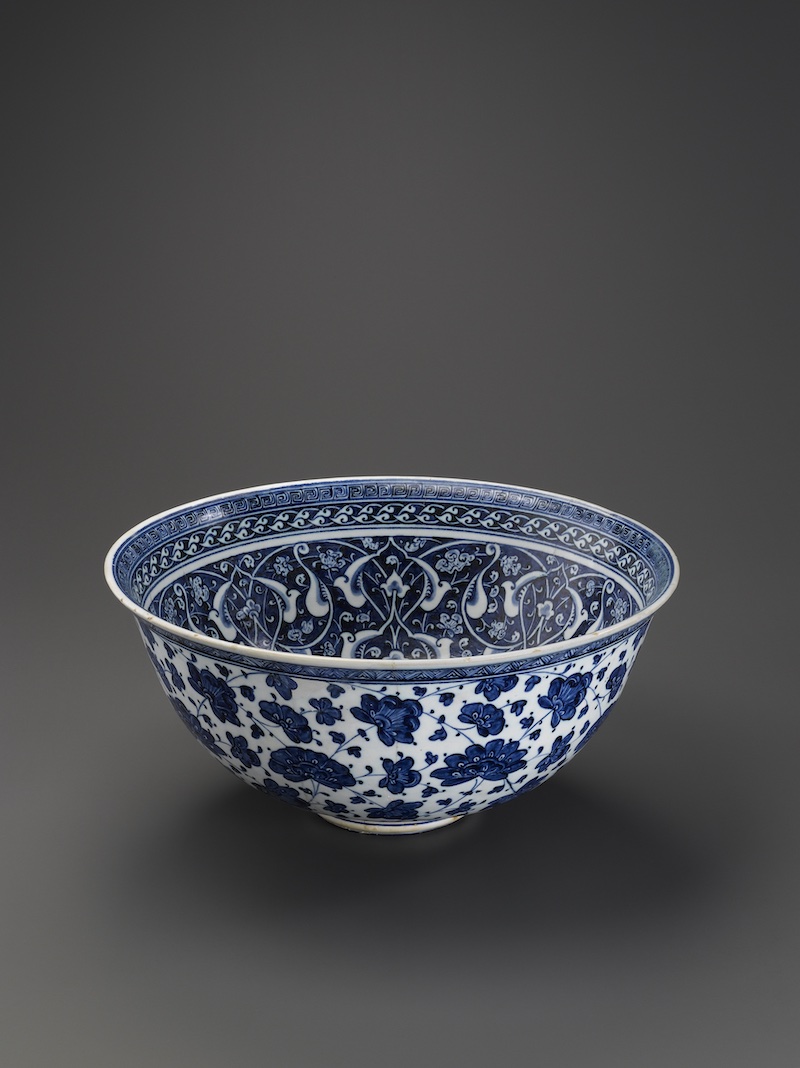
Very large bowl. Ottoman period, ca. 1480. Turkey, Iznik. Ceramic. Credit: © Musée du Louvre, Dist. GrandPalaisRmn / Hughes Dubois
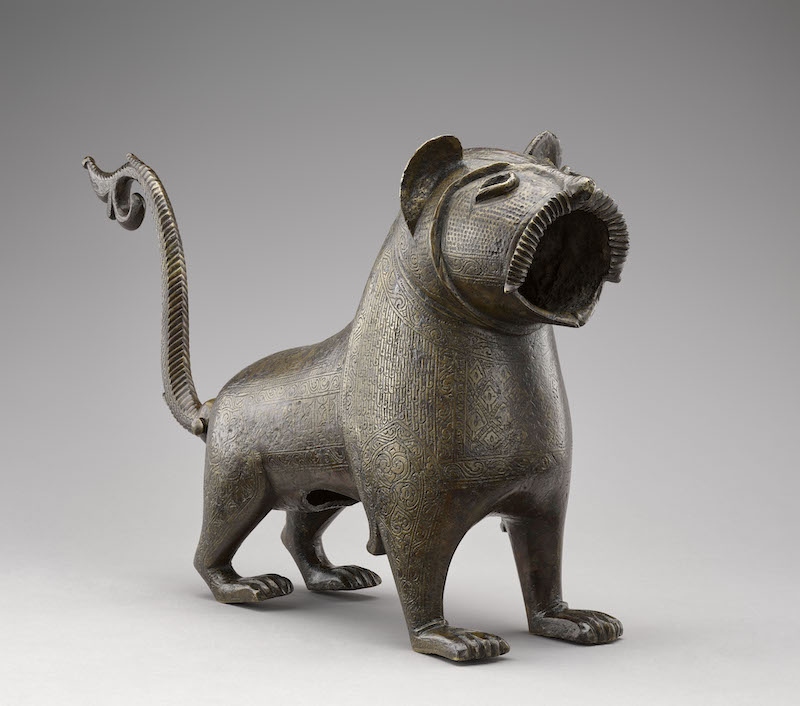
Lion of Monzòn. 12–13th century. Spain, Nasrid. Bronze. Credit: © GrandPalaisRmn (musée du Louvre) / Mathieu Rabeau
Exhibition Information:
From the Louvre: Masterpieces of Islamic Art
September 26, 2026-January 18, 2027
National Museum of Asian Art
1050 Independence Ave SW, Washington, DC 20004
National Museum of Asian Art: Website | Instagram
My Modern Met granted permission to feature photos from the National Museum of Asian Art.
Related Articles:
Explore the Impressively Accurate Medieval World Map by a 12th-Century Islamic Scholar
Dazzling Elements of Ancient Islamic Architecture We Still See Today
10 Incredible Mosques of the World Celebrating the Grandeur of Islamic Architecture
Laser-Cut Cube Immerses Visitors in Light and Pattern at the Seattle Asian Art Museum