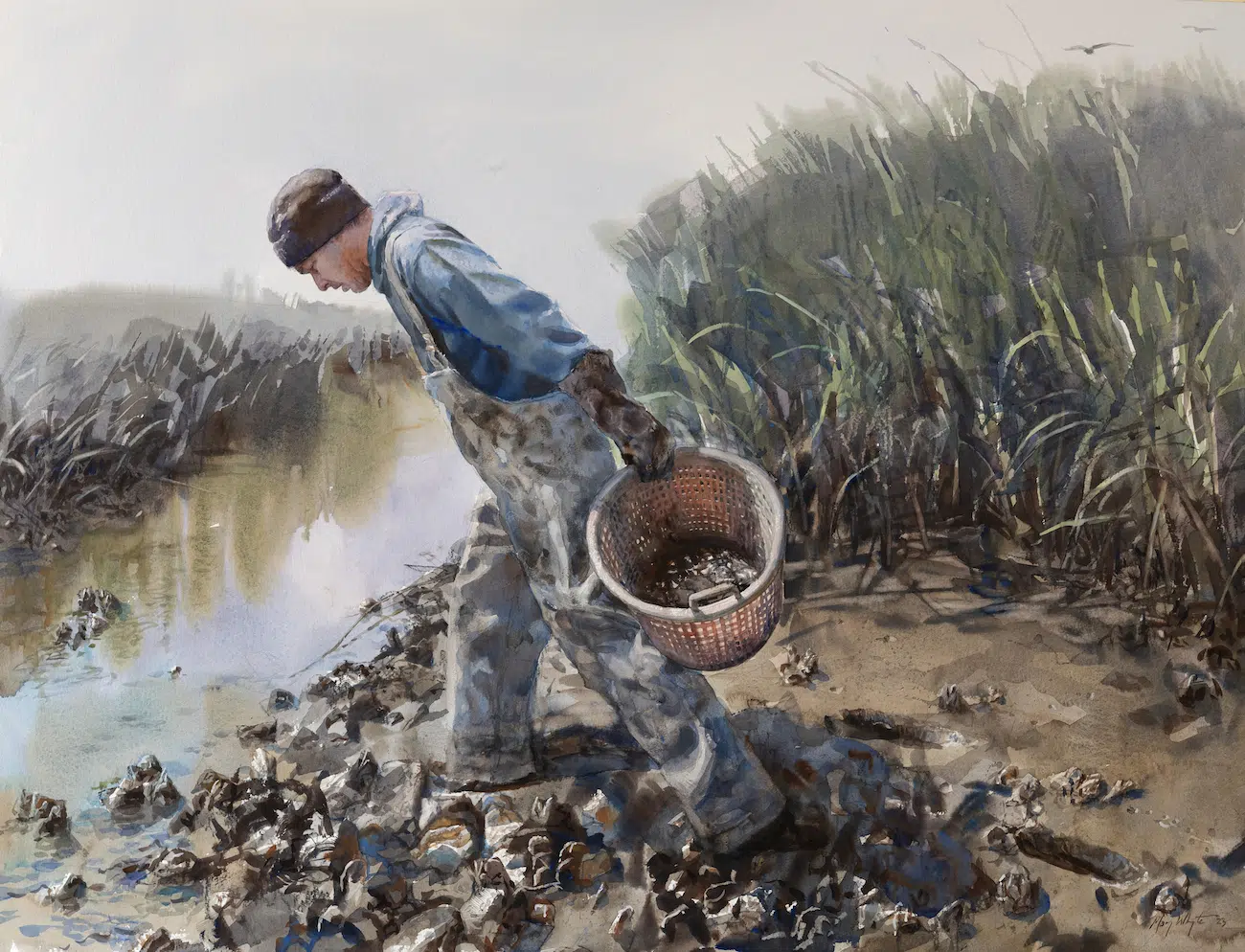
“Oyster Bank,” 2023. By Mary Whyte (American, b. 1953). Watercolor on paper. 37.75 x 47.25 (29.75 x 38). Jon Moeller and Lisa Sauer
Luminous watercolor portraits honor the resilience, dignity, and humanity of America’s blue-collar workforce in artist Mary Whyte’s watercolor paintings. Spanning communities across the United States, her series of work brings together workers whose contributions often go unseen while offering an intimate portrait of the people whose labor sustains everyday life.
The South Carolina-based artist, who boasts a distinguished career in figurative watercolor, spent years traveling across the United States to paint the people who form the backbone of the American working class. The resulting body of work refuses sentiment in favor of specificity. Each portrait attends closely to the physical evidence of a person’s labor: weathered hands, worn postures, the particular quality of light in a diner or a workshop at a particular hour of a particular day.
“The blue-collar workers I have painted across the country are diverse in almost every way,” Whyte tells My Modern Met. “Nonetheless, the one trait that most all of them share is a quiet sense of commitment to their work. Each person seemed to accept the purpose and value of their job, whether or not it was rewarded or acknowledged by the outside world.”
Artist Mary Whyte paints watercolor portraits of blue-collar workers across the United States, from Kansas diners to rural farms and workshops.
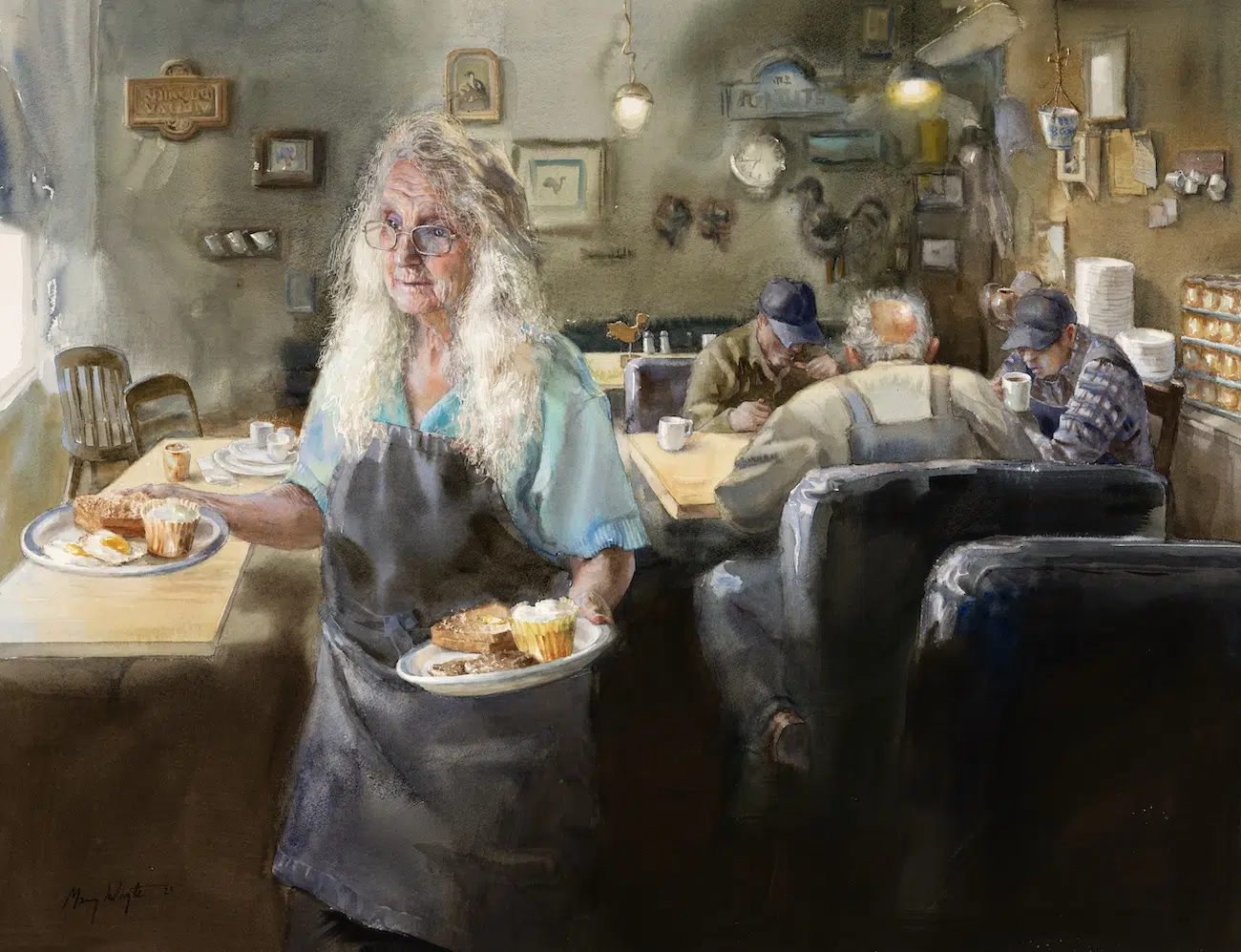
“Red Rooster Café,” 2021. By Mary Whyte (American, b. 1953). Watercolor on paper. 38.5 x 47 (24 x 31)
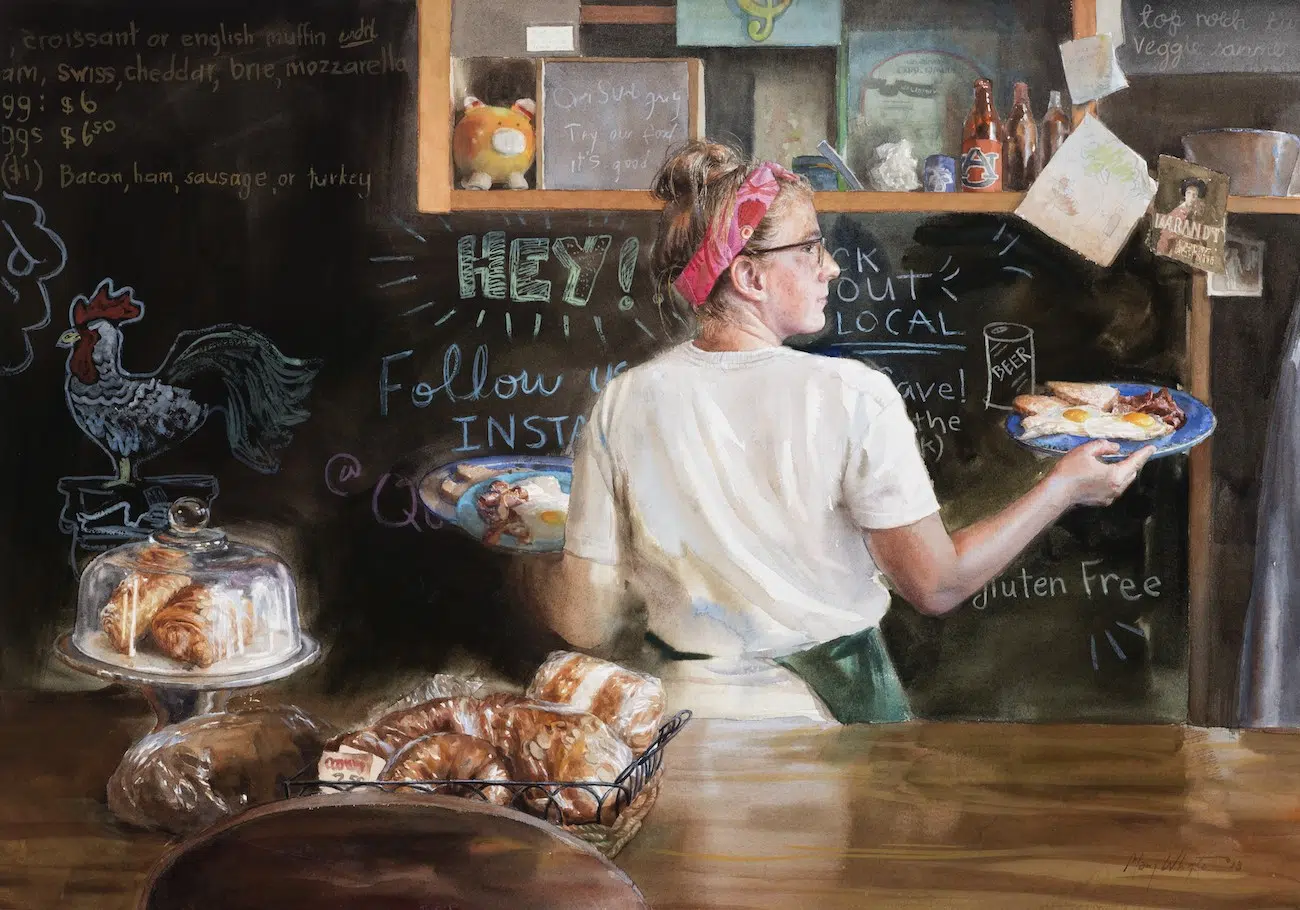
“Blue Plate Special,” 2018. By Mary Whyte (American, b. 1953). Watercolor on paper. 37 x 46 (23 x 33 unframed)
That commitment becomes the central subject of her latest exhibition, Mary Whyte: Salt of the Earth. Featuring over 50 portraits of everyday laborers, the artist makes no effort to dramatize her subjects or render their circumstances as picturesque. Instead, she trains her attention on the gesture, posture, and expression that most precisely captures a person’s relationship to their work.
“Often the story is told in the gesture of the person’s hands, whether they are rough, aged, or graceful,” she tells My Modern Met. “Most often it is only one or two key elements that best capture the feeling I want in a painting. You don’t have to paint all the spots on the cat for the viewer to know it is a cat.”
Throughout the exhibition, this attention to labor’s hidden architecture recurs. Whyte describes her interest in the people behind the scenes of even the simplest transactions: “Just getting a cup of coffee to go in the morning requires the largely unseen service of dishwashers, delivery people, kitchen help, floor moppers, food reps, accountants, store managers, and window washers,” she tells My Modern Met. “Backstage is where you find the real story.”
The artist’s latest exhibition, Mary Whyte: Salt of the Earth, presents more than 50 portraits of everyday laborers.
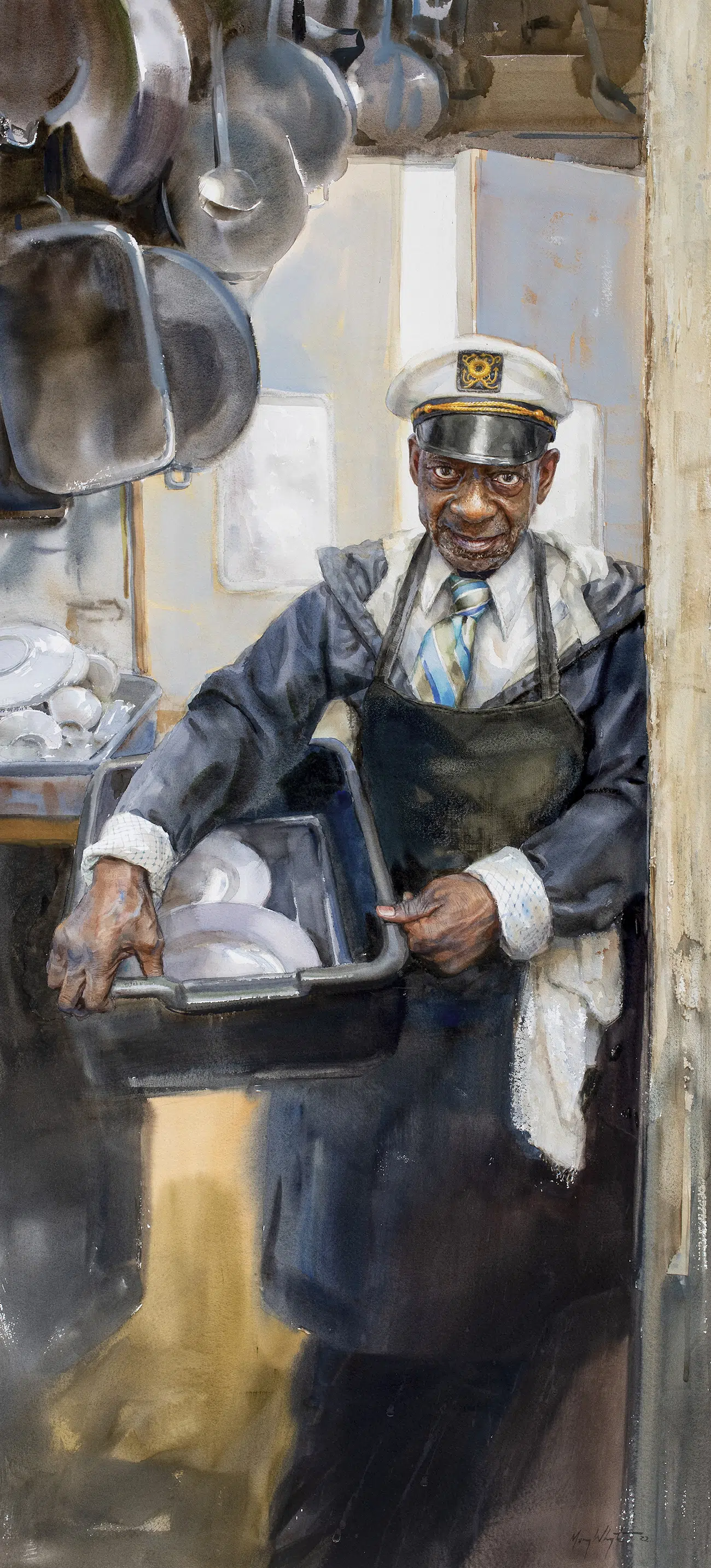
Captain, 2022. By Mary Whyte (American, b. 1953). Watercolor on paper. 73 x 41.5 (57.5 x 26 unframed)
Whyte’s chosen medium of watercolor carries its own significance within the exhibition. Watercolor demands a precision of timing that few other media require. The softness or hardness of an edge depends entirely on the wetness of the paper at the moment of application, which means that every decision must be correct on the first attempt. There is no layering over mistakes, no reworking the composition once the pigment sets. Whyte invokes John Singer Sargent’s description of the medium as “making the best of an emergency,” and her work reflects exactly this quality: it is fast, decisive, and luminous, with the translucency of the pigment lending the skin of her subjects a warmth that oil paint rarely achieves.
Working in watercolor, a medium defined by timing and moisture, Whyte achieves a luminous skin tone and immediacy that often leads visitors to mistake the works for oil paintings.
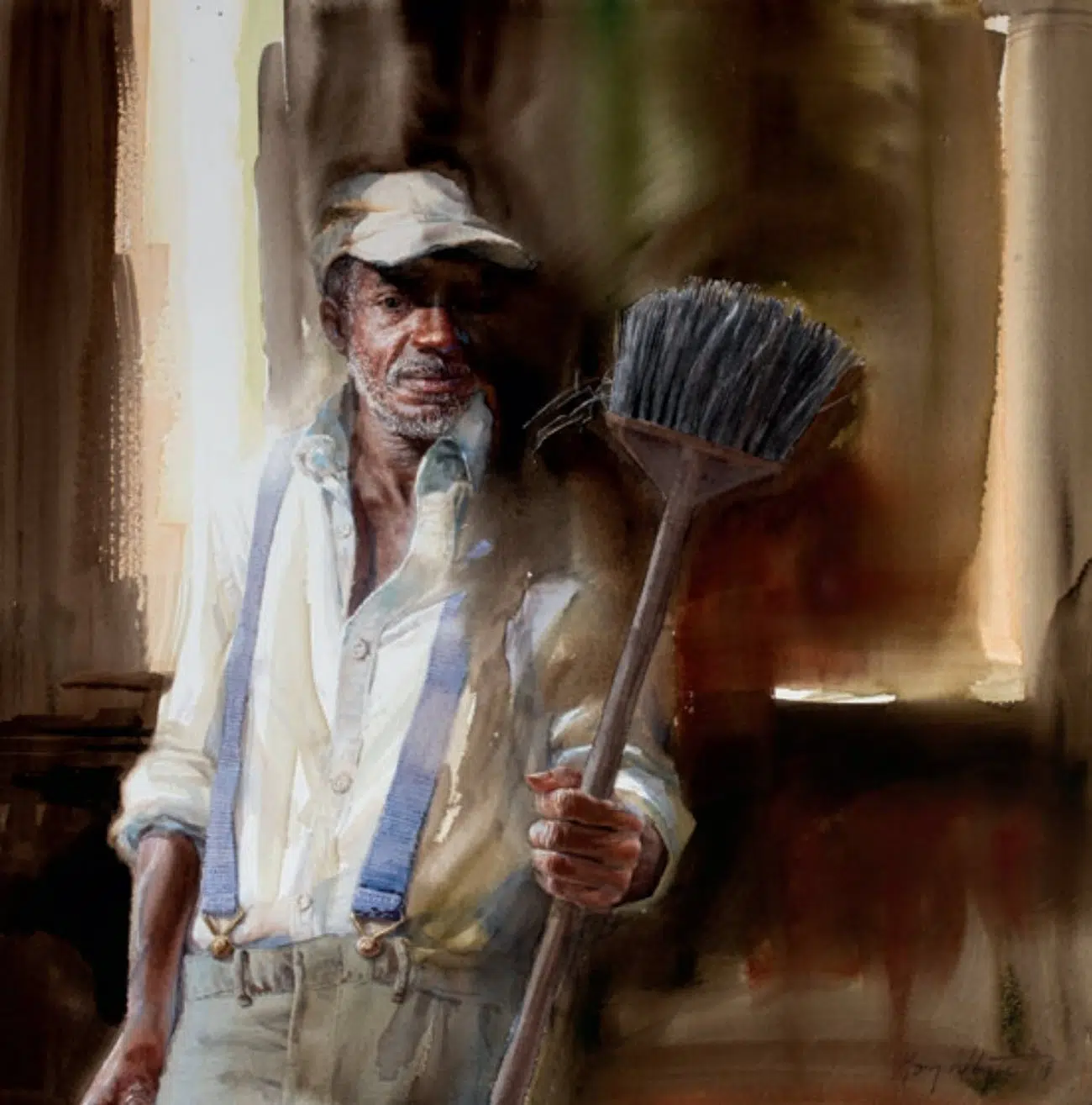
“Sweeper,” 2019. By Mary Whyte (American, b. 1953). Watercolor on paper. 35 ¼ x 34 ¼ inches
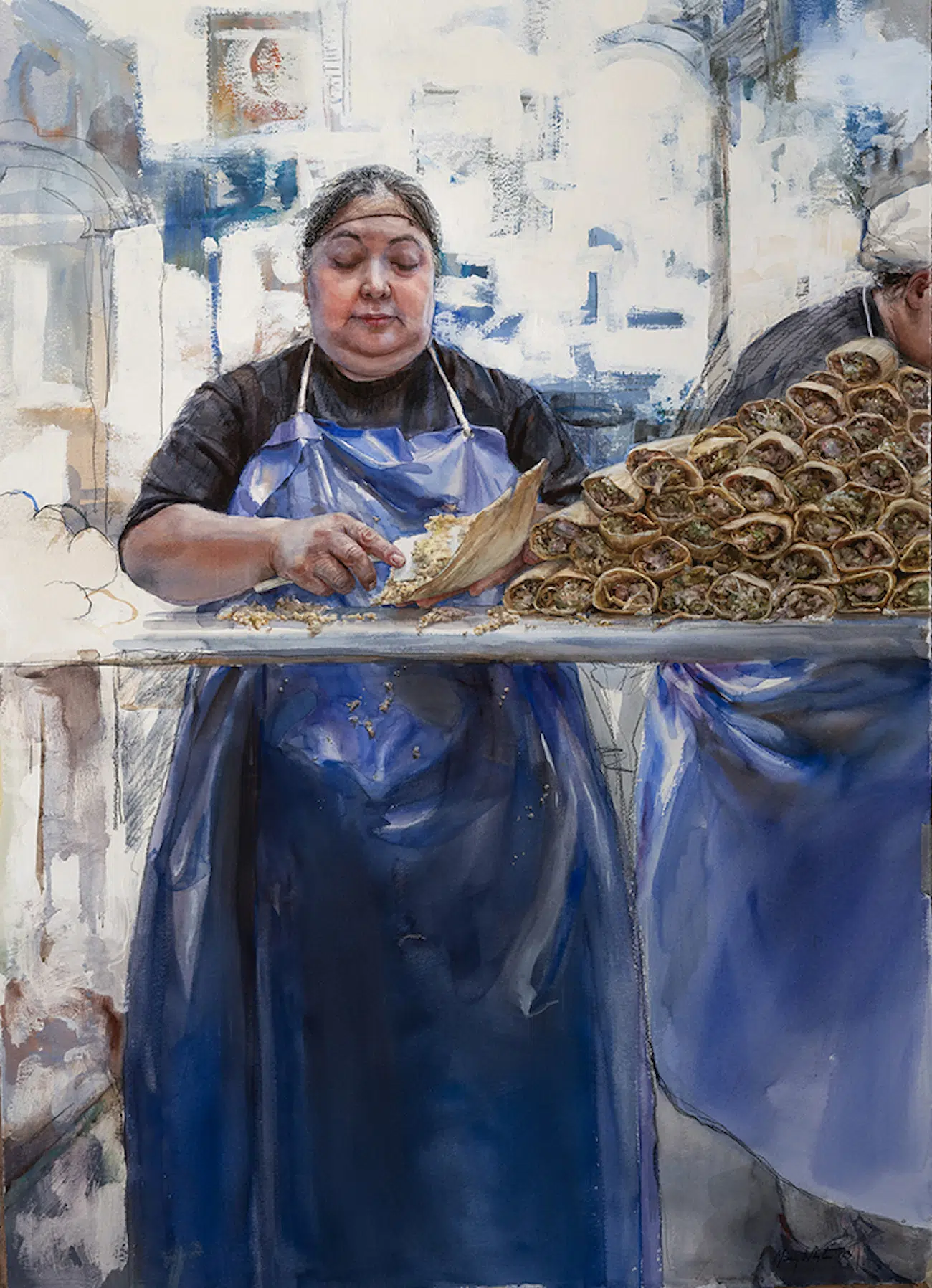
“Tamales,” 2023. By Mary Whyte (American, b. 1953). Watercolor on paper. 55 x 43 (41 x 29)
The Gibbes Museum, now in its second century as one of Charleston’s foremost cultural institutions, positions Salt of the Earth as a timely contribution to ongoing conversations about American identity. Dr. Alex Rich, the museum’s president and CEO, frames the exhibition’s resonance in terms of both historical moment and institutional purpose. “There are endlessly important reasons to present Mary Whyte’s work at any moment in time—she is a master watercolorist with a huge, much deserved following,” Dr. Rich tells My Modern Met. “But to present her work coincidentally with our celebrating 250 years of our country makes this exhibition doubly poignant.”
Dr. Rich emphasizes that the exhibition functions less as a survey of regional types and more as a portrait of collective experience. “Her portraits speak to our country today, as she honors people from every walk of life,” he tells My Modern Met. “Our United States can often seem less than united, with our differences frequently separating more than simply distinguishing us. Mary casts a thoughtful eye on every sitter, and as a result, her work resonates profoundly with every visitor to the Gibbes.”
Coinciding with the 250th anniversary of the United States, the exhibition invites viewers to recognize shared emotional experience across overlooked workers, regardless of region or background.
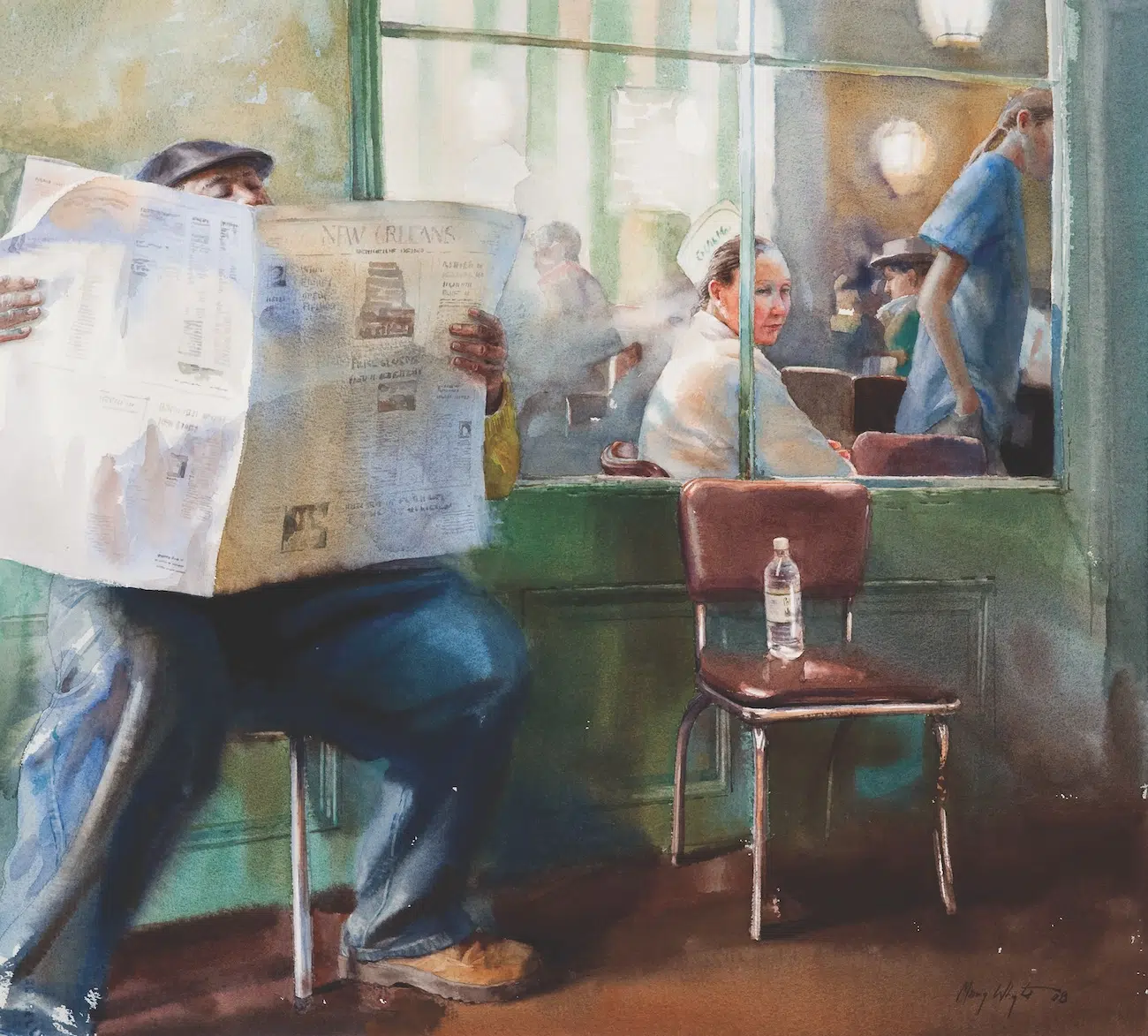
“News at Café du Monde,” 2008. By Mary Whyte (American, b. 1953). Watercolor on paper. 41 x 42.75 (31 x 32.75)
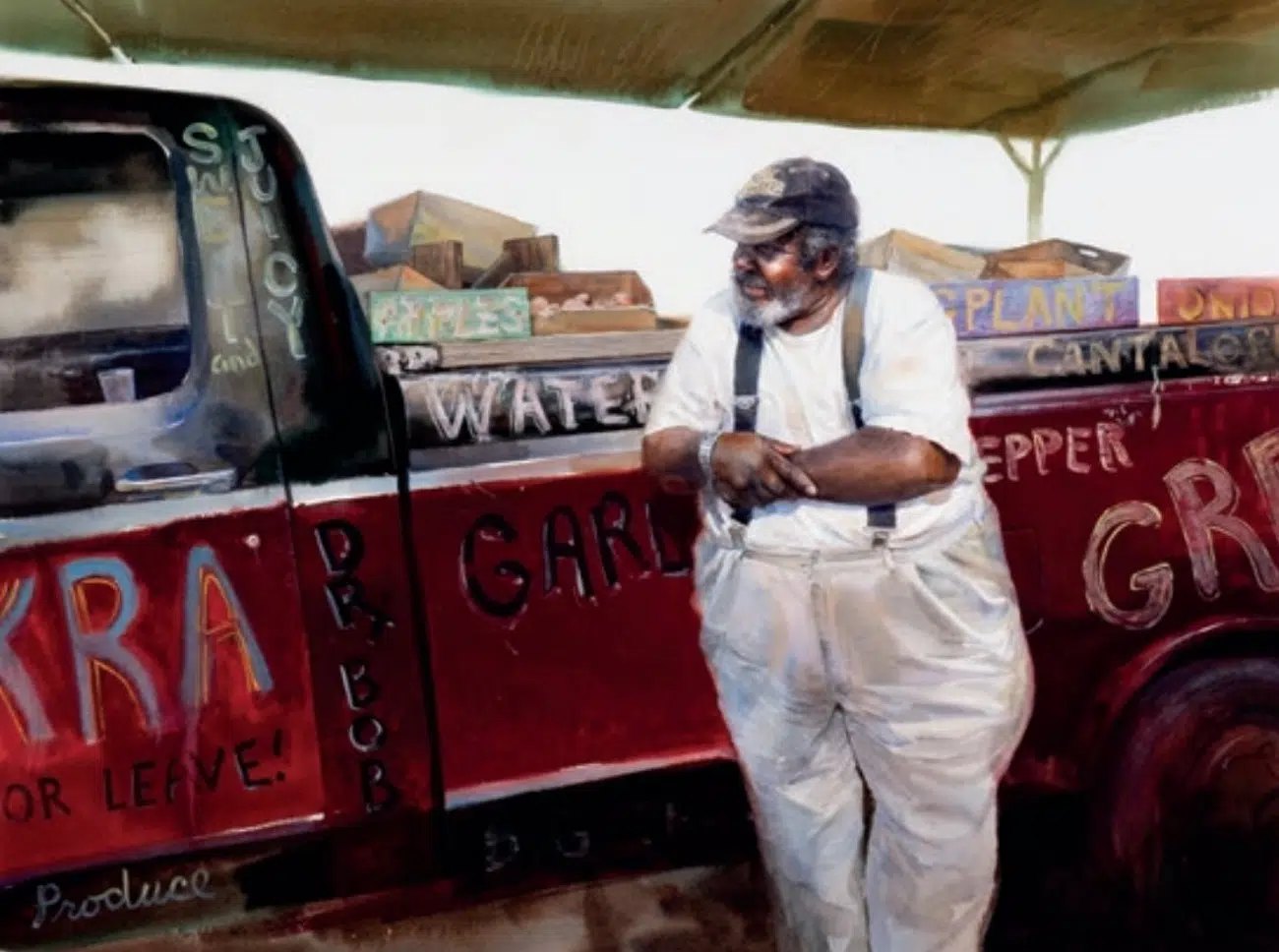
“Mr. Okra,” 2008. By Mary Whyte (American, b. 1953). Watercolor on paper. 46 x 56 inches (28 ½ x 38 ½ unframed)
The responses from visitors have confirmed that resonance. Dr. Rich describes the reaction in the galleries as one of genuine awe, encompassing both an admiration for the people Whyte portrays and a surprised appreciation for the medium itself. “When visitors realize that what they are looking at is not an oil painting but a watercolor,” he tells My Modern Met, “the appreciation of Mary’s hand as an artist makes every visitor unwittingly conscious of the production of art in addition to the subject matter presented.”
For Whyte, the ambition behind Salt of the Earth reaches beyond the formal achievements of the individual paintings. “My hope is that viewers coming to see Salt of the Earth will recognize the commonness of our humanity,” she tells My Modern Met. “While the viewer may not know or recognize the person depicted in each painting, my hope is that they will recognize the emotion. Emotion is the one thing we all share all over the world. Whether it is joy, sadness, determination, contentment, weariness, or satisfaction, we have all been there.”
Mary Whyte: Salt of the Earth is currently on view through September 27, 2026, at the Gibbes Museum of Art in Charleston, South Carolina.