“The Aftermath”
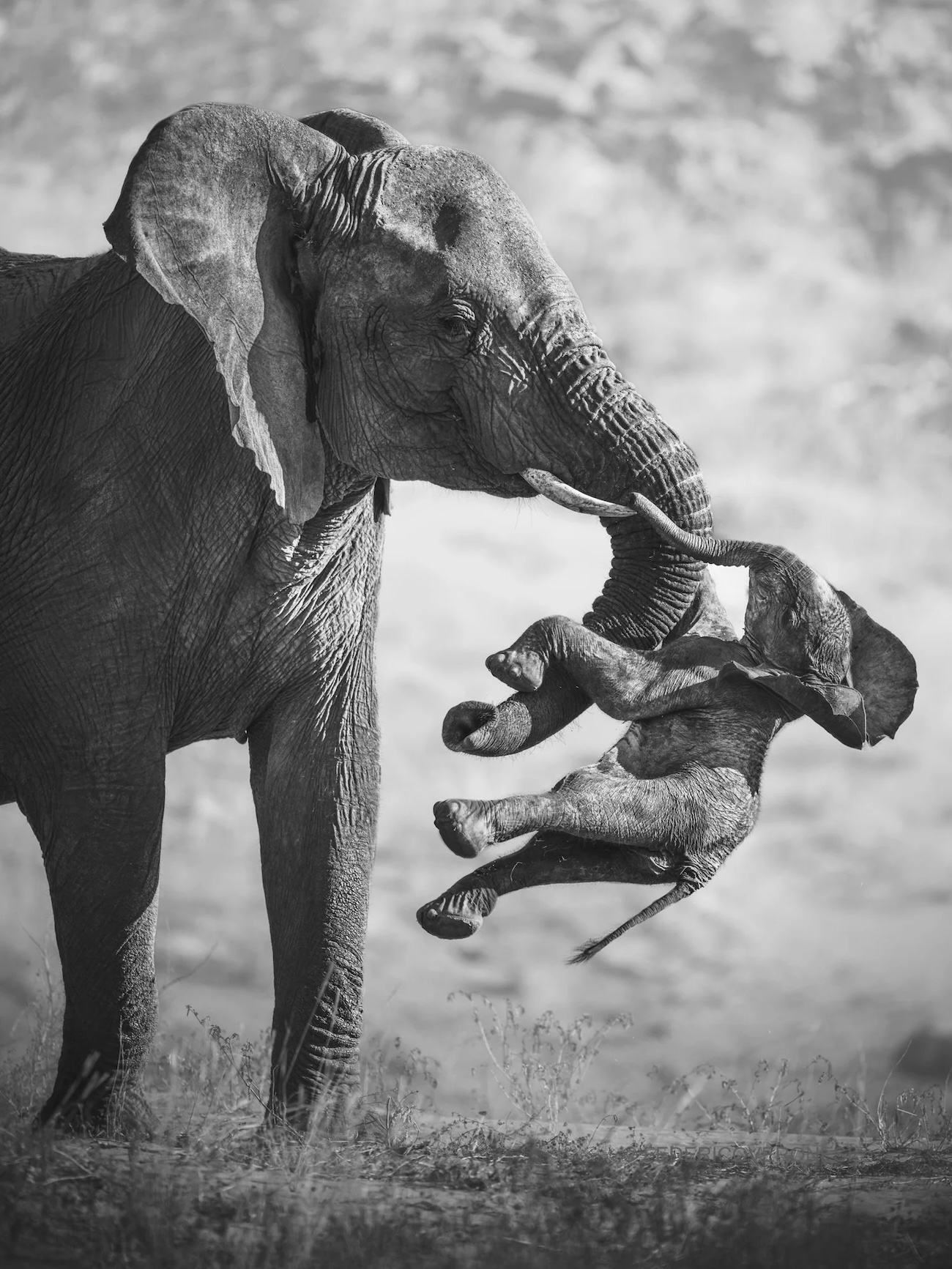
Wildlife photographer Federico Veronesi encountered the shot of a lifetime in Damaraland, Namibia. In September 2025, he witnessed a desert elephant carrying its stillborn calf. What resulted was an arresting black-and-white image that is beautifully composed but ultimately full of grief. The close-up portrait shows the mother with her deceased calf between her tusk and trunk, as if she is unable to let her baby go. The emotional image, titled The Aftermath, was recognized in the prestigious Wildlife Photographer of the Year 2026 competition, with Veronesi earning the title of Overall Winner and the Behavior Mammals category winner.
Veronesi was tracking elephants when he noticed an unusual pattern of drag marks in the sand of a dry riverbed. He understood why when he saw the mother and child. “The calf’s body rose up and in this particular frame, it almost looks like the calf is still alive, playing with its mother or trying to cling to her mother’s trunk,” he recalls to My Modern Met. “I feel that the ambiguity of the image, and how it can be read in many ways make it stand out from the other images I took, where the calf is clearly hanging lifeless from the mother’s tusk.”
The photographer initially felt conflicted about capturing the scene. “After taking the first few images, I felt like I was violating the elephant’s intimate moment, her grief, I was almost ashamed and thought that I shouldn’t take these photographs,” he shares. But ultimately, Veronesi found it important to highlight the complexity of these creatures. Elephants have been observed engaging in behaviors around death, including vocalizing, guarding the deceased, and carrying the dead, as pictured. By photographing this painful moment, Veronesi shows us that wildlife and humans aren’t as far apart as we may think.
We spoke with Veronesi about capturing the poignant shot, his philosophy about photographing wildlife, and more. Scroll down for My Modern Met’s exclusive interview.
What is your photography background, and how did you begin photographing wildlife?
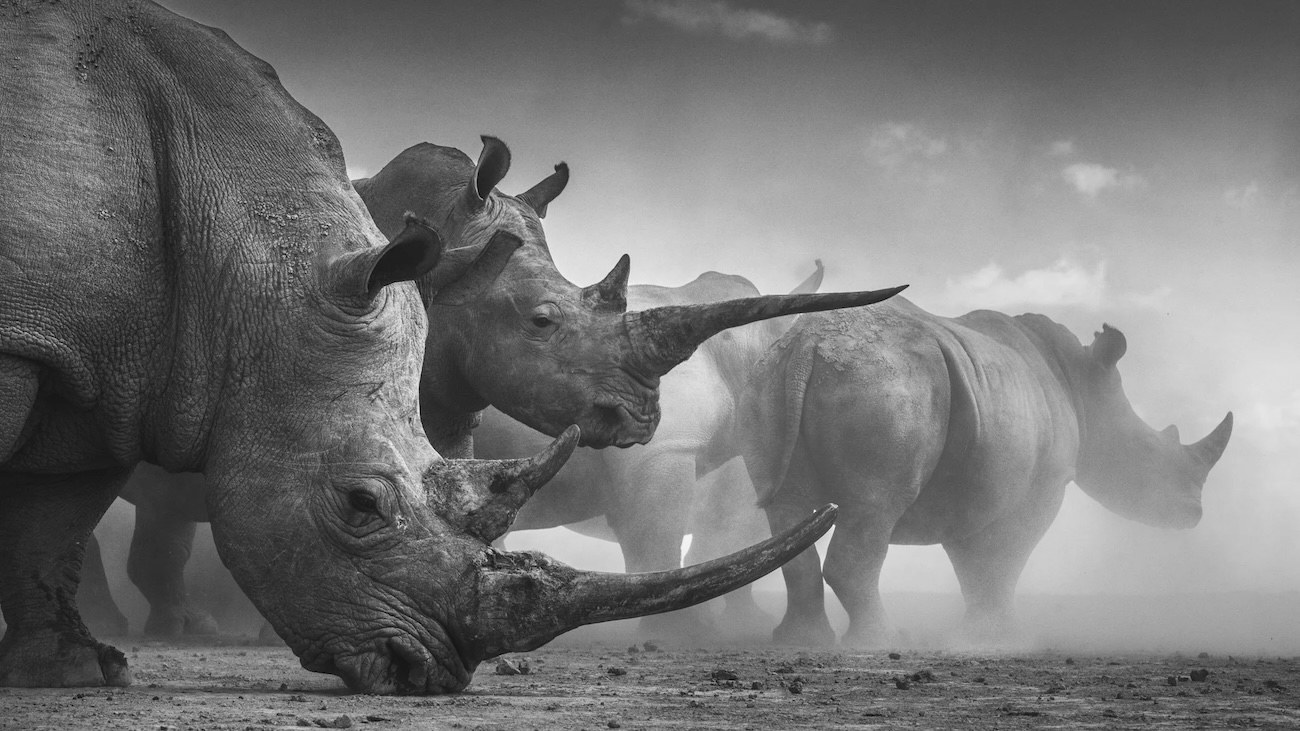
Photography was part of my life since an early age as I grew up in a family of keen nature photographers. Every travel or outing was always centered on photographing nature, birds and wildlife in particular. I therefore learned photography almost naturally. I began photographing wildlife with my Polaroid on my first trip to Africa when I was 6 years old or to the local zoos and safari parks. During my teenage years I upgraded to a reflex camera and slides, and that’s what I used for my first years in Kenya after I moved there in 2002 to follow my dream of living among wildlife and photographing it full time.
Set up the scene for your image The Aftermath, which shows an elephant carrying a dead calf. How did you come across this?
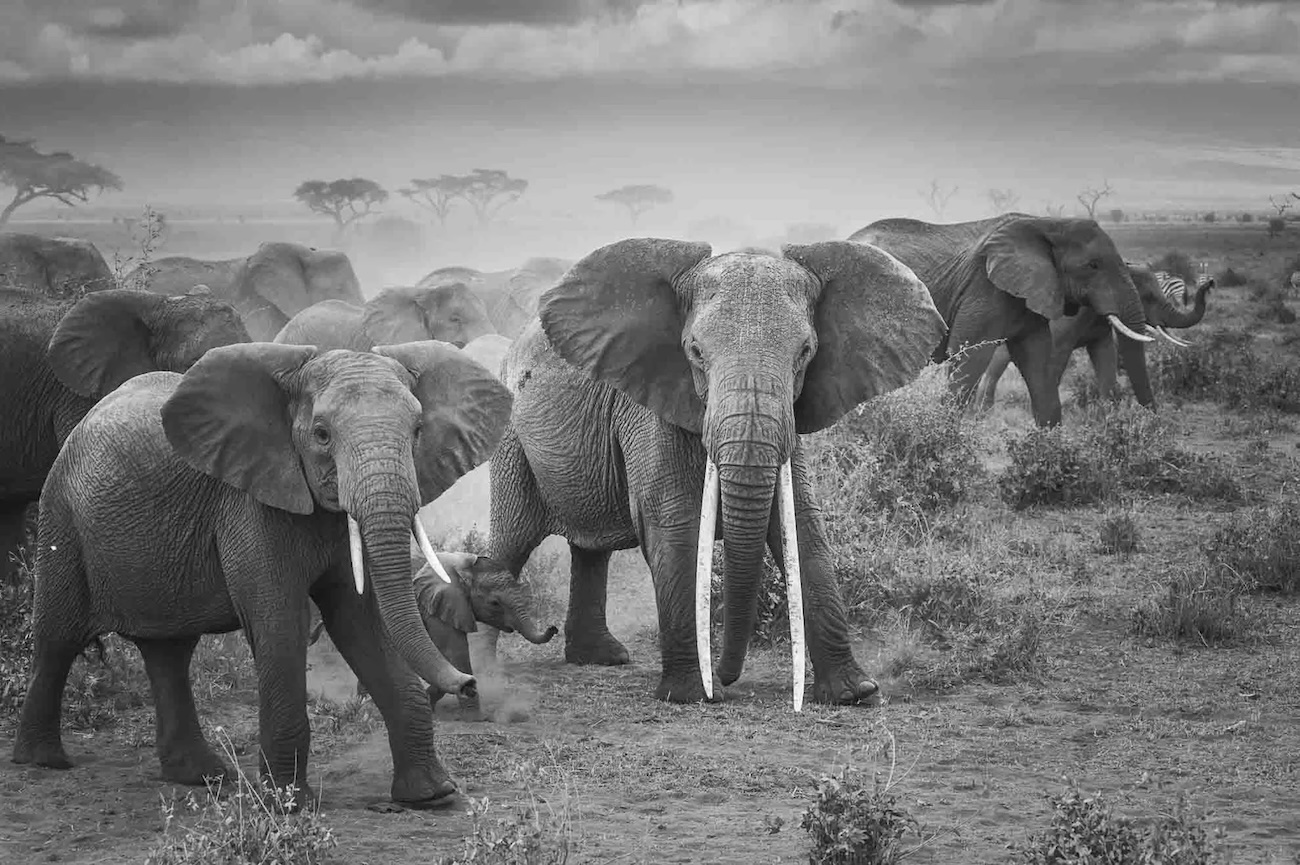
I was in Damaraland, northwestern Namibia, with the specific aim to photograph desert-adapted elephants and other wildlife living in this particularly dry but stunning ecosystem. Elephants are frequently found along the dry riverbeds that traverse this landscape, as that’s where they find some trees and vegetation that they can feed on. I had seen a family of elephants the previous evening, so that morning I returned to the place where I left them to pick up their tracks and hopefully find them again. As I followed the tracks, I noticed an unusual dragging mark on the ground, which I wasn’t immediately able to interpret. Shortly after I finally came across the elephants feeding on the river banks. Out of the group, a female appeared carrying a dead calf by wedging the calf’s leg between her trunk and tusk.
How did the final image emerge? Did you realize the photograph’s importance when you snapped it?
As the scene appeared in front of me, I grabbed my 400mm telephoto lens and framed the images, I went for a vertical crop as she was coming towards me and she filled the frame nicely. As she came forward, another elephant was following her, so she abruptly turned away. The calf’s body rose up and in this particular frame, it almost looks like the calf is still alive, playing with its mother or trying to cling to her mother’s trunk. I feel that the ambiguity of the image, and how it can be read in many ways make it stand out from the other images I took, where the calf is clearly hanging lifeless from the mother’s tusk. After taking the first few images I felt like I was violating the elephant’s intimate moment, her grief, I was almost ashamed and thought that I shouldn’t take these photographs. However, as I reflected on the event, I realized how important it was for me to tell the story, to offer people an open window into the soul of the elephant, into her feelings, into her memories, hopefully to make people understand the complexity of the animals’ emotions and sensibility. That’s why I also chose black and white, to expose these emotions without any possible distraction.
What is your philosophy when photographing wildlife?
When I am photographing wildlife, I am always looking for images where I can reveal how similar we are to them on an emotional level, and to establish a connection on the emotional level. I like to try to tell their story, and our story through them somehow. I strive to make images where people can see themselves in the animals. All of this while never disturbing the animals, never altering their behavior, and never manipulating my images digitally.
What can it tell us about our own humanity?
It’s fascinating to realize how much in common we have with the animals, how much our own behaviors can be interpreted in ecological terms and referred back to many of the behaviors that I witness in the wild. Some people’s lack of empathy towards animals is what I try to win over with my images, hoping that this can result in more efforts to peacefully coexist with wildlife, to not consider them only as disposable resources but sentient creatures that should be respected and protected. Sometimes I feel like our humanity is torn between people at war with our planet and its inhabitants, determined to exploit it to their benefit without any care for anything or anyone else, and those who are fighting to protect it. I hope to provide some tools in this battle with my images.
You’ve recently won the prestigious Wildlife Photographer of the Year 2026 competition for The Aftermath. Congrats! What was it like to have your work recognized in this way?
It’s a recognition that I frankly thought impossible to achieve. I thought it had to go to much more technically difficult images, or more creatively innovative ones. Or to images featuring less common creatures. The Wildlife Photographer of the Year 2026 competition is the most prestigious of its kind in the world, and it was an incredible honor and delight to win the overall. I am still in disbelief at times, thinking about how far that achievement felt in the past. I had never even featured in the competition before among the 100 selected images, so I felt like I was somehow failing at breaking through this. I was sometimes questioning my own work, whether I should try to step up somehow. Other times I was just accepting the reality and living with it. This award is an enormous recognition for my work and it shows that you should never give up on your path, to keep working hard and eventually the impossible might become possible.
What’s next for you?
I will continue to photograph wildlife with renewed enthusiasm, and a stronger belief in my work and capabilities. I will continue to produce photography books, I already have a few ideas, the next one will feature the winning image of course. And I will continue to explore the African wilderness, accompanying and mentoring other photographers.