London-based Heatherwick Studio continues its exploration of architecture that merges scientific function with sculptural ambition, this time turning its attention skyward. The firm has unveiled AlUla Manara, an astrotourism visitor center and research complex destined for the remote desert of north-west Saudi Arabia, near the ancient city of AlUla. The Royal Commission for AlUla selected the studio’s proposal following an international design competition, positioning the project as a centerpiece for one of the region’s first officially designated Dark Sky Parks.
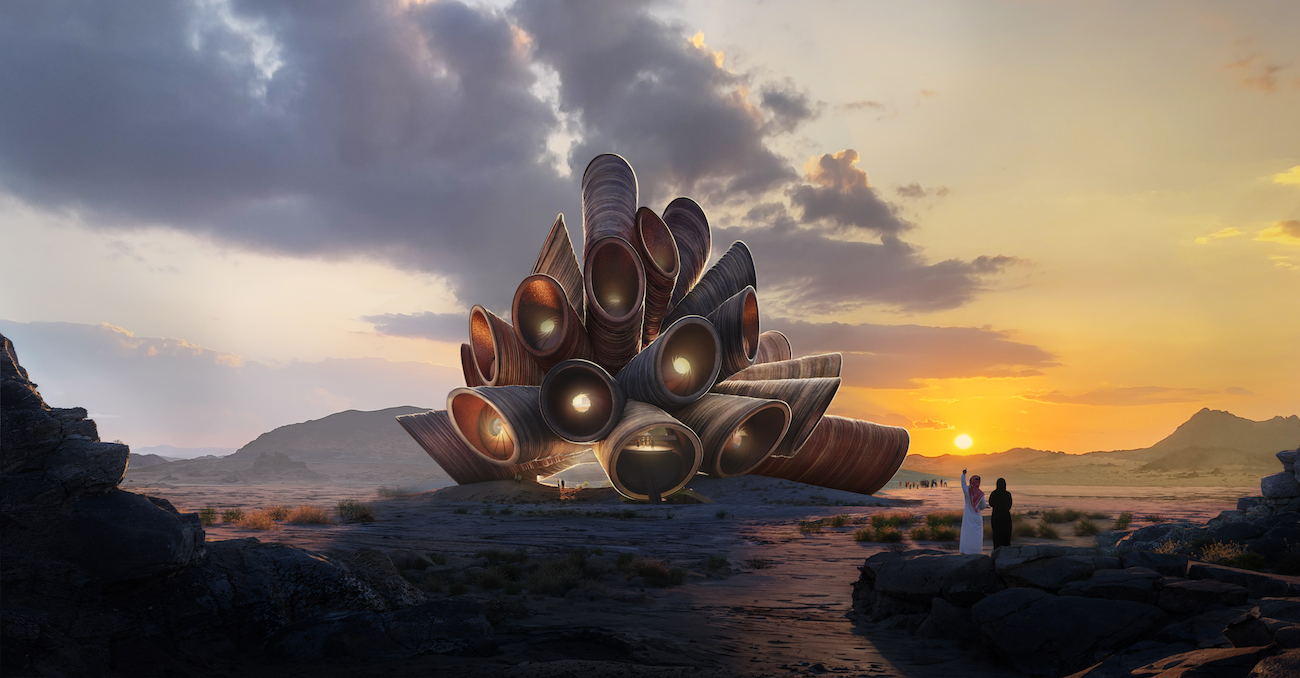
Heatherwick Studio draws its formal vocabulary from spiraling geometries that recur throughout the universe and across the natural world. The design team studied galaxies, planetary rings, and twisting gas formations alongside terrestrial patterns found in plants, prehistoric fossils, and shells, then translated these mathematical rhythms into architectural form. The result is a composition of tubular volumes that cluster together like a bundle of oversized telescopes, each one angling toward the sky while anchoring itself firmly in the desert floor.
Three interlocking formations dominate the main visitor center, and textured stone cladding wraps each tube, echoing the sandstone mountains that define AlUla’s UNESCO World Heritage landscape without directly imitating their forms. Stuart Wood, Executive Partner and Group Leader at Heatherwick Studio, frames the project as a departure from the conventions of observatory design, which typically favor isolated, technical structures that hold the public at arm’s length. AlUla Manara instead invites visitors into direct proximity with active scientific inquiry, dissolving the usual boundary between researcher and observer.
The building’s program extends beyond typical visitor center amenities. Exhibition galleries, immersive displays, and a planetarium will occupy much of the interior, alongside a restaurant and a rooftop observation deck that opens views across the desert night sky. Heatherwick Studio distinguishes this project from comparable astrotourism destinations by embedding genuine, real-time research facilities within the same structure that welcomes the public. Visitors will gain a behind-the-scenes vantage point onto ongoing scientific work, an approach that collapses the distance between spectacle and inquiry.
Desert conditions demand architecture that can pivot between two opposing environmental states: intense daytime sun and profound nighttime darkness. Heatherwick Studio addresses this duality through shading devices embedded within each tubular form, which regulate solar exposure throughout the day while safeguarding the unpolluted darkness that makes the site valuable for stargazing after sunset. Operable windows further allow the building envelope to respond to shifting desert weather, a strategy that improves energy performance while framing dramatic sightlines toward both the landscape and the sky above it.
AlUla Manara anchors a considerably larger masterplan that extends into the surrounding terrain. The scheme connects to existing hiking trails and introduces on-site accommodations, a dedicated stargazing lodge, and a series of remote pods that let overnight visitors experience the night sky in near-total isolation. The Royal Commission also plans to construct several world-class telescopes near the visitor center, equipping a growing community of astronomers and scientists with access to some of the clearest and darkest skies anywhere on the planet.
Heatherwick Studio positions the project within Saudi Arabia’s expanding role in global space research, and the studio frames AlUla Manara as more than a single building. The practice envisions the complex as a global hub for knowledge exchange, one that invites the public into direct dialogue with contemporary astronomy while reinforcing AlUla’s identity as a landscape shaped equally by ancient history and celestial observation.
Heatherwick Studio has unveiled AlUla Manara, a sculptural astrotourism visitor and research center that will anchor one of Saudi Arabia’s first officially designated Dark Sky Parks.
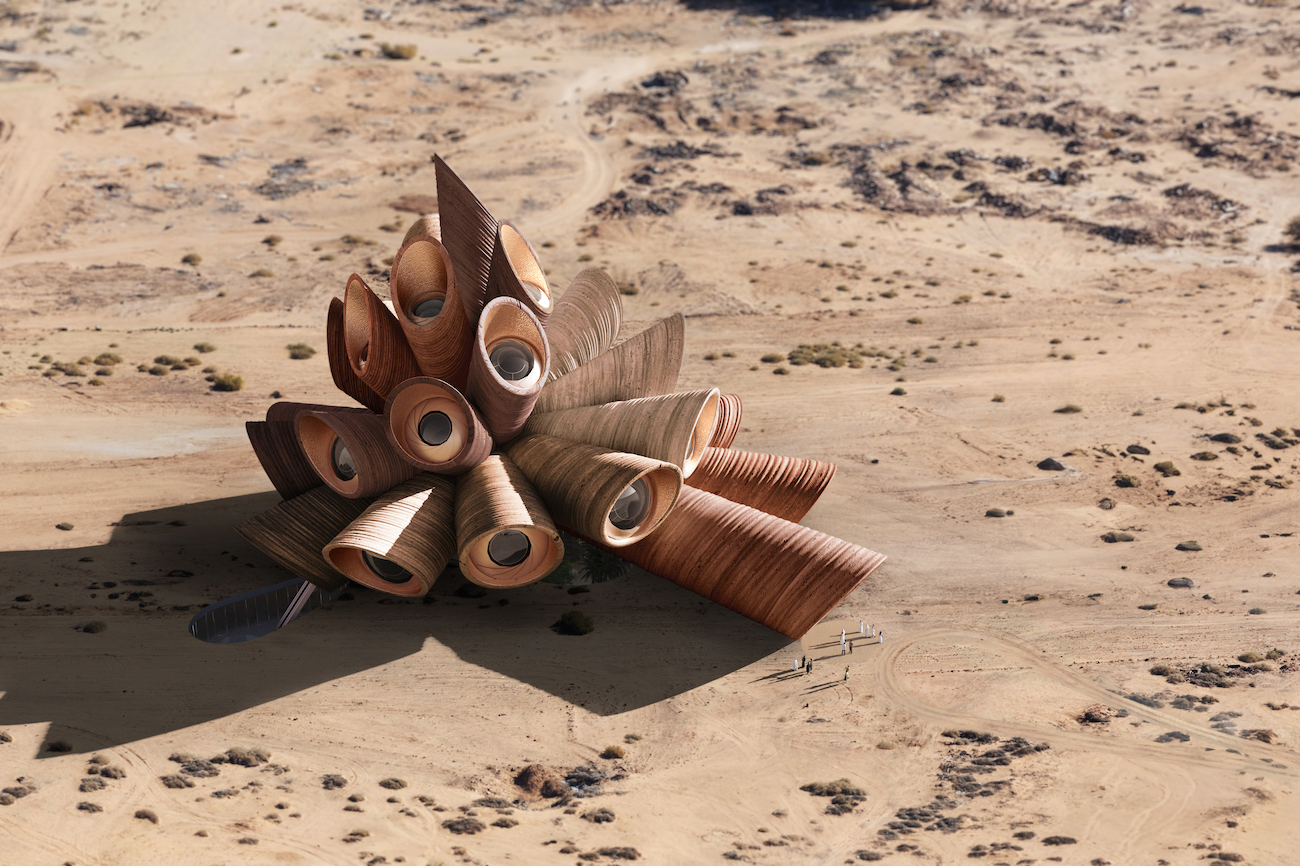
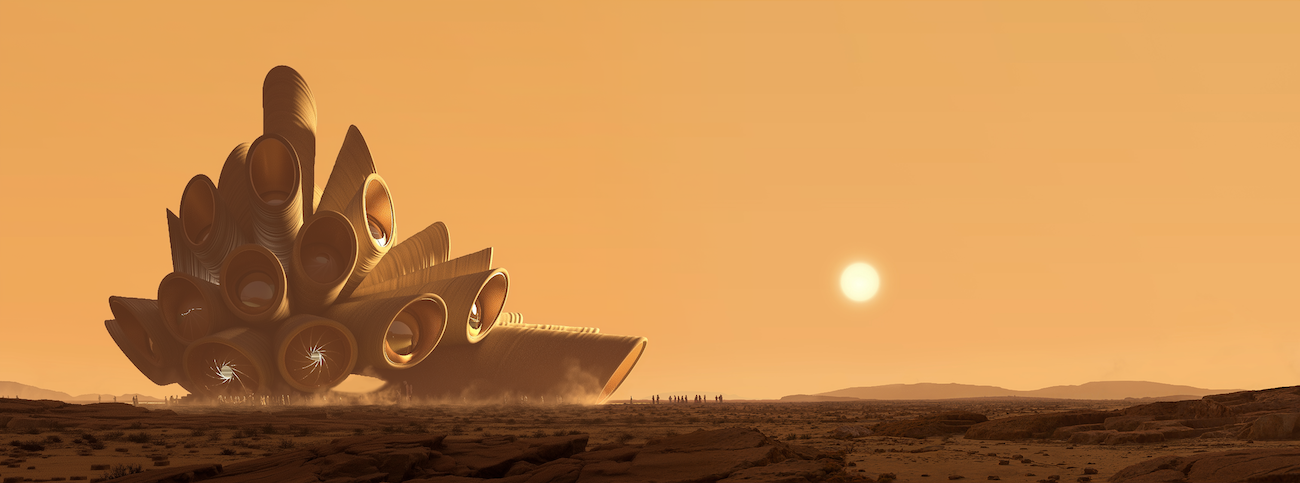
The telescope-like complex will house immersive exhibitions, a planetarium, and working astronomy research facilities under one roof.
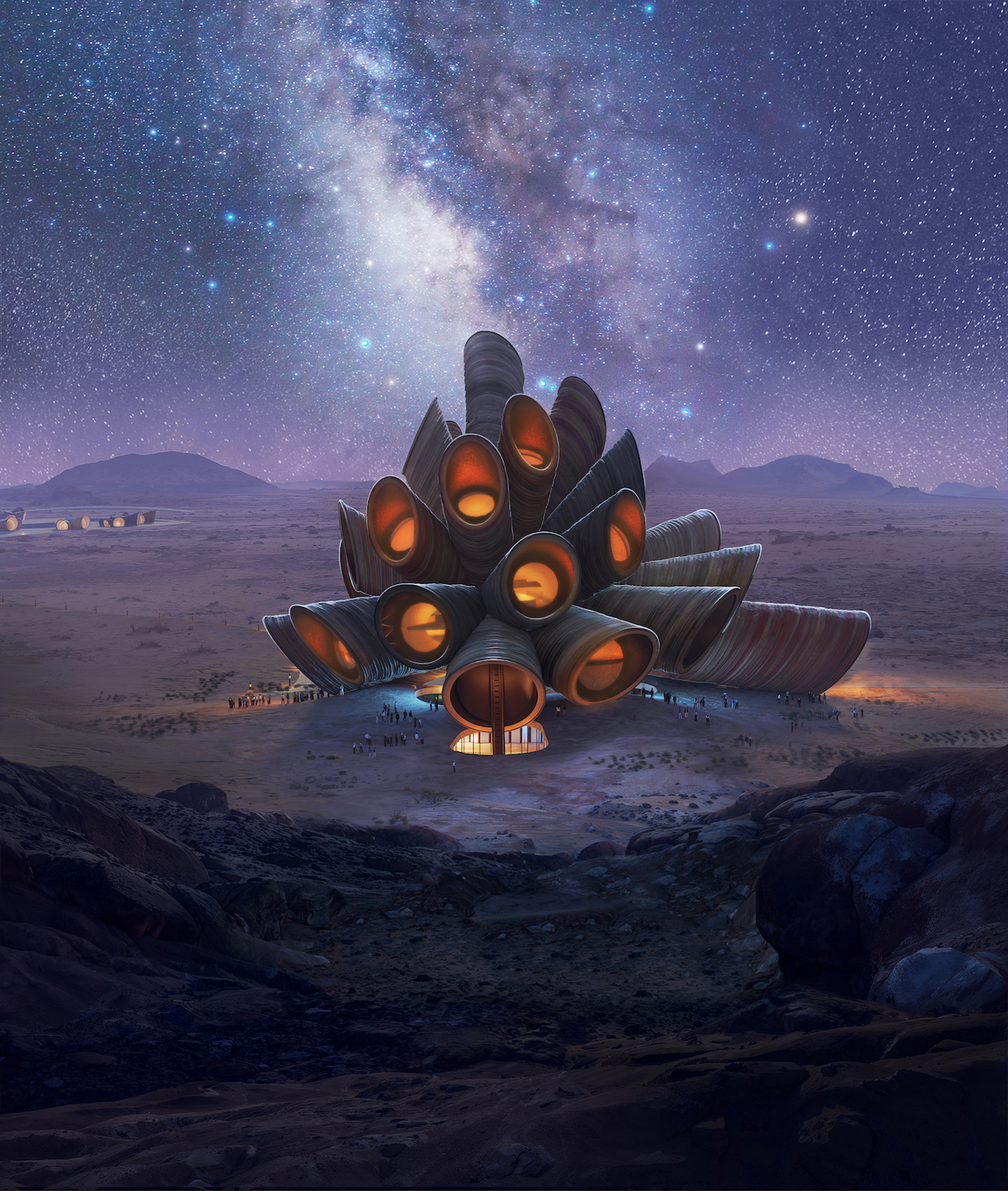
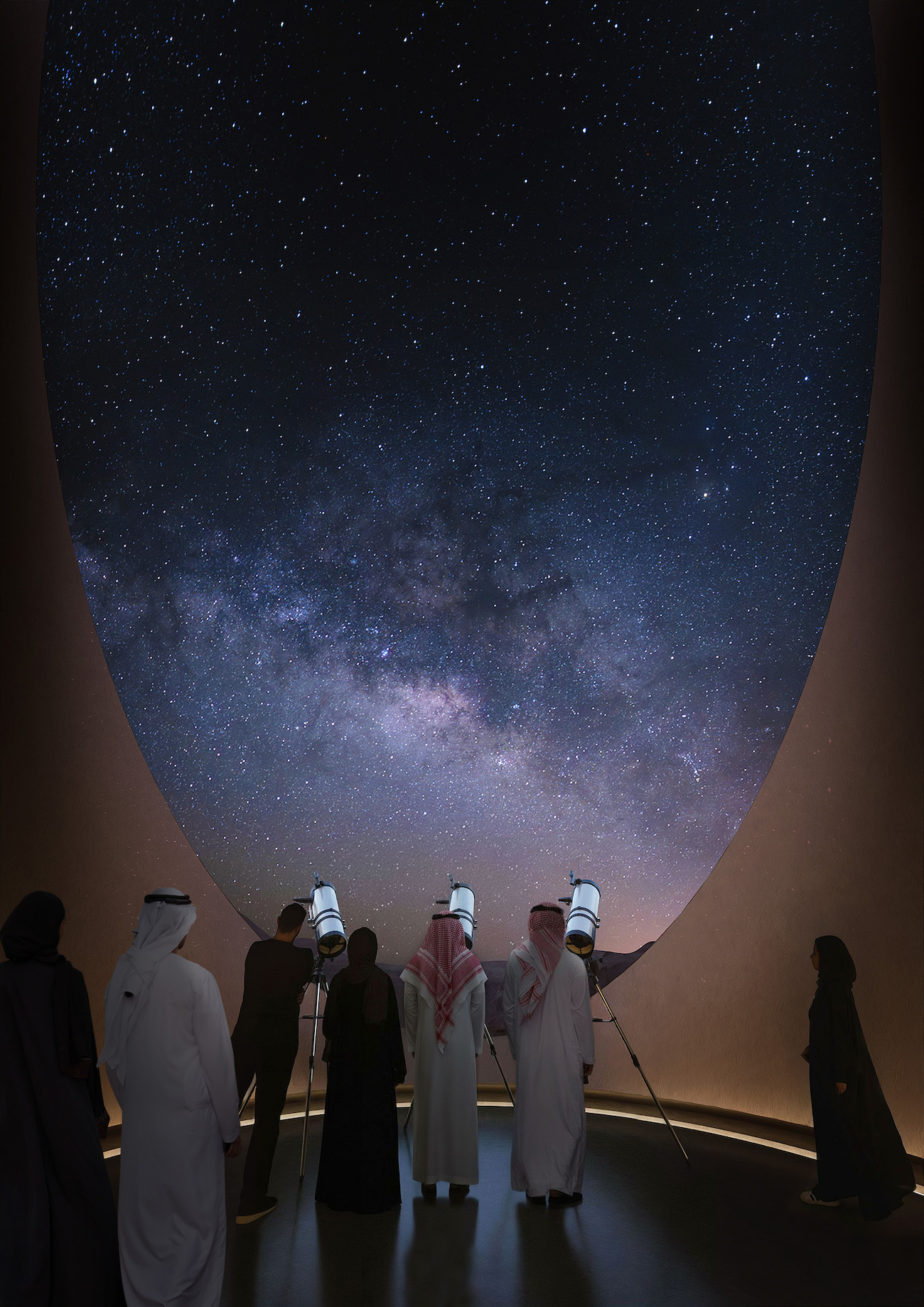
Hiking trails, a stargazing lodge, remote overnight pods, and world-class telescopes establish AlUla as a destination for astronomy, scientific research, and dark-sky tourism.
View this post on Instagram