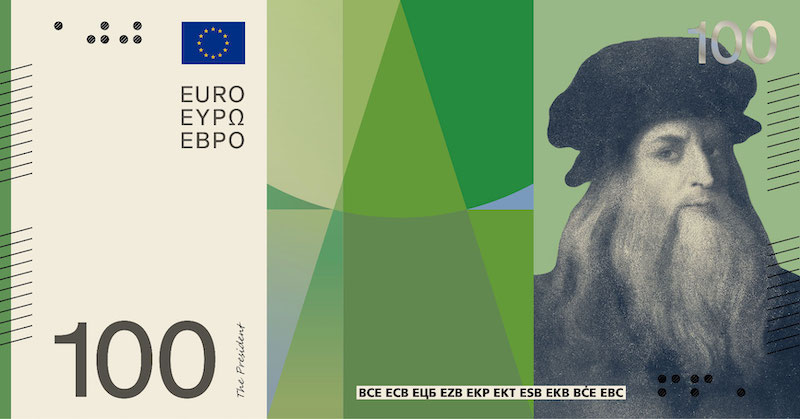
Leonardo Da Vinci on the €100 banknote in “Design C” by Neue Gestaltung GmbH
The euro is getting its first major redesign since 2002, and the public can help choose what the new banknotes will look like. On July 23, 2026, the European Central Bank (ECB) unveiled 10 shortlisted designs for the next generation of euro notes. A public survey will remain open through September 21, allowing people to rate the proposals and choose their favorites.
Ten new euro banknote designs celebrate European history, culture, and nature through portraits, birds, and river landscapes.
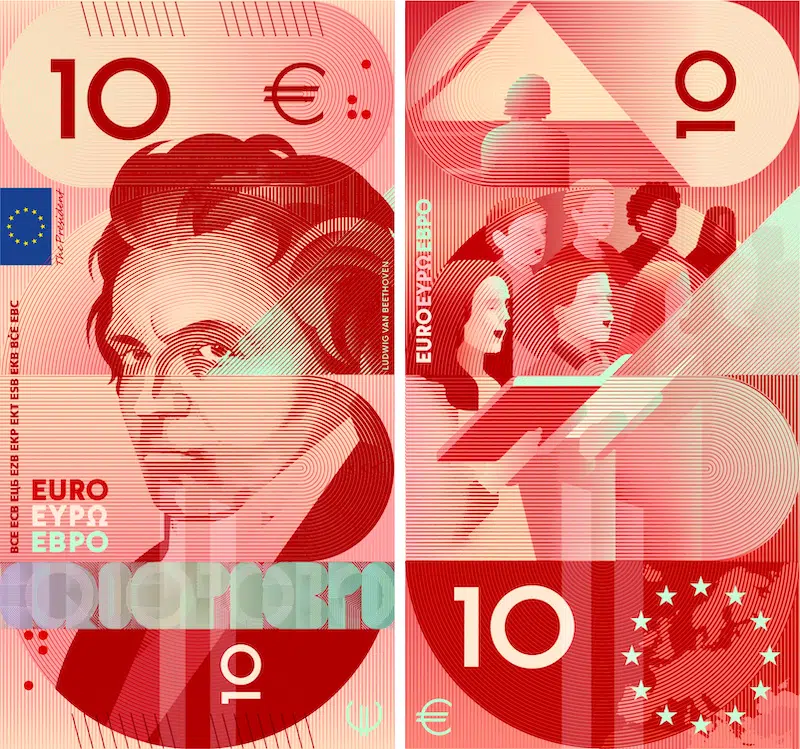
Mozart on the front (left) and the back side (right) of the €10 banknote in “Design G” by Rubio & del Amo and Cruz más Cruz
The redesign began in 2023, when the ECB Governing Council selected two themes: European culture and Rivers and birds. More than 1,200 designers entered the competition, and 25 finalists developed complete banknote series. The 25 designers ultimately submitted 39 proposals, which a 21-member jury narrowed to 10 winning designs, five for each theme.
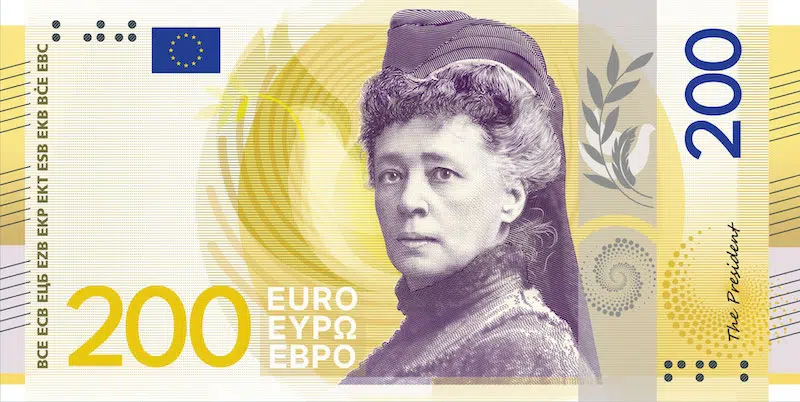
Bertha von Suttner on the €200 banknote in “Design E” by Myrsini Vardopoulou
The European culture theme celebrates six figures who shaped European art, science, and history. Maria Callas appears on the €5 note, Ludwig van Beethoven on the €10, Marie Curie on the €20, Miguel de Cervantes on the €50, Leonardo da Vinci on the €100, and Bertha von Suttner on the €200.
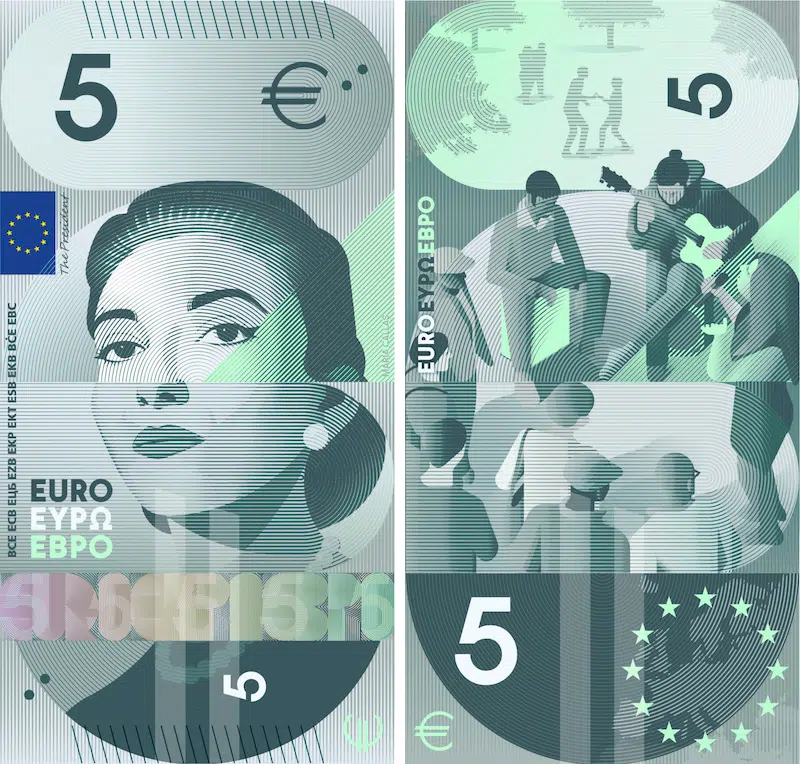
Maria Callas on the front (left) and the back side (right) of the €5 banknote in “Design G” by Rubio & del Amo and Cruz más Cruz
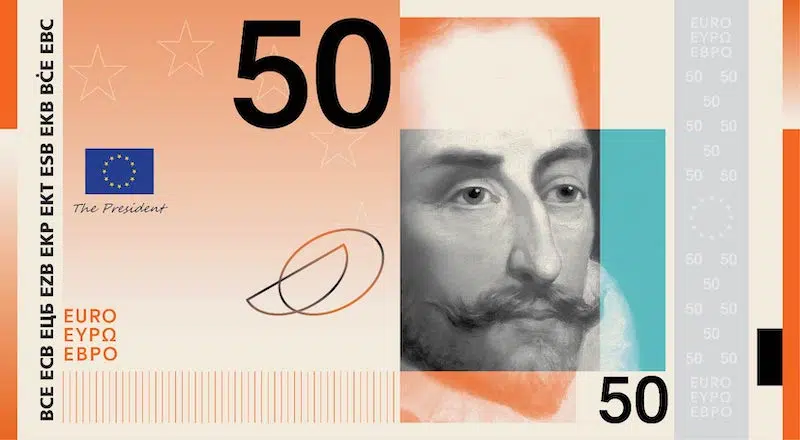
Miguel de Cervantes on the €50 banknote in “Design A” by Studio Joost Grootens
Five design proposals interpreted the same figures in distinct visual styles. Studio Joost Grootens uses tightly cropped portraits that emphasize the figures’ eyes and mouths, creating a sense of observation and dialogue. Jan Robert Dünnweller takes a more layered approach, combining hand-drawn portraits with objects and imagery associated with each figure. His designs also incorporate the European Union motto: “United in diversity.”
Other proposals experiment with illustration, typography, and graphic patterns to create a distinctly European identity while preserving the clarity needed for everyday currency.
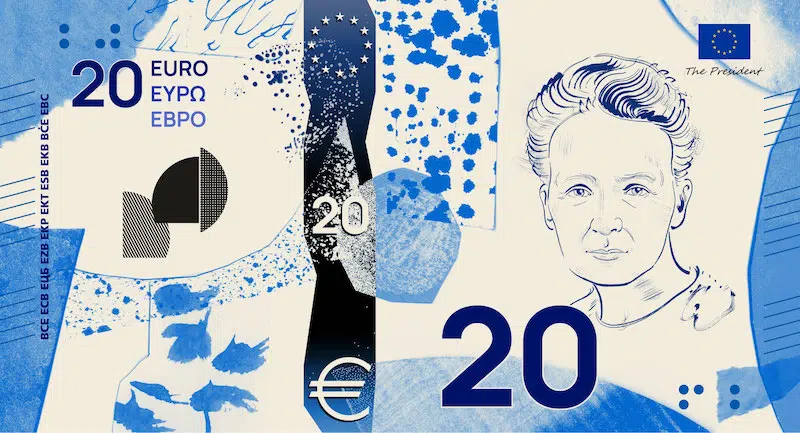
Marie Curie on the €20 banknote in “Design F” by Jan Robert Dünnweller
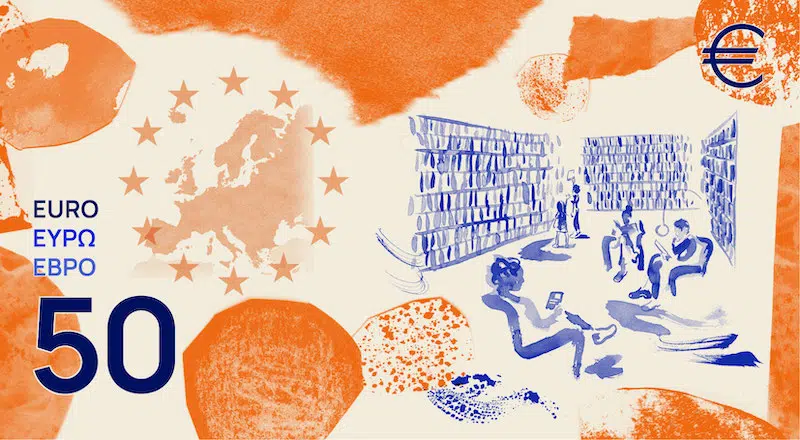
Back side of the €50 banknote in “Design F” by Jan Robert Dünnweller
The proposed euro banknotes transform European figures and native wildlife into striking new designs that could soon circulate across the continent.
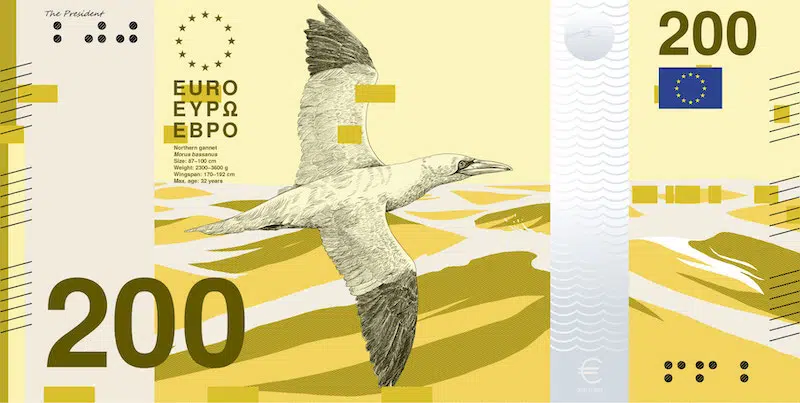
A northern gannet on the €200 banknote in “Design B” by PunktFormStrich
The Rivers and birds theme turns from history to the natural world. Six European bird species appear across river landscapes that follow their journey from mountain sources to the sea. The selection includes the wallcreeper, kingfisher, bee-eater, white stork, avocet, and northern gannet. The reverse of each note pairs a bird with a European Union institution, including the European Parliament and Court of Justice of the European Union.
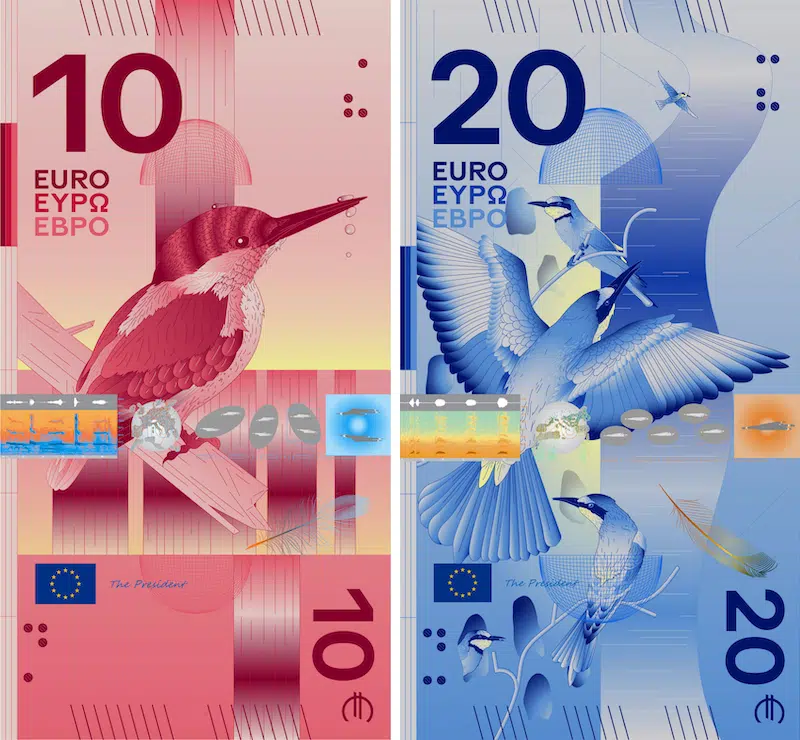
A kingfisher on the €10 banknote (left) and a bee-eater on the €20 banknote (right) in “Design D” by Rudy Guedj and François Girard-Meunier
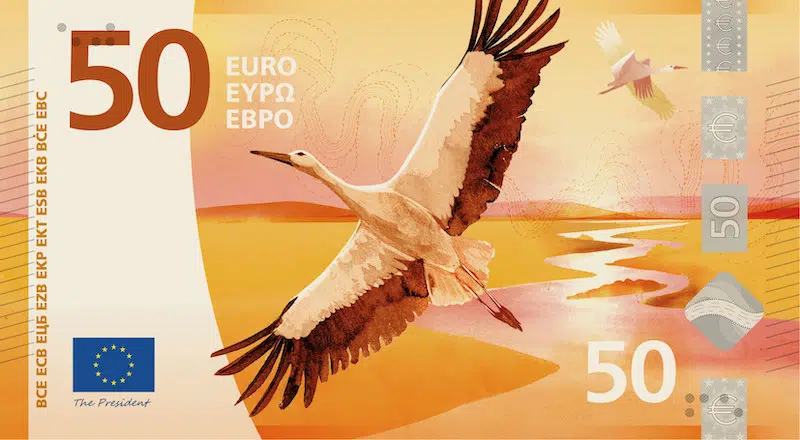
A white stork on the €50 banknote in “Design H” by Atelier Goppel-Toperngpong
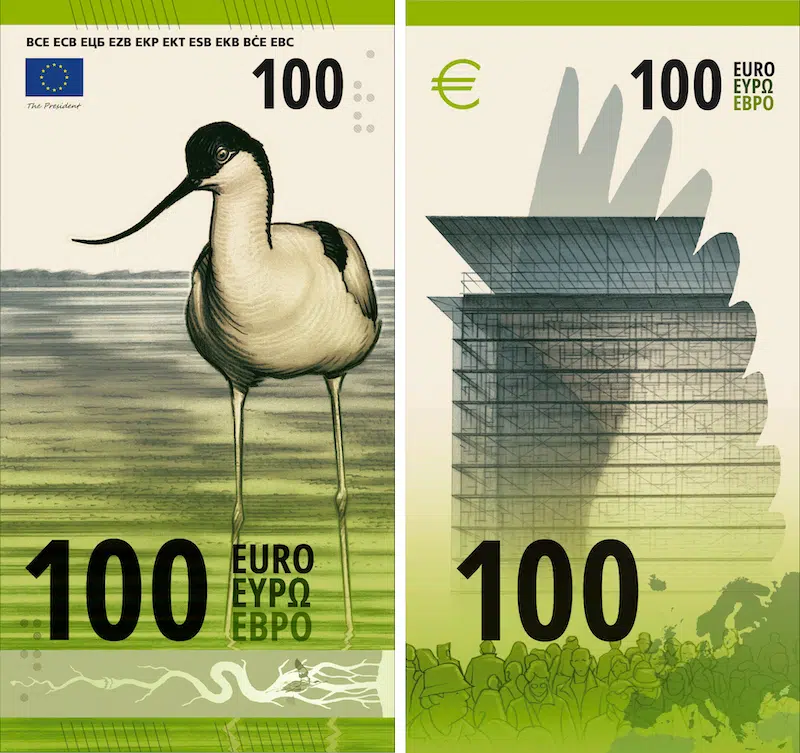
An avocat on the front (left) and the back side (right) of the €100 banknote in “Design J” by Ville Tietäväinen
Designers also translated movement and sound into graphic elements. PunktFormStrich turned birdsong and flight speed into abstract bars, while Isabelle Daëron and Ville Tietäväinen created more painterly designs that resemble miniature illustrated posters.
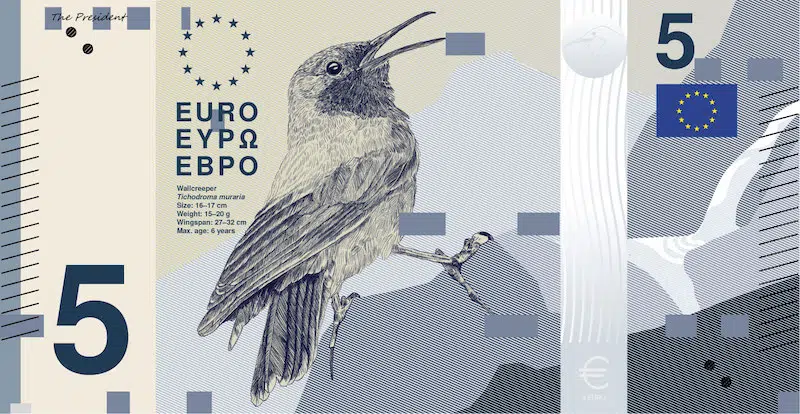
A wallcreeper on the €5 banknote in “Design B” by PunktFormStrich
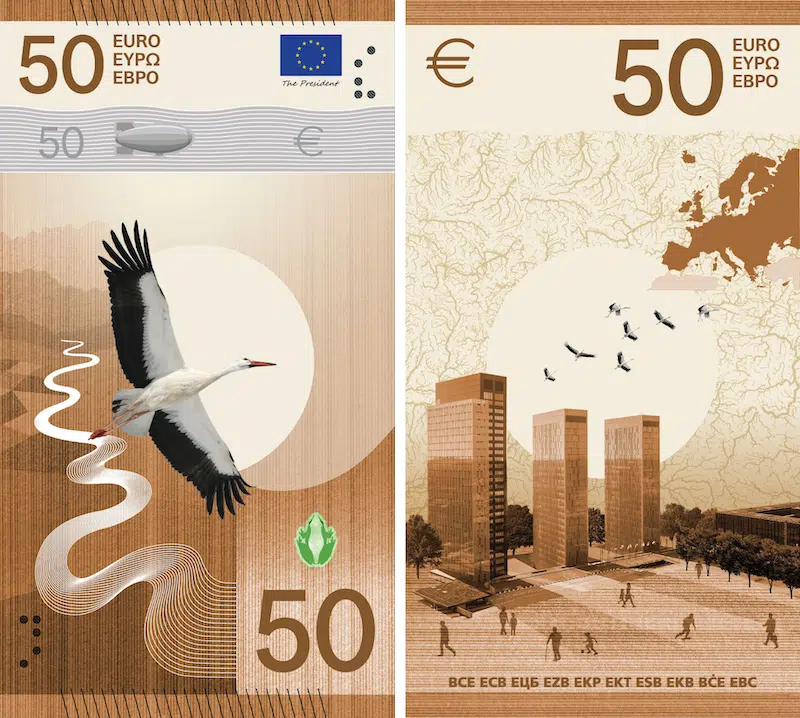
A white stork on the front (left) and the back side (right) of the €50 banknote in “Design I” by Isabelle Daëron
Now, the ECB is turning to the public. Anyone can participate in the online survey through September 21, 2026, by rating all 10 series and selecting a favorite from each theme. The Governing Council plans to select the final design by the end of 2026.
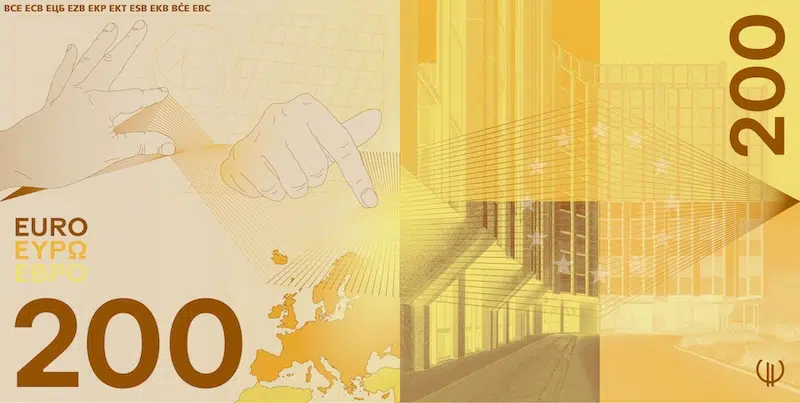
Back side of the €200 banknote in “Design D” by Rudy Guedj and François Girard-Meunier
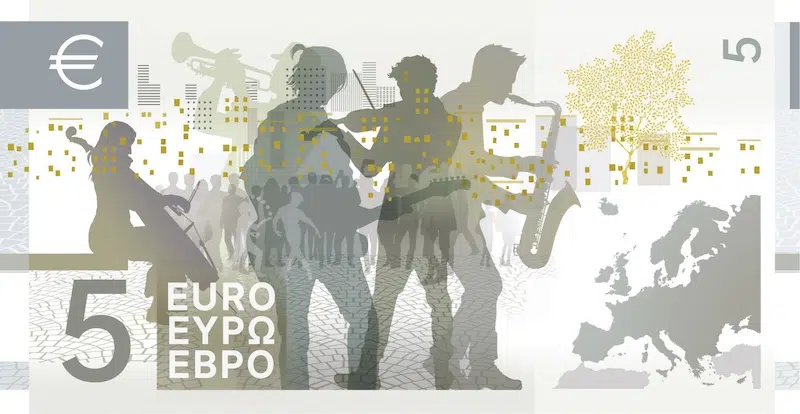
Back side of the €5 banknote in “Design E” by Myrsini Vardopoulou
The winning proposal will then undergo further development and testing, including work on security features, durability, and accessibility, before the new notes eventually enter circulation. And this time, the public gets a say in what that future looks like. See all of the proposed designs (labeled Design A-J) on the European Central Bank website.
European Central Bank: Website | Instagram
All images via European Central Bank.
Related Articles:
Coin Used for Bus Fare Turns Out To Be 2,000-Year-Old Carthaginian Artifact
Greece’s Euro Uses the Same Design Found on Ancient Coins 2,500 Years Ago
Trailblazing Actress Anna May Wong Becomes the First Asian American to Appear on U.S. Currency
Scotland Releases Colorful Currency That Honors Scottish Women and Wildlife