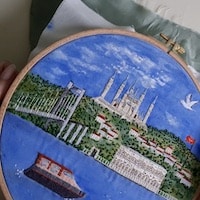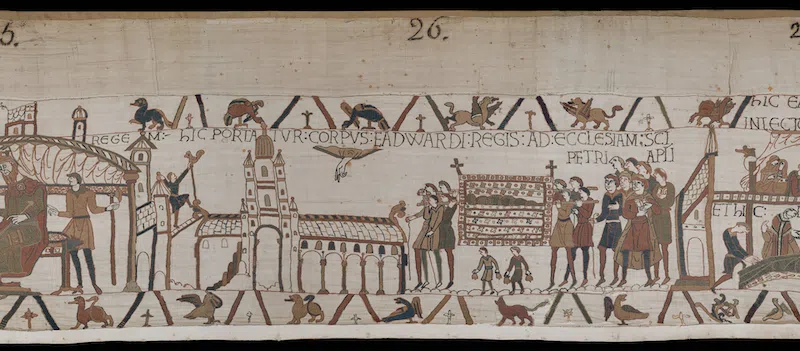
In a time when taking photos can be one of the main reasons people attend museum exhibitions, the British Museum has taken a strong stance on photography at its popular Bayeux Tapestry exhibition. Due to the abundance of people visiting the tapestry, which is back in England for the first time in nearly a millennium, the museum has enacted a no-photo policy to encourage viewers to move through the exhibition quickly and respectfully. The exhibition has thus far been wildly successful, with its initial ticket allocation selling out within hours.
The 230-foot-long embroidery, which depicts the events leading up to the Norman conquest of England in 1066, has resided in France for centuries. The desire to bring the tapestry back onto English soil has been ongoing, including an attempt to borrow it for Queen Elizabeth II’s coronation in 1953. But due to the risk of damage to the delicate, ancient embroidery, it hasn’t been moved until now, making the exhibition at the British Museum, which opened on September 10, a monumental one.
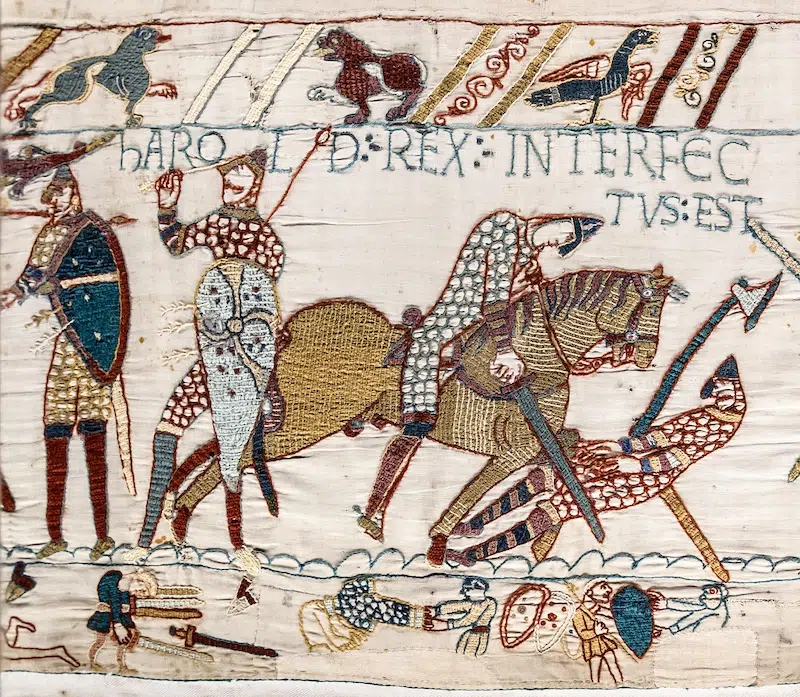
The tapestry remains in tremendous condition, unlike many of its medieval counterparts. It is almost entirely whole, and its red, blue, and green threads still have an unexpected vibrancy. The intricate embroidery depicts everything from elaborate battle scenes to animals and everyday life, with an incredible amount of detail preserved across its length. That so much of the tapestry has survived for nearly 1,000 years makes the opportunity to see it in person all the more remarkable.
The photo policy comes alongside a screen above the exhibit with a little lighted bird urging people to move along the length of the tapestry as they view it. If visitors were to follow the bird’s movement exactly, they would get to look at the tapestry for about 19 minutes and 30 seconds.
The response to the policy has been mixed, with some saying that they felt it encouraged them to really take in the fine craftsmanship of the work in a meditative, focused way, while others said that it left them wanting more time. The decision raises an interesting question about how we experience art in an increasingly digital world. While photographs allow us to preserve and share the things we see, the British Museum’s new policy suggests that sometimes, the best way to appreciate a masterpiece is to put down the phone and simply look.
The British Museum has introduced a photo ban to its popular Bayeux Tapestry Exhibition.
Source: British Museum Bans Photography of Bayeux Tapestry to Keep Lines Moving
Related Articles:
The Bayeux Tapestry Will Be Displayed in the UK for the First Time in Nearly 1,000 Years
Exploring the History and Highlights of London’s World-Renowned British Museum
JR Spotlights Community Kitchen Volunteers in Powerful Tapestry Project for Venice Biennale