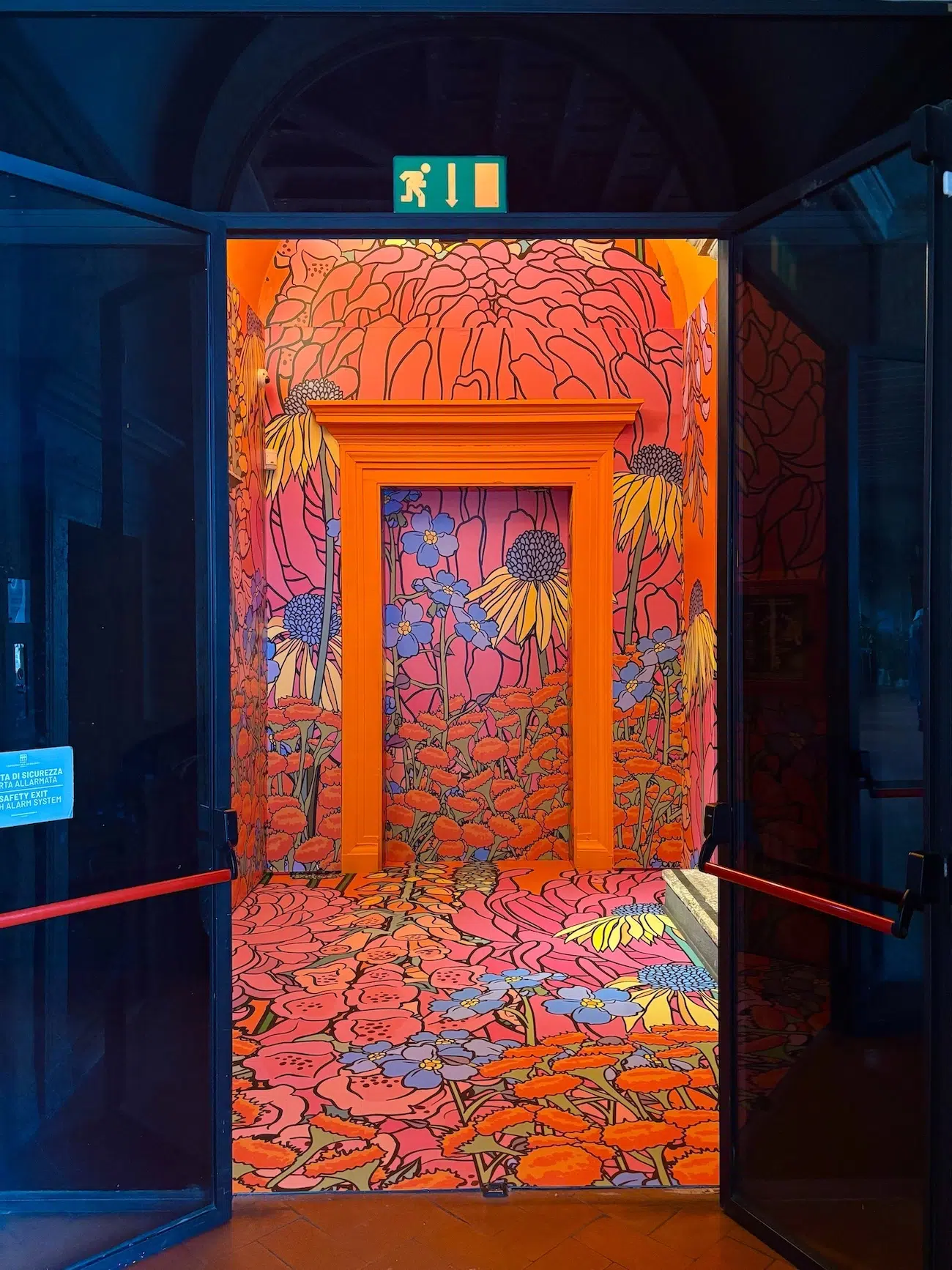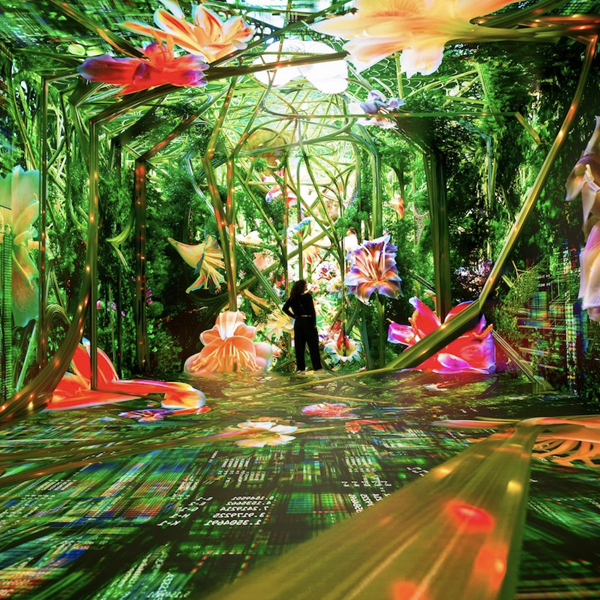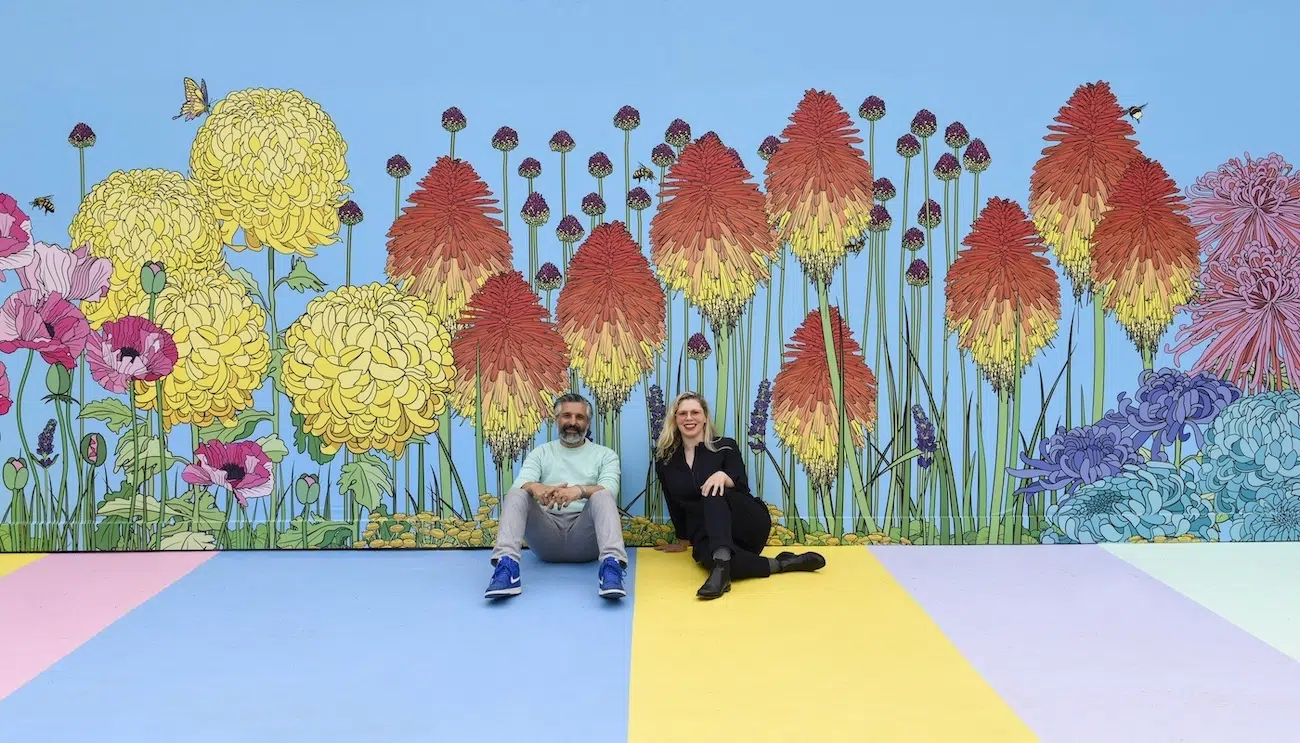
Many of us spend countless hours at home or in offices, cut off from the natural world. However, science proves that spending time in nature–or even just looking at pictures of it—has a positive impact on the mind, helps reduce stress, and lowers blood pressure. In a bid to improve our connection to the outdoors, British creative duo Lee Baker and Catherine Borowski (of Graphic Rewilding) transform urban environments with vibrant botanical murals.
Baker and Borowski met on a flight to New York and were drawn together by a shared desire to bring more nature and creativity to the lives of others. Borowski’s experience in large-scale curation encouraged Baker to take his studio-based, nature-inspired work into public spaces. And today, their vibrant, botanical installations and immersive environments can be found in cities all over the world.
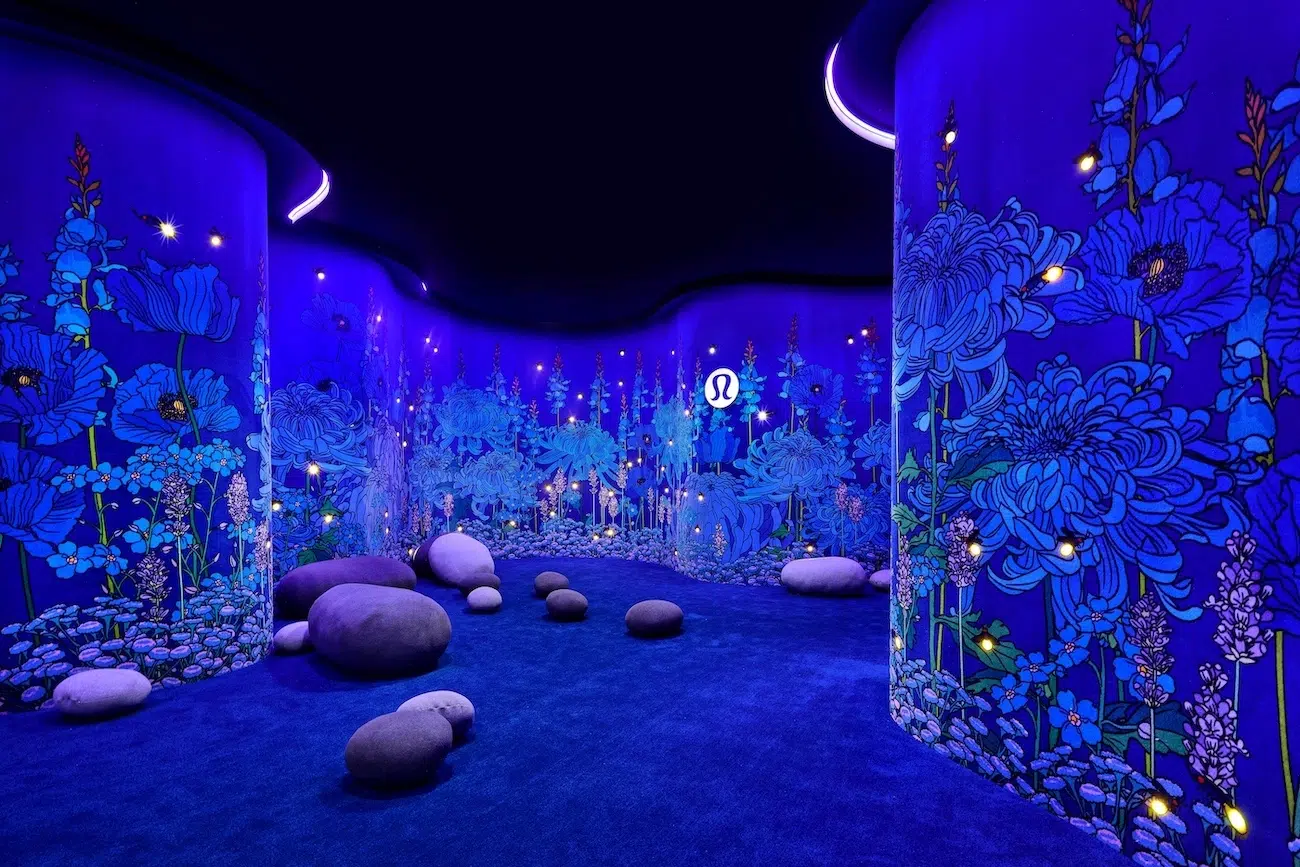
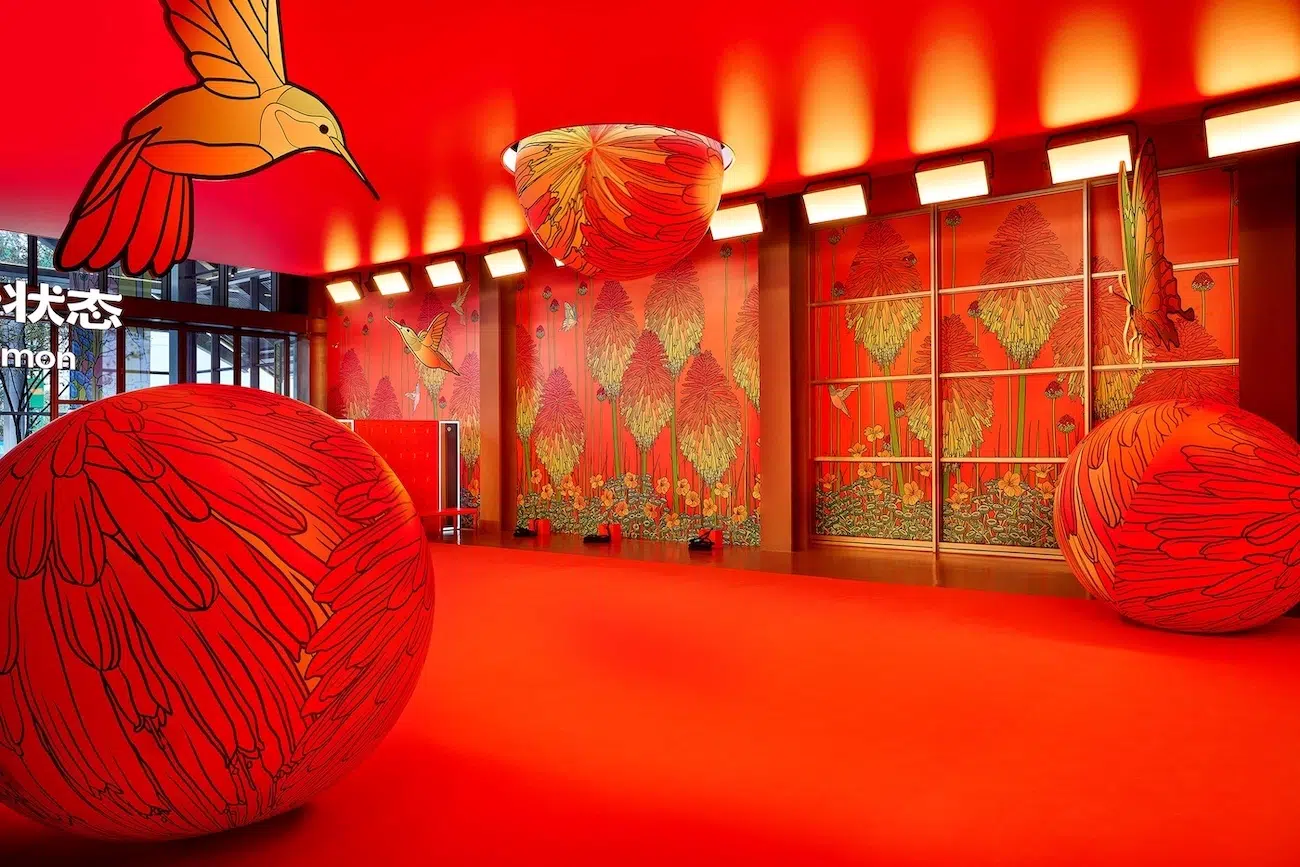
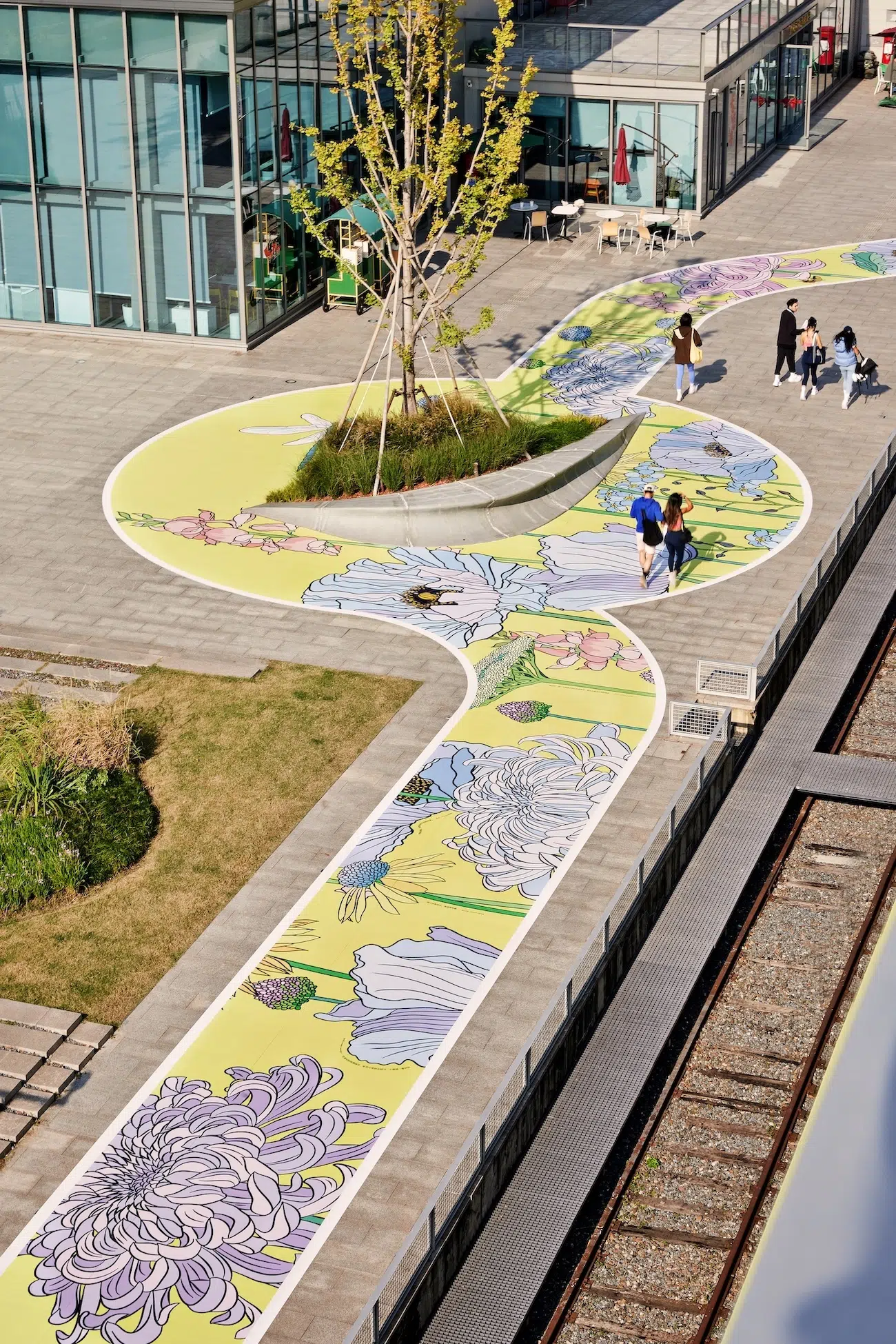
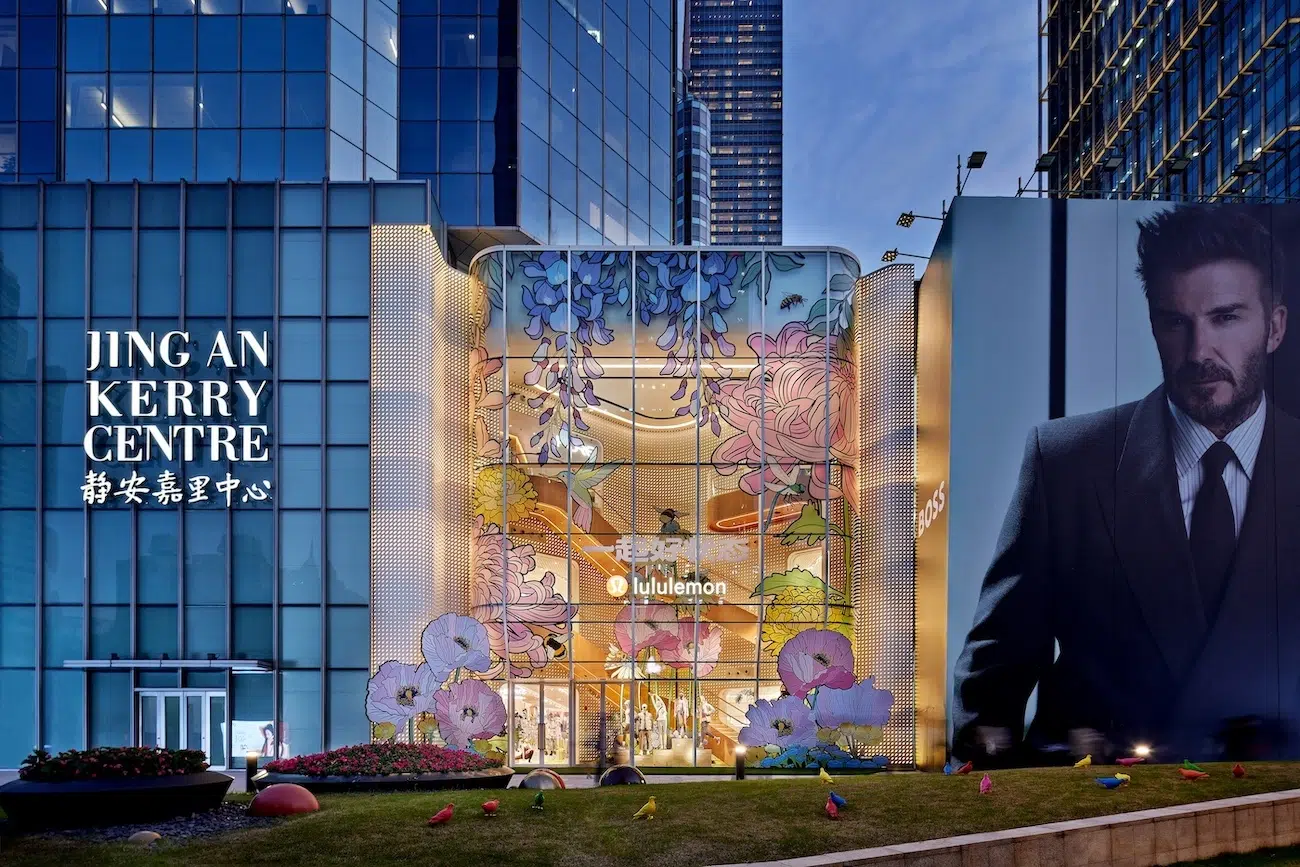
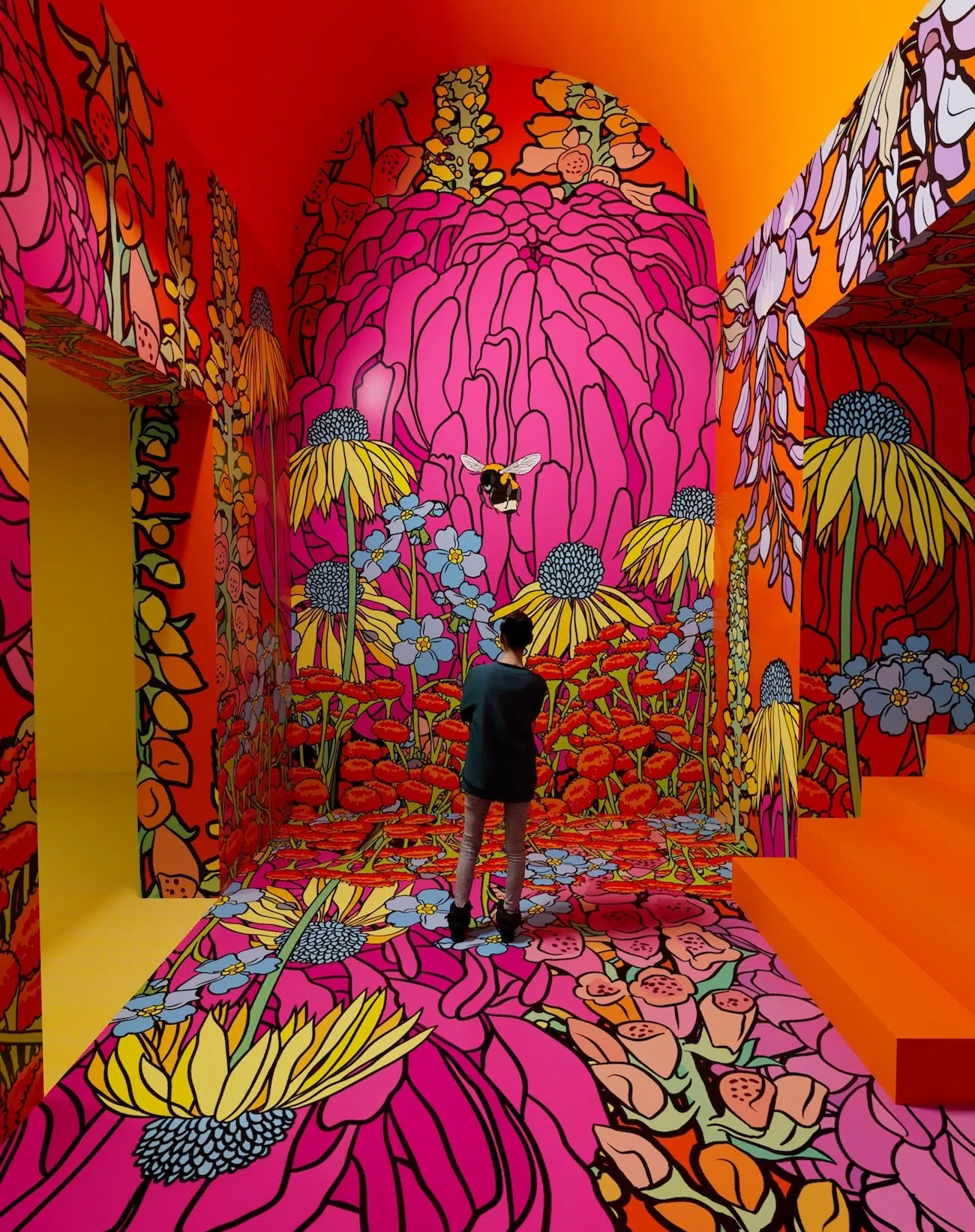
Standout projects include a towering, animated floral design in collaboration with Lululemon that spans the full height of Chengdu’s twin towers. Graphic Rewilding has also transformed Rome’s Chiostro del Bramante, Shanghai’s Start Museum, and New York’s Botanical Garden with their distinct colorful murals. Each project is designed to bring joy and encourage a deeper sense of connection and empathy with the natural world.
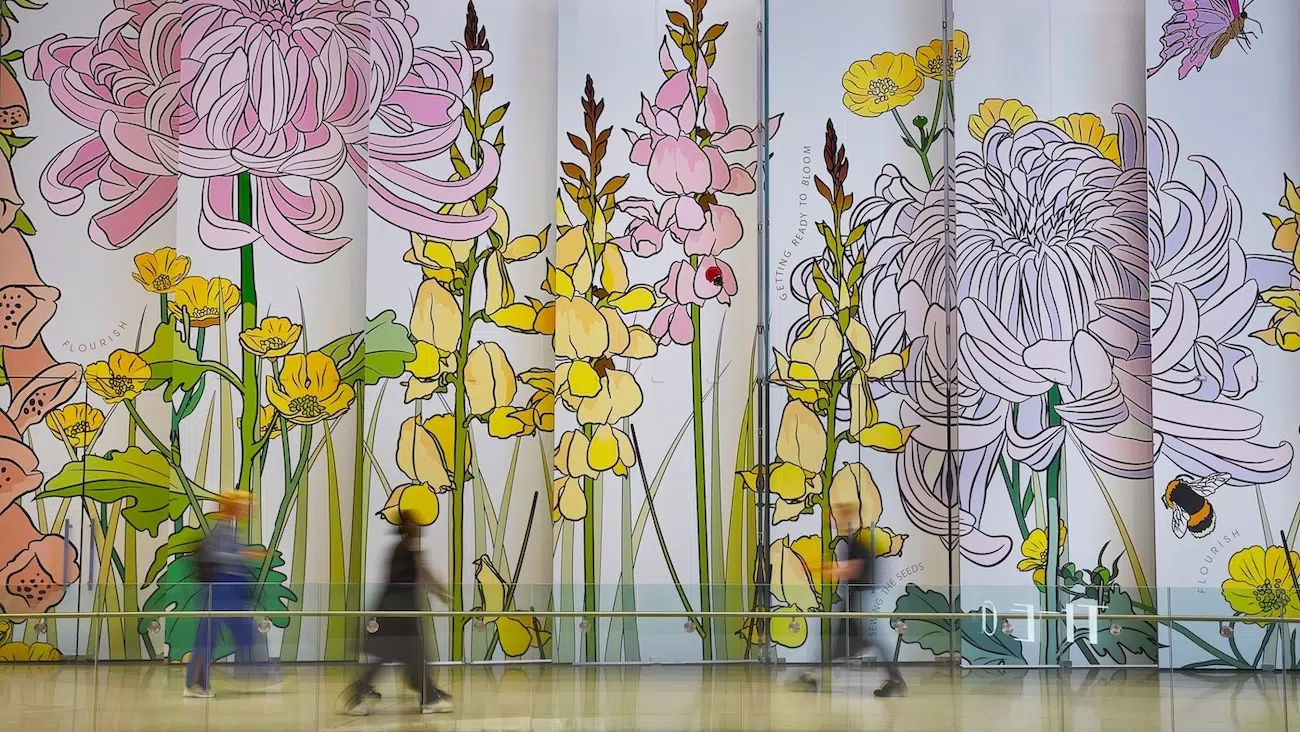
One most recent project, titled Fleeting Opulence, transforms the Winter Garden and surrounding spaces at Brookfield Place in New York City. Suspended across the full height of the building’s glass facade, the gorgeous window display features a variety of larger-than-life flowers. The giant work celebrates the wildflowers and pollinators of spring and brings a joyful burst of color to the space that shifts with the sunlight.
We recently caught up with Baker and Borowski to learn how their blossoming collaboration first took root and how it has evolved since. Read on for My Modern Met’s exclusive interview.
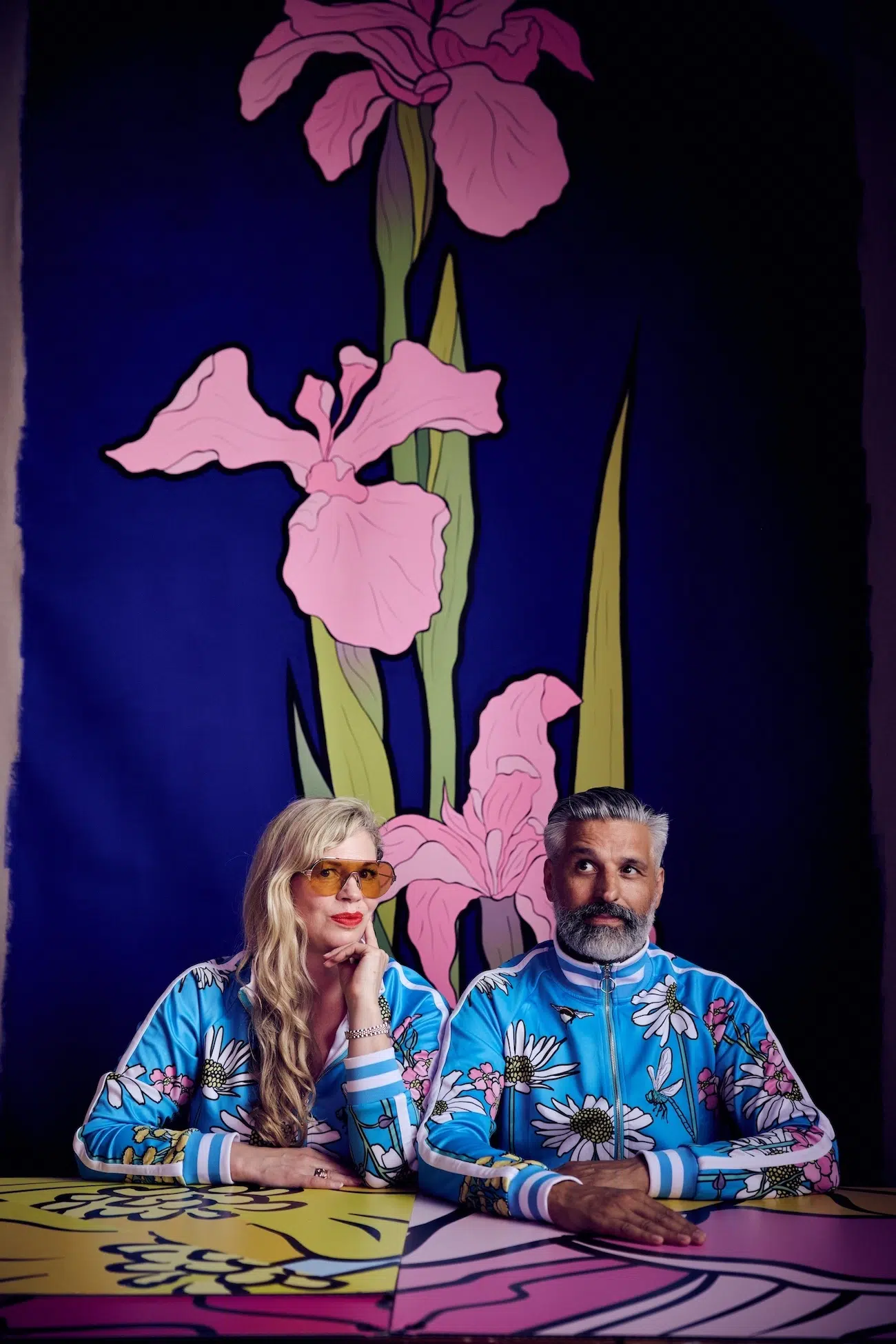
You met on a flight to New York. Do you remember your initial conversation and what prompted you to collaborate?
Lee Baker [LB]: We’d both reached a crossroads in our lives, and the moment was ripe for change. Even though we didn’t talk about that specifically, I think we both knew in our hearts that we’d just met someone who felt the same way, and that was very exciting. However, I had an exhibition in New York, and was on my way to live with my sister in Santa Ana and make a go of it in California, and Catherine had her public art, curation and events career and life in London, so we didn’t think our paths would cross again. But it had been such an intense connection, mainly through our passion for all things art, that after a few months in California and a few million texts back and forth, I ended up booking a flight back to the UK, and the rest is history!
What did each of you immediately recognize in the other’s work that felt like a good match?
[LB]: Absolutely nothing haha! We both had totally different approaches to our art. Catherine’s work was highly conceptual, minimal, deeply rooted in an inner-city upbringing, and my work was rooted in aesthetics and Japanese culture. I’m not sure either of us “liked” the other’s work as such. In the early days, every time we visited a gallery or museum, we would argue a lot about the merits of the exhibitions. BUT, we used to play a game where we would have to independently choose our favorite artwork in a show, and we would invariably and inextricably pick the same artworks. There was this “Venn diagram” of understanding about what we appreciated.
How did you land on your distinctive visual language so early on?
[LB]: Actually, the visual language took a long time to develop. It was actually through Catherine encouraging me to take my 15-year studio painting practice into the public realm. As a kid, I’ve been obsessed with cartoons and Japanese anime, but in 2002, I saw Takashi Murakami’s first solo show at The Serpentine. It opened my mind because he’d managed to majestically cross the bridge between kitsch pop and the esoteric. Nowadays, I’m not so enamored with his oeuvre, but at the time, through seeing Murakami’s lecture on the origin of the “Superflat” art concept, I came into contact with an Edo-era painter called Ito Jakuchu, who had spent 10 years painting a nature scroll series called The Colourful Realm of Living Beings. The title alone had me captivated. I traveled to Japan for his retrospective exhibition, and in front of his works, I felt an indescribable power. Catherine and I have subsequently traveled to Japan and other parts of Asia many times, and both feel a connection. This led to a fascination with how nature was perceived through the eyes of various historical Japanese artists. Woodblock artists such as Utagawa Hiroshige, who in turn had hugely influenced Western artists like Van Gogh and Monet. But also work by modern-day anime and manga artists such as Makoto Shinkai, who channel the same beauty and respect for nature. I feel like Graphic Rewilding artwork is a marriage of these approaches.
Catherine Borowski [CB]: My background is in large-scale events and curation, so I was able to help us get a start. I had been commissioning numerous well-known and emerging public artists for projects, and I asked Lee to slip in a few of his artworks alongside, and it got a hugely positive response. The first artwork was called Graphic Rewilding, and we loved the phrase so much that we kept it.
Looking back, how has your collaboration evolved from those early days to your global commissions today?
[CB]: When I was studying art at Nottingham Trent University and working part-time in the photography department of a UK national newspaper, I would take the public railway back to London every week. Every time I saw the rows of office buildings in Canary Wharf outside the window, I would think of the “non-places” described by French anthropologist Marc Augé—those homogeneous, cold spaces that lack historical and cultural belonging. Since then, the impact of office buildings on people’s behavior patterns and the design logic of open office spaces have really stuck with me.
[LB]: Alongside this thinking, Catherine and I found the White Cube gallery world stifling and elitist, not just for artists, but for the public too. There’s a quote by Shirley Chisholm, the first Black woman in Congress: “If they don’t give you a seat at the table, bring a folding chair,” and that really resonated. We wanted to bypass the art world and bring art directly to the public.
[CB]: About 10 years ago, I had an idea to start a gallery in a dumpster, known as a “skip” in the UK. To use these overlooked vessels as a means of inspiring and displaying artwork. In order to avoid having to bend to others’ will, we funded the projects ourselves and quickly began exhibiting in parking spaces all over London. SKIP Gallery went on to become an international art project dedicated to creating much-needed space, opportunities, and funding for emerging artists, forging opportunities for artistic interventions by repurposing dumpsters. SKIP Gallery ended up curating and funding 24 shows, turning tarmac around the world into exhibition space. From London, Milan, and Rotterdam to remote towns on the Scottish Borders and Greek Islands. And in fact, our last SKIP Gallery show was in New York.
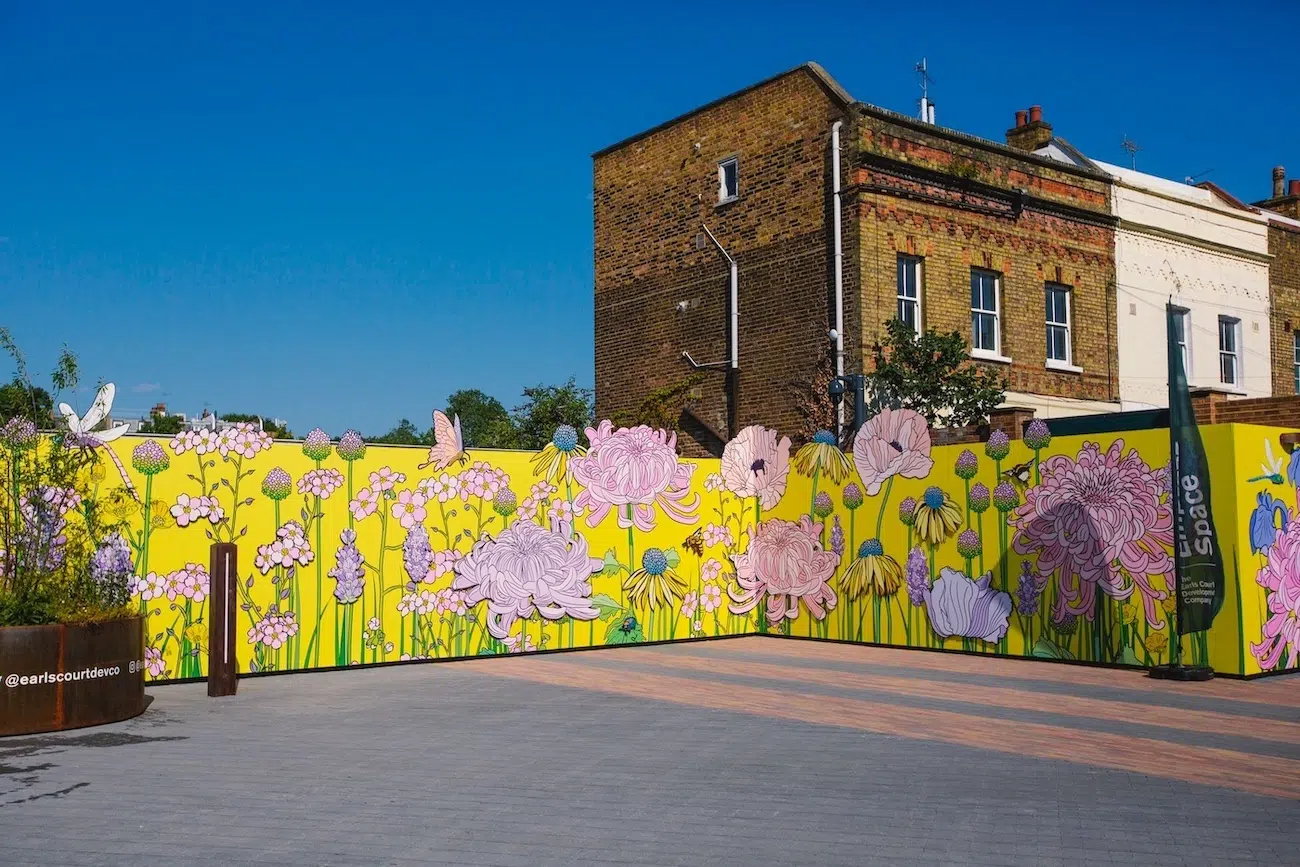
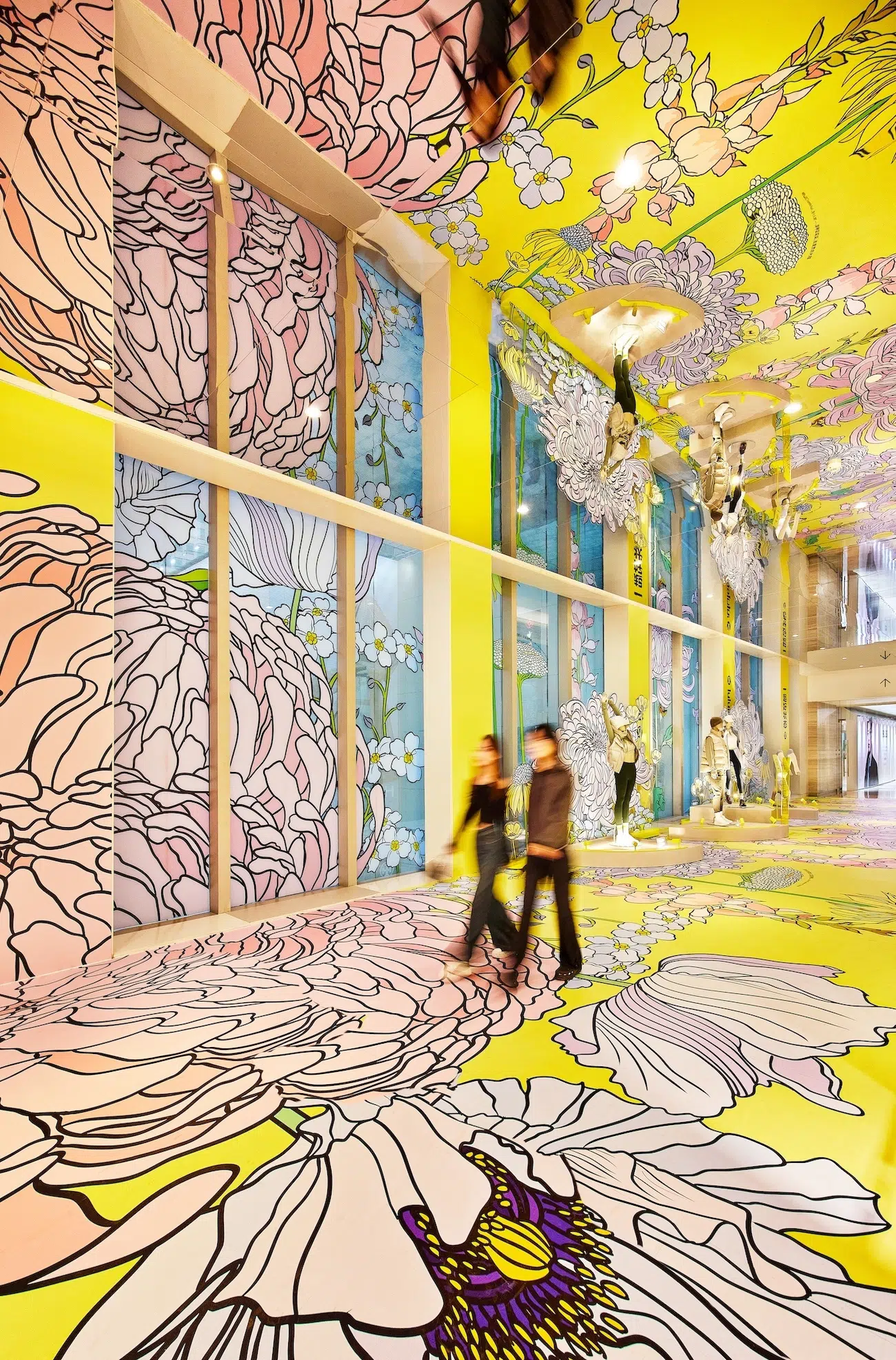
[LB]: When we began Graphic Rewilding, we had already had a taste of creating public art internationally and knew that we wanted to take Graphic Rewilding beyond the borders of the UK. Even though Graphic Rewilding is a very different proposition to SKIP Gallery, it comes from the same vision, that all public spaces are potential canvases for purposeful art. We knew from the outset that what started as murals was only the beginning of our Graphic Rewilding journey. Almost immediately, we started breaking our art away from the walls in order to create more immersive experiences. Situations people would walk, not past, but through. This led to my learning 3D software and an investigation of all types of substrates and manufacturing techniques that would not only help us create these huge works, but also be expedient for global travel and construction.
What’s been the most unexpected or exciting opportunity?
Even though we can’t talk about them yet, we have some phenomenal projects coming up in the U.S., which we are very excited about. There’s been such a connection here, and wonderful positive opportunities have come along.
That said, I think our most unexpected and biggest past project came through Lululemon in China, who work with an artist every year for World Mental Health Day, with a series of immersive health and wellbeing events across the whole country.
From early on, we’ve promoted and given talks about the scientifically proven positive effects on our wellbeing of not only nature itself, but also of imagery of nature. Lululemon really connected with our artwork and story, and we spent eight months developing some mind-blowingly maximalist artworks in colossal public spaces in Shanghai and the rest of China. The whole experience was extraordinary.
Lee, you’ve spoken about growing up in an inner-city environment. Was nature something you instinctively sought out, or something that gradually became part of how you live and create?
[LB]: Actually, Catherine’s inner-city experiences are more extreme than mine. She grew up in a social housing estate in North London. Looking out from the living room window, her view was a concrete parking lot. It was the 1980s. To be honest, no one in her community even had a car at that time, so all she saw was the gray asphalt. She often sat looking out the window, daydreaming that it could be a park, or a garden, with grass and daisies. I also grew up in an urban environment, and while I had a little more access to green space, I did not instinctively seek it out. I was among those kids who had, for many years, a total ambivalence to real nature and was more at home customizing cars and rummaging for car parts in scrap yards than going for a walk in a forest. Something I read about once really rang a bell with me, and it was a phenomenon known as “the extinction of experience,” where people simply forget what nature actually is and so lose empathy for the natural world. I thought that was me! But my particular awakening to happiness through nature came, over the years, through a passion for nature in art: paintings, prints, graphic design, tattoos, textile design, TV, social media, but also video games. I still find it incredibly relaxing wandering, often on horseback, through epic landscapes of games like Horizon Zero Dawn or Ghost of Yotei. Imagine, during a high-speed supercar race in the game Gran Tourismo, pulling over on a lay-by just to take a look at the stormy sunset on the horizon. This all sounds ridiculous, but tests have actually proven that people who are exposed to nature in VR and video games experience lower levels of stress and higher levels of positivity compared to those who are exposed to virtual urban environments. I’m certainly not proposing this as a replacement for nature, but I find it incredibly interesting that our brains can be hacked to suspend disbelief and accept that, though we are not interacting with real trees, rocks, or animals, we are psychologically benefiting from a totally imagined nature scenario. Something the artist David Hockney likes to describe as “New Nature.”
[CB]: We were at a huge David Hockney retrospective show in Paris recently, and I felt as much joy from seeing nature through his eyes as I do from the real deal. In order to joyfully encourage people to look up and take notice, we take those often missed tiny moments of floral joy, and zoom in to create larger than life designs, and we call this idea “Microscopic Maximalism.”
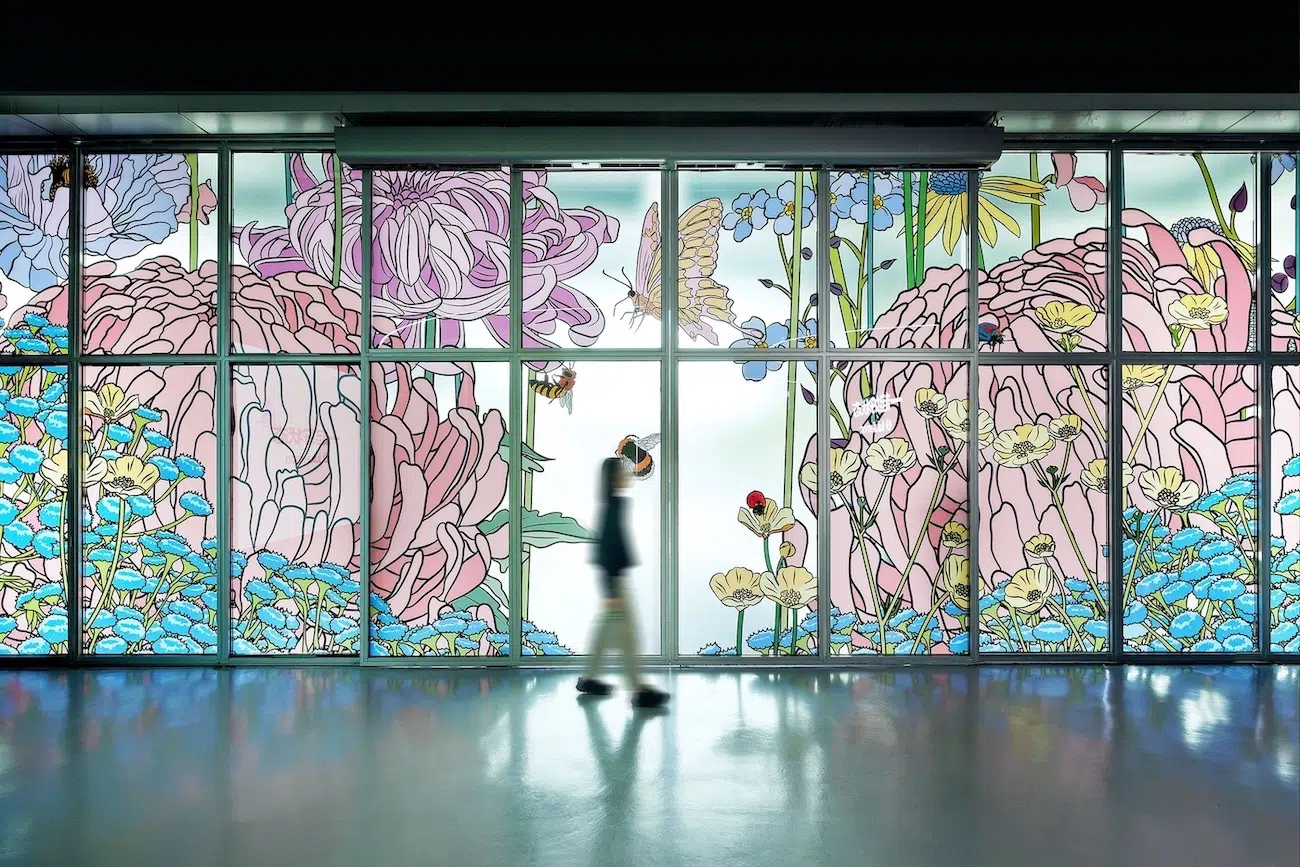
Your work appears in places like Brookfield Place and the Chiostro del Bramante. How does the surrounding architecture influence each design?
Our work is always totally site-specific, and creating such baroque art for strong architectural spaces is very difficult. It’s such a fine line, because our work contains so many conflicting organic shapes and colors which can clash horribly with the architecture.
To avoid this, we take lidar scans, photos, video and accurate measurements, then recreate the spaces in 3D software, where we set virtual cameras at eye level in numerous locations, then apply and adjust our designs accordingly. This “tuning” takes a long time because the design compositions are absolutely crucial to the artworks feeling correct in the architectural space.
We laugh about the fact that our lives would be a lot easier if our work was geometric!
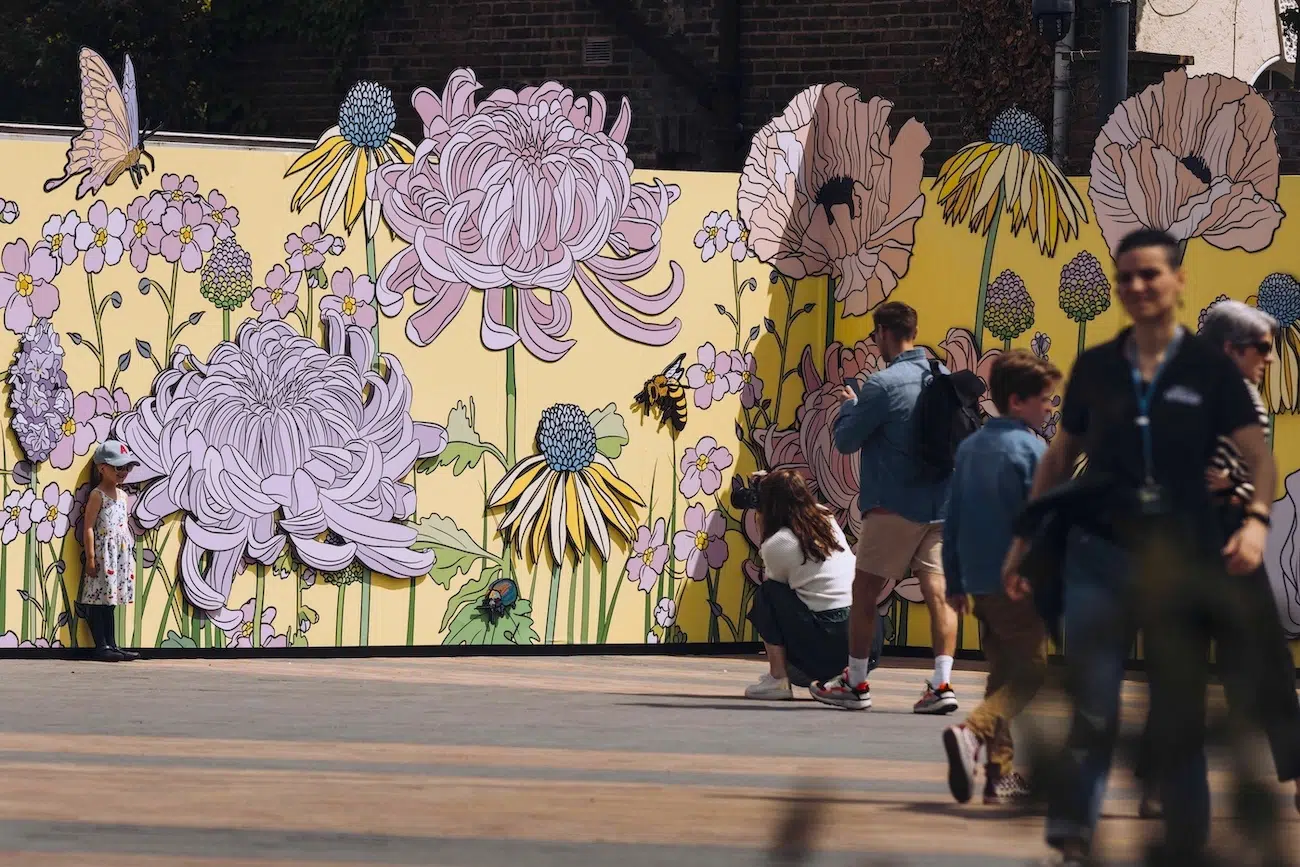
Have you ever had a location where the work felt especially needed?
A great example of this was an early project, near the end of the pandemic, in Crawley in the UK, where most of the residents worked at Gatwick International Airport. After the outbreak, the airport was closed, residents lost their jobs, and the whole town fell into depression. The town contacted us and asked if we wanted to create a mural in a neglected street in the town centre. But instead, we took over walls, floor, benches, trees, billboards, and bins. People absolutely loved it. It was originally only supposed to be exhibited for three months, but was kept up for three years and was never vandalized (which, strangely, feels like a badge of honor).
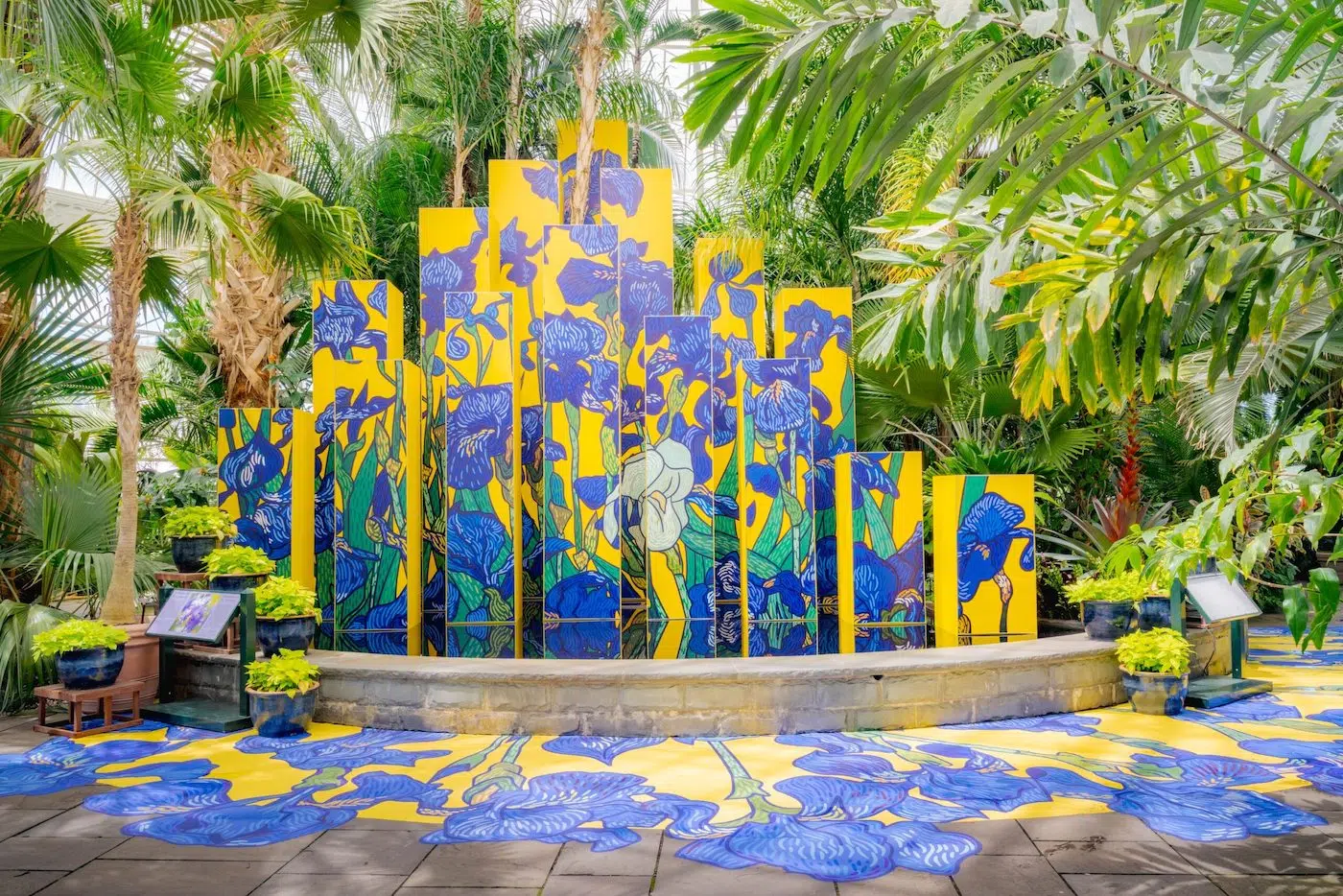
How did you go about translating Van Gogh’s Irises into your own visual language for New York Botanical Gardens?
This project was at once hugely inspirational and incredibly daunting because Van Gogh is such an inspiration. How could we possibly do his work any justice?
Rather than simply translating his work into our Graphic Rewilding flat style, we wanted to imbue the flowers with the same sculptural quality that Van Gogh applied to his forms. This meant following the form of each petal with our own digital “brushstrokes.” But while doing so, we also realized that the nuances in subtle color variation this is able to achieve were a real step change in our work. It took much longer to draw, but it was such an opportunity to improve and grow as artists.
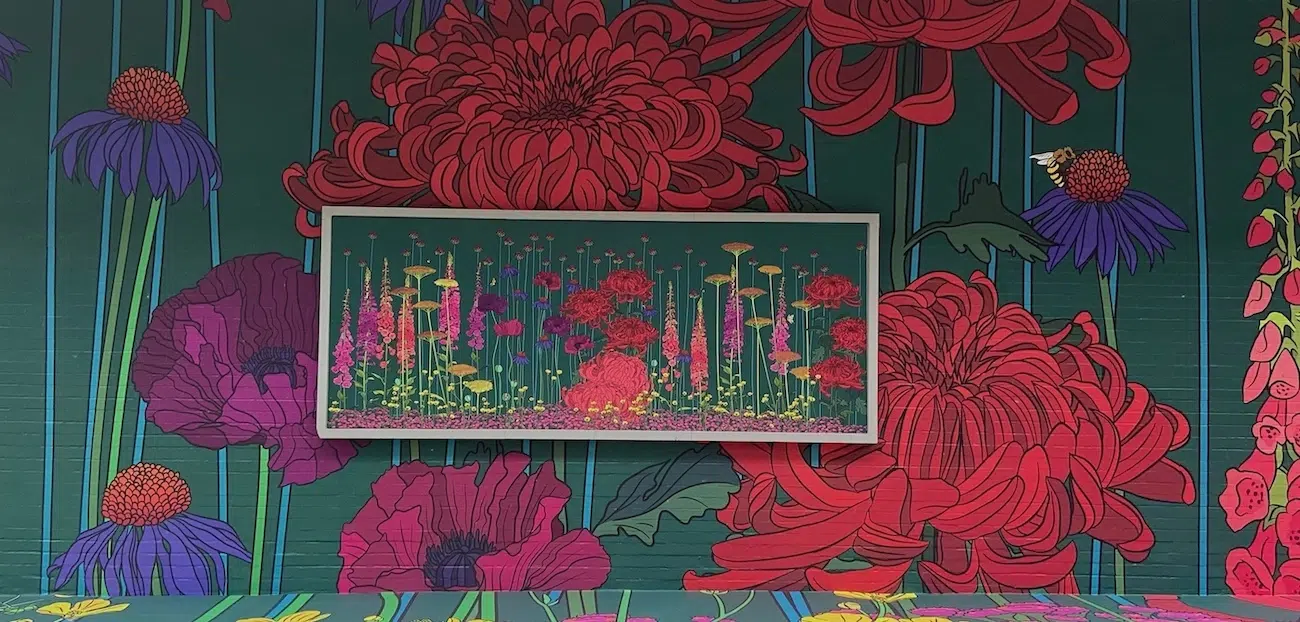
Do you spend time studying plants in real life before illustrating them, or is it more intuitive?
[LB]: This is a really good question. As you can see from the earlier questions, in the past, I was only fascinated by artistic depictions of nature. So my first port of call was copying historical Japanese artworks. However, because our work developed into being totally site-specific and rooted in place, we both began researching and photographing the flora and fauna of the places where we were commissioned. As this went on, we amassed a huge collection of drawings studied from real life, and my personal biophilic sensibilities grew and grew, as a glorious feedback loop occurred. But I always emphasize that I’m not a botanical illustrator. Even though our drawings are recognizable as specific plants, my aim is still very much an artistic interpretation, so I take many creative liberties with color and shape if it helps the final composition. The artwork rules over accuracy.
What’s the most technically challenging surface you’ve worked on?
The technical challenges are far-reaching, but we always get there in the end. They can range from extreme weather situations in New York, massive people traffic in the centre of Shanghai, or insane heights in London.
However, we did a seemingly simple project in Wales, UK, a few years ago, which was an underpass that was deep-set, with highly textured brick. Our work requires very precisely painted black lines, and that was an extreme technical challenge. It didn’t help that it rained 90% of the time!
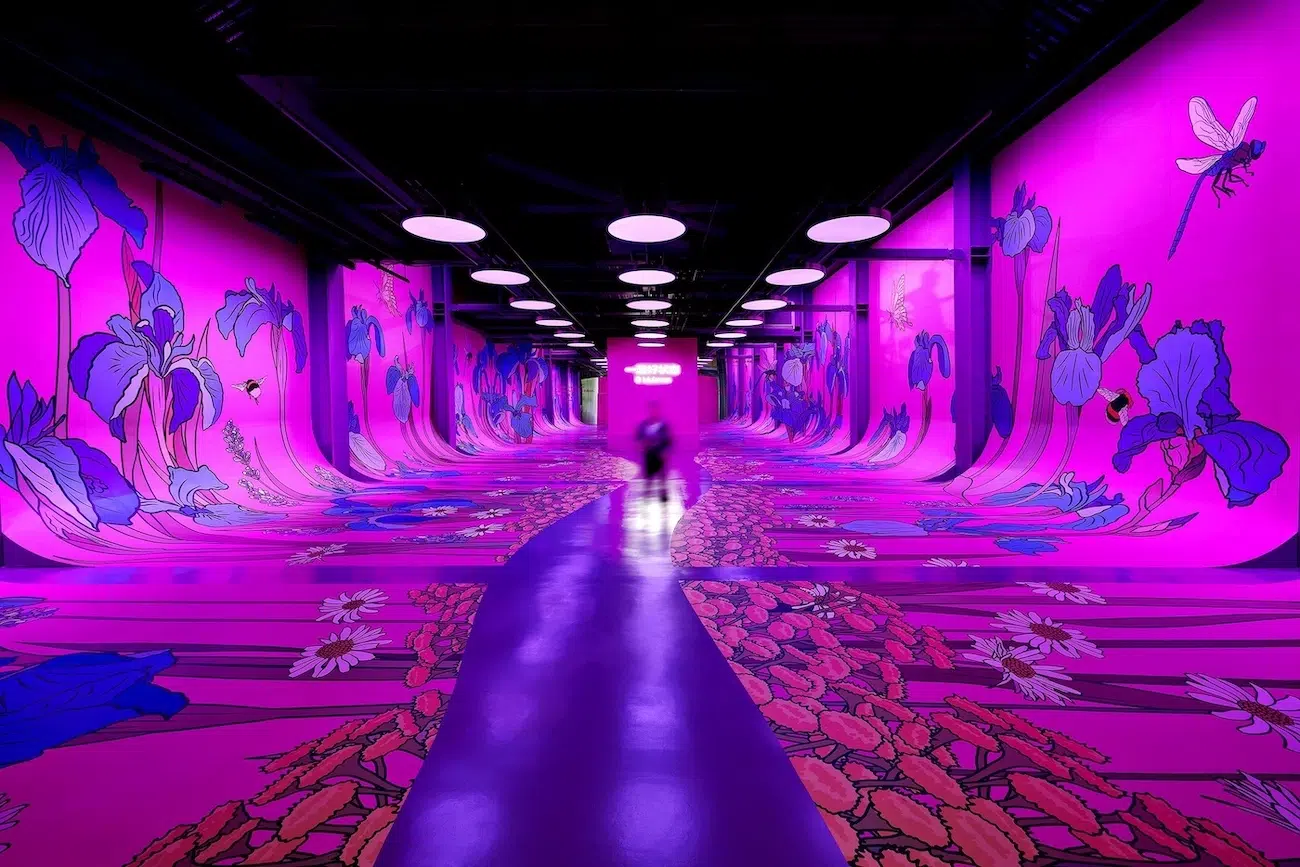
Also, because we love covering entire floors to create full immersion in outdoor spaces, that can be quite a challenge.
Is there a flower that best represents each of you?
[CB]: I’m a huge fan of daisies and buttercups, and any wild flower that can appear in the cracks of concrete, to bring color and joy into urban spaces. There is a beautiful resilience in these flowers.
[LB] I think that resilience represents Catherine beautifully, although I’m not sure if the daisies represent me. I love drawing irises. There is such a gossamer delicacy about them, and their beauty is incredibly fleeting, making them very hard to capture.
What’s one small way people can bring a bit of “rewilding” into their everyday lives?
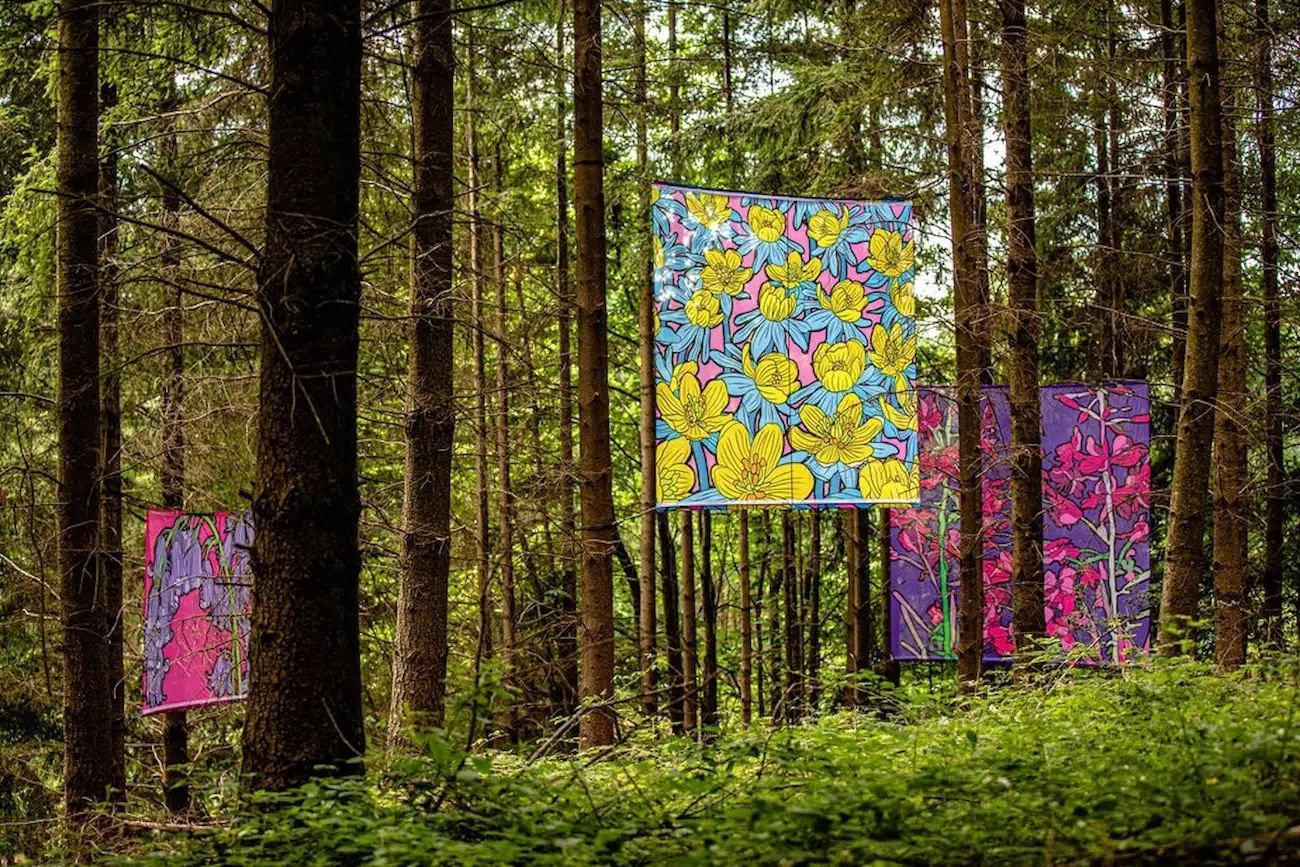
[LB] I think “noticing” is becoming a lost art. Our lives seem to have become so fast and distracted that sometimes we forget to really notice. I’m reading a fascinating book by Olivia Meehan called Slow Looking: The Art of Nature, which talks about that moment when beauty takes your breath away and bypasses the intellect. Maybe it’s naive, but I think we need a bit more of that in our lives.