View this post on Instagram
In a focused exhibition for Art Week Miami, a previously unseen side of Jean-Michel Basquiat’s artwork is finally coming to light in Basquiat. A Hidden World. The show highlights Basquiat’s use of ultraviolet (UV) materials, bringing together four of his paintings that contain hidden images and markings invisible to the naked eye. The exhibition offers a new look at Basquiat’s creative process, revealing that there may be more to some of his most recognizable works than meets the eye.
Opening Nov. 29 at the Institute of Contemporary Art (ICA) Miami, the exhibition is the first dedicated specifically to Basquiat’s use of UV materials. With the help of specialized lighting, visitors will be able to see a completely different side of paintings that, under normal lighting, appear much simpler.
One of the most striking examples is Emblem, a painting from 1984. Under normal light, the painting features a largely white background with scattered figures and markings. However, when illuminated with UV light, the canvas is transformed, revealing a vibrant collection of hidden drawings, words, and symbols. Among them is the phrase “invisible men,” which the exhibition’s catalogue connects to the underrepresentation and erasure of Black people in art.
Interestingly enough, Basquiat was already known for his tendency to paint over or partially erase parts of his work, often leaving traces of what had been there before. “I scratch out and erase but never so much that they don’t know what was there. My version of pentimento,” the artist once said. Pentimento is a term used to describe earlier layers of a painting that become visible beneath the final image. With his use of UV materials, Basquiat took this practice a step further, creating entire layers that could only be seen under certain lighting conditions.
Other works featured in the exhibition include Untitled (Orange Sports Figure) from 1982, which contains Basquiat’s signature and date in invisible ink, as well as Cash crop and O.M.R.A.V.S., both completed in 1984. Together, the four paintings offer a closer look at how the artist experimented with different materials and played with the idea of what should be seen and what should remain hidden.
The exhibition is also working with art conservator Suzanne Siano to study the paintings and better understand the materials Basquiat used. These findings will be documented in an accompanying catalogue, offering further insight into an aspect of his work that has remained hidden for decades.
Curated by Dieter Buchhart and Anna Karina Hofbauer, Basquiat. A Hidden World will be on view at ICA Miami’s Expansion Space in the Design District through Feb. 15, 2027. For an artist whose work has been studied and celebrated for decades, the exhibition raises an interesting question: How much of Basquiat’s art have we really been seeing all this time?
Previously unseen paintings by Jean-Michel Basquiat are coming to Art Week Miami in Basquiat. A Hidden World.
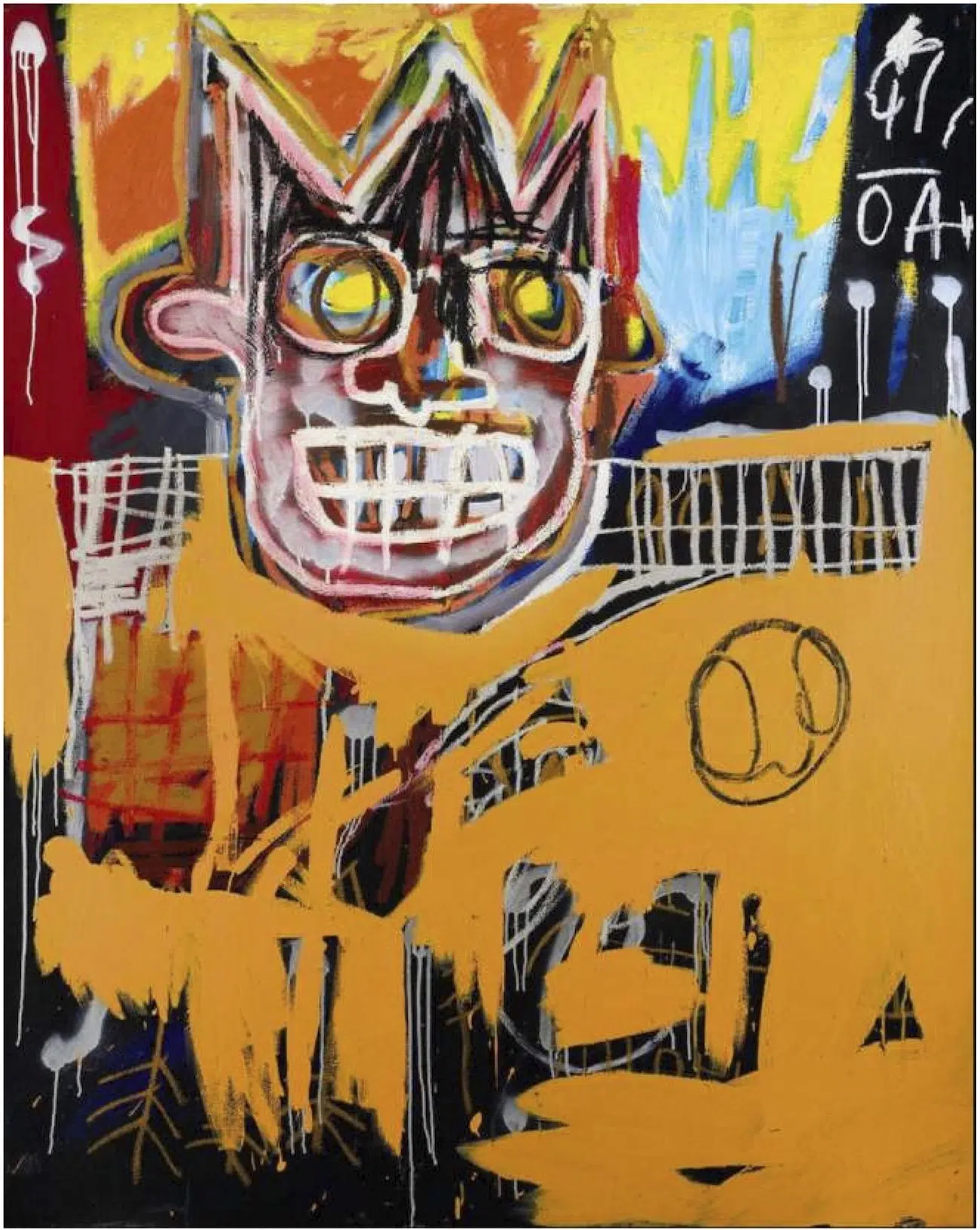
Jean-Michel Basquiat, “Untitled (Orange Sports Figure),” signed and dated NYC ‘82 in invisible ink. Acrylic, oil stick and spray paint on canvas, 152.4 x 121.9 cm
Basquiat was known to paint over or partially erase parts of his work, often leaving traces of what had been there before…
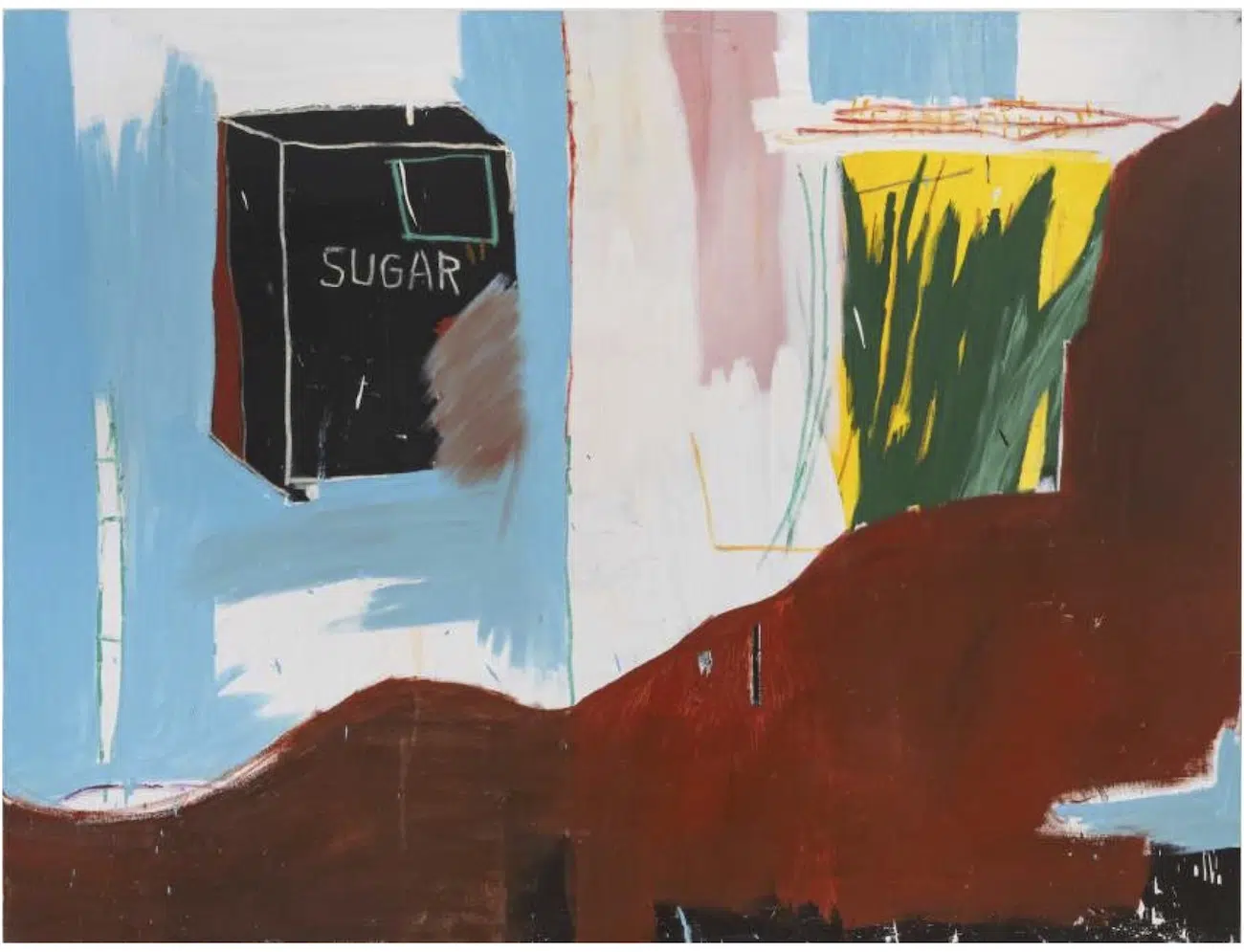
Jean-Michel Basquiat, “Cash crop,” 1984. Oil and acrylic on canvas, 182.9 x 243.8 cm
But this exhibition is the first dedicated specifically to Basquiat’s work with UV materials, transforming his paintings when placed under UV lights.
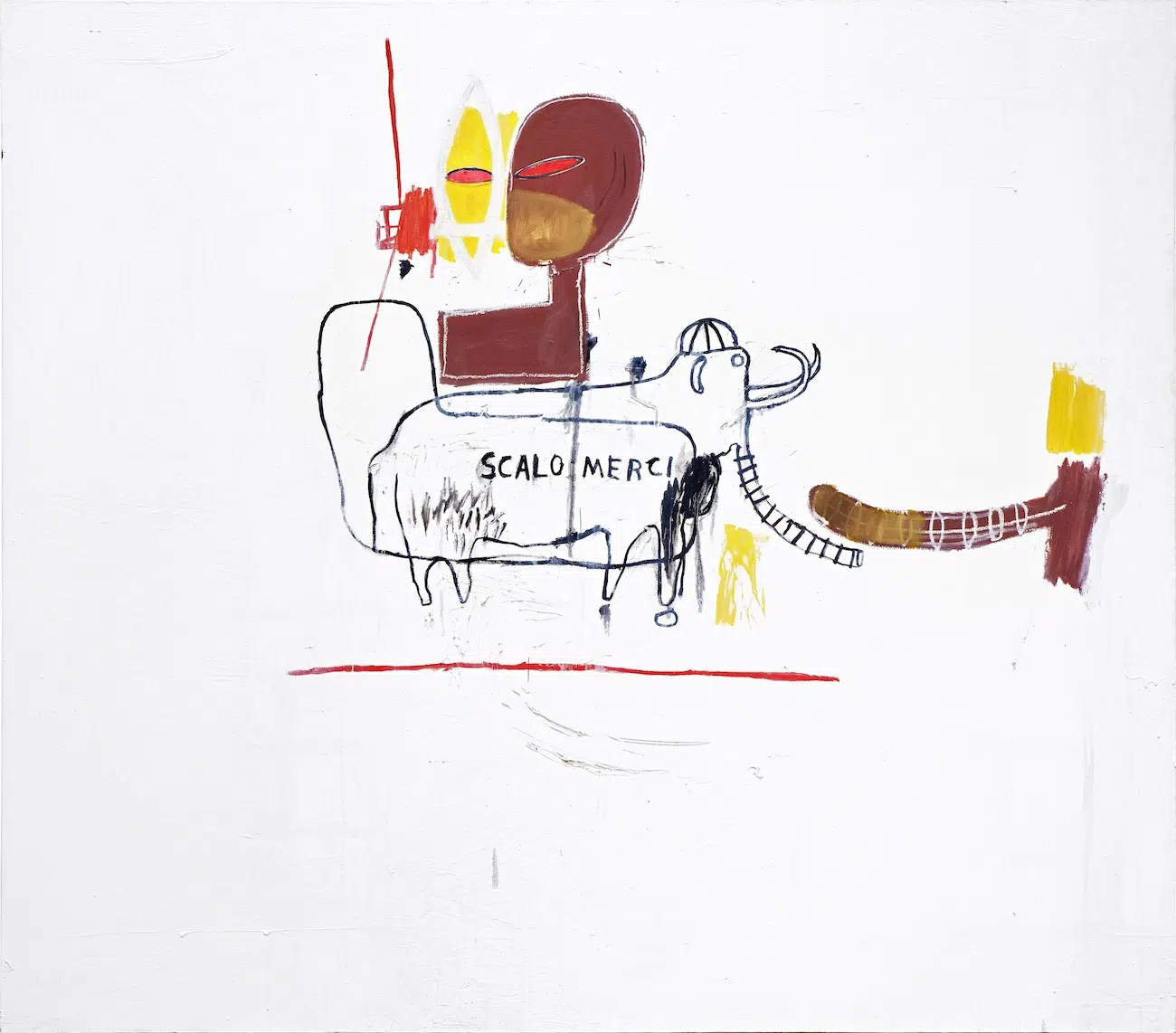
Jean-Michel Basquiat, “Emblem,” 1984. Oil and oilstick on canvas, 218.4 x 248.9 cm
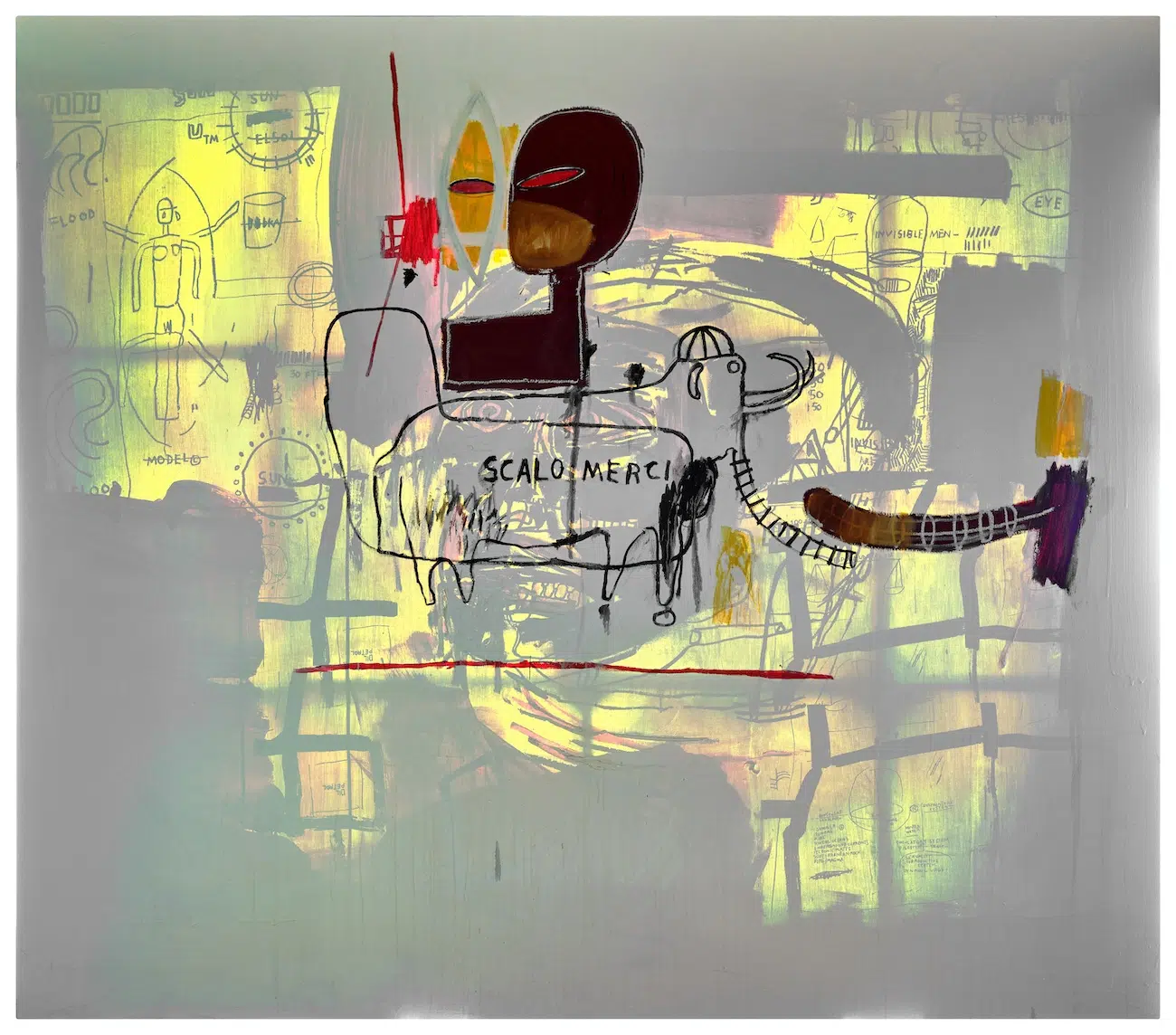
Jean-Michel Basquiat, “Emblem,” 1984. Oil and oilstick on canvas, 218.4 x 248.9 cm
Basquiat. A Hidden World will be on view at ICA Miami’s Expansion Space in the Design District through February 15, 2027.
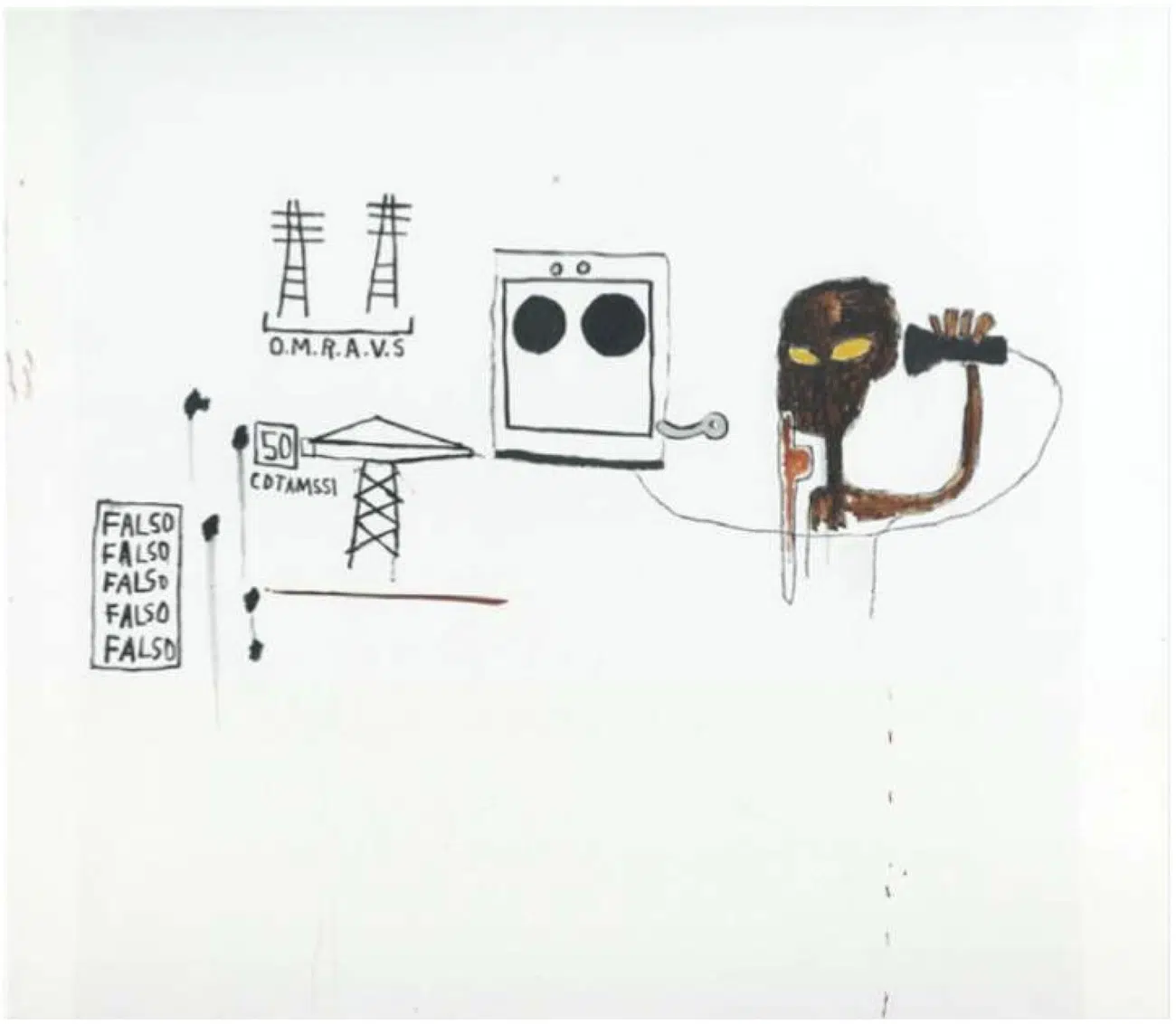
Jean-Michel Basquiat, “O.M.R.A.V.S,” 1984. Oil and oilstick on canvas, 218.4 x 249.5 cm