Over the past few years, toy maker Mattel has been working to make its Barbie lineup more reflective of the real world. Recent releases include a Barbie with Down syndrome, the brand’s first doll with hearing aids, and a doll with type 1 diabetes. Now, Mattel has taken another step forward with the release of an autistic Barbie, continuing its push to make the iconic fashion doll more inclusive.
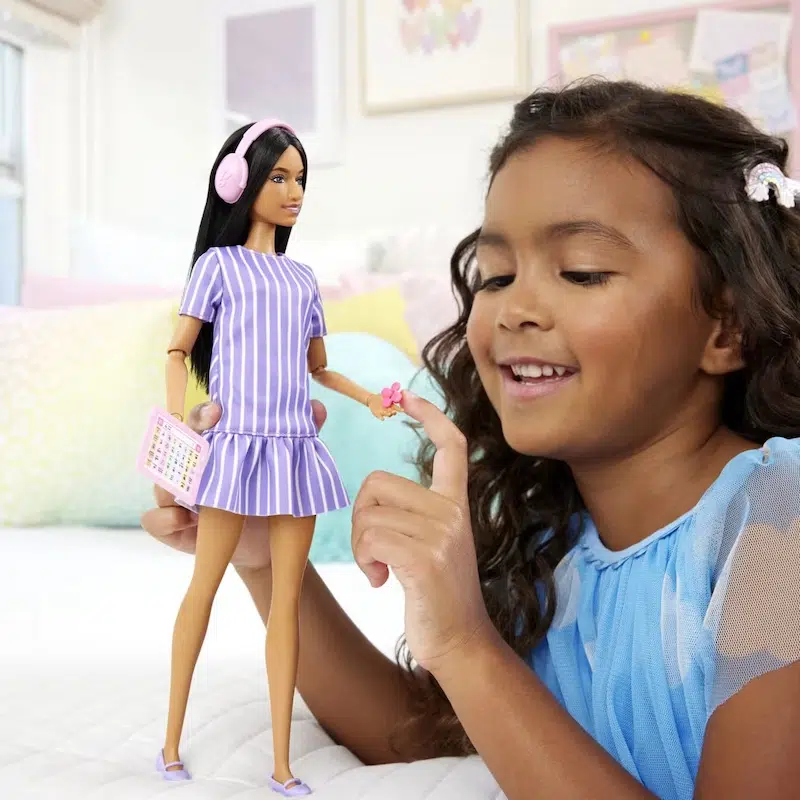
Autistic Barbie was created in collaboration with the Autistic Self Advocacy Network (ASAN) to design a doll that represents some of the ways autistic people experience the world. It comes with a fidget spinner, noise-canceling headphones, and a slightly shifted gaze to represent how some people with autism sometimes avoid direct eye contact.
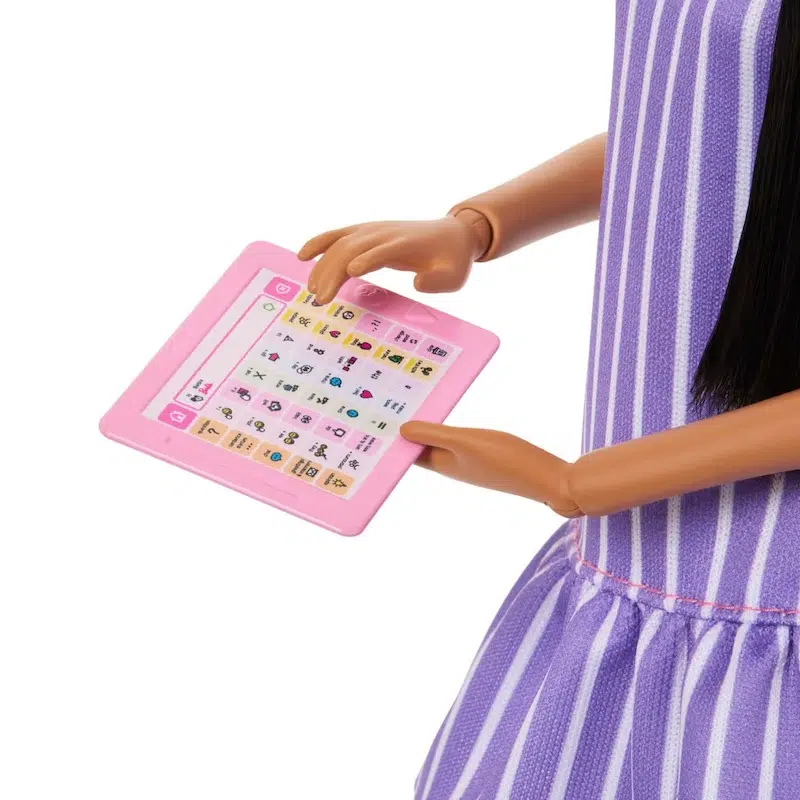
The doll also comes with an Augmentative and Alternative Communication (AAC) tablet, a tool that gives non-verbal people with autism a way to express themselves. And she’s also made with flexible joints at the elbows and wrists to allow her hands to move freely so kids can play out stimming movements with the doll. Even her loose-fitting dress has been carefully designed in a way to minimise fabric-to-skin contact, which some people with autism struggle with.
Mattel also modeled the doll on its employees in India, alongside mood boards reflecting women from a range of Indian backgrounds. Noor Pervez, the community engagement manager at the Autistic Self Advocacy Network, who worked closely with Mattel on developing the Barbie prototype, wanted to represent a segment of the autistic community that is often overlooked.
Despite the designer’s good intentions, the autistic Barbie is currently facing online backlash. Many people have understandably taken to social media to express their concern that it reinforces narrow stereotypes. Autism exists on a broad spectrum, and no single representation can reflect the wide range of experiences, traits, and behaviors within the autistic community.
One person wrote, “Autism can’t be summed up with a couple of props. Reducing it to noise-canceling headphones and a fidget spinner risks reinforcing narrow stereotypes rather than challenging them.” Another commented, “Inclusion should be about listening to autistic people—not packaging us.”
The creators of the autistic Barbie didn’t set out to define autism, but to highlight just a few of the many ways it can present. “Autism doesn’t look any one way,” Pervez says. “But we can try and show some of the ways that autism expresses itself.”
Peter Watt, managing director of National Programmes at the National Autistic Society, agrees that the doll represents a positive step toward improving public understanding of autism and helping every child feel included. “Seeing more depictions of autism is key to understanding and autism acceptance,” he says. “It’s really important that these representations are authentic and based on extensive consultation with autistic people, and we’re pleased Mattel involved the autistic community in the development of this doll.”
Find out more about the new autistic Barbie on the Mattel website.
Mattel just released an autistic Barbie, continuing its push to make the iconic fashion doll more inclusive.
View this post on Instagram
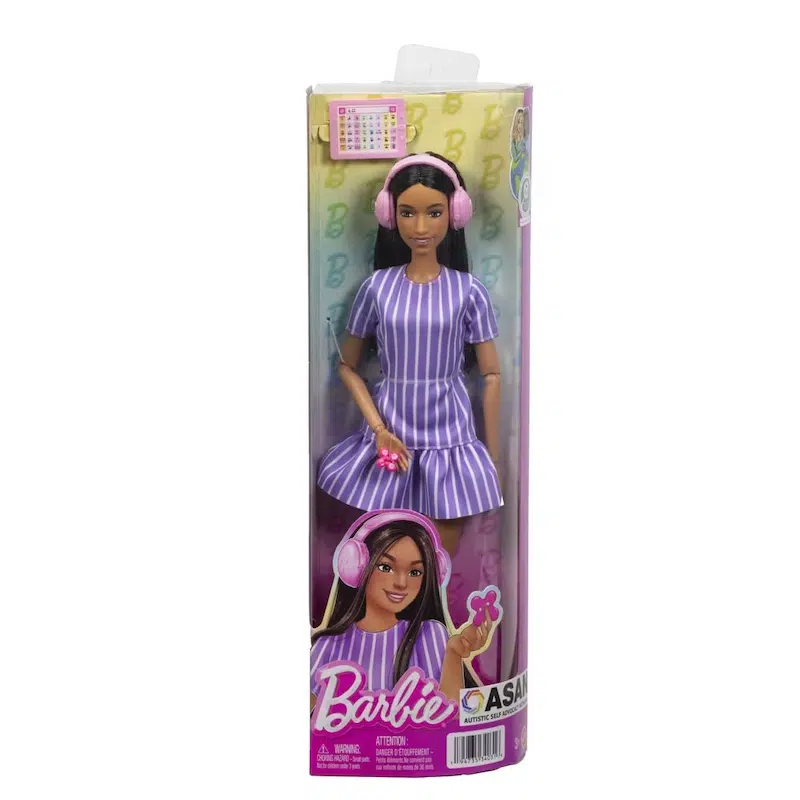
It comes with a fidget spinner, noise-canceling headphones, and a slightly shifted gaze to represent how some people with autism sometimes avoid direct eye contact.
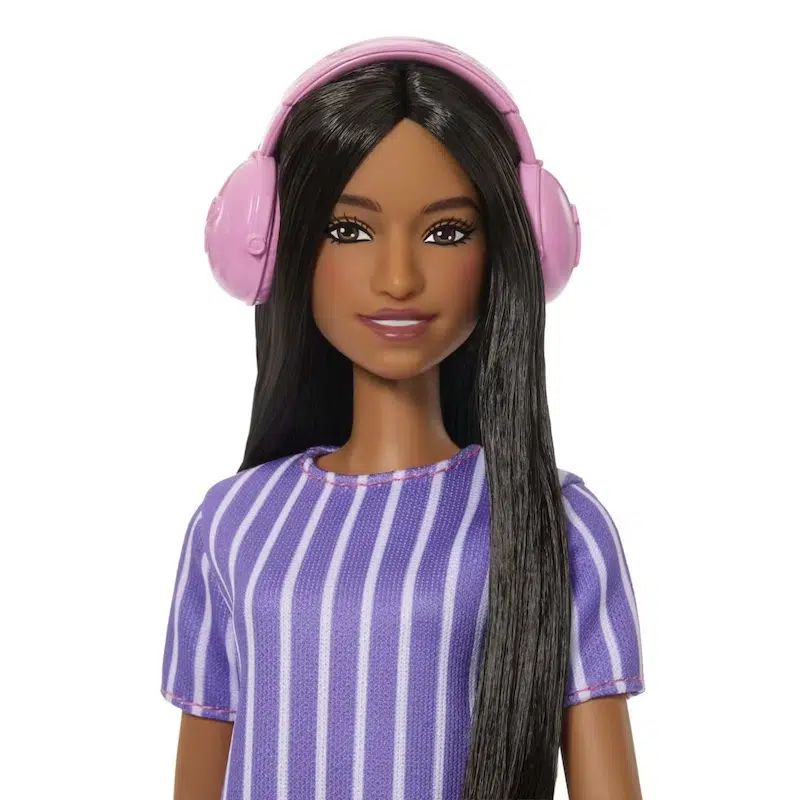
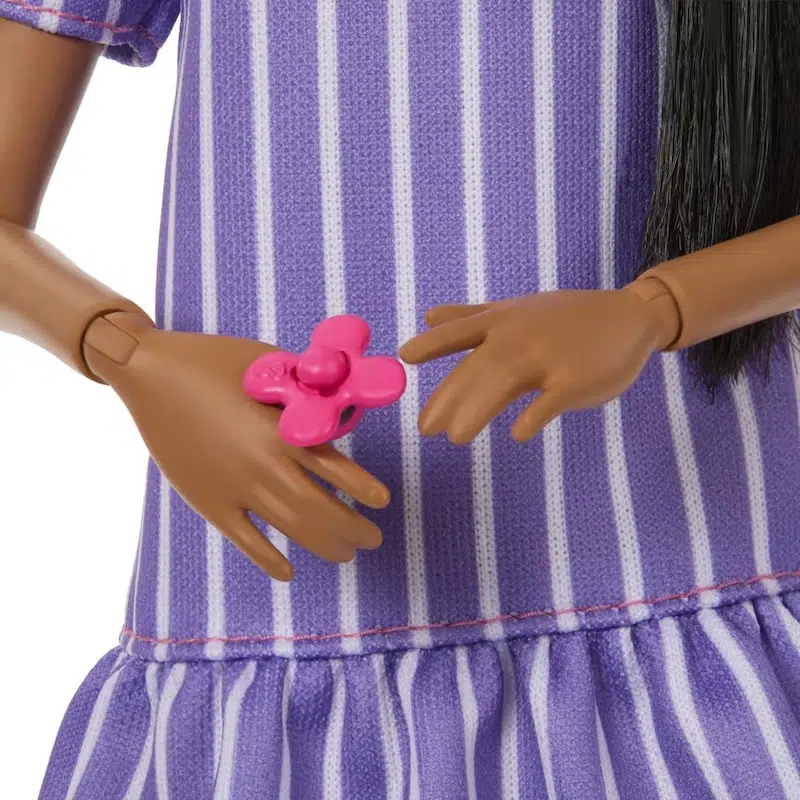
The doll also comes with an Augmentative and Alternative Communication tablet, a tool that gives non-verbal people with autism a way to express themselves.
Mattel: Website | Instagram | Facebook | YouTube
Source: Barbie® Introduces the First Autistic Barbie Doll, Championing Representation for Children through Play; Ellie Middleton on Instagram; Backlash against first autistic Barbie for ‘reinforcing stereotypes’: Critics claim doll with fidget spinner, noise-cancelling headphones and side-gazing eyes is offensive
Related Articles:
Barbie Introduces Doll With Type 1 Diabetes to Make Every Child Feel Included
Mattel Unveils New Barbie Doll With Down Syndrome
Barbie Just Introduced Its First Doll With Behind-the-Ear Hearing Aids
Barbie Introduces Diwali Doll Created by Indian Fashion Designer Anita Dongre