Barcelona is a city of contrasts. Its history stretches back over 2,000 years, beginning as a Roman colony. But time hasn’t stopped for the second-largest city in Spain. It boasts great contemporary art, food, and shopping, making it the perfect destination for anyone who wants to experience history while enjoying the modern trappings of a bustling metropolis. “Barcelona was one of those travel experiences that changed the way I look at art, architecture, and creativity,” says Eugene Kim, My Modern Met’s co-founder and editor-in-chief.
My Modern Met has created a guide that will help you make the most of your trip to Barcelona. Many of our recommendations revolve around architecture, specifically one architect and designer: Antoni Gaudí. He looms large in Barcelona, as he designed 12 buildings—some of which are UNESCO World Heritage Sites. Many of his pieces feature the style Modernisme, also known as Catalan modernism or Catalan art nouveau, which combines organic shapes and vibrant colors into the design.
While there is a lot to do on this list—it’ll keep you busy—sometimes, it’s best to take a moment and just let yourself enjoy the vibe of the city. “Some of my favorite moments also happened without any planning at all,” Kim explains. “I remember simply walking through Barcelona at night and suddenly coming upon the Cathedral of Barcelona, illuminated against the darkness. It was breathtaking.”
Scroll down to see our art and culture guide to Barcelona. Be sure to make plenty of room for tapas!
Where to Stay in Barcelona
Cotton House Hotel, Autograph Collection
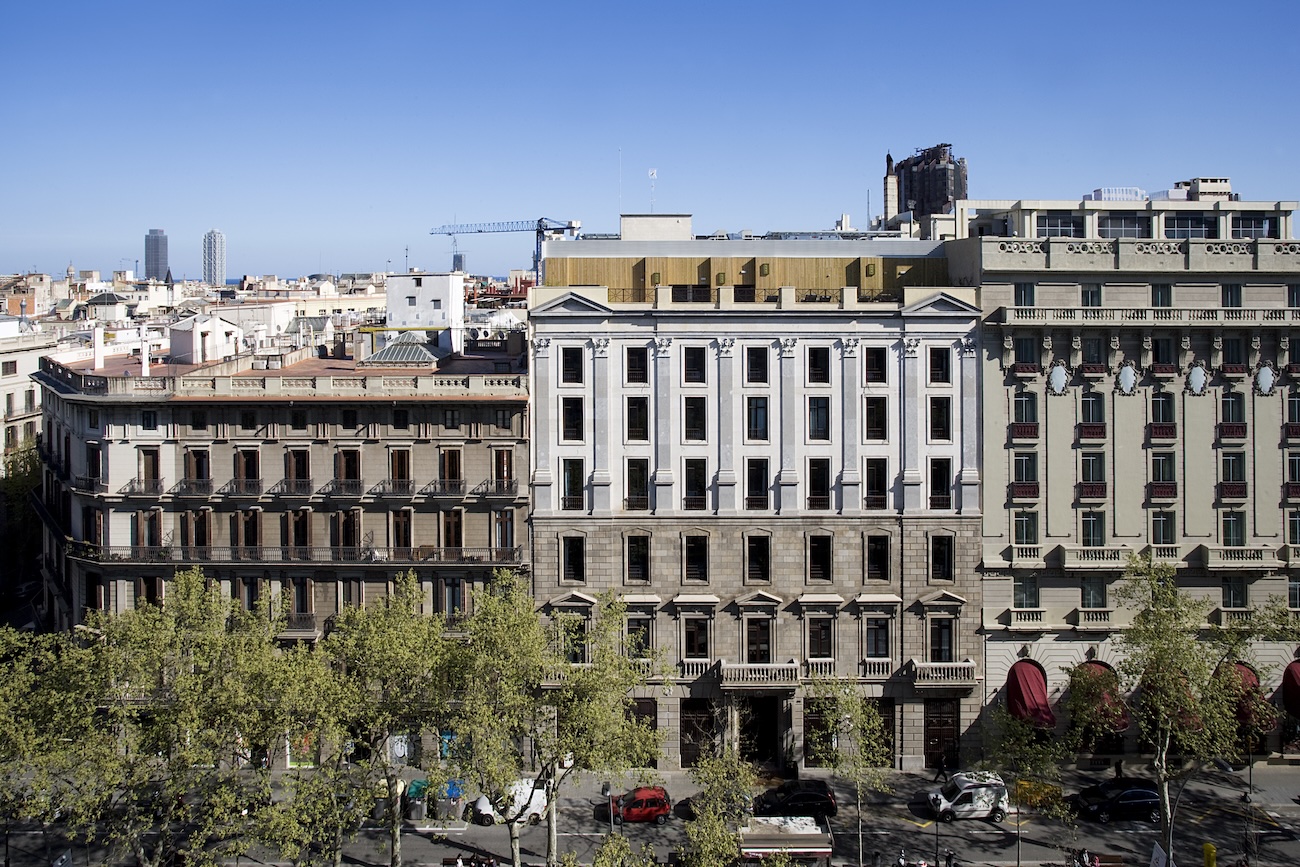
Photo: Autograph Collection
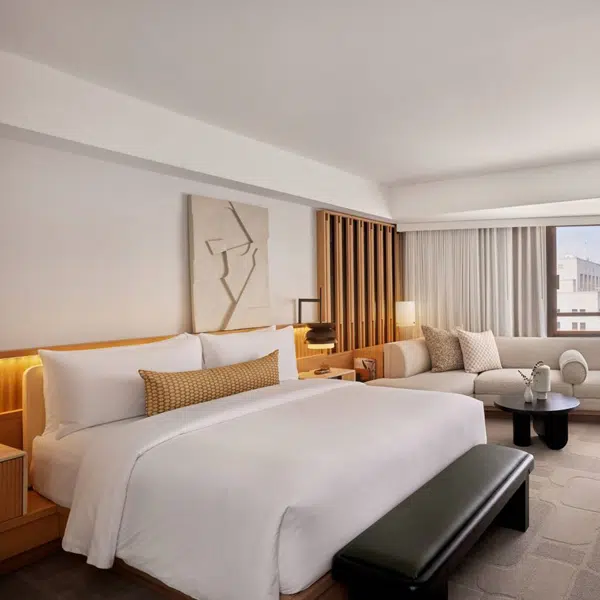
Sleep in history when you stay at the Cotton House Hotel, Autograph Collection. The boutique accommodations are in the former headquarters of the city’s Cotton Producers’ Guild, and its design marries 19th-century architecture with contemporary comforts. Suites feature colorful frescoes and moldings, eye-catching wallpaper, and balconies overlooking Barcelona.
When you’re ready to explore, the Cotton House Hotel, Autograph Collection is within walking distance of cultural sites, architecture, and incredible restaurants. “From the hotel, I wandered into the Gothic Quarter and saw the Cathedral of Barcelona glowing against the night sky,” explains Kim. “Simple evening walks became unforgettable moments.”
Gaudí + Architecture
Sagrada Família
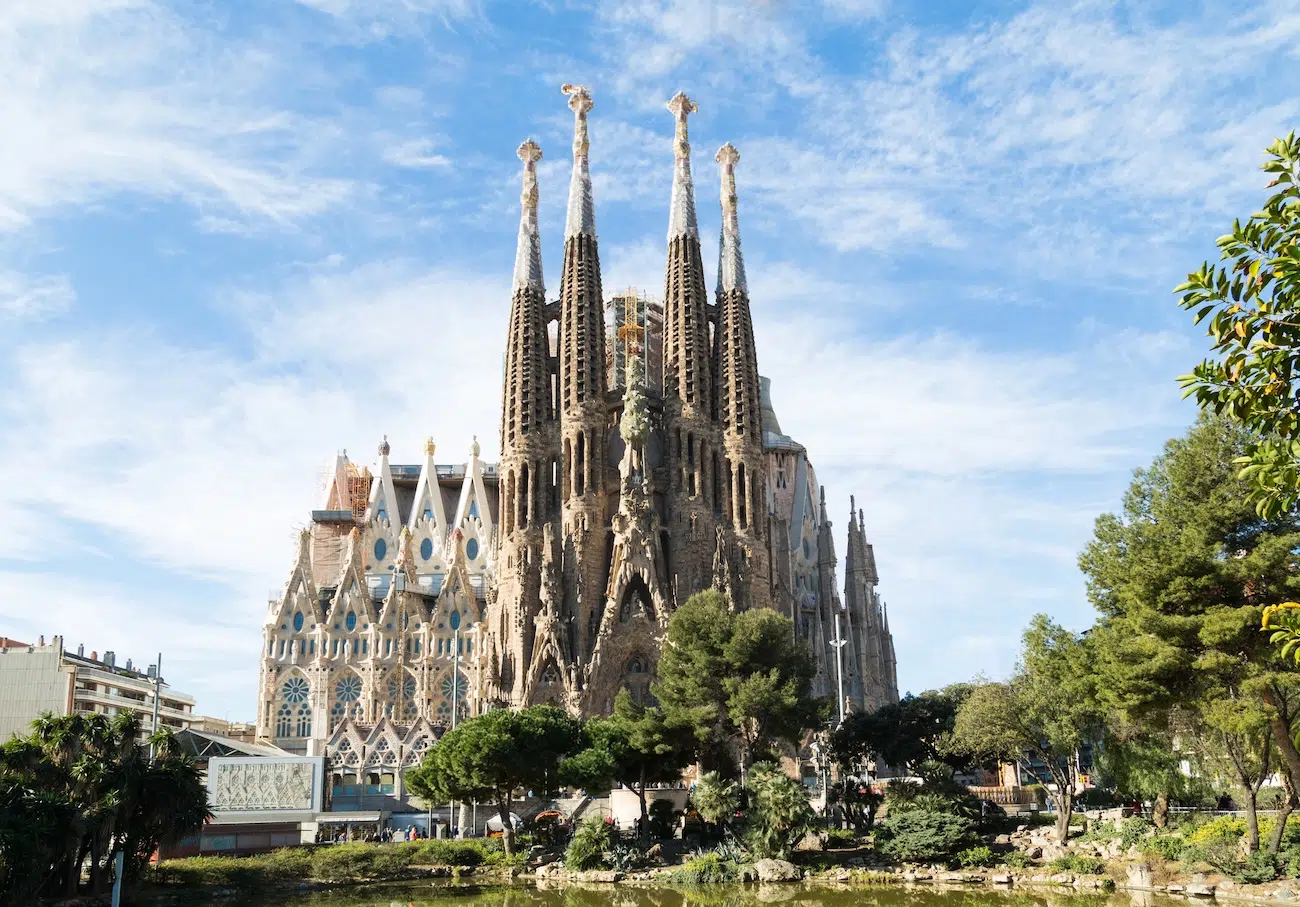
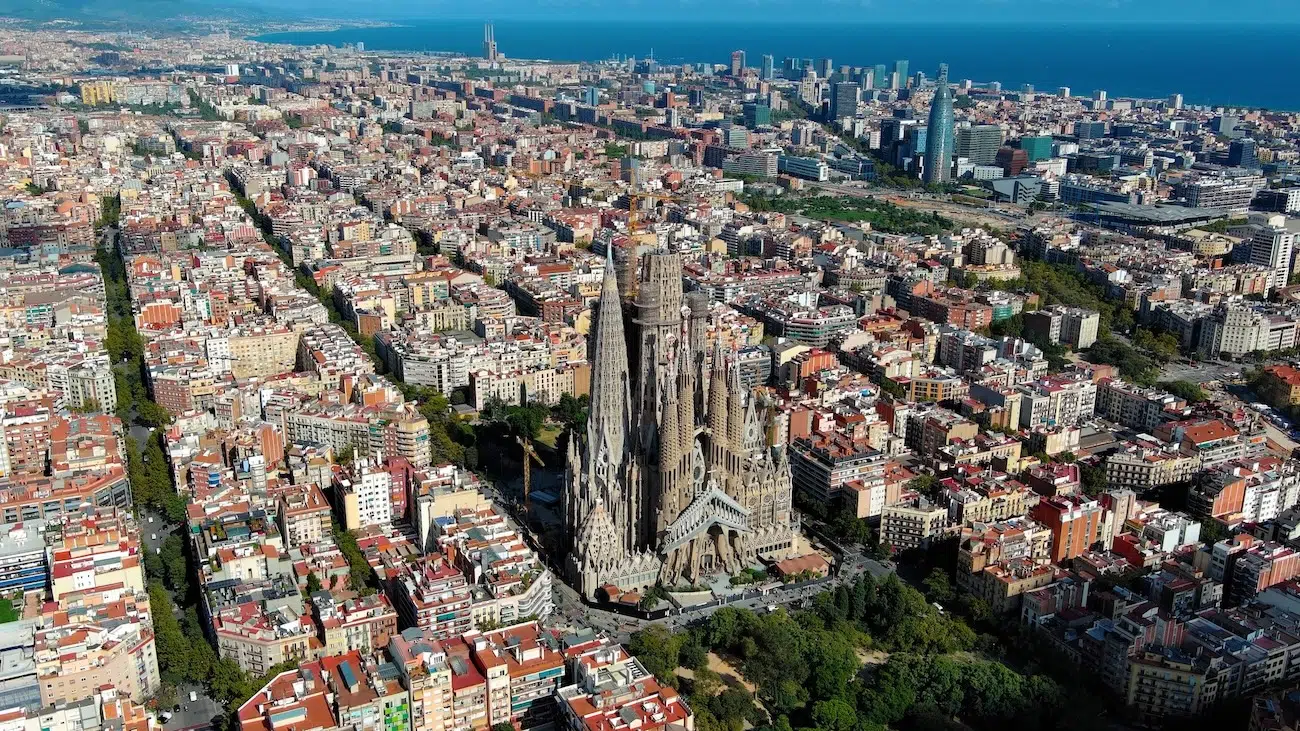
Sagrada Família is Gaudí’s unfinished basilica whose construction began in 1882. This UNESCO World Heritage Site is still being built, with funding coming from ticket sales and donations. Architecturally, it combines multiple styles: Gothic with Modernisme and its signature wild organic forms.
Like the rings of a tree, a trio of facades tells the different stories of its construction. The Nativity is the oldest and most ornate, while Passion is stark and angular. Glory is the newest facade and is still being completed. Once inside, you’re greeted with tree-esque columns and stained glass that bathes the space in vibrant color.
“The Sagrada Família was especially moving,” Kim shares. “Watching sunlight pass through the stained-glass windows and fill the interior with brilliant colors felt spiritual and almost magical. Then you look upward and see those immense branching columns rising around you like a living forest.”
Lines for Sagrada Família can be long, so your best bet is to book timed tickets in advance.
Casa Batlló
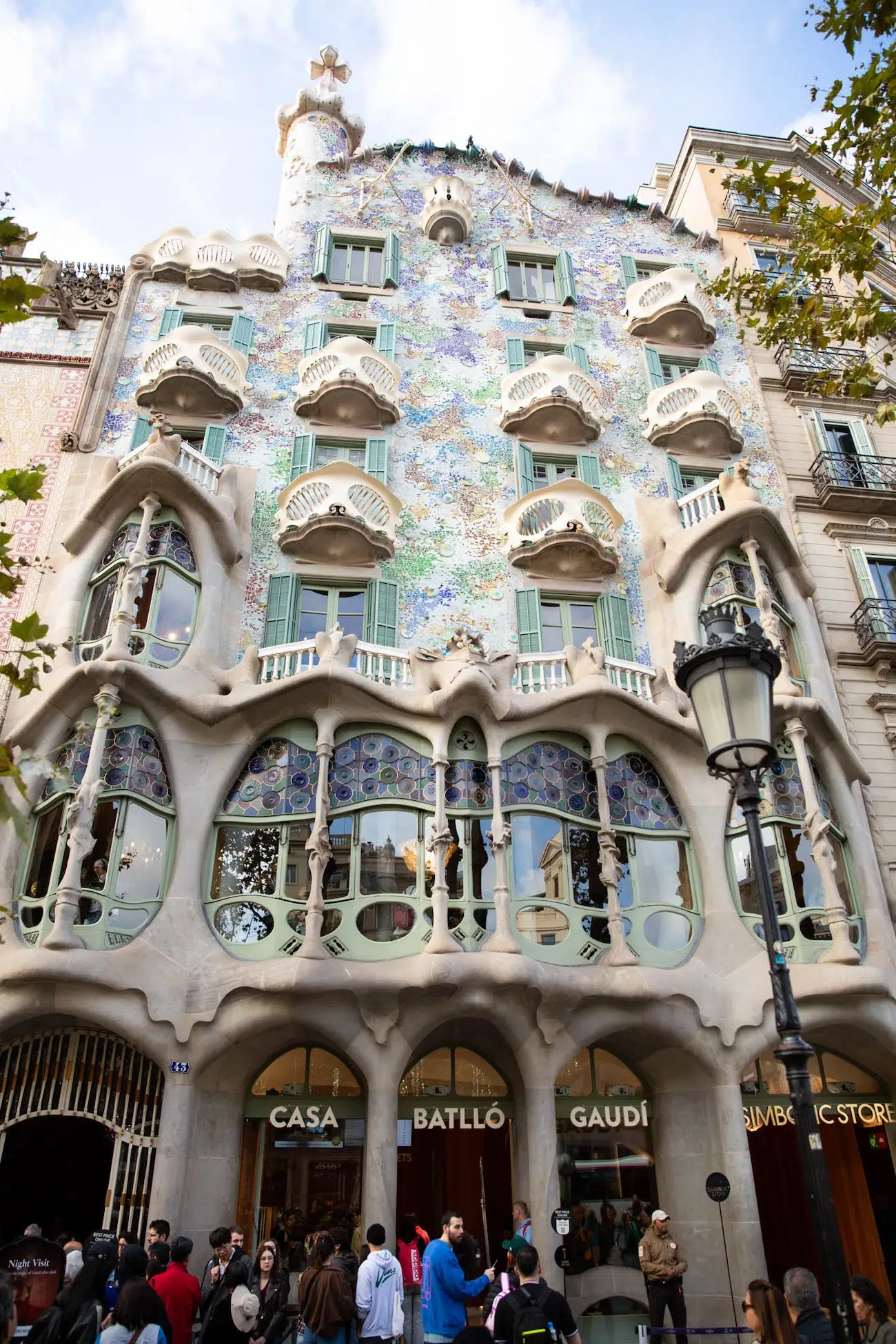
Photo: Eugene Kim / My Modern Met
“Casa Batlló was another highlight,” Kim says, “from the flowing shape of its facade to the remarkable doors, windows, and details throughout the house.” It’s a Gaudí redesign of an existing building on the Passeig de Gràcia, an avenue regarded as “the most expensive street in Barcelona.” Nicknamed “Casa dels ossos” (House of Bones), it’s easy to see why. Its balconies and facade have a skeletal quality. The roof, however, is meant to evoke a dragon’s back as a way to reference the legend of Sant Jordi (patron saint of Catalonia).
The interior of Casa Batlló has few straight lines, with features that flow and are surrounded by underwater-esque shapes. Enjoy an immersive experience when you try its multimedia tour, which has augmented reality elements to show another side of the structure.
Casa Milà
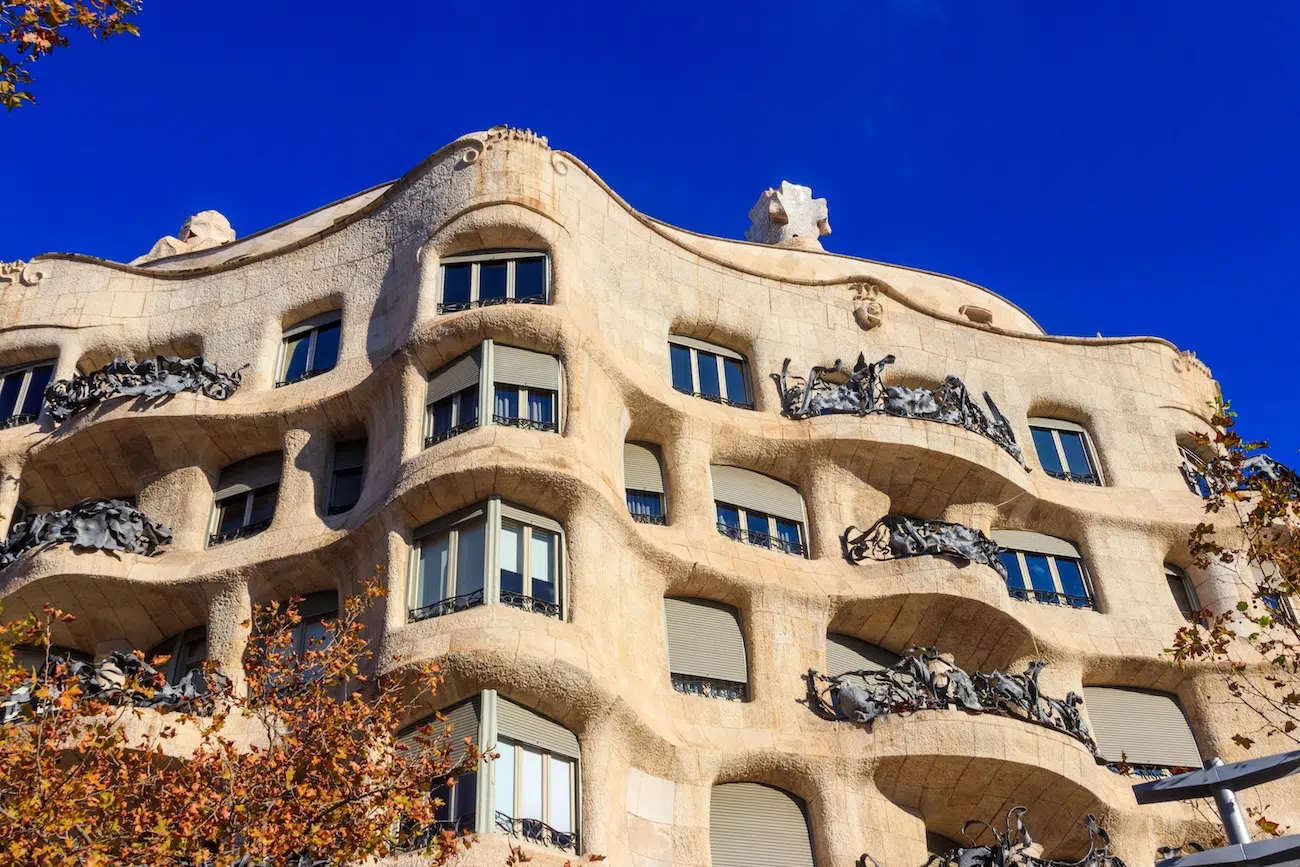
Barcelona is full of Gaudí masterpieces, and Casa Milà is no different. It’s also on the Passeig de Gràcia, alongside Casa Batlló. Its nickname is “La Pedrera” (The Quarry), in reference to its undulating, rough-hewn stone facade. The building lacks any straight structural walls; instead, a self-supporting stone facade with wrought-iron balconies keeps it upright.
When you visit this UNESCO World Heritage Site, be sure to pay attention to the roof. It has sculptural chimneys and ventilation towers resembling helmeted warriors.
Park Güell
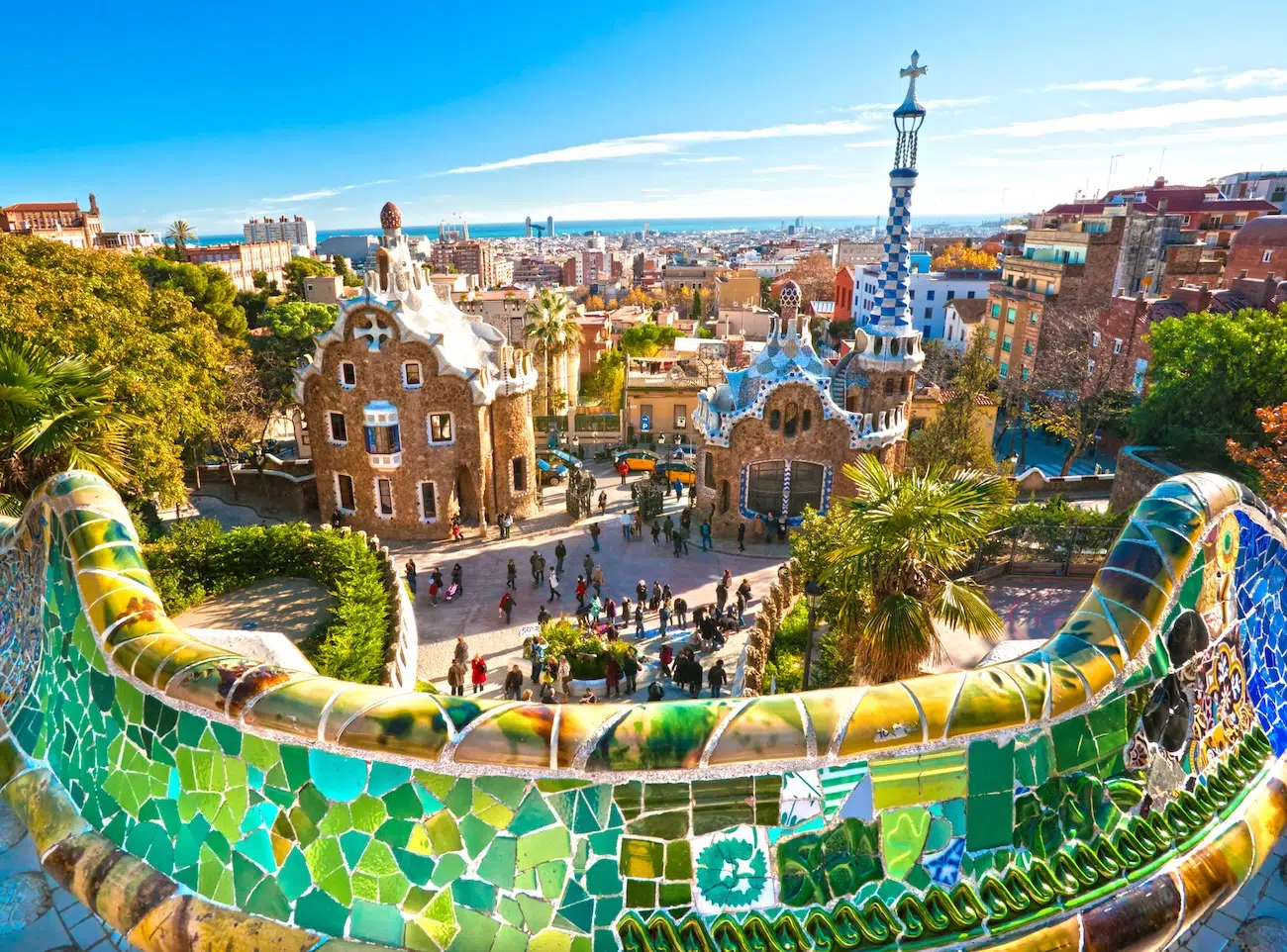
Park Güell is a public park designed by Gaudí. It was originally supposed to be a private housing development, but it was a commercial failure. Now, it’s a place for all to enjoy. Famous for its mosaic-covered structures, the main terrace is prized for its sweeping views over the city and sea, lined with a long, wavy mosaic bench. The park also includes the Hypostyle Room (Sala Hipóstila), an open concourse with 86 Doric-style columns, and the Gaudí House Museum, which once served as the architect’s residence.
Park Güell is mostly free, but some sections require a paid ticket.
Palau de la Música Catalana
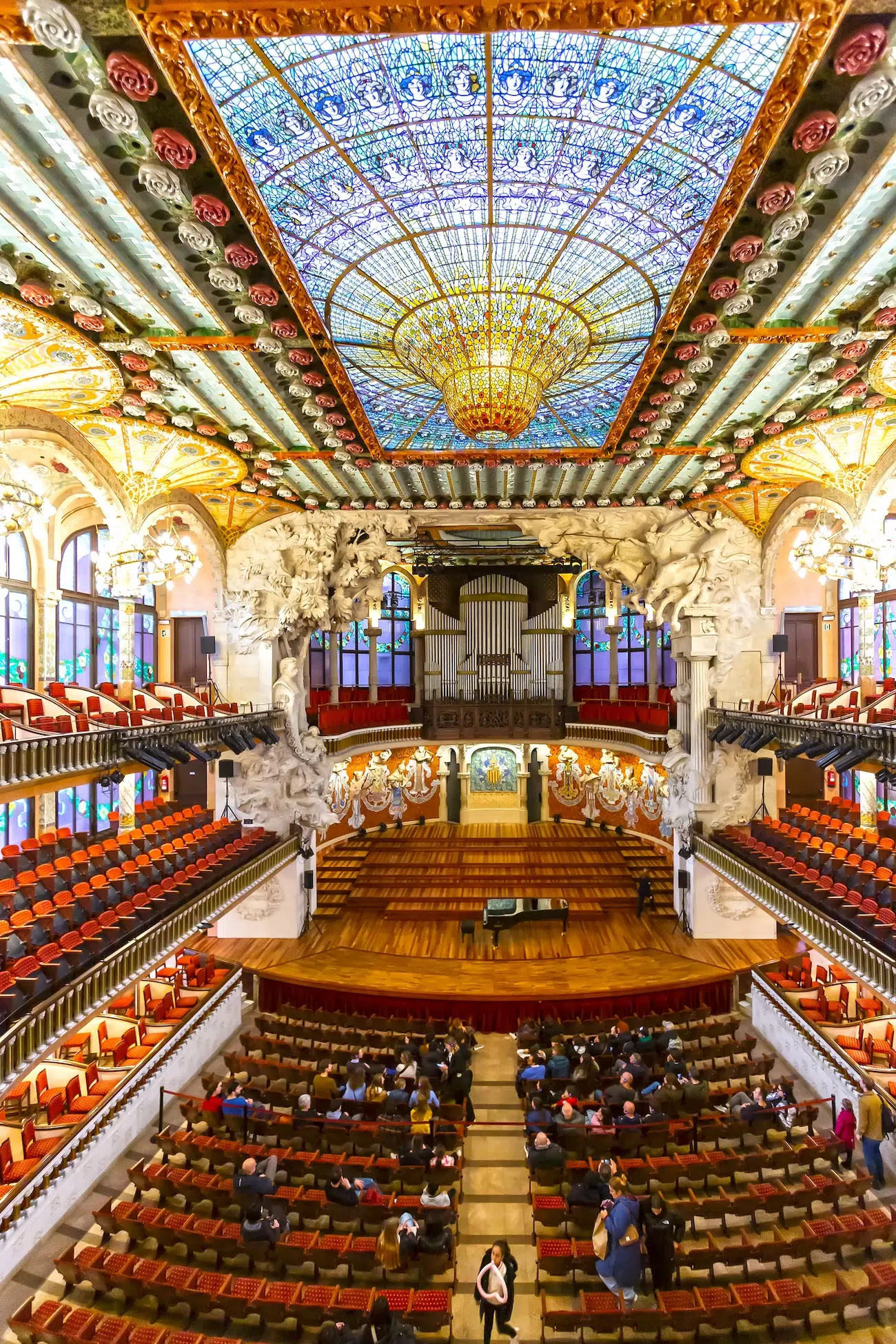
Palau de la Música Catalana is a concert hall designed by Lluís Domènech i Montaner. Like Gaudí, Domènech was a well-known Modernisme architect whose creation is now a UNESCO World Heritage Site. The hall is known for its stained-glass skylight shaped like an inverted dome alongside an ornate facade and interior featuring mosaics, sculptures, and floral motifs.
The building was completed in 1908 and is now home to the Orquestra Simfònica del Vallès and other concerts. It’s best to experience Palau de la Música Catalana as it was intended—by attending a live performance.
Cathedral of Barcelona
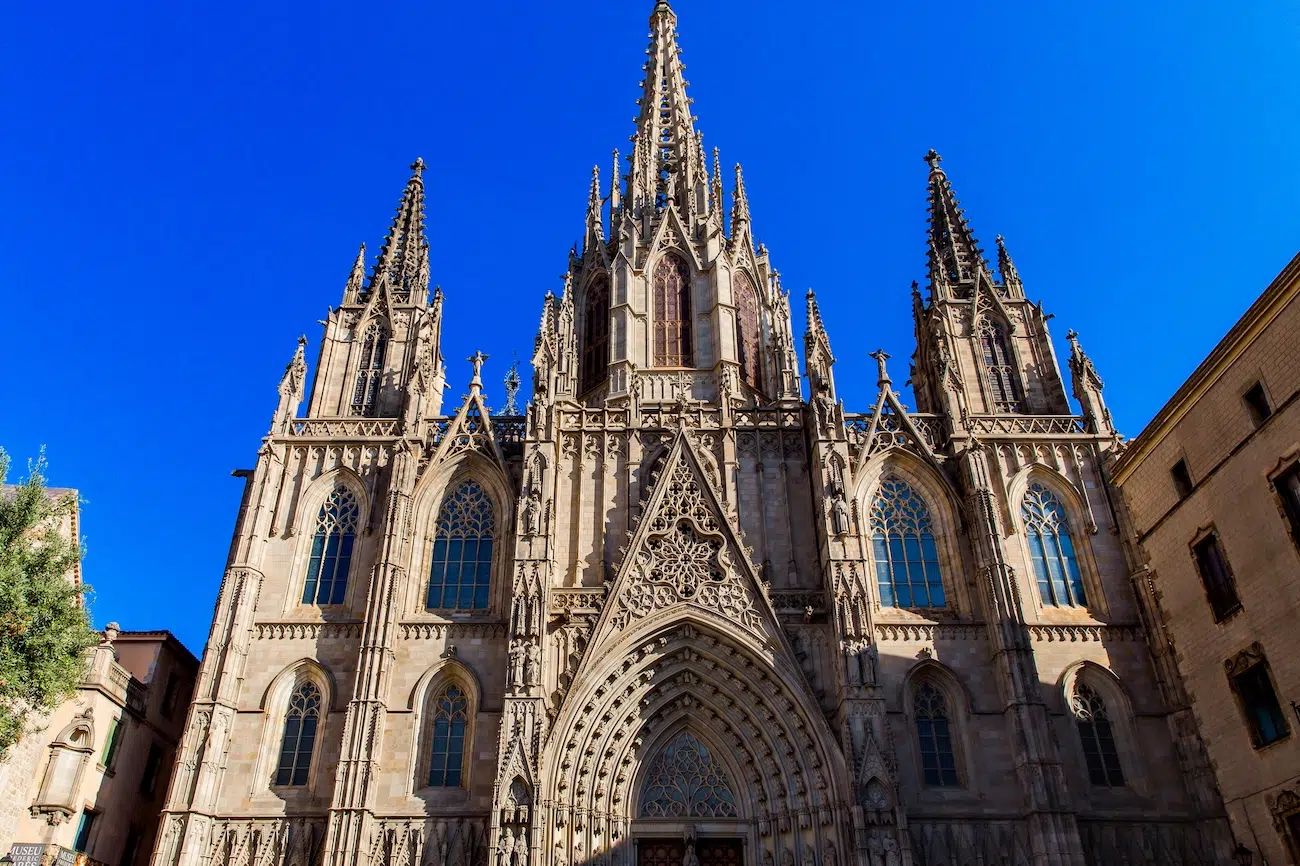
The Cathedral of the Holy Cross and Saint Eulalia, aka Cathedral of Barcelona, is a Gothic-style cathedral built between the 13th and 15th centuries, with a Gothic Revival-style facade added later during the 19th and 20th centuries. Located in the Gothic Quarter—the historic heart of the city—the cloister houses 13 white geese, symbolizing the age of Saint Eulalia at her martyrdom.
Visit the cathedral for its stunning architecture but also its views; the rooftop terrace is accessible via an elevator, and once up there you’ll have an incredible vantage point of the nearby spires and the city at large.
There’s free entry during certain hours, with a donation or ticket required for other times.
Museums + Art in Barcelona
Museu Nacional d’Art de Catalunya (MNAC)
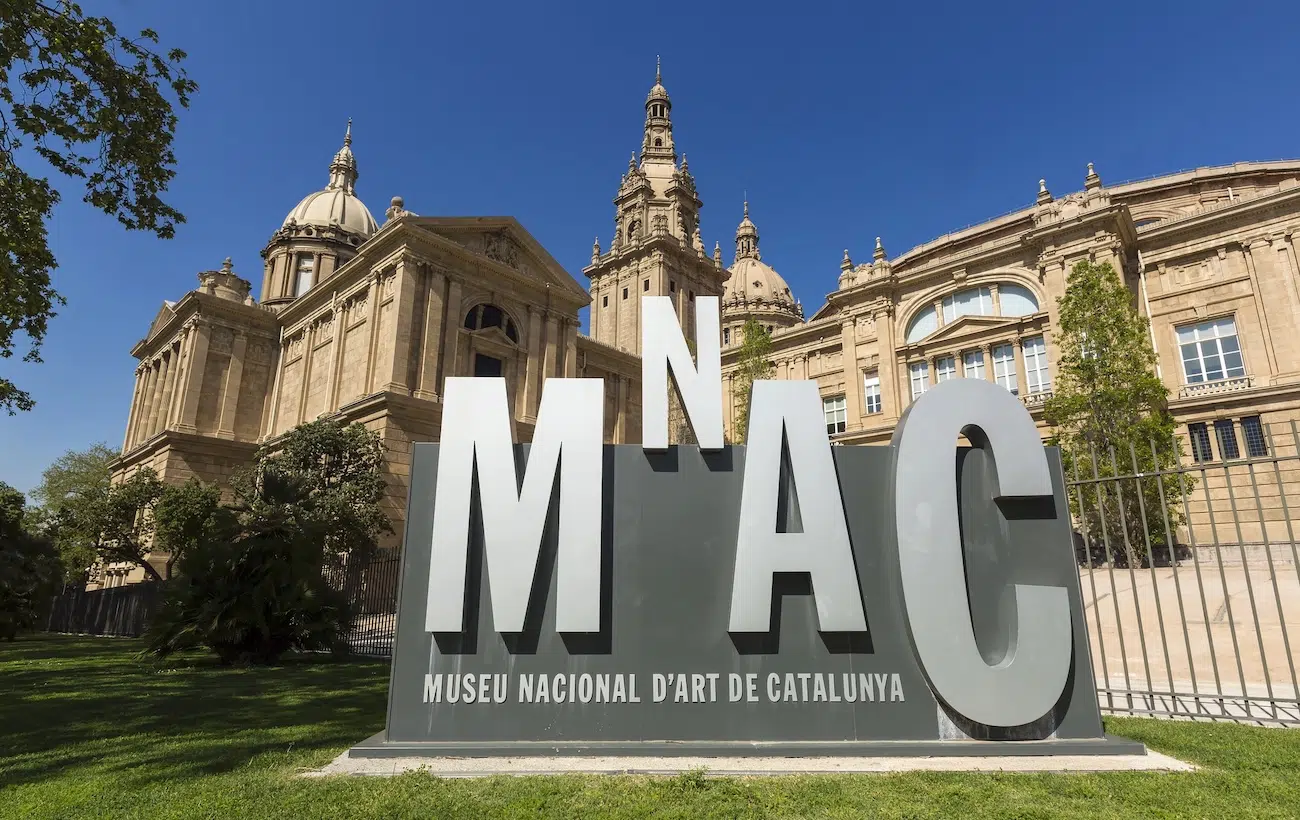
The Museu Nacional d’Art de Catalunya (MNAC) is housed in the Palau Nacional, an opulent building that was originally constructed for the 1929 International Exhibition. Its collection is renowned for Romanesque art, including murals removed from Pyrenean churches. But there’s much more to see in its collection, with art covering the Gothic, Renaissance, Baroque, and Modernisme periods, plus photography. When you’re done looking at the art, take in the panoramic view of Barcelona from its front steps and terrace.
MNAC is free for those under 16 and over 65. For everyone else, basic and general admission tickets are required.
Museu d’Art Contemporani de Barcelona (MACBA)
View this post on Instagram
Contrasting the grandeur of the MNAC is the Museu d’Art Contemporani de Barcelona (MACBA), a contemporary art museum. Its building has a white, glass-fronted facade located in the El Raval neighborhood, a place known for its nightlife, market, and restaurants.
The collection focuses on contemporary art from the mid-20th century to the present, with an emphasis on Catalan and Spanish artists. It features rotating exhibitions alongside the permanent collection, and there’s a focus on conceptual and experimental work.
The plaza outside of MACBA is a popular skateboarding spot. Take in the art and watch people shred once you’re done.
Moco Museum Barcelona
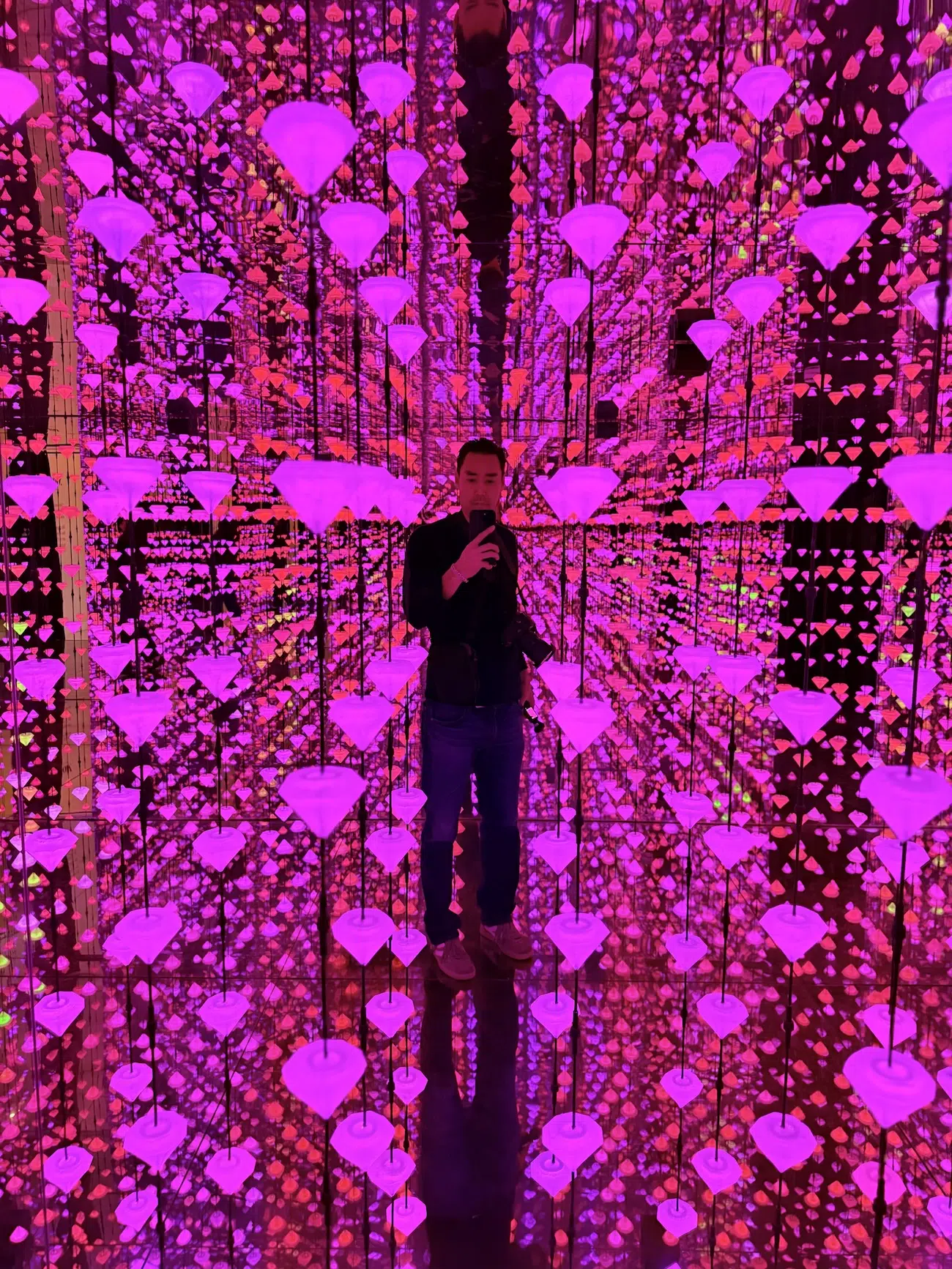
Photo: Eugene Kim / My Modern Met
The Moco Museum Barcelona is part of the Moco (Modern Contemporary) Museum group. (It has sister locations in Amsterdam and London.) Its offerings focus on modern, contemporary, and street art, showcasing the likes of Banksy, KAWS, Andy Warhol, Jean-Michel Basquiat, Keith Haring, and more. It has rotating exhibitions, eschewing a permanent collection.
If you’re looking for an Instagram-friendly location, you’ll want to check out this institution. It’s always a ticketed entry, with no admission-free times (unlike the other museums on this list).
Barcelona Areas to Explore
Gothic Quarter
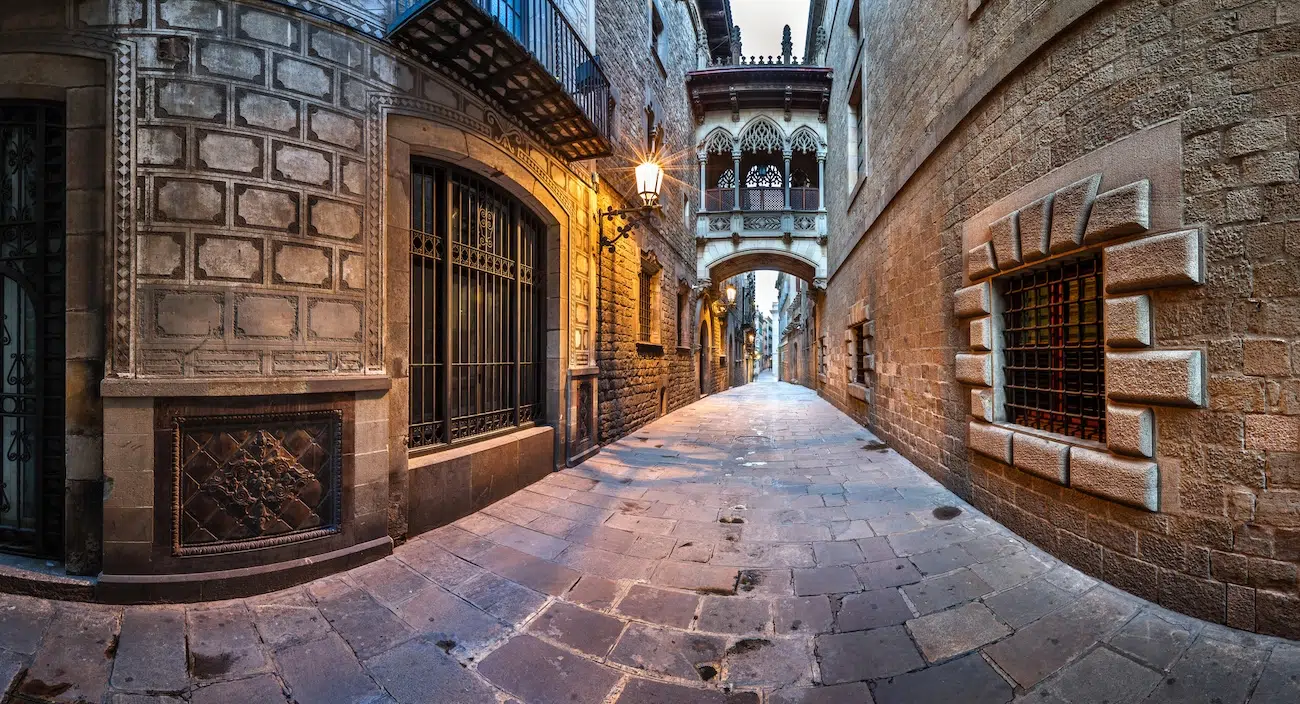
The Gothic Quarter is the historic core of Barcelona. It’s built on the grounds of what was once the Roman city of Barcino. Here, you’ll find the Cathedral of Barcelona alongside remnants of the Roman Empire—walls and towers are scattered throughout the maze-like medieval streets. They are too narrow for cars, making this the perfect place to explore on foot. And when you need a break, escape to one of the tapas bars in the area.
El Born
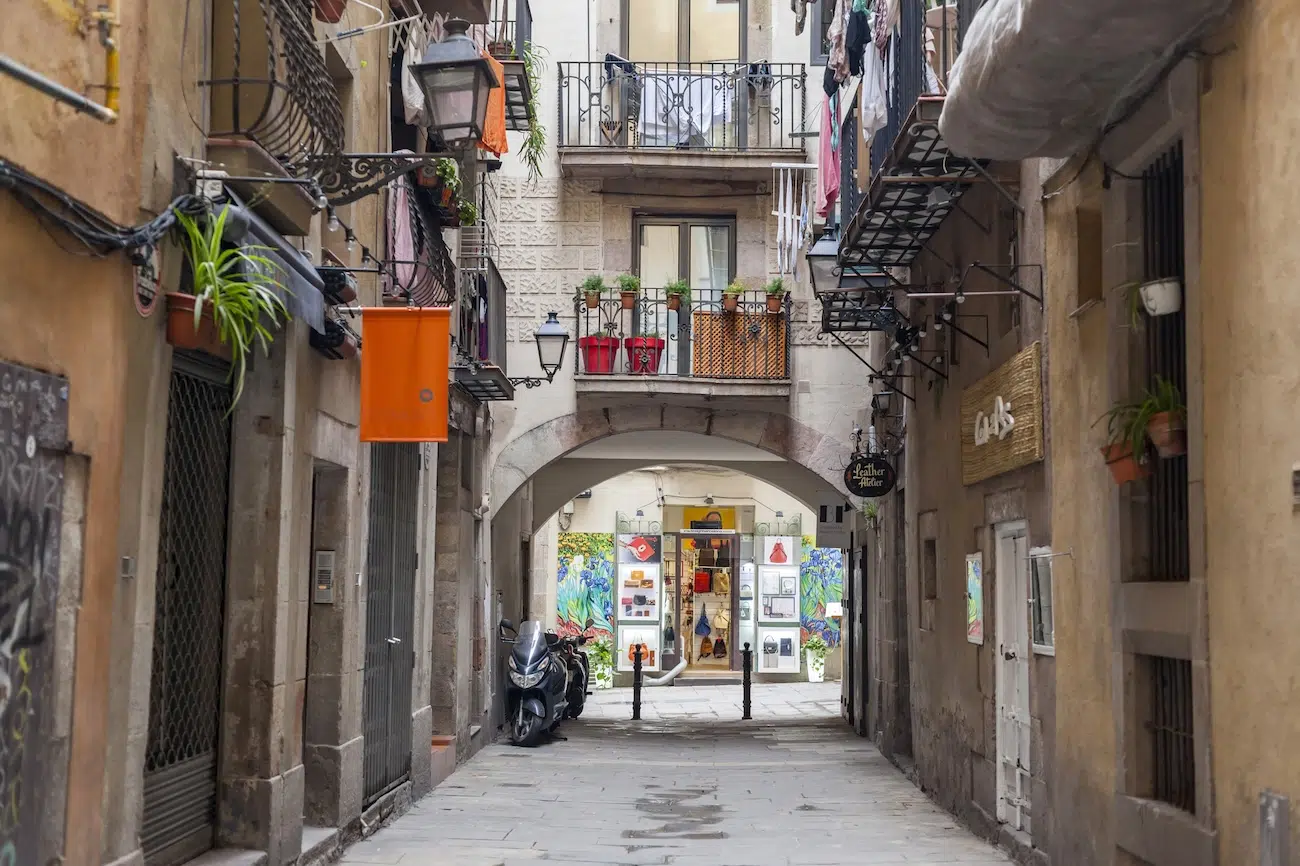
Just east of the Gothic Quarter, you’ll find El Born, a trendy spot that has historically been a working-class neighborhood and market district. In the center of the area is Passeig del Born, a promenade with bars and restaurants. El Born is known for its strong food scene and boutique shopping and design stores.
Art + Culture Experience
The Best of Antoni Gaudí in Barcelona: Private Full-Day Tour
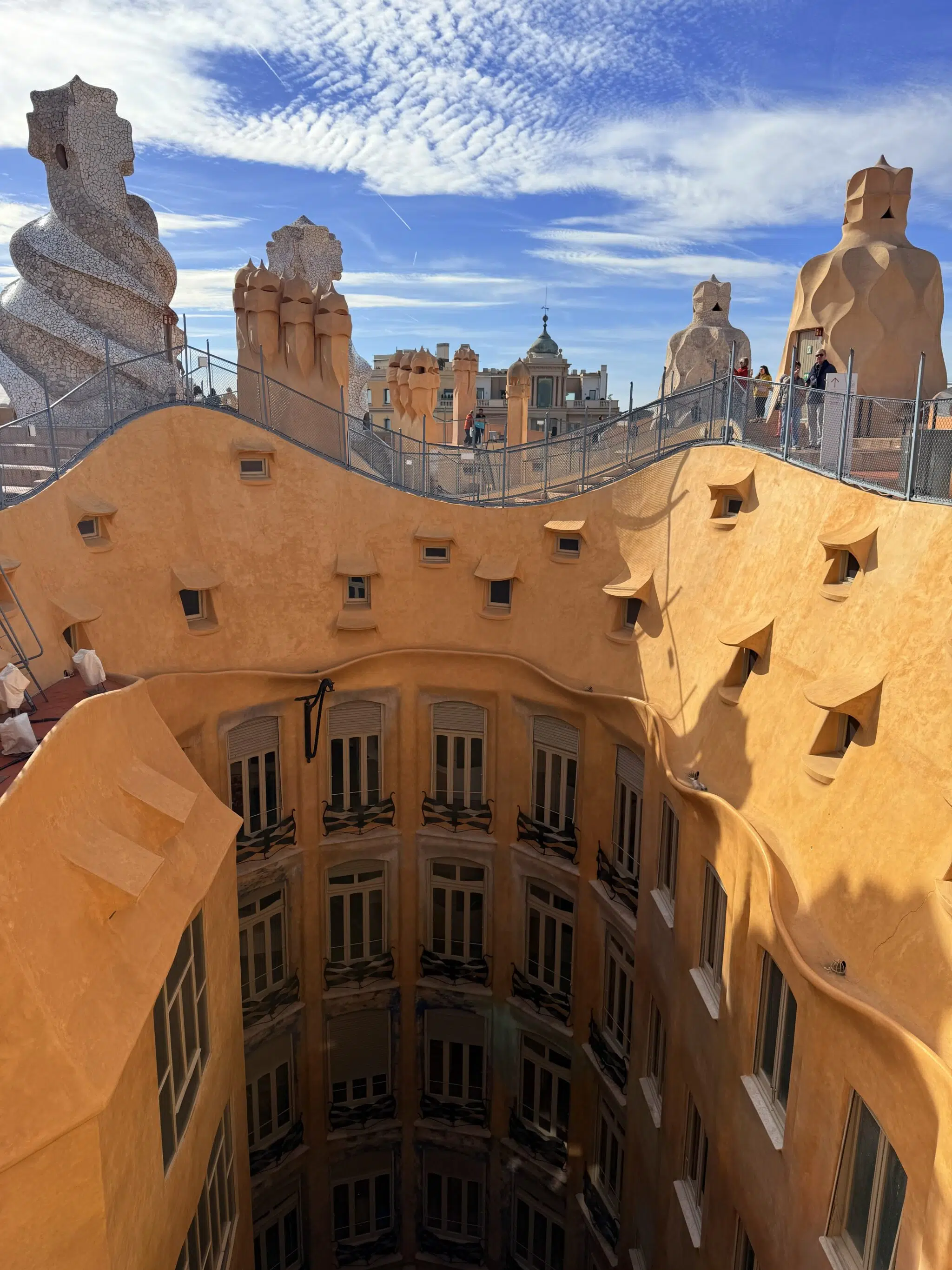
Photo: Eugene Kim / My Modern Met
With Gaudí having an outsized influence on Barcelona’s architecture, there’s so much to see when it comes to his work. Gain a deeper understanding through Marriott Bonvoy Tours & Activities, which offers The Best of Antoni Gaudí in Barcelona: Private Full-Day Tour.
Kim embarked on this tour and highly recommends it. “The defining experience of my time in Barcelona was seeing Antoni Gaudí’s architecture in person,” he recalls. “I was fortunate to explore his work on a private tour through Marriott Bonvoy Tours & Activities with Mari Carmen Rodriguez, and seeing these buildings up close gave me an entirely new appreciation for the scale of his imagination. Gaudí’s creativity feels almost without limits. His work is so original, organic, and unexpected that it doesn’t really resemble anything else I’ve experienced.”
Where to Eat + Drink
Casa Alfonso
View this post on Instagram
Cafe Alfonso opened its doors in 1934, originally as a colmado, or upscale grocery and charcuterie, and has remained family-owned for over 90 years. Step into this restaurant to experience a back-in-time feel, as much of the original decoration and furniture has remained intact. While there, enjoy its croquetas—it’s especially known for them—and cured meats.
Batuar Restaurant & Bar at Cotton House Hotel
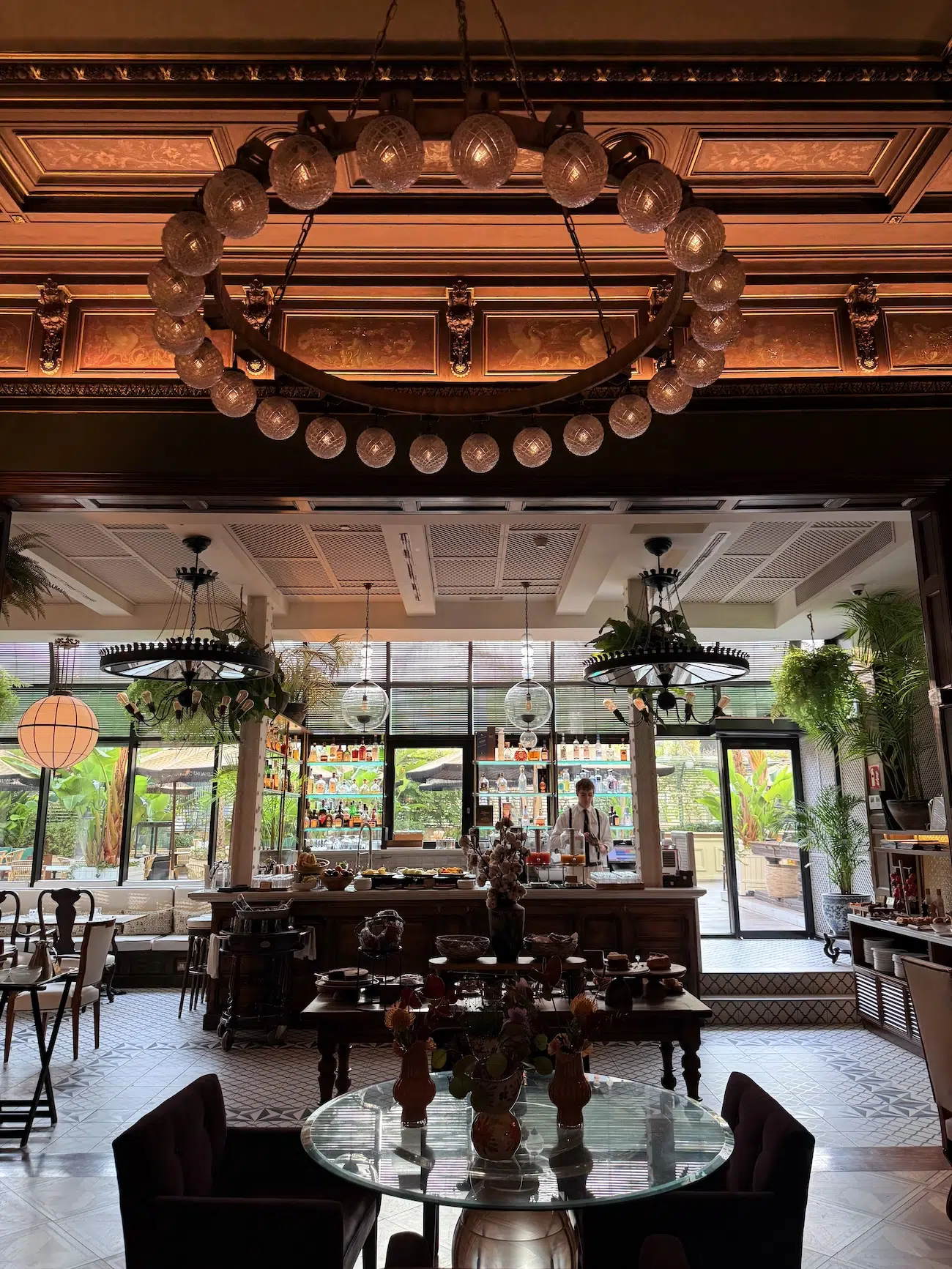
Photo: Eugene Kim / My Modern Met
Inside the Cotton House Hotel is the Batuar Restaurant & Bar. Its name comes from batuar, which is the machine that was once used to press cotton and remove its impurities. This is a nod to the building’s history in the textile industry. On the menu, you’ll find seasonal Mediterranean cuisine with local ingredients to be enjoyed in its beautiful Neoclassical architecture and outside on its lush, plant-filled terrace.
Kim enjoyed noshing at Batuar. He shares, “Breakfast there was something I looked forward to every morning, and I had a memorable dinner there as well. There was something special about beginning and ending my days in a place that felt so connected to Barcelona’s sense of design, style, and history.”